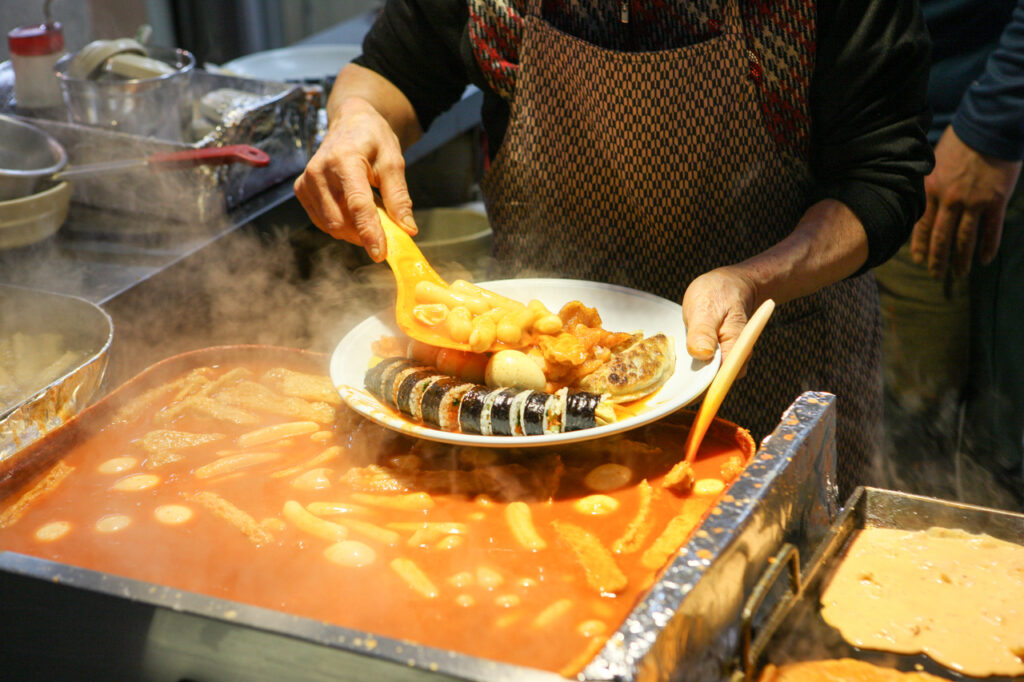

Tteokbokki (떡볶이) is one of Korea’s most recognizable comfort foods. Chewy rice cakes simmer in a sweet, spicy sauce, often with fish cakes, vegetables, and boiled eggs. You can find it at street stalls, traditional markets, bunsik restaurants, and dedicated tteokbokki shops across Korea.
The familiar red version is only one part of the story. Tteokbokki also has a soy-sauce-based royal court style, a table-top version cooked with friends, and newer variations made with cream, cheese, or black bean sauce. Whether you order a small snack on the street or share a bubbling pan at a restaurant, tteokbokki is an easy way to experience Korea’s everyday food culture.
Quick Facts About Tteokbokki
Korean name: 떡볶이 (tteokbokki)
Meaning: Stir-fried or simmered rice cakes
Main ingredients: Rice cakes, sauce, and often fish cakes and vegetables
Common flavor: Sweet, savory, and spicy
Popular styles: Gochujang tteokbokki, royal court tteokbokki, table-top tteokbokki, and rabokki
Often served with: Eomuk (fish cakes), sundae (Korean blood sausage), twigim (fried snacks), and gimbap
Where to find it: Street stalls, markets, bunsik shops, and tteokbokki restaurants
What Is Tteokbokki?
Tteokbokki is a Korean dish made by cooking tteok (떡), or rice cakes, in a seasoned sauce. The rice cakes are usually shaped like short cylinders and have a soft, springy texture. They absorb the sauce while staying pleasantly chewy.
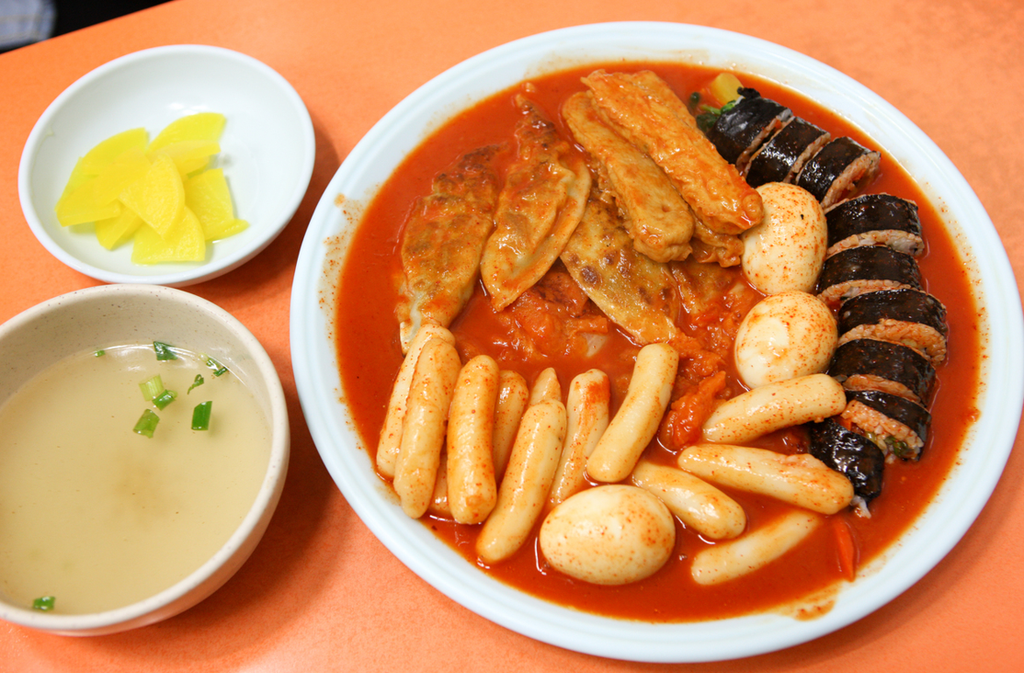
Photo: Korea Tourism Organization
The best-known version uses gochujang (고추장), Korean red chili paste, for a sauce that is spicy, slightly sweet, and savory. Many cooks add eomuk, cabbage, scallions, and boiled eggs. The dish may be simmered until the sauce thickens and coats the rice cakes.
Not all tteokbokki is spicy. Gungjung tteokbokki (궁중떡볶이), or royal court tteokbokki, uses soy sauce rather than gochujang. It is stir-fried with ingredients such as beef and vegetables, creating a savory, mild dish with a very different flavor from the red street-food style.
A Brief History of Tteokbokki
Rice cakes have been part of Korean food culture for centuries, but the tteokbokki eaten today has changed over time. Historical royal court cooking included a soy-sauce-based rice cake dish. It combined rice cakes with ingredients such as beef, mushrooms, and vegetables, and was served as a savory dish rather than a spicy street snack.
The red gochujang version became popular in the 20th century. The Sindang-dong tteokbokki district in Seoul is closely associated with the modern style. Korea Tourism Organization accounts trace the area’s tteokbokki culture to the 1950s, when Ma Bok-rim began selling the dish there. The story is often told as part of the neighborhood’s food history, though details of the dish’s exact origin are sometimes described differently.
Over time, tteokbokki became a familiar and affordable snack sold by street vendors and bunsik shops. It also became a popular shared meal, especially in places where diners cook the ingredients together in a pan at the table.
Today, the dish continues to evolve. Restaurants offer versions with ramen noodles, cheese, cream, seafood, or black bean sauce, while traditional markets and street stalls keep serving the spicy, chewy classic.
Popular Types of Tteokbokki
Gochujang Tteokbokki (고추장 떡볶이)
This is the classic red version many visitors picture when they think of tteokbokki. Rice cakes simmer in a sauce made with gochujang, often balanced with sugar or syrup, soy sauce, garlic, and stock. Fish cakes, cabbage, scallions, and boiled eggs are common additions. The flavor can range from mildly sweet to quite spicy. If you are sensitive to heat, ask for a mild version before ordering; spice levels vary from shop to shop.
Gungjung Tteokbokki (궁중 떡볶이)
Gungjung tteokbokki is the royal court style. It is usually made with a soy-sauce seasoning, beef, mushrooms, and vegetables. The result is savory and aromatic rather than fiery. This is a good choice if you want to try a different side of tteokbokki or prefer a non-spicy meal. Despite the name, it is now served in restaurants and is not limited to royal cuisine.
Rosé Tteokbokki (로제 떡볶이)
Rosé tteokbokki combines spicy Korean chili sauce with cream or milk. The creamy sauce softens the heat while keeping a savory, slightly spicy flavor. It is a popular choice for diners who want something richer and milder than classic tteokbokki.
Cream Tteokbokki (크림 떡볶이)
Cream tteokbokki is made with a smooth, savory cream-based sauce and is usually much less spicy than rosé tteokbokki. Its rich flavor pairs well with chewy rice cakes, and it is a good option for those who prefer little or no heat.
Gireum Tteokbokki (기름떡볶이)
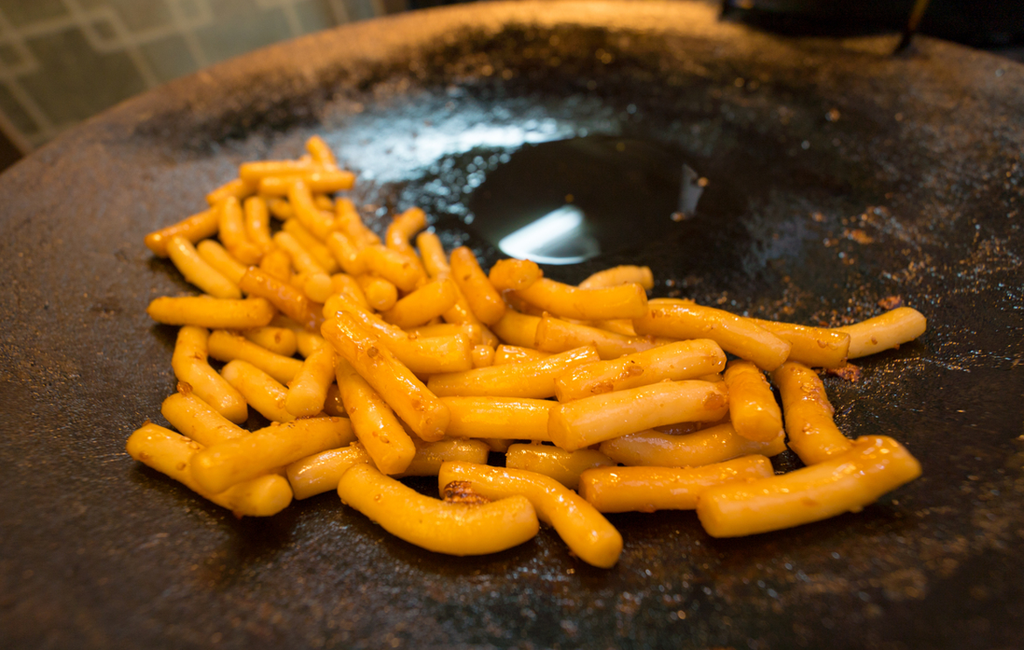
Photo: Korea Tourism Organization
Gireum tteokbokki (기름떡볶이) is a stir-fried version made with a small amount of oil and seasoning rather than a pool of sauce. The rice cakes are pan-fried until lightly browned and coated with a concentrated mix of seasonings. It is less saucy and has a firmer, more toasted texture.
Rabokki (라뽁이)
Rabokki combines tteokbokki with ramyeon (라면), Korean instant noodles. The noodles soak up the spicy sauce, making the dish hearty and filling. Some shops also add dumplings, fish cakes, cabbage, or cheese.
Jeukseok Tteokbokki (즉석 떡볶이)
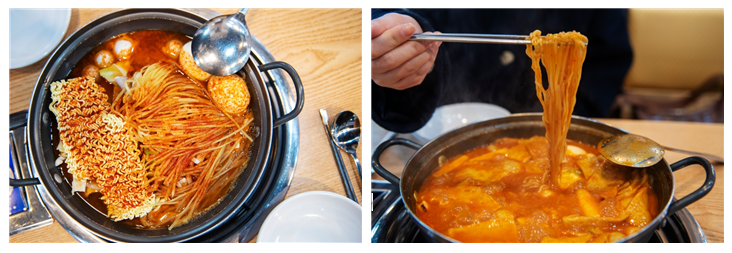
At a jeukseok tteokbokki restaurant, the ingredients arrive uncooked in a pan with sauce and broth. Diners cook the dish at the table, adding noodles, dumplings, eggs, or vegetables as it simmers. This style is made for sharing. The meal often ends with fried rice cooked in the leftover sauce, soaking up the flavors left in the pan.
Regional and Shop-Specific Styles
Tteokbokki changes from one region and restaurant to another. Some places add seafood or use a broth-based sauce; others offer jjajang tteokbokki, flavored with black bean sauce. Even two shops serving the same style can taste quite different. The rice cakes, sauce, stock, and cooking time all affect the final texture and flavor.
What to Add to Your Tteokbokki
Tteokbokki is often ordered with extra ingredients or shared with other bunsik favorites.
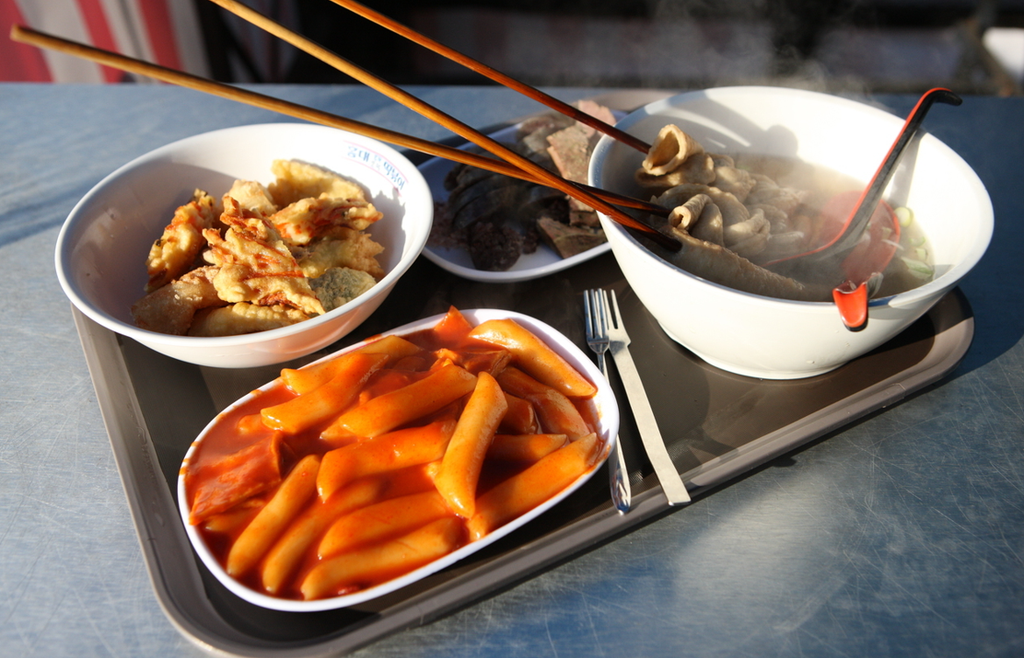
Photo: Korea Tourism Organization
- Eomuk (어묵): Fish cake, often served in the pan or on skewers with warm broth.
- Boiled eggs: A popular topping that softens the spicy sauce.
- Ramyeon (라면): Instant noodles that soak up the sauce.
- Mandu (만두): Korean dumplings, sometimes simmered in the pan or served fried.
- Twigim (튀김): Fried snacks such as vegetables, seaweed rolls, or squid. They are especially good dipped in tteokbokki sauce.
- Sundae (순대): Korean blood sausage, commonly eaten with tteokbokki at street stalls.
- Gimbap (김밥): Rice rolls that make the meal more filling and help balance the spicy sauce.
- Cheese: Melted over the dish for a creamy, salty contrast.
- Fried rice: At some table-top restaurants, rice is stir-fried in the leftover sauce at the end of the meal.
You do not need to order every side. For a simple first meal, try tteokbokki with fish cakes and a boiled egg, then add twigim or gimbap if you want something extra.
How to Enjoy Tteokbokki in Korea
Try a Street-Stall Serving
At a market or street stall, tteokbokki is often served in a small paper cup or bowl. You can eat it as a snack while exploring, or order it with other bunsik dishes for a more filling meal. Street-stall menus may have limited English, but the dish is usually easy to recognize from the bright red sauce and long rice cakes. Pointing to the pan or menu photo is often enough.
Share a Table-Top Pan
Table-top tteokbokki is usually ordered for two or more people. The pan arrives with rice cakes, vegetables, fish cakes, noodles, and sauce, and the staff may tell you when it is ready to eat. Follow the restaurant’s instructions and let the ingredients simmer until the rice cakes are soft and the sauce thickens. If you want fried rice at the end, ask before the pan is cleared.
Choose Your Spice Level
Tteokbokki can be mild, medium, or very spicy depending on the shop. If you are unsure, ask whether the sauce is spicy before ordering. Rose, cream, and soy-sauce versions are usually gentler alternatives, though recipes differ.
Eat It While It Is Hot
The rice cakes are at their best when warm and chewy. As they cool, they can become firmer, and the sauce thickens. At a table-top restaurant, eat as the ingredients finish cooking rather than waiting too long.
Where to Find Tteokbokki
Tteokbokki is easy to find throughout Korea. Look for bunsik shops, traditional markets, street stalls, food courts, or restaurants specializing in tteokbokki.
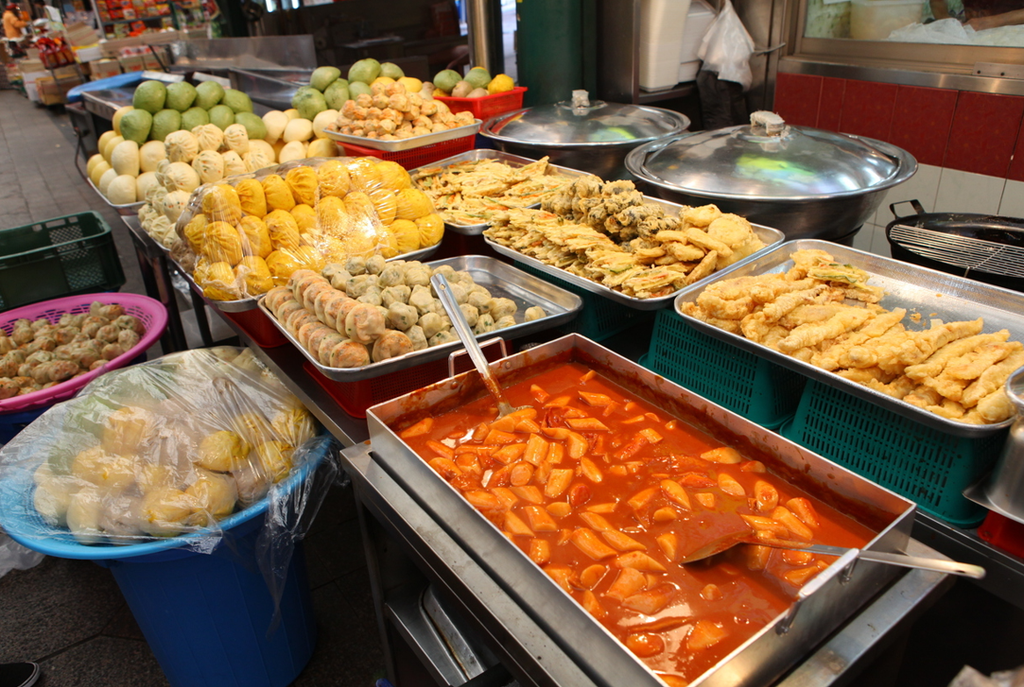
Photo: Korea Tourism Organization
For a food-focused visit in Seoul, Sindang-dong Tteokbokki Town is a well-known district with several restaurants offering their own versions. Many specialize in table-top tteokbokki, where diners cook the pan themselves and can add noodles, dumplings, or other ingredients.
You can also find tteokbokki in school-area snack shops, shopping districts, and near subway stations. Each setting offers a slightly different experience: a quick street snack, a casual meal with friends, or a bubbling pan shared around a table.
Tips for Ordering Tteokbokki
- Check the spice level first. The standard red sauce can be hotter than it looks.
- Ask about the rice cakes. Some shops use rice-based tteok, while others use wheat-based versions.
- Look for fish cake in the sauce. Many recipes include eomuk or use broth made with fish ingredients.
- Share table-top tteokbokki. It is usually served in portions meant for more than one person.
- Add fried rice at the end. It is a popular way to finish a table-top meal.
- Balance the heat with sides. Gimbap, fried snacks, and fish cake broth are common pairings.
- Bring a little patience. Table-top versions need time to simmer before they are ready.
Read Next
10 Korean Restaurant Tips Every First-Time Visitor Should Know –
Types of Tteok (떡) –
Twigim (튀김): Korea’s Crispy Street-Food Favorite –
Eomuk (어묵): Korea’s Savory Ground-Fish Favorite –
Ramyeon (라면) Guide: Types, Recipes & Where to Eat –
Kimbap (김밥): Types, Ingredients, and How to Eat It