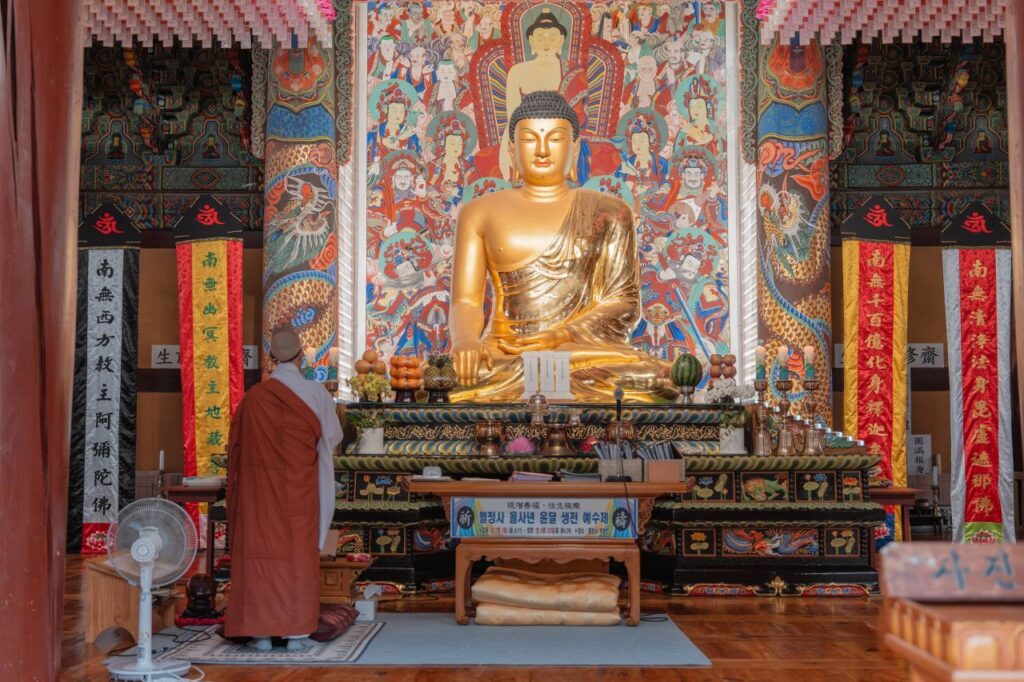

A Korean temple stay gives visitors the chance to spend a night at a Buddhist temple and experience part of its daily rhythm. Programs are available at temples across Korea, from city-center temples in Seoul to mountain monasteries in Gangwon-do and historic temples in Gyeongju and Hapcheon.
Each temple has its own setting and schedule. One program might focus on meditation and quiet time; another may include a temple tour, Buddhist ceremonies, traditional crafts, or Seonmudo, a form of moving meditation. You do not need to be Buddhist to participate. The official Templestay network includes programs at temples belonging to different Buddhist orders. In the temple descriptions below, the order is included as background information alongside each location.
Quick Facts About Korean Temple Stay
- Korean name: 템플스테이 (Templestay)
- Common overnight format: 2 days and 1 night
- Other options: One-day programs and longer stays
- Common activities: Temple tours, Buddhist ceremonies, meditation, meals, tea, and cultural activities
- Religious background required: No
- Booking: Search programs and reserve through the official Templestay website
What Happens During a Temple Stay?
Activities vary by temple and program. Many stays include a temple tour, meditation, a communal meal, and the option to attend a Buddhist ceremony. Some also offer activities such as making prayer beads or lotus lanterns, printing from Buddhist woodblocks, or talking with a monk over tea.
Templestay programs generally fall into three types. One-day programs offer a short introduction, often lasting a few hours. Experience-oriented stays include more scheduled activities and may introduce parts of the monastic routine. Rest-oriented stays leave more time for guests to slow down, explore the grounds, or relax. The names and schedules vary, so read the individual program details before booking.
A Sample 2-Day, 1-Night Schedule
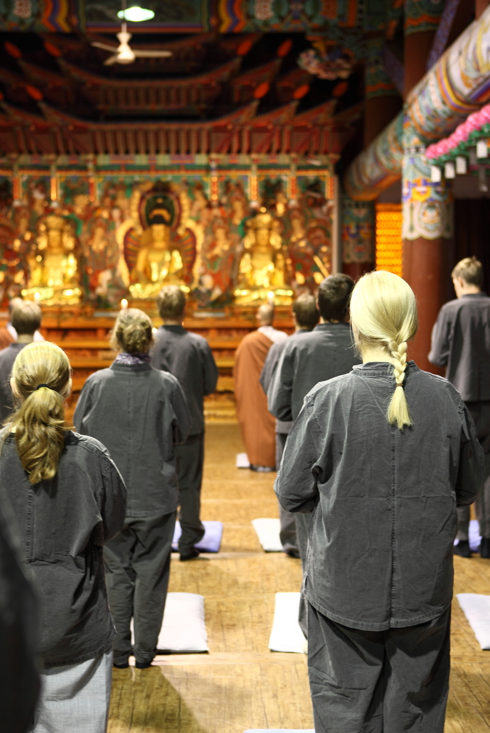
There is no single schedule followed by every temple. A typical overnight program may look like this:
| Time | What may happen |
|---|---|
| Early afternoon, Day 1 | Check in, attend an orientation, and change into temple clothes |
| Afternoon | Join a temple tour or walk a forest path |
| Early evening | Eat dinner and, if you wish, attend an evening Buddhist ceremony |
| Night | Have free time before lights-out or quiet hours |
| Before sunrise, Day 2 | Attend an early morning ceremony; some programs begin around 3:00–4:30 a.m. |
| Morning | Eat breakfast and join meditation, prayer-bead making, or another activity |
| Late morning | Check out |
For example, a Beomeosa program includes a temple tour, dinner, optional evening and early-morning ceremonies, and meditation or prayer-bead making. Haeinsa’s Tripitaka Koreana program includes woodblock printing, a temple tour, an early-morning ceremony, and 108-bead making. These are examples; schedules differ by temple and date.
Activities You May Experience
Buddhist Ceremonies
A yebul (예불) is a Buddhist ceremony that includes bowing and chanting in a Dharma hall. Guests may observe or participate, depending on the program. You do not need to know the chants. Follow the host’s instructions and remain quiet during the service.
Meditation and Walking Meditation
Some programs introduce cham-seon (참선), or Seon meditation. This may involve sitting quietly and paying attention to posture and breathing. Walking meditation offers a slower way to notice the temple grounds and surrounding landscape. No prior experience is needed.
108 Prostrations
Some stays include 108 bows, a repeated bowing practice connected with Buddhist reflection. It is not part of every program. Check the schedule, and contact the temple before booking if you have mobility concerns.
Temple Meals
Meals are generally simple and plant-based. Some programs include balwoo gongyang (발우공양), a formal meal using traditional bowls; others serve a regular communal temple meal. The meal style varies by temple. Contact the temple in advance about dietary needs.
Crafts and Special Programs
Depending on the temple, activities may include making prayer beads or lotus lanterns, or printing from Buddhist woodblocks. Haeinsa’s Tripitaka Koreana program, for example, includes a woodblock-printing activity. Golgulsa is known for Seonmudo, a practice combining movement, breathing, and meditation.
Temple Stay Locations Around Korea
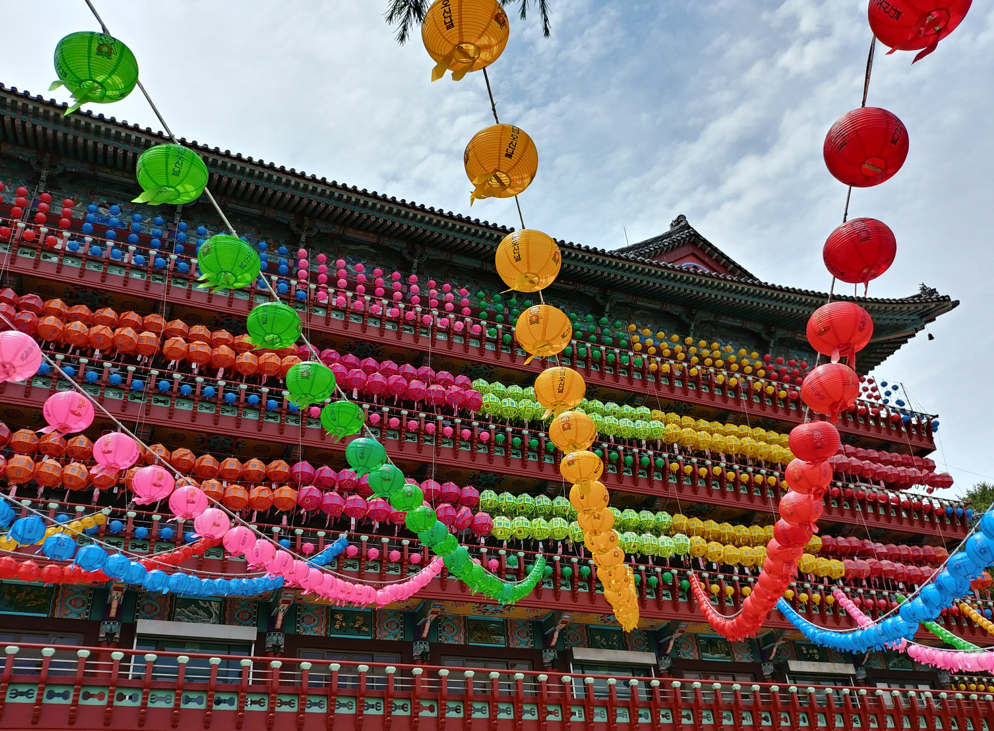
Templestay programs are available at participating temples across the country. The following examples show the range of locations and experiences. Activities and overnight availability depend on the temple and date, so check the official reservation page before planning your visit.
Seoul (서울)
Jogyesa (조계사) — Jongno-gu (종로구), Jogye Order (조계종)
Jogyesa is in central Seoul, close to Insadong (인사동) and other historic neighborhoods. It is a convenient choice for visitors who want an introduction to Korean Buddhist culture without traveling outside the city. The temple offers short programs and overnight stays on selected dates. Jogyesa is the chief temple of the Jogye Order.
Templestay programs and reservations at Jogyesa
Geumsunsa (금선사) — Jongno-gu (종로구), Jogye Order (조계종)
Geumsunsa is a mountain temple in the Bukhansan (북한산) area of Seoul. Its forest setting offers a quieter experience while remaining within the city. The temple is a branch of Beomeosa and belongs to the Jogye Order.
Templestay programs and reservations at Geumsunsa
Bongeunsa (봉은사) — Gangnam-gu (강남구), Jogye Order (조계종)
Bongeunsa is near COEX in Gangnam, surrounded by modern buildings and busy streets. Its location makes it easy to include in a Seoul itinerary. The temple offers a regular Saturday-to-Sunday overnight program, along with shorter experiences on selected days.
Templestay programs and reservations at Bongeunsa
Gangwon-do (강원도)
Naksansa (낙산사) — Yangyang-gun (양양군), Gangwon-do (강원도), Jogye Order (조계종)
Naksansa overlooks the East Sea from the coast of Yangyang. Visitors can explore the temple grounds and landmarks such as the Seaward-Looking Avalokitesvara Bodhisattva statue and Uisangdae Pavilion. The temple offers both one-day and overnight programs.
Templestay programs and reservations at Naksansa
Busan (부산)
Beomeosa (범어사) — Geumjeong-gu (금정구), Busan (부산), Jogye Order (조계종)
Beomeosa is located on Geumjeongsan Mountain in northern Busan. Programs may include meditation, Buddhist ceremonies, tea, a temple tour, and making prayer beads. The Templestay accommodation is at the Seon-Culture Training Center, about 800 meters from the main temple grounds, so confirm the check-in location before your visit.
Templestay programs and reservations at Beomeosa
Gyeongsangbuk-do (경상북도)
Golgulsa (골굴사) — Gyeongju-si (경주시), Gyeongsangbuk-do (경상북도), Jogye Order (조계종)
Golgulsa sits on Hamwolsan Mountain outside Gyeongju. It is known for Seonmudo, a Korean Buddhist practice that combines movement, breathing, and meditation. Depending on the program, guests may also try sitting or walking meditation, chanting, 108 prostrations, or archery.
Templestay programs and reservations at Golgulsa
Bulguksa (불국사) — Gyeongju-si (경주시), Gyeongsangbuk-do (경상북도), Jogye Order (조계종)
Bulguksa is a historic temple included in the UNESCO World Heritage property “Seokguram Grotto and Bulguksa Temple.” Its Templestay accommodation is about a five-minute drive from the main temple, while many activities take place at Bulguksa. Check the program information for transportation between the two locations.
Templestay programs and reservations at Bulguksa
Gyeongsangnam-do (경상남도)
Haeinsa (해인사) — Hapcheon-gun (합천군), Gyeongsangnam-do (경상남도), Jogye Order (조계종)
Haeinsa is in Gayasan National Park and is home to the Tripitaka Koreana woodblocks and the buildings where they are stored. Programs may include woodblock printing, a temple tour, Buddhist ceremonies, and prayer-bead making. Reaching this mountain temple takes planning, so check the bus connections and arrival instructions before booking.
Templestay programs and reservations at Haeinsa
Jeollanam-do (전라남도)
Baekyangsa (백양사) — Jangseong-gun (장성군), Jeollanam-do (전라남도), Jogye Order (조계종)
Baekyangsa is surrounded by forest on Baegamsan Mountain. Its programs include Seon meditation and walking meditation. The temple also offers special temple-food programs connected with Venerable Jeong Kwan; these are scheduled separately and may have limited availability.
Templestay programs and reservations at Baekyangsa
Chungcheongbuk-do (충청북도)
Guinsa (구인사) — Danyang-gun (단양군), Chungcheongbuk-do (충청북도), Cheontae Order (천태종)
Guinsa is located in a valley in the Sobaek Mountains and is the headquarters of the Cheontae Order. Its large temple complex climbs along the valley, creating a distinctive mountain setting. Programs run on selected dates, so check the current schedule and activities before planning your visit.
Templestay programs and reservations at Guinsa
What to Bring
Temples often provide a uniform, such as a vest and trousers, but what is included varies. Bring:
- Comfortable clothes to wear under the uniform
- Socks and comfortable walking shoes
- A towel, toiletries, and personal medication
- A change of clothes and underwear
- A warm layer, especially for a mountain temple or a winter visit
- A water bottle, if permitted by the temple
Check the program page to see whether bedding, towels, soap, or a hair dryer are provided. Rooms may be shared, and private rooms may be limited or require an additional fee.
Temple Etiquette
A temple is an active place of worship, so guests should move quietly and follow the staff’s instructions.
- Wear modest, comfortable clothing.
- Keep your voice low, especially near prayer halls and accommodation areas.
- Do not enter buildings or rooms marked as off-limits.
- Follow the schedule and arrive on time.
- Wear socks in Dharma halls when required.
- Do not smoke or drink alcohol during the stay.
- If you feel unwell or need to skip an activity, let the Templestay staff know.
Individual temples may have additional rules, so read the information provided after booking.
Booking and Planning Your Visit
Search the official Templestay website by region, date, language, and program type. One temple may offer both one-day experiences and overnight stays, while another may run programs only on selected weekends or during certain seasons. Before booking, confirm the current fee, cancellation policy, room type, meals, check-in location, and whether activities are optional. For a mountain temple, check the final bus or taxi connection and allow extra time for the journey. Schedules and transportation details can change.
Why Try a Korean Temple Stay?
A temple stay lets you experience a temple as a living place, not only as a historic attraction. You might hear the evening bell, walk through the grounds before sunrise, share a simple meal, or learn about Buddhist culture through meditation and traditional activities. With programs available in cities, mountains, and coastal areas, you can choose a temple that fits your trip. Check the individual listing and leave enough time to follow the temple’s schedule at a quieter pace.