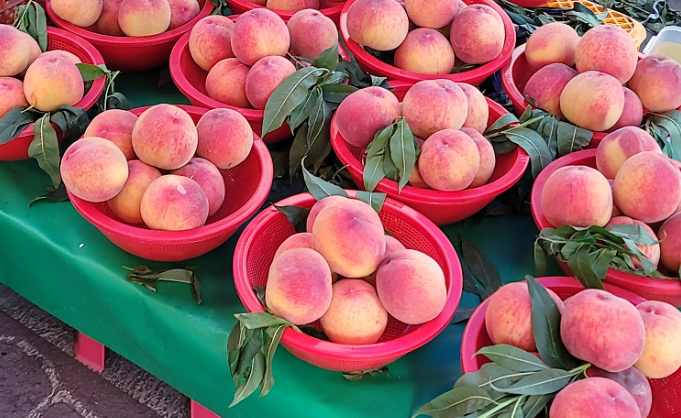

Peaches are one of Korea’s best-loved summer fruits. When they come into season, fruit shops and supermarkets fill with fragrant peaches in shades of pink, cream, and yellow. Some are soft and juicy, while others are firm and crisp.
Korean peaches are often grouped as baekdo (백도, white-fleshed peach), hwangdo (황도, yellow-fleshed peach), and cheondo (천도, nectarine). Their harvest times vary by variety, so peaches can be enjoyed from early summer into autumn.
Quick Facts About Korean Peaches
- Korean name: 복숭아 (bok-sunga)
- Main types: White-fleshed peaches, yellow-fleshed peaches, and nectarines
- Main season: Usually June through September, depending on the variety and region
- Common ways to enjoy them: Fresh, chilled, in desserts, or made into juice, jam, and canned fruit
- Major growing areas: Eumseong, Icheon, and Cheongdo
What Are Korean Peaches Like?
Korean peaches are prized for their fragrance and sweet, juicy flesh. Their texture ranges from soft and delicate to firm and crisp. Many peaches have fuzzy skin, while nectarines have smooth skin.
Peaches are delicate and can bruise easily, so they are often handled and packed carefully. In season, they are sold individually, in small packs, and in gift boxes.
Types of Peaches You’ll Find in Korea
Baekdo (백도): White-Fleshed Peaches
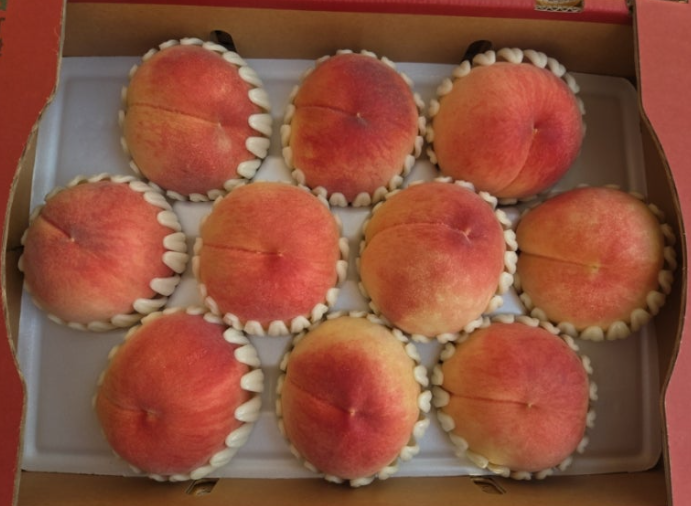
Baekdo means “white peach.” These peaches have pale, often pink-blushed skin and light-colored flesh. Many are soft, juicy, and sweet when ripe, with a gentle fragrance.
Hwangdo (황도): Yellow-Fleshed Peaches
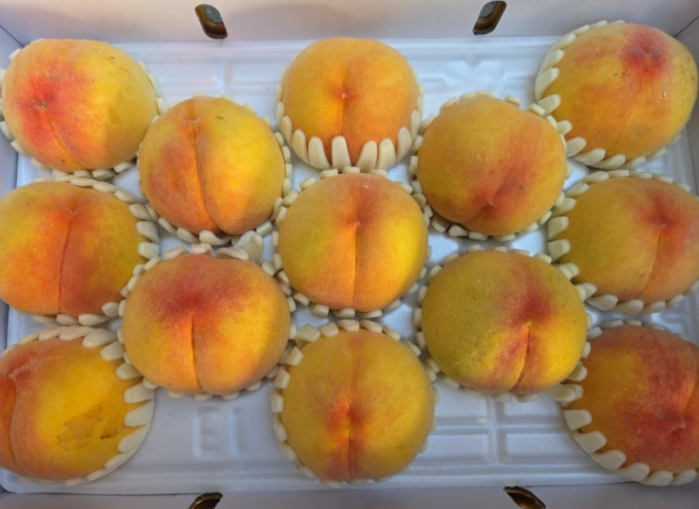
Hwangdo means “yellow peach.” The flesh is yellow, and the texture is often firmer than that of a soft white peach. Yellow peaches are enjoyed fresh and are also familiar in canned form. Their harvest season depends on the variety; some ripen in summer, while later varieties can be available into September.
Cheondo (천도): Nectarines
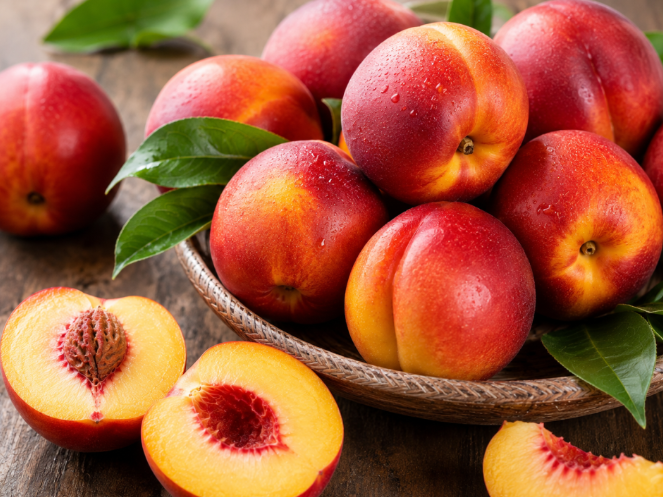
Cheondo refers to nectarines, which have smooth skin instead of the fuzzy skin found on many other peaches. They can be white- or yellow-fleshed, and their flavor may be sweet or pleasantly tart. Because the skin is smooth, nectarines are often eaten without peeling.
When Is Peach Season in Korea?
Korean peaches are generally in season from June through September. Early varieties may appear in late June or July, while many white peaches are harvested in August. Some late-season yellow peaches are available in September. The exact timing changes with the variety, growing region, and weather. Because peaches are a summer fruit, they are especially popular during hot weather. You may see them served chilled, added to seasonal desserts, or displayed in carefully packed fruit boxes.
Where Are Peaches Grown in Korea?
Peaches are grown in several parts of Korea. Eumseong in Chungcheongbuk-do, Icheon in Gyeonggi-do, and Cheongdo in Gyeongsangbuk-do are among the areas known for peach production. Some local farms offer peach-picking experiences during the harvest season, though dates and reservation rules vary by farm.
Canned Hwangdo: A Hospital-Visit Treat
For many Koreans who grew up in the 1970s and 1980s, canned yellow peaches (hwangdo, 황도) bring back memories of visiting someone in the hospital. The cans were considered a special treat to bring along, and some families also served the soft peaches to children when they were sick and had little appetite. Korean reminiscences and cultural writing describe canned peaches as a memorable hospital gift and comfort food from that time.
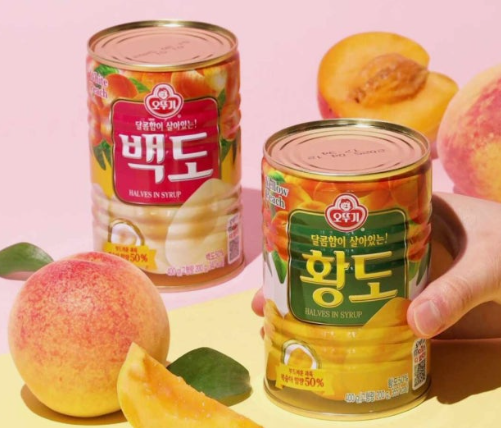
The soft peach slices in sweet syrup were ready to eat and available outside the fresh-peach season. For some people, the taste of canned hwangdo is tied to childhood memories of being unwell and cared for. This was a familiar practice for many families, though it was not a formal rule followed everywhere.
How Koreans Enjoy Peaches
Many people enjoy peaches fresh, either at room temperature or chilled. Soft peaches can be eaten with a spoon or cut into pieces, while firmer peaches are easy to slice.
Peaches are also used in:
- Peach ade (복숭아에이드): A sweet, often fizzy café drink
- Peach bingsu (복숭아빙수): Shaved ice topped with peach and other ingredients
- Peach jam (복숭아잼): A fruit spread for toast or bread
- Peach juice and canned peaches: Convenient ways to enjoy peaches outside their fresh season
Fresh peaches are also sold in gift boxes, especially when premium varieties are in season.
Peaches in Korean Tradition
In Korean traditional art and decorative motifs, peaches are associated with long life and good fortune. This symbolism is part of a broader East Asian tradition in which the peach represents longevity.
Are Peaches Healthy?
Peaches contain water, dietary fiber, and nutrients such as vitamin C and potassium. Their nutritional content varies by variety and serving size. Enjoy them as a fresh seasonal fruit as part of a varied diet.
A Practical Tip for Buying and Storing Peaches
Choose peaches with a pleasant fragrance and avoid fruit with deep bruises or damaged skin. Peaches can continue to soften after purchase, so leave firm ones at room temperature until they reach the texture you like. Once ripe, refrigerate them and enjoy them soon for the best flavor and texture.
From soft, fragrant baekdo to crisp nectarines and firm ttakbok peaches, Korea’s summer harvest offers plenty of choices. If you visit Korea between June and September, try a fresh peach from a market or look for a farm that welcomes visitors during harvest.