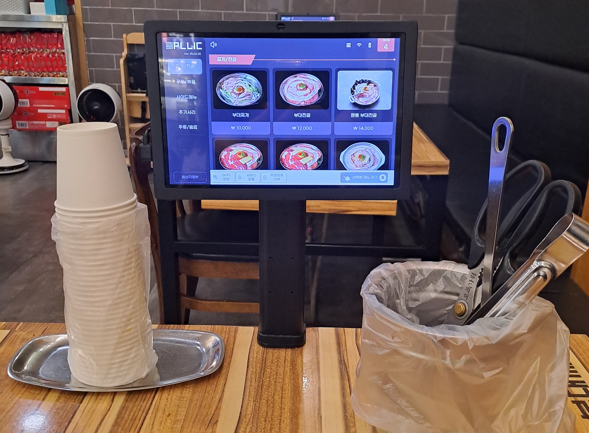

You landed in Korea, you’re hungry, and that neon-lit restaurant looks incredible. But Korean tables come with a few unwritten rules that nobody tells tourists in advance. Get these right, and every meal becomes smoother, friendlier, and honestly, a lot more fun. Here are the golden tips you absolutely need before your first bite.
1. How to call the server & order — 3 ways
Korean restaurants usually use one of these three ways to take your order — here they are in order of what you’ll see most often.
1-1. The call bell on the table. Many restaurants put a small call bell (or button) right on the table: give it a press and staff appear at your side. No need to shout, no need to wave — the bell does the talking.
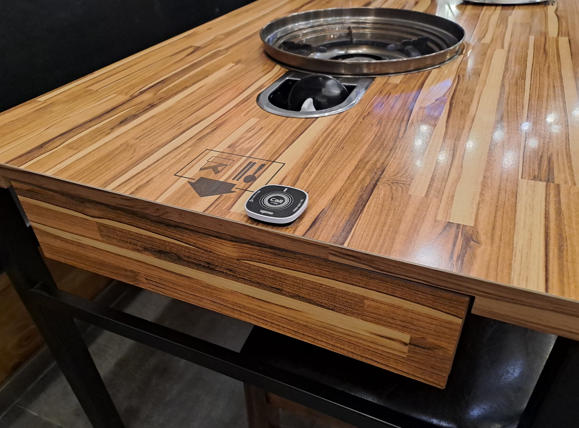
1-2. The table-order machine (테이블 오더). Plenty of restaurants, especially casual chains, skip the spoken order entirely and give you a tablet or touchscreen at your table instead. These machines come in two versions — take a quick look at what the screen does before you start touching:
- Order-only machines: you tap the dishes you want and the order goes straight to the kitchen. You eat first and pay at the end.
- Order + payment machines: the machine does both — you tap your order, pay by card right there, and only then is your order placed. No payment, no order.
A second’s glance at the screen tells you which one you’re dealing with — no surprises, no confusion.
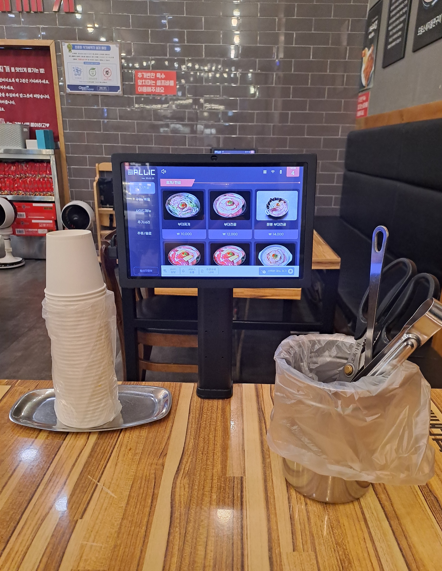
1-3. Just call out. If there’s no call bell and no table-order machine — a diner, a traditional spot, anywhere low-tech — you simply raise your hand and say a soft “yeogiyo!” (여기요!, “Excuse me!”). It’s completely normal in Korean restaurants, so don’t feel shy about calling out.
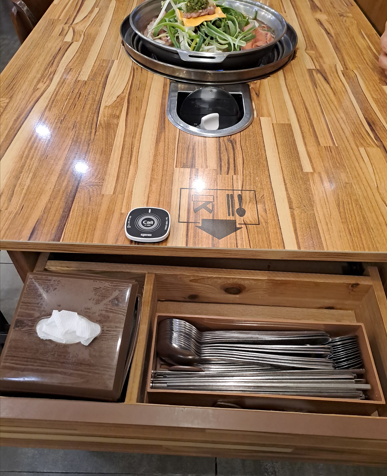
2. No spoon or chopsticks on the table? Open the drawer beside you
If the restaurant hasn’t set out spoon and chopsticks for you, don’t sit there awkwardly — look for the drawer right next to you. Many Korean restaurant tables (or the benches around them) have a drawer built into the side. Open it and you’ll find napkins, spare spoons, and chopsticks waiting inside. Grab what you need and you’re ready to eat.
3. Water? Usually free and brought to you — and you don’t always need to order a drink
In many countries, ordering a drink is a normal part of eating at a restaurant. In Korea, it’s often different — you don’t necessarily need to order a beverage with your meal.
Most Korean restaurants bring water to your table without asking, sometimes in a big shared jug — and it’s free. If no water arrives, no problem: just ask the server for some (“mul juseyo” — 물 주세요, “water, please!”).
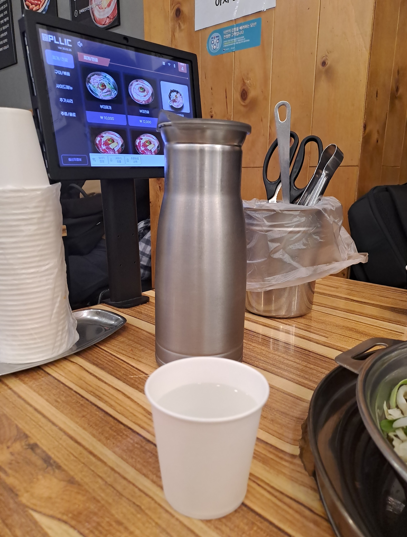
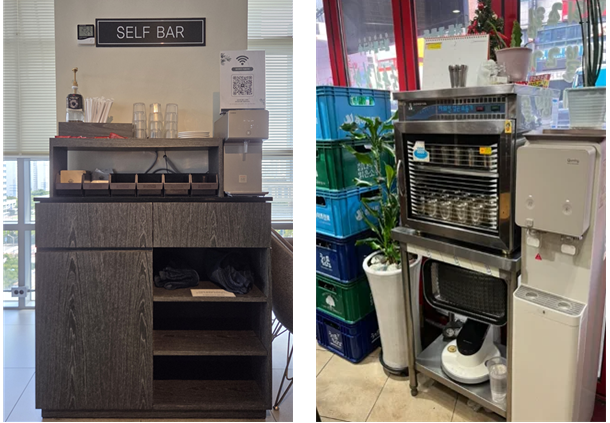
And keep an eye out, because some places are self-service: they keep a water dispenser (and cups) out for customers to help themselves. All of it is free, none of it is awkward.
And rest easy about the water itself — Korean restaurants serve purified water, so it’s completely safe to drink, no worries about your stomach.
Did they give you brown water? Relax — it may be boricha (보리차), or roasted barley tea. It’s roasted barley steeped in water, with a gentle nutty, toasted flavor.
It doesn’t show up at every restaurant, and when it does, it may arrive in the exact same kind of container as the water — so if you thought it was water, you’re not wrong to be confused. And it’s totally safe to drink.
In Korea, it’s very common to simply drink the free water or barley tea provided with your meal instead of ordering a separate beverage. So don’t feel like you have to order a soft drink, juice, or other beverage just because you’re eating at a restaurant.
4. Check the table for sauces and seasonings
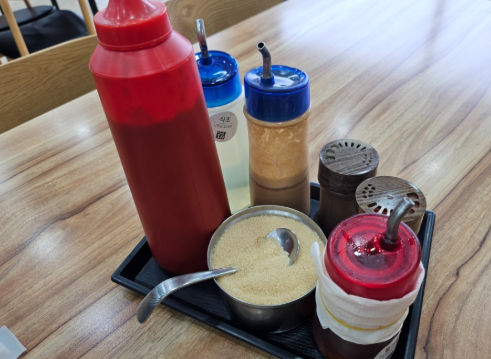
Before you start eating, take a quick look around your table. You may find sauces or seasonings that are meant to be added to your food.
For example, restaurants that specialize in sanchae bibimbap (산채비빔밥) — bibimbap made with various mountain vegetables — may have sesame oil and gochujang (고추장, Korean red chili paste) already sitting on the table.
You may be expected to add these yourself according to your taste, rather than waiting for the server to bring them.
So before asking, “Where’s the sauce?”, check the table first. The seasoning you need may already be right in front of you.
5. Banchan: ask if it’s refillable — then refill it
The little side dishes that appear at your table are often free — and at many restaurants, refillable. Every place is different, so just ask politely. If the answer is yes, go ahead and ask for more whenever you run out — they’ll happily bring fresh ones.
Read Next Banchan (반찬, Side Dish) Refills in Korean Restaurants – Kimbap Life
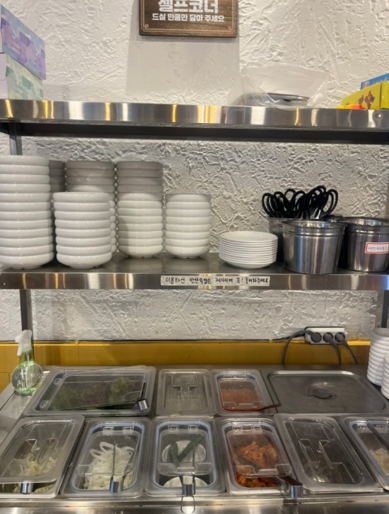
And just like the water, some restaurants make banchan self-service too: they set up a side-dish bar where you grab your own refills with tongs and help yourself as often as you like. If you spot one, no need to ask anyone — just walk over and take what you need.
6. Never eaten the dish before? Ask how to eat it. Seriously.
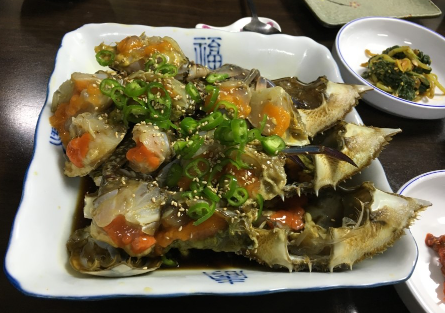
Korea’s menu is full of showstoppers you won’t find elsewhere — and some of them come with a technique. Take gejang (게장, soy-marinated raw crab): you crack the shell, suck out the rich, almost custardy meat, and often mix the soy marinade into rice. No idea where to start? Just ask. Korean servers are used to curious newcomers and genuinely happy to show you — you’ll enjoy the food twice as much.
7. Keep your bowls on the table
In Korea, you don’t lift your rice bowl or soup bowl to your mouth. Bowls stay on the table, and you lean slightly forward to eat — proper Korean table manners. You’ll see locals doing it without even thinking.
8. Spoon for rice and soup, chopsticks for banchan
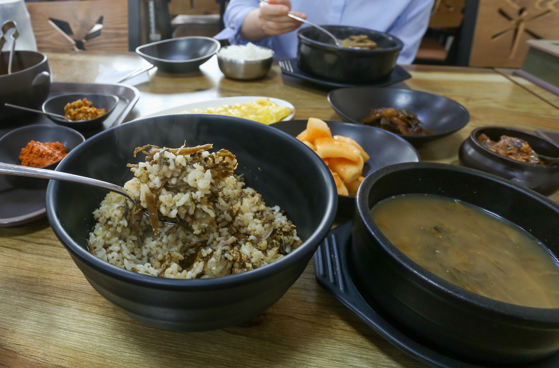
A rule of thumb — though not an absolute one: rice and soup = spoon, side dishes (banchan) = chopsticks. It’s not that Koreans always eat rice with a spoon — chopsticks find their way into rice bowls too sometimes. And banchan are most often eaten with chopsticks, but some side dishes are perfectly fine with a spoon, so no need to be rigid about it.
Bibimbap is usually eaten with a spoon because the rice, vegetables, and sauce are mixed together before eating.
9. Bonus: free coffee from the vending machine — yes, really
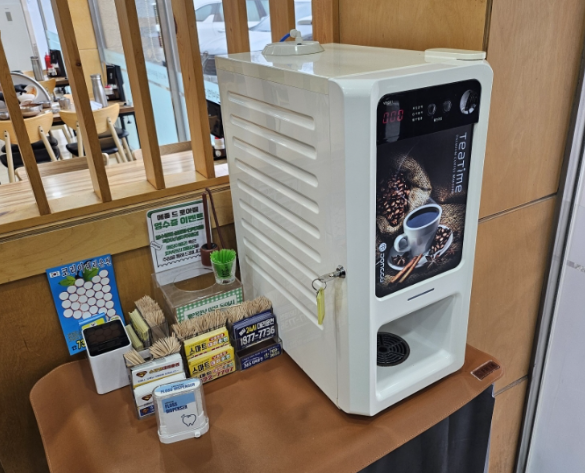
Many Korean restaurants, especially older-style or traditional restaurants, keep a small coffee vending machine by the door or counter. Press the button and out comes a hot cup of Korean-style instant coffee that adventurous souls never forget (think warm, sweet, and dangerously easy to drink). It’s often free — and honestly, it’s part of the experience. Give it one try.
10. No tipping. Really. Zero.
This is the one travelers can’t believe. In Korea, tipping is not practiced and not expected. No 10%, no rounding up, no “keep the change.” Your bill is your bill. It’s not rude to skip it — it’s the custom.