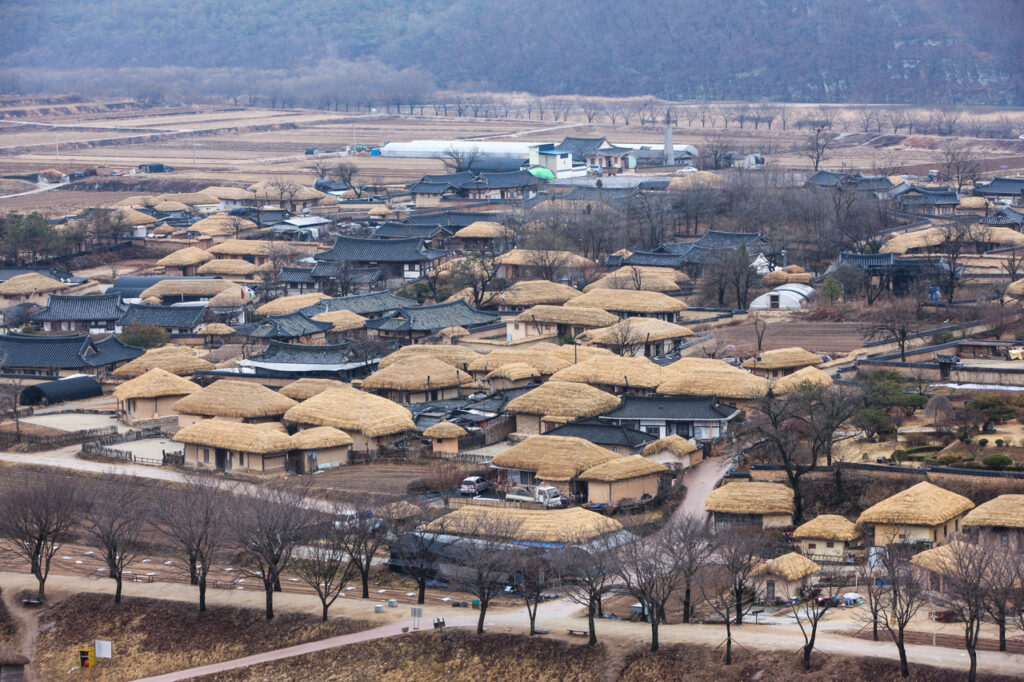

Andong Hahoe Folk Village (안동 하회마을) is one of Korea’s best-preserved historic villages. The Nakdonggang River curves around the village in a broad S-shape, creating the setting that gave Hahoe its name. Inside the village, tiled-roof houses, thatched homes, old trees, and family residences preserve a way of life shaped by the Joseon Dynasty and the Pungsan Ryu clan.
Hahoe is more than a collection of old buildings. It is a living village, still inhabited by descendants of the families who have called it home for generations. Visitors can walk its lanes, learn about the history of the Ryu clan, see Hahoe masks, and watch the village’s famous mask dance drama. Across the river, Buyongdae Cliff offers a wide view of the village and the river landscape that surrounds it.
Quick Facts About Andong Hahoe Folk Village
- Korean name: 안동 하회마을 (Andong Hahoe Folk Village)
- Location: Pungcheon-myeon, Andong, Gyeongsangbuk-do
- UNESCO status: Part of the UNESCO World Heritage property “Historic Villages of Korea: Hahoe and Yangdong”
- Best known for: Traditional clan houses, Hahoe masks, and Hahoe Byeolsingut Tallori
- Admission: ₩5,000 for adults, ₩2,500 for teenagers, and ₩1,500 for children
- Best experiences: Walking the village lanes, watching the mask dance, visiting the Hahoe Mask Museum, and viewing the village from Buyongdae
- Getting around: Local buses connect Andong with Hahoe; a shuttle serves visitors between the village entrance area and the village
A Village Shaped by the River
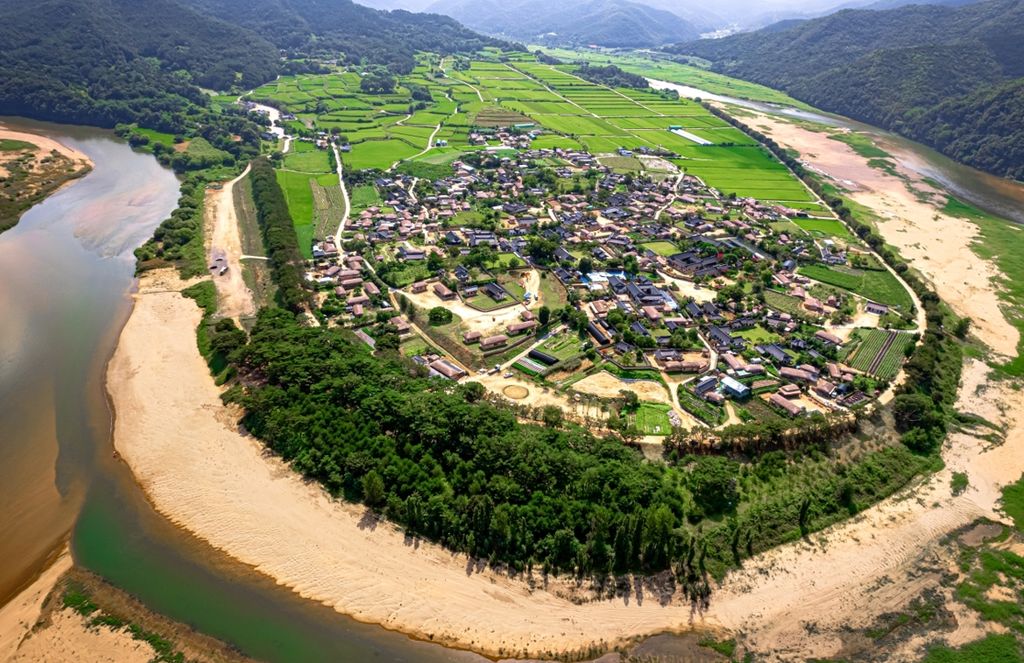
Photo: Korea Tourism Organization
The name Hahoe means “the river turns around.” The Nakdonggang River bends around the village, while mountains, forest, fields, and sandy riverbanks form its wider landscape. From the ground, the village feels tucked into a quiet curve of the river. From Buyongdae Cliff, the pattern becomes easier to see: the river wraps around the houses and fields below.
Hahoe is known as a traditional clan village. For more than 600 years, it has been closely associated with the Pungsan Ryu clan. The village includes large tiled-roof houses that belonged to prominent families, smaller homes, pavilions, shrines, and thatched-roof houses. Together, these buildings offer a rare look at how family, social status, Confucian values, and village life shaped a historic settlement.
Unlike an open-air museum where every building is preserved only for visitors, Hahoe remains a lived-in community. Some houses are historic residences, some are cultural sites, and some remain private homes. As you explore, follow marked paths and respect residents’ privacy.
A Brief History of Hahoe
Hahoe developed as a settlement of the Pungsan Ryu clan during the late Goryeo and early Joseon periods. It became home to generations of scholars and government officials, including Ryu Un-ryong and his younger brother Ryu Seong-ryong.
Ryu Seong-ryong served as a high-ranking official during the Japanese invasions of Korea in the late 16th century. He later wrote Jingbirok, an important record of the war. His former residence, Chunghyodang, remains one of Hahoe’s best-known historic houses.
The village’s layout and buildings reflect the Confucian culture of the Joseon Dynasty. The homes, study spaces, family shrines, and village paths reveal the relationships between family, learning, ritual, and community. The landscape was also part of village life: the river, fields, pine forest, and nearby cliff shaped both daily routines and the way people understood their surroundings.
In 2010, Hahoe and Yangdong were inscribed together on the UNESCO World Heritage List as the “Historic Villages of Korea: Hahoe and Yangdong.” UNESCO recognizes them as well-preserved examples of historic clan villages that reflect the architecture, social structure, and Confucian culture of Joseon Korea.
What to See and Do in Hahoe Folk Village
Walk the Village Lanes
The best way to understand Hahoe is to walk through it. Paths curve between tiled-roof and thatched-roof houses, old walls, courtyards, and trees. Look at how the different homes sit within the village rather than focusing only on individual buildings. The layout shows how a community developed over generations.
The central area around the old zelkova tree, often called Samsindang, is one of the village’s important gathering places. The tree is associated with local village customs and traditions. Take time to look at the paths branching away from it and notice how the lanes connect family residences and shared spaces.
Some areas are residential and may not be open to visitors. Follow signs, avoid entering private courtyards, and keep your voice low.
See Yangjindang and Chunghyodang
Yangjindang (양진당) is associated with the head family of the Pungsan Ryu clan and the scholar Ryu Un-ryong. Its arrangement of buildings and courtyard gives visitors a sense of the scale and structure of a prominent traditional family residence.
Chunghyodang (충효당) is connected with Ryu Seong-ryong, the scholar and government official who lived during the Japanese invasions of Korea. The house and its surrounding grounds help connect Hahoe’s architecture to the people who shaped its history.
These historic houses are important cultural properties, and access to interiors can be limited. Check current signs and visitor guidance before entering.
Visit the Hahoe Mask Museum
The Hahoe Mask Museum (하회세계탈박물관) is near the village entrance. Its collection includes Hahoe masks as well as traditional masks from Korea and other parts of the world. The exhibits introduce how masks are made and used in performances, rituals, and folk traditions. The museum also offers activities such as trying on masks and taking photos in themed areas. It is a good first stop before visiting the village because it introduces the characters and humor you may later recognize in the mask dance drama. The museum is generally open from 9:30 a.m. to 6:00 p.m. and admission is free. Hours and special programs may change, so check its official visitor information before your trip.
Watch Hahoe Byeolsingut Tallori
Hahoe Byeolsingut Tallori (하회별신굿탈놀이) is the village’s traditional mask dance drama. The performance uses distinctive wooden Hahoe masks and characters representing different parts of society. Through music, movement, and satire, the drama pokes fun at social hierarchy and human behavior.
The performance has roots in village rituals asking for peace and prosperity. It is now presented at the Hahoe Village Mask Dance Theater, where visitors can see the masks come to life through dance, music, and dialogue. The performance is recognized as part of Korea’s mask dance drama tradition inscribed on UNESCO’s Intangible Cultural Heritage list in 2022.
As of 2026, regular performances are generally scheduled Tuesday through Sunday, often at 2:00 p.m., with Mondays closed. The schedule can vary by season and event, so confirm the current performance time before planning your visit.
Walk Through Mansongjeong Pine Forest
Mansongjeong (만송정) is a pine grove near the river at the edge of the village. The tall trees form a quiet green space between the houses and the Nakdonggang River. The area offers a different mood from the busier lanes and provides views toward Buyongdae Cliff on the opposite bank.
It is a lovely place to pause, especially on a warm day. Stay on paths and respect any areas marked for conservation or limited access.
See Hahoe from Buyongdae Cliff
Buyongdae Cliff (부용대) rises across the river from the village and is one of the best places to take in the wider landscape. From the top, you can see the curve of the Nakdonggang River, the rooflines of Hahoe, the pine forest, and the fields around the village.
The viewpoint involves a short uphill walk. If you are considering crossing the river by boat, check locally whether a ferry is operating that day; service can depend on conditions and schedule. You can also reach the viewpoint by road. Follow local safety guidance and do not approach the cliff edge.
Look for Seasonal Performances and Events
In addition to the regular mask dance, Hahoe hosts traditional events such as Seonyu Julbulnori (선유줄불놀이), a river fireworks performance held on selected dates. Ropes are stretched across the river landscape, and glowing sparks descend toward the water, creating a dramatic scene beneath Buyongdae.
This is a limited event rather than a nightly performance. Tickets and shuttle arrangements may be required, and dates can vary each year. Check the official Andong or event website well in advance if you hope to attend.
Experiences to Try in Hahoe
Learn About the Masks and Try One On
After exploring the Hahoe Mask Museum, try on a mask or take a photo in one of the museum’s activity areas. The exaggerated features of Hahoe masks make more sense once you know the characters and their roles in the dance drama. You may also find traditional mask souvenirs and local craft items near the village entrance. Look for pieces made by local artisans if you want a keepsake connected to Hahoe’s living traditions.
Join a Cultural Program
Depending on the season, Hahoe and nearby cultural sites may offer programs related to traditional customs, family mottos, folk arts, and Confucian culture. Some are short visitor activities, while others are designed for groups or require advance reservations.
Stay Overnight in a Traditional House
A hanok stay gives you the chance to experience the village after many day visitors have left. The quieter evening and early morning hours offer a different sense of the village, when the lanes and courtyards return to their everyday rhythm.
Hahoe has traditional guesthouses, but facilities differ from one property to another. Some historic houses are not open for general viewing, and a guesthouse stay does not necessarily include access to every building. Review accommodation details and house rules before booking.
Taste Andong’s Local Food
Andong is known for hearty local dishes. Andong jjimdak is chicken braised with vegetables and glass noodles in a savory soy-based sauce. Andong salted mackerel, called gan godeungeo, is another regional specialty, often served grilled with rice and side dishes.
You may also see heotjesabap, a meal inspired by foods traditionally prepared for ancestral rites, and Andong soju, a local distilled spirit. Restaurants in and around the village offer a chance to sample these dishes after a walk through the historic lanes.
How to Visit Andong Hahoe Folk Village
Hahoe Folk Village is at 186-8 Jeonseo-ro, Pungcheon-myeon, Andong-si, Gyeongsangbuk-do. The village is open year-round, but its visitor hours change by season.
Opening Hours and Admission
As of October 2026, the general visiting schedule is:
- April–September: 9:00 a.m.–6:00 p.m. Last admission is at 5:30 p.m.
- October–March: 9:00 a.m.–5:00 p.m. Last admission is at 4:30 p.m.
Admission is ₩5,000 for adults, ₩2,500 for teenagers, and ₩1,500 for children. Group rates are available for groups of 30 or more. Parking is free.
The village is large enough to take several hours to explore, especially if you plan to visit the museum, watch the mask dance, and walk to scenic areas. Check performance times and the last shuttle or bus before you enter.
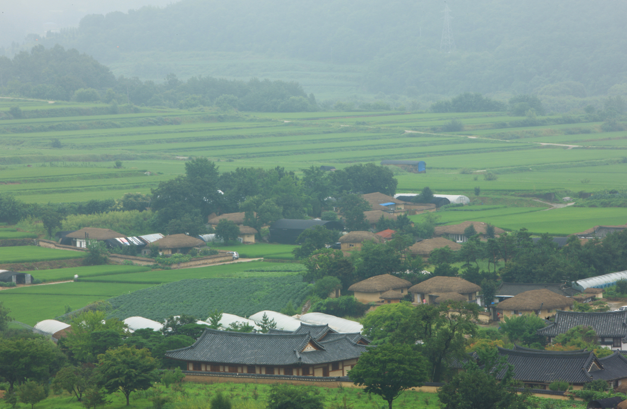
Photo: Korea Tourism Organization
Getting There
Local buses connect central Andong and Andong Bus Terminal with Hahoe. Routes and timetables can change, so check the Andong Bus Information System or a local map app on the day of your visit. Bus routes serving Hahoe include services such as 210 and other Andong routes depending on the departure point.
Visitors who arrive by car can park near the village entrance. A shuttle bus operates between the entrance or parking area and the village; follow the current signs and staff instructions when you arrive.
Hahoe is some distance from central Andong, and attractions in the area are spread out. If you want to combine the village with Buyongdae or Byeongsan Seowon, allow extra time for travel between sites.
Tips for Planning Your Visit
- Arrive early. A morning visit gives you more time to explore the lanes before the busiest hours.
- Check the mask dance schedule. Performance days and times may vary by season and special events.
- Visit the mask museum. It provides useful context for the masks and characters used in Hahoe’s folk performance.
- Wear comfortable shoes. The village has long walking routes and uneven paths.
- Respect residents. Hahoe is a living village. Do not enter private homes or photograph people without permission.
- Plan transportation both ways. Bus frequency may be limited compared with urban routes, so confirm the last departure before you visit.
- Check event dates early. Seonyu Julbulnori takes place only on selected dates and may require advance tickets.
- Allow time for Buyongdae. The cliff viewpoint is across the river and requires separate travel planning.
- Bring cash or check payment options. Small local shops and experiences may have different payment methods.
- Stay overnight if you can. A hanok stay gives you more time to enjoy the quieter parts of Andong and Hahoe.
Why Hahoe Folk Village Is Worth Visiting
Hahoe is a rare place where architecture, family history, landscape, and performance traditions come together. Its houses and lanes preserve the story of a historic clan village, while the Nakdonggang River and Buyongdae explain why the village developed where it did.
The experience is richer when you do more than walk through the central streets. Learn the stories behind the houses, see the Hahoe masks, watch the mask dance, and take in the village from the river landscape. With time to explore and care for the people who still live there, Hahoe offers a vivid connection to Korea’s history and living traditions.
Official Visitor Resources
- Andong Hahoe Folk Village — Korea Tourism Organization
- Historic Villages of Korea: Hahoe and Yangdong — UNESCO World Heritage Centre
- Hahoe Mask Museum — Korea Tourism Organization
- Hahoe Byeolsingut Tallori — Korea Tourism Organization
- Andong Public Transportation and Travel Information — VISITKOREA
- Andong Tourism — Official Website
Read Next
Hanok Villages in Korea: Bukchon, Jeonju, and Hahoe
Korean Floor Heating (Ondol): How It Works in Korean Homes –
Bukchon Hanok Village (북촌한옥마을)
Jeonju Hanok Village (전주한옥마을)