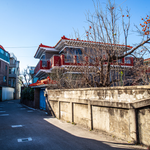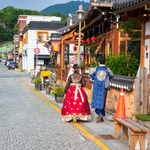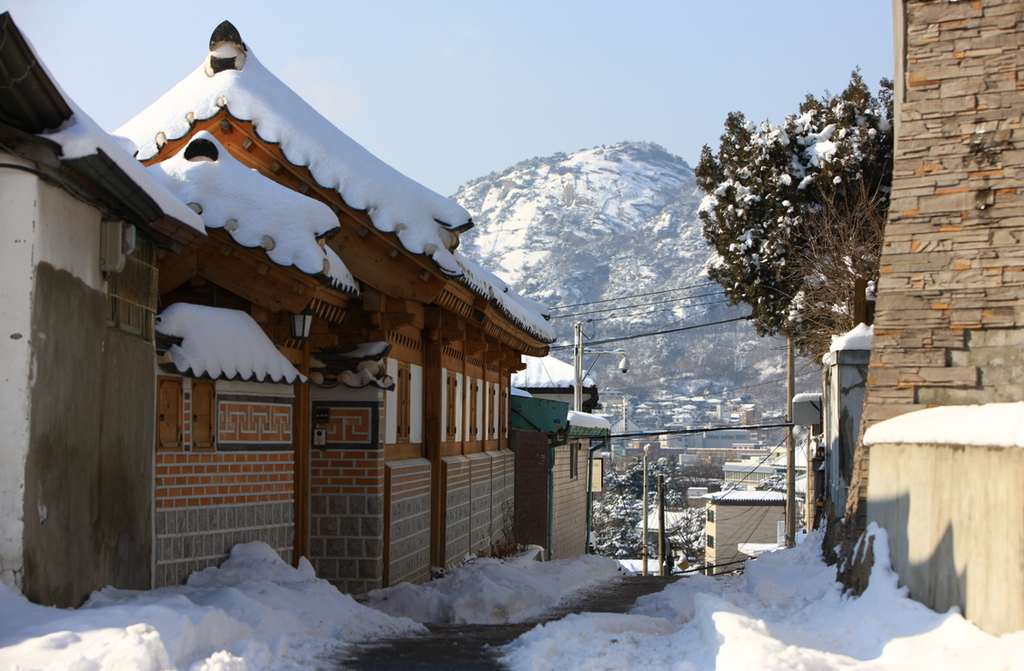

Bukchon Hanok Village (북촌한옥마을) is one of Seoul’s best-known traditional neighborhoods. Set between Gyeongbokgung Palace and Changdeokgung Palace, it is made up of narrow lanes, sloping streets, and clusters of hanok (한옥), traditional Korean houses. Many visitors come for the tiled roofs and hillside views, but Bukchon is also a living neighborhood where people work and make their homes.
The village offers more than a look at traditional Korean architecture. Its streets reveal how a historic residential area changed as Seoul grew, while its hanok show how traditional design adapted to modern city life. A visit is most rewarding when you take your time, explore beyond the busiest photo spots, and remember that the streets are also part of residents’ everyday lives.
Quick Facts About Bukchon Hanok Village
- Korean name: 북촌한옥마을 (Bukchon Hanok Village)
- Location: Jongno-gu, Seoul
- Nearest subway station: Anguk Station on Line 3
- Admission: Free
- Best known for: Hanok alleys, hillside views, and the Bukchon Eight Views
- Visitor hours: The designated Red Zone on Bukchon-ro 11-gil is open to tourists from 10:00 a.m. to 5:00 p.m.
- UNESCO status: Bukchon is not a UNESCO World Heritage Site
A Neighborhood Between Two Palaces
The name Bukchon means “northern village.” The neighborhood lies north of Jongno and Cheonggyecheon Stream, between Gyeongbokgung Palace and Changdeokgung Palace. Its hills, old roads, and nearby palaces have shaped the area for centuries.
Bukchon is often described as a hanok village, but it is not a purpose-built attraction. It is a collection of residential neighborhoods, including parts of Gahoe-dong, Gyedong, Samcheong-dong, and Wonseo-dong. The streets are lined with homes, cultural spaces, small shops, and cafés. Some hanok are open to visitors as public facilities or businesses, while others remain private homes.
The village’s layout makes the walk feel different from one street to the next. A narrow alley may lead uphill toward a view of tiled rooftops, while another opens toward a courtyard, workshop, or quiet lane. On clear days, the higher streets offer views across central Seoul.
A Brief History of Bukchon
Bukchon has long been a residential area near the center of Seoul. During the Joseon Dynasty, prominent families and government officials lived in the neighborhood because it was close to the royal palaces and government offices.
The hanok seen in Bukchon today do not all date back to the Joseon period. Many of the dense clusters of homes in areas such as Gahoe-dong and Gyedong took shape around the 1930s, as Seoul expanded and large plots of land were divided into smaller housing lots. Builders adapted hanok features to the needs of a growing city, creating a more compact urban house.
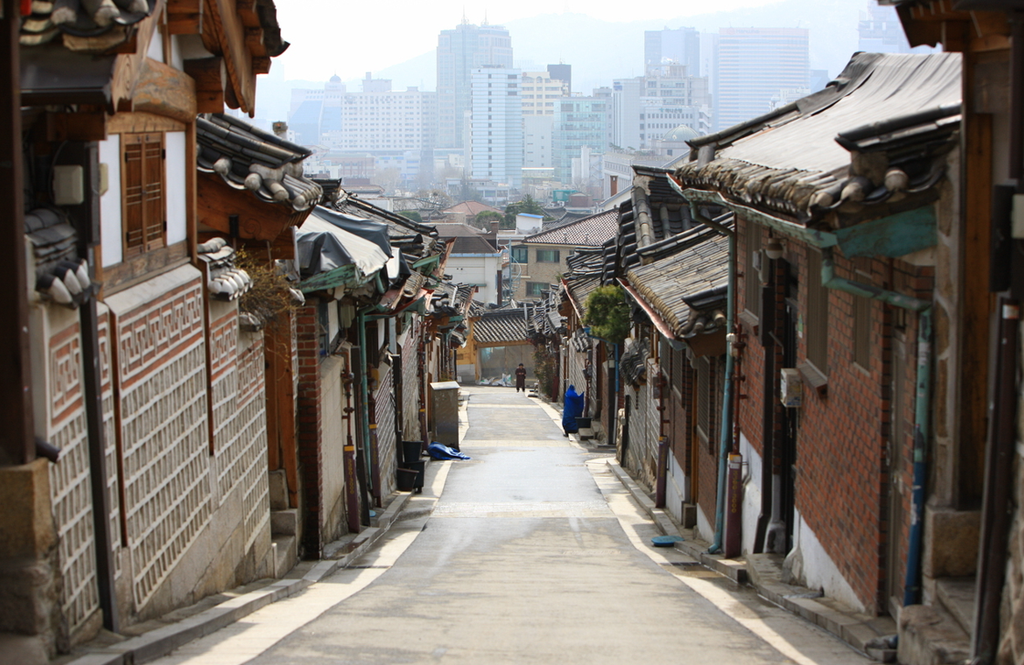
These homes retained familiar elements such as tiled roofs, wooden structures, courtyards, and ondol floor heating. At the same time, they used newer materials and layouts suited to denser streets and changing household needs. Bukchon’s architecture therefore shows how the traditional hanok form adapted to modern urban life.
The neighborhood changed again as Seoul developed in the decades that followed. Some hanok were lost, while others were preserved or renovated. Today, Bukchon brings together historic houses, modern homes, cultural facilities, galleries, and local businesses.
What to See and Do in Bukchon Hanok Village
Walk the Bukchon Eight Views
The Bukchon Eight Views are a series of scenic spots that show different sides of the neighborhood. Along the route, you can see views toward Changdeokgung Palace, the lanes of Wonseo-dong, the uphill and downhill alleys of Gahoe-dong, and the stone stairway in Samcheong-dong.
You do not need to visit every viewpoint to enjoy the walk. The full course takes around two hours and forty minutes and includes steep sections, so choose a shorter route if you prefer a more relaxed stroll. Seoul’s official Bukchon guide includes maps and alternative walking courses.
See the Hanok Rooftops from Gahoe-dong
The Gahoe-dong lanes are among Bukchon’s most memorable spots. From the hillside streets, rows of tiled roofs overlap against the city in the distance. The view changes as you walk, so pause at a few points instead of trying to take every photo from one place. These are public streets in a residential neighborhood. Keep your voice low, avoid blocking doorways, and take photos from the street without looking into homes.
Visit Baek In-je House
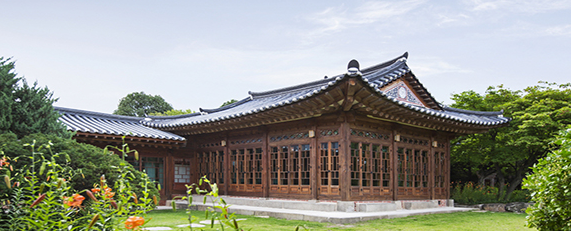
Baek In-je House (백인제가옥) is a historic modern hanok with a main house, garden, and separate buildings. Its architecture offers a closer look at how hanok design adapted during the early 20th century. The grounds are free to visit, but access to the interiors may require a guided tour reservation. Check the current schedule before you go. The house is closed on Mondays and January 1.
Explore a Public Hanok or Craft Workshop
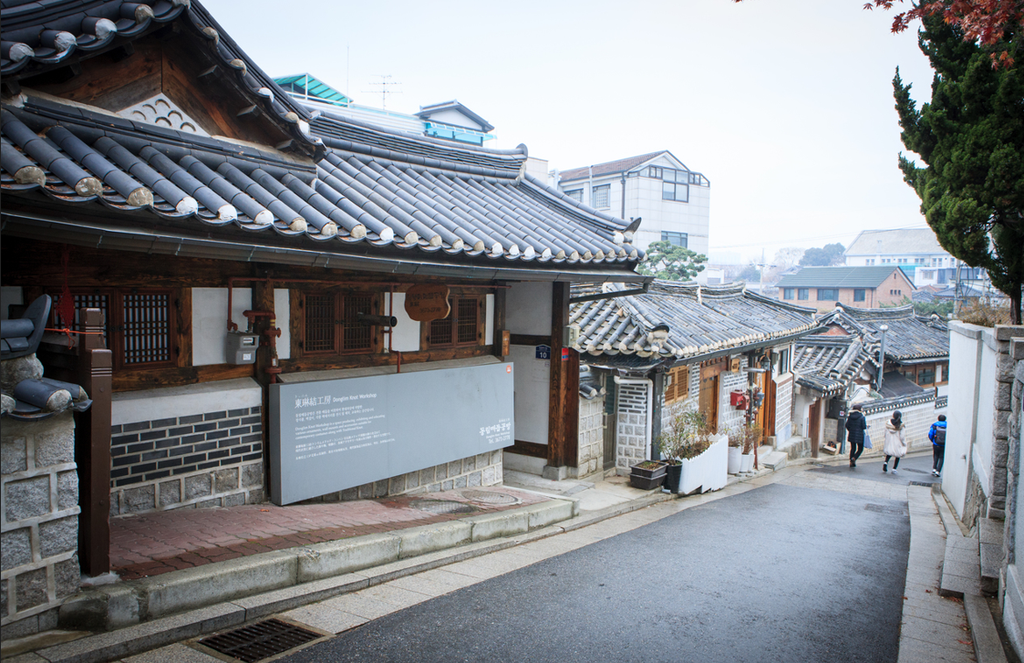
Photo: Korea Tourism Organization
Bukchon is more than a place to admire from the street. Public facilities such as the Bukchon Traditional Culture Center introduce hanok and local history, while nearby workshops offer a chance to see traditional crafts being made. Programs and opening hours vary, so check ahead if you have a particular workshop or activity in mind. When you visit a workshop or cultural space, take time to notice the details of the building as well as the activity: wooden frames, courtyards, rooflines, and the way rooms open toward one another.
Take a Slow Walk Along Gyedong-gil (경동길)
Gyedong-gil is a good place to slow down between the steeper lanes. Follow the street past small shops, cafés, and cultural spaces, then take one of the side alleys when you see a public route or visitor facility. This gives you a feel for Bukchon as a neighborhood, not just a collection of photo spots.
A Simple Route for a First Visit
Start near Anguk (안국) Station and walk toward Gyedong-gil. Visit Baek In-je House if it is open, then continue toward the Bukchon Eight Views and the Gahoe-dong alleys. Finish near Samcheong-dong, where you can rest at a café or explore a nearby gallery. The route includes hills and stairs, so wear comfortable shoes and allow time for breaks. If you enter the designated Red Zone along Bukchon-ro 11-gil, plan your visit between 10:00 a.m. and 5:00 p.m.
How to Visit Bukchon Hanok Village
Bukchon Hanok Village is centered around Gyedong-gil in Jongno-gu, Seoul. The nearest subway station is Anguk Station on Line 3. From Exit 2, it is about a 10-minute walk to the village area, though the route and walking time vary depending on which streets you plan to visit.
There is no general admission ticket for walking through the neighborhood. Some museums, cultural facilities, workshops, and private businesses may have their own hours or fees.
One important rule applies to the designated Red Zone along Bukchon-ro 11-gil. Tourists may visit this area from 10:00 a.m. to 5:00 p.m. Visiting during restricted hours, from 5:00 p.m. to 10:00 a.m., can result in a ₩100,000 fine. This restriction applies to the designated zone, not every street in Bukchon. Check the posted signs and current Seoul Metropolitan Government guidance before your visit.
Chartered buses are also prohibited on designated roads in the Bukchon area. If you are traveling with a group, plan to arrive on foot or by public transportation rather than by chartered bus.
Bukchon’s streets are steep in places, and some lanes have stairs or uneven surfaces. Comfortable walking shoes are helpful. Parking is limited, so public transportation is the easiest way to reach the neighborhood.
Tips for Planning Your Visit
- Go during the permitted visiting hours. The Red Zone on Bukchon-ro 11-gil is open to tourists from 10:00 a.m. to 5:00 p.m.
- Treat the area as a residential neighborhood. Keep noise down, do not peer into homes, and avoid lingering in front of private gates.
- Plan a route that matches your pace. Bukchon has hills and stairs. Seoul’s official guide provides suggested walks, including shorter routes.
- Use public transportation. Anguk Station is the closest subway station, and parking is limited.
- Check individual facility hours. Cultural centers, museums, shops, and workshops set their own schedules.
- Be considerate when taking photos. Avoid photographing residents or looking through windows and gates.
Why Bukchon Hanok Village Is Worth Visiting
Bukchon offers a glimpse of how Seoul’s history and daily life meet in the same streets. Its hanok, lanes, and hillside views tell the story of a traditional residential area that changed as the city grew.
Walk slowly, follow a route that suits you, and leave time to notice the details: the curve of a roof, a stone wall along a slope, or a glimpse of the city between the houses. With a little consideration for the people who live there, Bukchon can be a memorable way to experience Seoul’s architectural heritage.
Read Next
Hanok Villages in Korea: Bukchon, Jeonju, and Hahoe
Korean Floor Heating (Ondol): How It Works in Korean Homes –
Jeonju Hanok Village (전주한옥마을)