
What Is Bap?
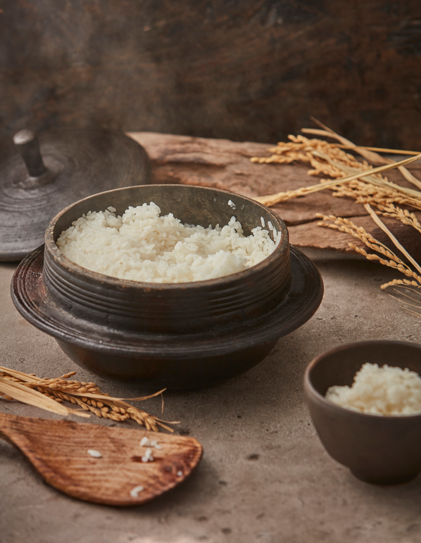
Bap (밥) means cooked rice in Korean. In everyday language, it can also mean a meal. When Koreans say, “Let’s eat bap,” they usually mean, “Let’s have a meal,” not “Let’s eat only rice.”
The most common type of bap in Korea is short-grain rice. It is usually soft, slightly sticky, and mildly chewy. Unlike long-grain rice, which separates more easily, Korean rice holds together well and fits the structure of Korean meals, where rice is eaten together with soup, stew, kimchi, meat, fish, and side dishes.
Rice at the Korean Table
In a typical Korean meal, each person is served an individual bowl of rice. While many dishes on the table are shared, rice is usually personal. Soup, stew, kimchi, grilled fish, meat dishes, and side dishes may be placed in the center, but each diner has their own bowl of bap.
This is one of the basic patterns of Korean dining. Rice is not simply one dish among many. It is the base of the meal. Many Korean foods are strongly seasoned, so rice plays an important balancing role. Spicy, salty, fermented, or rich flavors are usually eaten with rice rather than by themselves.
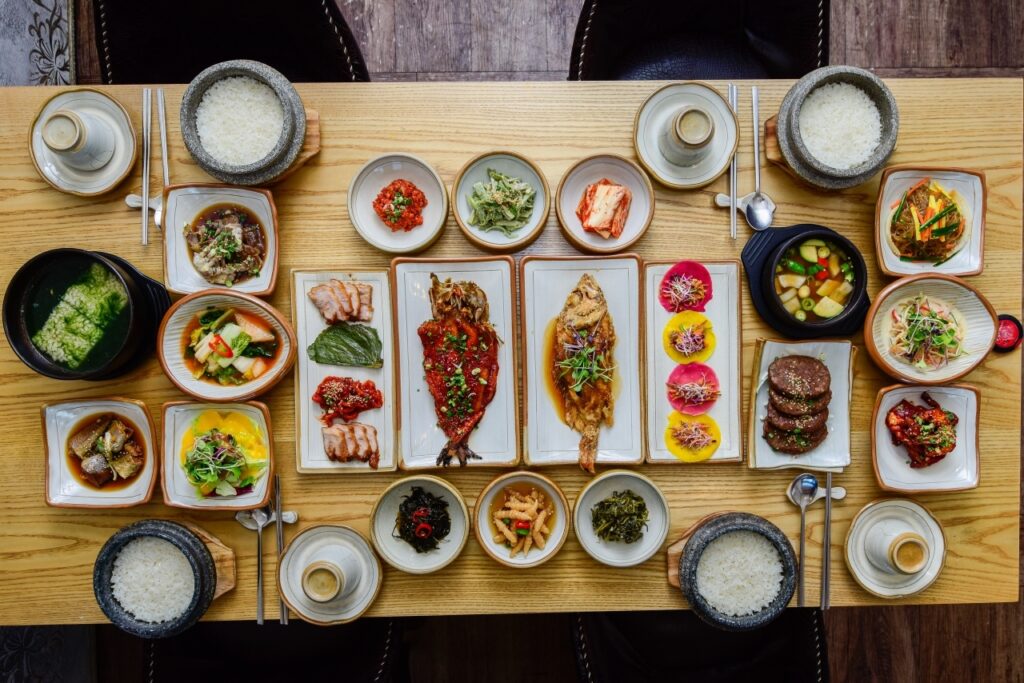
Photo: Korea Tourism Organization
Common Types of Bap
Ssalbap (쌀밥)
Ssalbap is plain white rice. It is the most common everyday rice in Korea and is widely served in homes, restaurants, and lunch sets.
For a long time, white rice carried a special meaning in Korean history. Rice was highly valued, but not everyone could afford to eat plain white rice every day. Because of this, white rice was often associated with abundance and a better standard of living. Today it is ordinary and easy to find, but historically it was not equally available to everyone.
For foreign visitors, ssalbap may look simple, but it is one of the clearest examples of how Korean meals are built. Korean rice is meant to support the other dishes on the table. Its mild taste and soft texture make it the natural center of the meal.
Japgokbap (잡곡밥)
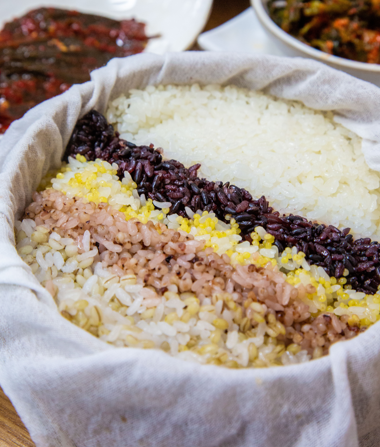
Japgokbap is mixed-grain rice. It is usually made by mixing white rice with other grains such as barley, millet, sorghum, black rice, and beans. The exact mixture varies by household, restaurant, and personal preference.
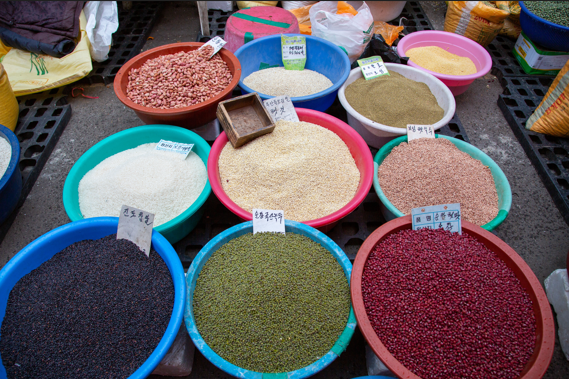
Historically, mixed-grain rice was common because plain white rice was not always available in large amounts. Sources from Korean food history note that mixed grains were a major part of everyday life, especially for ordinary people.
Today, the meaning of japgokbap has changed. In the past, it was often connected to necessity, but now many people choose it for health reasons. It is commonly seen as more nutritious than plain white rice, and many Koreans prefer it for its nuttier flavor, firmer texture, and more varied appearance
For foreigners, japgokbap is interesting because it shows how the same food can change meaning over time. What once reflected limited access to white rice is now often seen as a healthy and intentional choice.
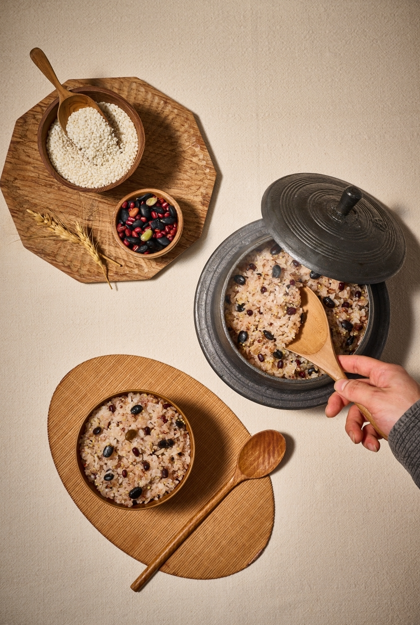
Photo: Korea Tourism Organization
Heukmibap (흑미밥)
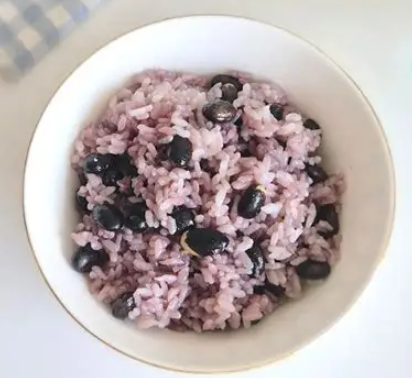
Heukmibap is rice cooked with black rice. It is usually not made with only black rice. Instead, a smaller amount of black rice is mixed with white rice, and the finished rice often turns purple.
Its most noticeable feature is its color. For many foreign visitors, purple rice can be surprising at first, but it is very familiar in Korea. Heukmibap is popular because it keeps the soft texture of everyday rice while adding a deeper flavor and a more colorful appearance.
In restaurants, purple rice is often used to make an ordinary meal look a little more special without changing the overall role of rice in the meal.
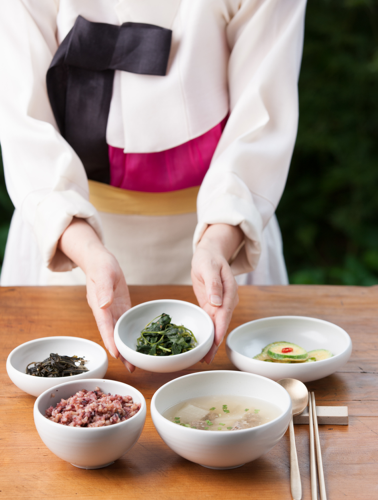
Photo: Korea Tourism Organization
Boribap (보리밥)
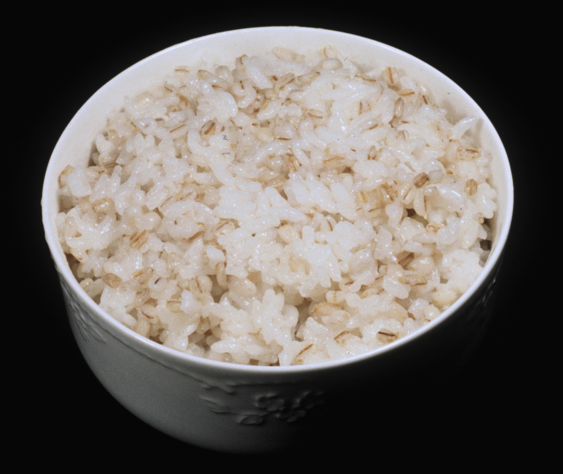
Boribap is rice cooked with barley. It has a chewier texture than plain white rice and a mild nutty flavor. Historically, barley was important because it was easier to grow than rice and became a major staple for ordinary people over a long period of Korean history. The Korean encyclopedia entry on barley rice notes that many common people relied on barley from ancient times through the Joseon period and even into the Japanese colonial period.
Because of that history, boribap carries both practical and cultural meaning. In the past, it was often linked to hardship and necessity. Today, however, it is valued for its health benefits.
Kongbap (콩밥)
Kongbap is rice cooked with beans. The beans add texture, color, and a slightly earthy taste. It is a familiar style of rice in Korean home cooking and school meals.
Kongbap also has an interesting meaning in Korean language. In colloquial Korean, the expression “to eat kongbap” means to go to prison or to serve time in jail. Dictionary sources explain that this expression comes from the older association between prison meals and bean rice.
Rice Dishes in Korea
Gukbap (국밥)
Gukbap is a dish that combines rice and soup in one meal. The word comes from guk (soup) and bap (rice). In some versions, the rice is already placed in the soup. In others, it is served separately and added by the diner.
Gukbap is popular because it is simple, filling, and practical. It is especially common as an everyday meal and is often associated with local food cultures and regional specialties. Well-known examples include pork soup with rice, bean sprout soup with rice, and blood sausage soup with rice.
For foreign visitors, gukbap is useful to know because it shows a different side of Korean food. Instead of many small shared dishes, gukbap is often a complete one-bowl meal, making it easy to understand and easy to order.
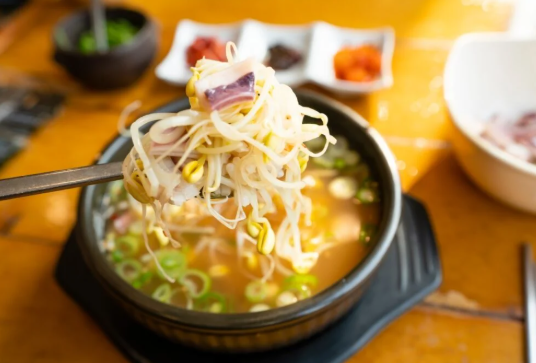
Photo: Korea Tourism Organization
Bibimbap (비빔밥)
Bibimbap means mixed rice. It is made by placing vegetables, meat, egg, and usually gochujang on top of rice, then mixing everything together before eating.
Bibimbap is one of the best-known Korean dishes internationally. One reason is that it is visually clear: even first-time visitors can immediately see that it is rice with colorful toppings. Another reason is that it presents several important features of Korean food at once—rice, vegetables, seasoning, and balance in a single bowl.
For foreigners, bibimbap is often one of the easiest Korean dishes to approach. At the same time, it also shows an important principle of Korean meals: rice works as the base that brings different ingredients together.
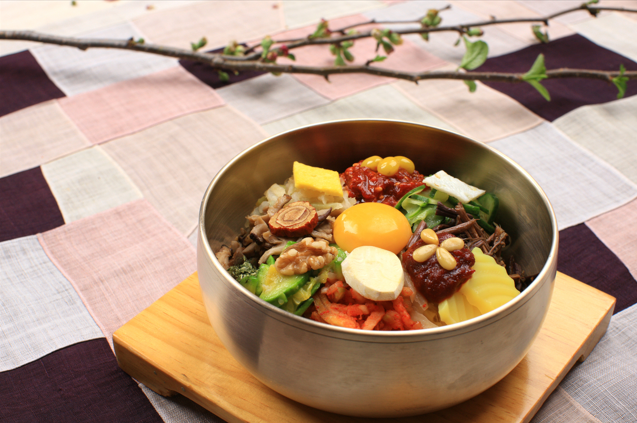
Photo: Korea Tourism Organization
Bokkeumbap (볶음밥)
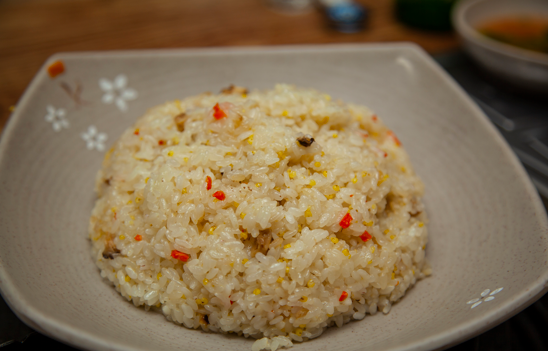
Bokkeumbap means fried rice. It is made by stir-frying cooked rice with ingredients such as kimchi, vegetables, egg, meat, or seafood.
It is one of the most practical rice dishes in Korean cooking because it can be made in many ways. Leftover rice is often used for bokkeumbap because firmer rice is better for stir-frying. This makes it common in both homes and restaurants.
For foreign readers, bokkeumbap is interesting because it shows how flexible bap can be. Rice in Korea is not only served in a bowl next to other dishes. It can also become a full dish on its own through frying, seasoning, and mixing.
How Rice Is Served in Korea
Dolsotbap (돌솥밥)
Dolsotbap is rice served in a hot stone pot. The stone pot keeps the rice hot for a long time and creates a crispy scorched layer at the bottom.
One of the most interesting parts of dolsotbap is what happens after the main rice is eaten. In many restaurants, hot water is poured into the stone pot so that the scorched rice at the bottom softens. This can then be eaten or drunk at the end of the meal.
For foreigners, dolsotbap is memorable because it adds texture and process to the meal. It is not just rice served hot. It offers soft rice, crispy rice, and then a final toasted rice finish from the same pot.
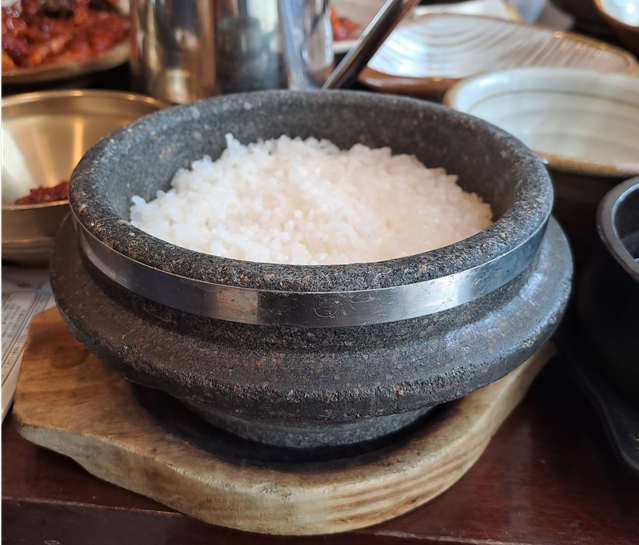
Be careful, as dolsotbap is very hot.
Gonggibap (공기밥)
Gonggibap means an individual bowl of plain rice served at a restaurant. It is the standard bowl of rice that accompanies many Korean meals.
This term is useful for visitors because it appears often in restaurants and on menus. In some places, gonggibap is included automatically. In others, especially barbecue restaurants, it may need to be ordered separately.
Gonggibap also shows something about Korean meal structure. Rice is basic and expected, but it is still treated as an individual serving. Even when many dishes are shared, each person’s bowl of rice remains separate.
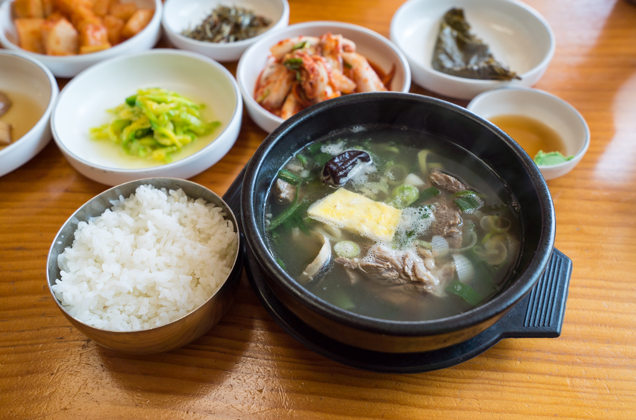
Photo: Korea Tourism Organization
Rice in Modern Korean Life
Rice remains an important part of daily life in Korea, but the way it is prepared has changed over time.
Electric rice cookers are now one of the most common kitchen appliances in Korean homes. They make it easy to cook rice and keep it warm for long periods. Many models also have settings for mixed-grain rice, porridge, and other functions. This reflects how central rice still is in the Korean kitchen. Source
Instant microwaveable rice is also very common in modern Korea. It is sold in convenience stores, supermarkets, and online shops, and it is especially popular among single-person households, students, and office workers. Although cooking methods have become more convenient, rice continues to serve the same role: it remains one of the most basic parts of everyday Korean meals.