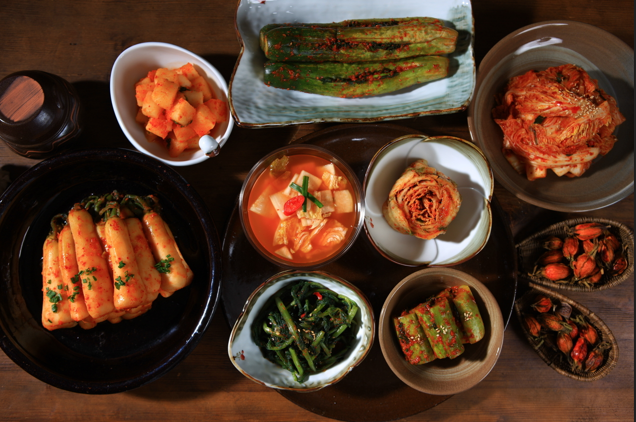

Many people picture kimchi as spicy red cabbage. That is the best-known kind, but kimchi is much more than one dish. It is a family of Korean vegetable dishes with different ingredients, seasonings, textures, and levels of fermentation. Kimchi can be crisp and fresh, deeply sour, mild and white, or served in a refreshing broth. It is eaten as a side dish, used in cooking, and connected to Korea’s seasons and family traditions.
Quick Facts About Kimchi
- Korean name: 김치 (kimchi)
- What it is: A family of Korean vegetable dishes, many of them fermented
- Best-known variety: Napa cabbage kimchi, or baechu kimchi (배추김치)
- Other ingredients: Radish, cucumber, young radish greens, mustard leaves, and green onions
- How it is eaten: As a side dish or as an ingredient in stews, fried rice, pancakes, and other dishes
What Is Kimchi?
Kimchi is made by salting vegetables and seasoning them. Many varieties are then left to ferment. Napa cabbage is the most internationally recognized ingredient, but kimchi can also be made with radish, cucumber, young radish greens, mustard leaves, and green onions.
Seasonings often include Korean red pepper flakes called gochugaru (고춧가루), garlic, ginger, and green onion. Some recipes use fish sauce or salted shrimp for a savory flavor, while others use plant-based seasonings. Ingredients and methods vary by household, region, and season.
Kimchi is not one fixed recipe. It is a broad tradition of preparing vegetables, with each variety offering a different taste and texture.
How Kimchi’s Flavor Changes
Kimchi changes as it ferments. Freshly made kimchi is crisp and bright, with the fresh flavor of its vegetables and seasoning. As it ripens, it develops a deeper, tangier taste. Very sour kimchi may be less appealing as a side dish for some people, but it is excellent for cooking.
Koreans often choose kimchi based on how ripe it is:
- Fresh kimchi: Crisp and lively, often eaten soon after it is made
- Ripe kimchi: More developed in flavor and commonly served with everyday meals
- Sour, aged kimchi: Often used in stews, fried rice, pancakes, and braised dishes
A single batch can taste quite different over time. That changing flavor is part of what makes kimchi useful in Korean cooking.
Popular Types of Kimchi
Baechu Kimchi (배추김치): Napa Cabbage Kimchi
Baechu kimchi is the layered cabbage kimchi most people picture when they hear the word kimchi. Napa cabbage is salted, then seasoned with a mixture that often includes gochugaru, garlic, ginger, green onion, and sometimes fish sauce or salted shrimp. Some recipes also use ingredients such as radish, pear, onion, or rice paste.
Baechu kimchi can be eaten at different stages. When it is freshly made, the cabbage is crisp and the seasoning tastes bright. As it ferments, the flavor becomes more rounded and sour. Well-aged baechu kimchi is especially popular for cooking dishes such as kimchi jjigae (김치찌개), kimchi fried rice, kimchi pancakes, and braised kimchi.
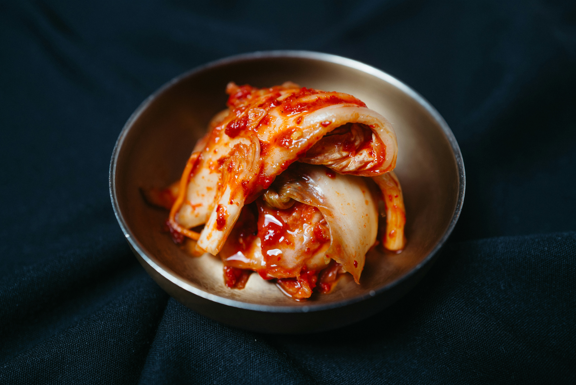
Photo: Korea Tourism Organization
Kkakdugi (깍두기): Cubed Radish Kimchi
Kkakdugi is made from Korean radish cut into cubes. The radish is salted, mixed with red seasoning, and left to ferment. It has a firm, crunchy texture and a flavor that can be spicy, slightly sweet, and tangy as it ripens.
Kkakdugi is especially well known as a side dish for Korean soups. It is commonly served with seolleongtang (설렁탕), galbitang (갈비탕), gomtang (곰탕), and kalguksu (칼국수). These broths are warm and often mild, while kkakdugi adds crunch and acidity. A bite of radish kimchi between spoonfuls of soup and rice refreshes the palate.
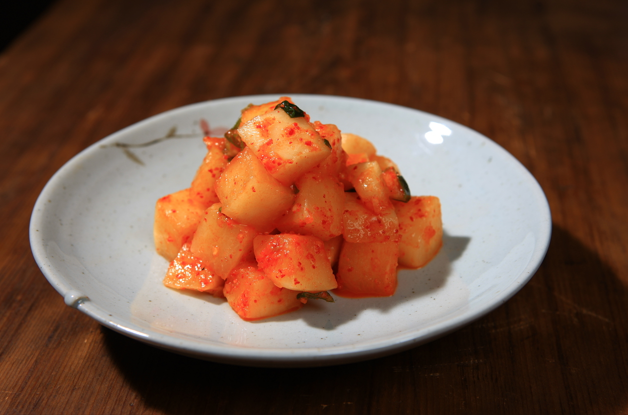
Photo: Korea Tourism Organization
Baek Kimchi (백김치): White Kimchi
Baek kimchi means “white kimchi.” It is made with little or no red pepper powder, so it is mild rather than spicy. Napa cabbage and radish are common ingredients, and some versions include pear, chestnut, jujube, pine nuts, garlic, or ginger.
Baek kimchi often has a light, refreshing broth and a gentle sweetness from the vegetables and fruit. It is a good option for people who want to try kimchi without much chili heat. Its flavor is subtle, but it is not bland: the clean broth and mild fermentation give it its own character. It also pairs well with spicy or strongly seasoned foods.
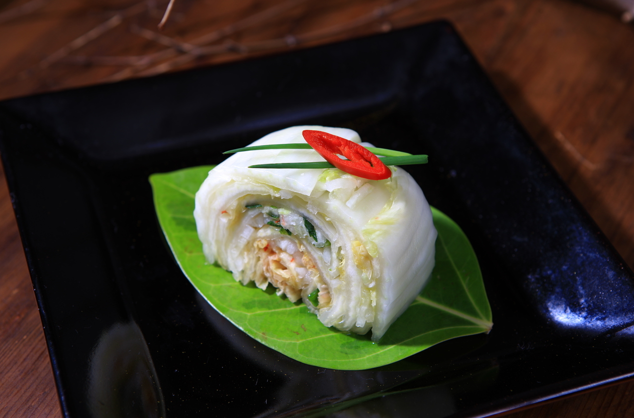
Photo: Korea Tourism Organization
Dongchimi (동치미): Winter Radish Water Kimchi
Dongchimi is a water kimchi made mainly with radish. It is usually prepared in a light brine with ingredients such as garlic, ginger, and green onion. Unlike red cabbage kimchi, it has little or no thick red seasoning. The clear or pale broth is an important part of the dish.
Dongchimi is especially associated with winter. As it ferments, the broth develops a clean, lightly sour flavor, while the radish stays crisp. The broth can be served as part of the side dish or used in cold noodle dishes, where its refreshing taste gives the noodles a bright, tangy flavor.
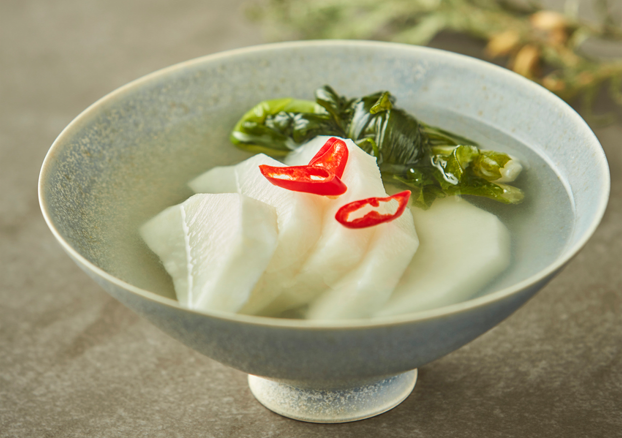
Photo: Korea Tourism Organization
Nabak Kimchi (나막김치): Light Sliced Vegetable Water Kimchi
Nabak kimchi is made with thin, square slices of radish and napa cabbage in a light broth. A small amount of red pepper can give the broth a delicate pink color, but nabak kimchi is generally mild and refreshing rather than heavily seasoned.
It is often served with special meals or when a lighter side dish is welcome. The thin slices make it easy to eat alongside rice and other dishes, while the broth adds moisture and a gentle tang. Like dongchimi, nabak kimchi shows that kimchi does not have to be thick, fiery, or dominated by chili.
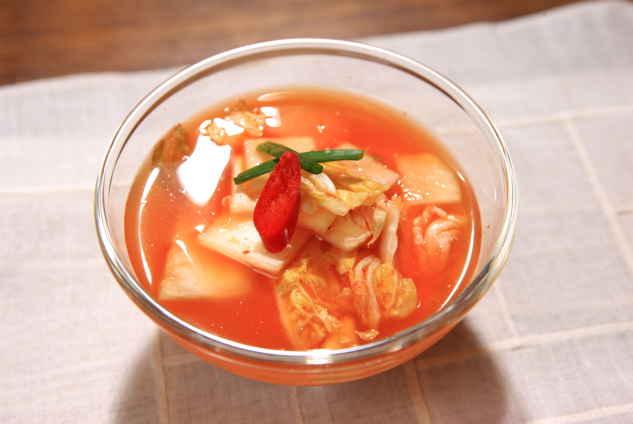
Photo: Korea Tourism Organization
Oi Sobagi (오이소박이): Stuffed Cucumber Kimchi
Oi sobagi is cucumber kimchi made by cutting cucumbers open and filling them with seasoned ingredients. The filling often includes garlic, chives, gochugaru, and fish sauce, though recipes vary. The cucumber stays juicy and crisp, while the seasoning adds a savory, spicy center.
Oi sobagi is popular in warmer weather because it tastes fresh and cooling. It is often enjoyed while the cucumbers are still crunchy, rather than after a long fermentation. It pairs well with rice, noodles, and grilled meat. Compared with cabbage kimchi, it has a lighter, juicier texture and a fresher flavor.
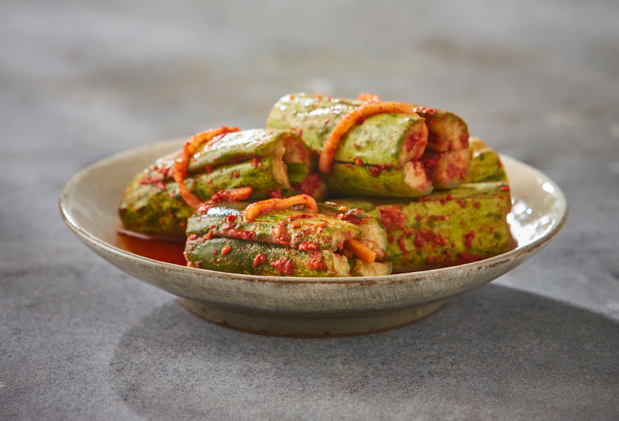
Photo: Korea Tourism Organization
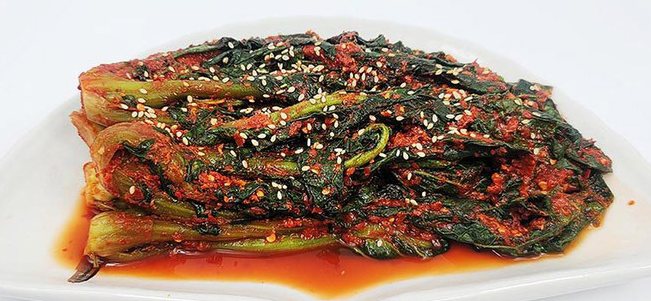
Yeolmu Kimchi (열무김치): Young Radish Greens Kimchi
Yeolmu kimchi is made with the tender leaves and stems of young radishes. It is especially popular in spring and summer. It can be seasoned in a red style or made with more broth for a lighter version.
The young greens give yeolmu kimchi a fresh, slightly grassy flavor, while fermentation adds a gentle tang. It is often eaten with cold noodles or mixed into rice with seasonings such as gochujang (고추장) and sesame oil. Its lightness makes it a welcome change from the more robust cabbage kimchi often associated with winter.
Chonggak Kimchi (총각김치): Young Whole Radish Kimchi
Chonggak kimchi is made with small Korean radishes and their greens. The radishes are usually kept whole or mostly whole, so they are eaten together with the stems and leaves. This gives the kimchi a different texture from kkakdugi, where the radish is cut into cubes.
Chonggak kimchi is crunchy, bold, and full of radish flavor. It becomes more sour and complex as it ferments, and it goes well with rice, noodles, soups, and everyday home meals. The name is traditionally associated with the tied hairstyle worn by unmarried men in old Korea, which the radish greens were said to resemble.
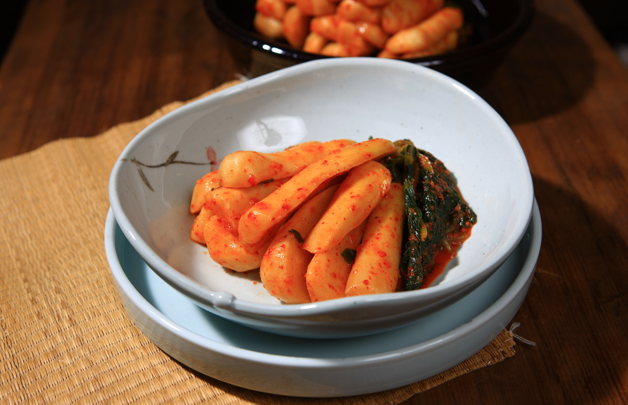
Photo: Korea Tourism Organization
Pa Kimchi (파김치): Green Onion Kimchi
Pa kimchi also shows how Korean food uses strong flavors with confidence. Garlic, onion, fermented seafood, chili, and acidity all meet in one bite. For people who love deep savory food, pa kimchi can become a favorite. Pa kimchi is made with Korean green onions, often the thinner variety called jjokpa (쪽파). The green onions are coated in seasoning and fermented. Because green onions already have a strong, aromatic flavor, pa kimchi tastes bold and savory. It pairs especially well with rice, grilled meat, and rich foods. Its strong flavor can stand out when eaten by itself, but it adds a lively contrast to a meal. Pa kimchi is a good choice for people who enjoy pungent, deeply seasoned foods.
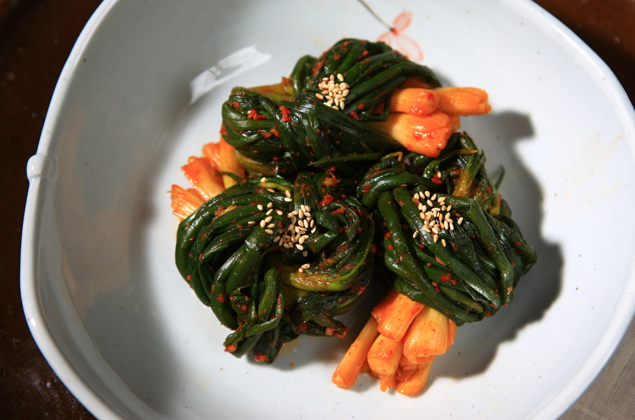
Photo: Korea Tourism Organization
Gat Kimchi (갓김치): Mustard Leaf Kimchi
Gat kimchi is made with mustard leaves, which have a peppery, slightly bitter flavor. It is especially associated with the Jeolla region, including Dolsan gat kimchi (돌산갓김치) from Yeosu (여수). Fermentation deepens the leaves’ sharp flavor, and the seasoning often gives the kimchi a bold, spicy taste. Gat kimchi may be an intense first taste for people new to Korean kimchi, but its strong, leafy flavor is part of its appeal. It pairs well with rice, pork, and hearty stews. The variety also illustrates how kimchi reflects local ingredients and regional tastes.
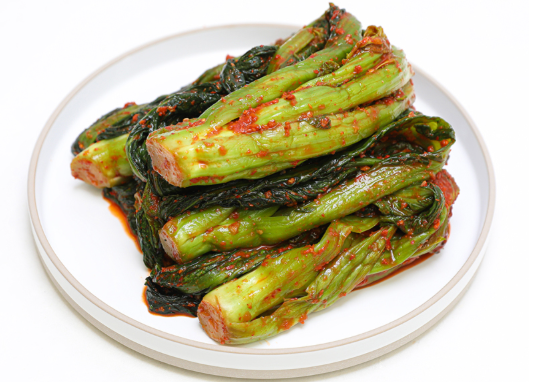
Photo: Korea Tourism Organization
Geotjeori (겉절이): Fresh Kimchi
Geotjeori is fresh, lightly seasoned kimchi that is usually eaten soon after it is prepared. Cabbage is a common base, but other vegetables can also be used. Since it is not left to ferment for long, geotjeori stays crisp and tastes bright, with little of the deep sourness found in aged kimchi.
It is often served with kalguksu, bossam (보쌈), or a simple rice meal. Geotjeori is a good introduction for people who prefer fresh vegetables and lively seasoning over a strong fermented flavor. It is not unfinished kimchi; it is a style meant to be enjoyed fresh.
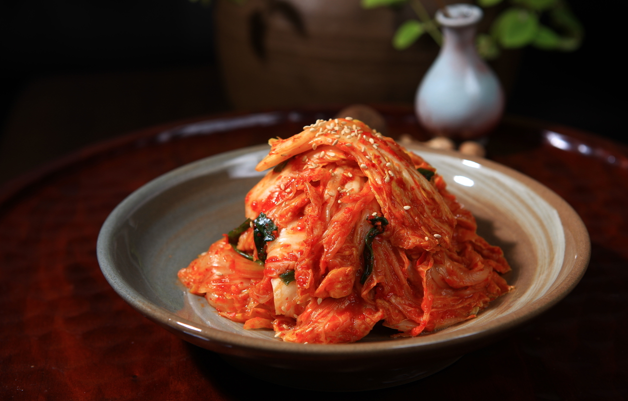
Photo: Korea Tourism Organization
Kimchi by Region and Season
Kimchi varies from one region and household to another. Local vegetables, seafood, climate, and personal taste can all influence the ingredients and seasoning. Coastal areas may use more seafood-based ingredients, while inland regions may make greater use of local vegetables and mountain greens. These are broad tendencies, not rules—family recipes can differ even within the same area.
The seasons also shape which kinds of kimchi are made and eaten. Winter is closely associated with kimjang (김장), the seasonal preparation of large amounts of kimchi to eat through the colder months. Spring and summer bring lighter options such as yeolmu kimchi and cucumber kimchi.
UNESCO inscribed Kimjang, the practice of making and sharing kimchi, on its Representative List of the Intangible Cultural Heritage of Humanity in 2013. The tradition reflects not only how kimchi is prepared for winter, but also how families and communities share the work and food.
How Koreans Eat Kimchi
Kimchi is commonly served as banchan (반찬), a side dish eaten with rice and other foods. Different varieties complement different meals:
- Baechu kimchi adds a spicy, tangy bite to rice and everyday meals.
- Kkakdugi adds crunch and acidity to soups such as galbitang and seolleongtang.
- Water kimchi provides a refreshing contrast to noodles and rich foods.
- Fresh geotjeori pairs well with kalguksu and boiled pork.
Kimchi is also cooked in many dishes, including kimchi jjigae (김치찌개), kimchi fried rice (김치볶음밥), kimchi jeon (김치전), kimchi mandu (김치만두), and kimchi jjim (김치찜). Sour, aged kimchi is especially useful in these recipes because heat brings out its deep, savory flavor.
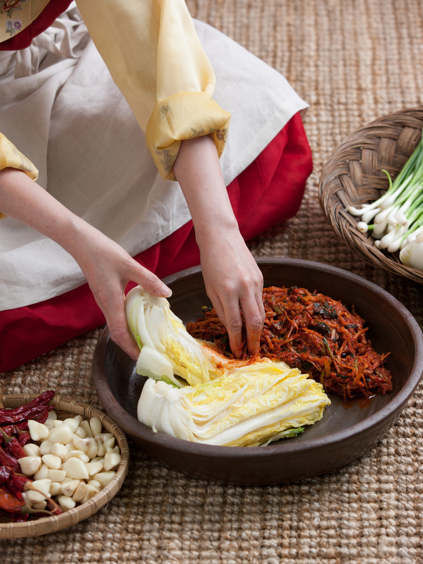
Photo: Korea Tourism Organization
Kimchi in Modern Korea
Many Koreans still make kimchi at home, but plenty of people buy it at supermarkets, markets, or online. Some families make kimjang together; others order kimchi or buy smaller packages that suit a smaller household. Kimchi refrigerators also make it easier to store different varieties at home.
Kimchi has become popular around the world, too. It appears in international supermarkets and restaurants, and cooks add it to dishes such as burgers, tacos, noodles, and grilled cheese. These newer combinations show how food changes as it travels, while kimchi remains rooted in Korean food culture.
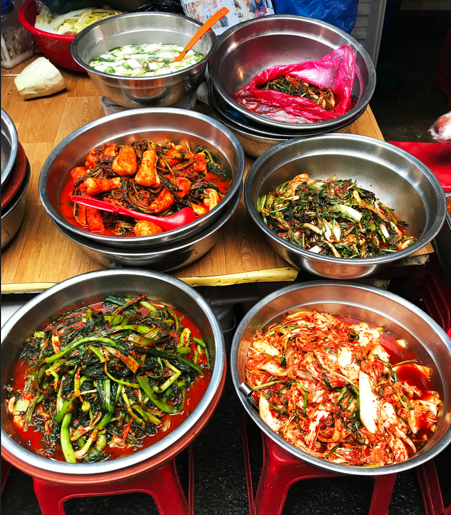
Photo: Korea Tourism Organization
Tips for Trying Kimchi
- Start with baechu kimchi to try the most familiar variety.
- Choose baek kimchi if you want a milder option with little or no chili heat.
- Try geotjeori if you prefer crisp, fresh vegetables to sour fermented flavors.
- Have kkakdugi with soup to see how its crunchy, tangy taste complements broth.
- Try sour kimchi in a cooked dish such as kimchi jjigae or fried rice.
Kimchi can be spicy or mild, crisp or soft, fresh or deeply sour. Trying several varieties is a delicious way to discover how much variety fits under one familiar name.
Read Next
Kimjang (김장): Korea’s Kimchi-Making Season
Kimchi Jjigae (김치찌개): Korea’s Comforting Kimchi Stew –

Pingback: Kimjang (김장): Korea’s Kimchi-Making Season - Kimbap Life
Pingback: Bap (밥): Different Types of Korean Rice -
Pingback: Types of Banchan (반찬): A Detailed Side Dish Guide -