Kimchi: The Most Important Banchan
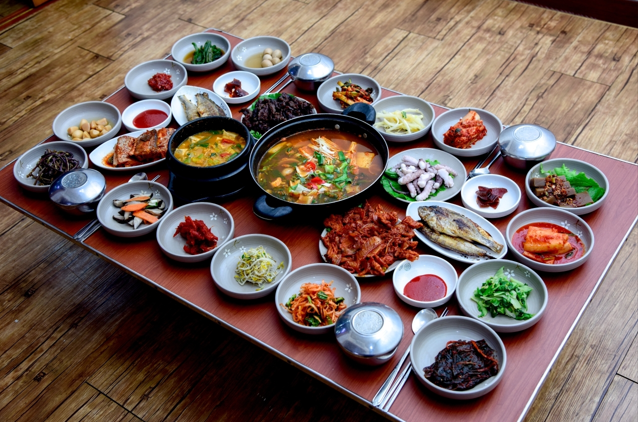
Kimchi is the most important banchan in Korea.
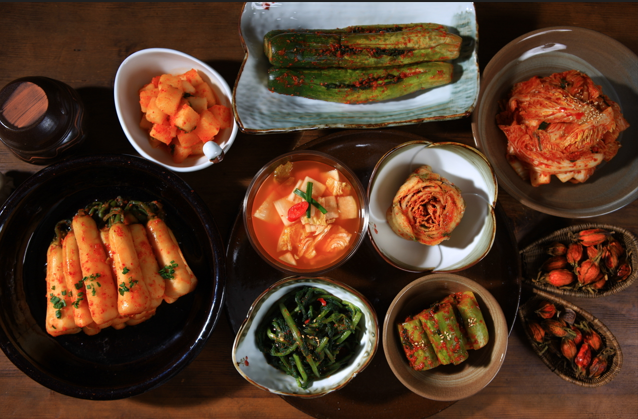
There are many kinds of kimchi, but the most famous is napa cabbage kimchi, called baechu kimchi. There is also cubed radish kimchi, cucumber kimchi, young radish kimchi, green onion kimchi, mustard leaf kimchi, water kimchi, and many more.
Kimchi is fermented, spicy, sour, salty, and deeply Korean. It appears with almost every kind of Korean meal.
Rice and kimchi can be enough for a simple meal.
Kimchi with grilled pork is perfect.
Kimchi with ramyeon is essential.
Kimchi with seolleongtang gives sharpness to mild beef soup.
Kimchi with tteokguk gives contrast to the soft rice cake soup.
Kimchi with fried rice becomes the main ingredient.
Kimchi with tofu becomes dubu kimchi.
Kimchi with pancake batter becomes kimchi jeon.
Kimchi with stew becomes kimchi jjigae.
As banchan, kimchi gives the table life. It provides acidity, fermentation, spice, and appetite. Without kimchi, many Korean meals feel incomplete.
Kimchi is not just a side dish.
It is the foundation of Korean banchan culture.
Kkakdugi: Cubed Radish Kimchi
Kkakdugi is cubed radish kimchi.
It is especially important with Korean soups such as seolleongtang, galbitang, gomtang, haejangguk, and other broth-based meals. The soup may be mild and warm, while kkakdugi is crunchy, spicy, sour, and refreshing.
This contrast is perfect.
A spoonful of hot beef soup.
A bite of crunchy kkakdugi.
A spoonful of rice.
More broth.
That rhythm is one of Korea’s great soup meal pleasures.
Many soup restaurants are judged by their kkakdugi. A restaurant can have good broth, but if the kkakdugi is weak, the meal feels less satisfying. In some seolleongtang or galbitang restaurants, people remember the radish kimchi as much as the soup itself.
Kkakdugi shows that banchan are not secondary.
Sometimes the side dish determines whether the whole meal feels complete.
Namul: Seasoned Vegetables
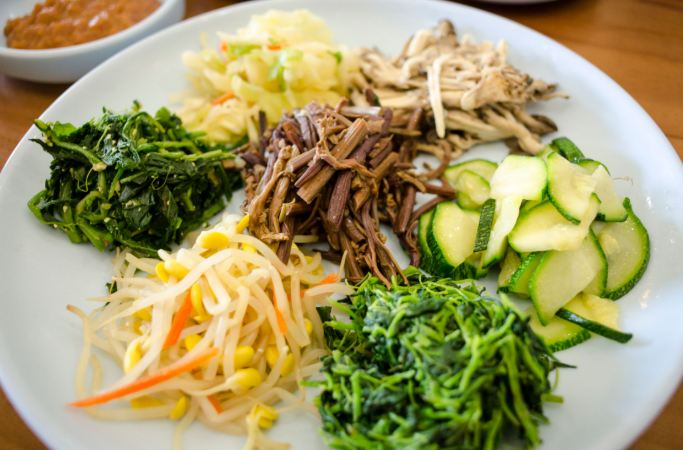
Namul are seasoned vegetables or greens.
They are one of the most important groups of Korean banchan. Namul can be made from spinach, bean sprouts, fernbrake, radish, zucchini, mushrooms, eggplant, mountain vegetables, and many other ingredients.
Namul is usually seasoned with ingredients such as sesame oil, garlic, salt, soy sauce, green onion, sesame seeds, or sometimes chili powder.
Common namul include:
Sigeumchi namul, seasoned spinach
Kongnamul muchim, seasoned soybean sprouts
Gosari namul, seasoned fernbrake
Doraji namul, seasoned bellflower root
Hobak namul, seasoned zucchini
Gaji namul, seasoned eggplant
Mushroom namul
Radish namul
Namul is important because it brings vegetables to the table in a Korean way. These vegetables are not usually served plain. They are lightly cooked, seasoned, and balanced with sesame aroma and garlic.
Namul can be mild, earthy, nutty, fresh, or slightly bitter.
It adds color, texture, and healthful feeling to the meal.
It also appears in bibimbap. Many bibimbap toppings are forms of namul. This means banchan can become part of another dish. What appears as a side dish on one table may become a main bowl ingredient in another meal.
This flexibility is typical of Korean cooking.
Kongnamul Muchim: Seasoned Soybean Sprouts
Kongnamul muchim is one of the most common Korean banchan.
It is made from soybean sprouts, usually seasoned with garlic, sesame oil, salt, green onion, and sesame seeds. Some versions include gochugaru for a slightly spicy flavor.
The taste is mild, nutty, fresh, and clean.
The texture is crunchy.
This banchan is simple, affordable, and everywhere. It appears in home meals, restaurants, lunch boxes, cafeterias, and bibimbap. It also pairs well with spicy soups and rich meat dishes because it refreshes the mouth.
Kongnamul muchim may not look exciting, but it is one of the quiet foundations of Korean everyday food.
It is the kind of banchan that makes the meal feel familiar.
Sigeumchi Namul: Seasoned Spinach
Sigeumchi namul is seasoned spinach.
The spinach is usually blanched, squeezed gently, and seasoned with sesame oil, garlic, salt or soy sauce, and sesame seeds. It is soft, green, mild, and fragrant.
This banchan is common in home cooking and lunch boxes. It also appears in bibimbap. Its role on the table is gentle. It does not shout. It gives a soft green balance to stronger dishes.
Sigeumchi namul pairs well with rice, meat, soups, and spicy foods.
It is one of the best examples of how Korean cooking can make a simple vegetable meaningful with only a few ingredients.
Spinach.
Garlic.
Sesame oil.
Salt.
Sesame seeds.
That is enough.
Gosari Namul: Seasoned Fernbrake
Gosari namul is made from fernbrake.
Gosari has an earthy flavor and slightly chewy texture. It is used in bibimbap, yukgaejang, holiday dishes, and banchan. For foreign visitors, it may be unfamiliar because it does not taste like common leafy greens.
Gosari has a deeper, more forest-like taste.
It can feel rustic and traditional.
As banchan, gosari namul adds earthiness to the table. It is especially important in ceremonial and holiday foods. It also helps show that Korean vegetable culture includes not only common garden vegetables, but also mountain vegetables, roots, stems, and wild greens.
Gosari is not flashy.
But it carries an old Korean flavor.
Muchim: Seasoned Fresh or Lightly Cooked Dishes
Muchim means seasoned or mixed dish.
Many banchan use this method. Ingredients are mixed with seasonings such as gochugaru, garlic, soy sauce, vinegar, sugar, sesame oil, and sesame seeds. Some muchim dishes are fresh and crisp. Others use blanched vegetables or cooked ingredients.
Examples include:
Oi muchim, spicy cucumber salad
Kongnamul muchim, seasoned soybean sprouts
Doraji muchim, seasoned bellflower root
Musaengchae, seasoned shredded radish
Chwinamul muchim, seasoned wild greens
Ojingeo muchim, spicy seasoned squid
Muchim dishes often give freshness and sharpness to the table. They can be spicy, sour, sweet, salty, or nutty depending on the seasoning.
Oi muchim, for example, is crunchy and refreshing. It works well with meat and rice.
Musaengchae is crisp and lightly spicy, often eaten with rice or in bibimbap.
Muchim shows how Koreans use seasoning to transform simple ingredients into lively side dishes.
Oi Muchim: Spicy Cucumber Salad
Oi muchim is seasoned cucumber salad.
It is usually made with sliced cucumbers, gochugaru, garlic, vinegar, sugar, salt or soy sauce, sesame oil, and sesame seeds. It is crunchy, spicy, sour, slightly sweet, and refreshing.
This banchan is especially good with rich or heavy foods because cucumber gives freshness. It also works well in summer because of its cool texture.
Oi muchim is usually eaten fresh. It is different from cucumber kimchi, which may be fermented or stored longer. Oi muchim is quicker, brighter, and more immediate.
It is one of the banchan that makes a meal feel lively.
Crunch matters.
Freshness matters.
Oi muchim gives both.
Bokkeum: Stir-Fried Banchan
Bokkeum means stir-fried dish.
Many common Korean banchan are made by stir-frying ingredients with oil, soy sauce, garlic, sugar, chili, or sesame oil.
Common bokkeum banchan include:
Eomuk bokkeum, stir-fried fish cake
Myeolchi bokkeum, stir-fried anchovies
Ojingeochae bokkeum, stir-fried dried squid strips
Beoseot bokkeum, stir-fried mushrooms
Hobak bokkeum, stir-fried zucchini
Gamja bokkeum, stir-fried potatoes
Bokkeum banchan often taste savory, sweet, salty, and slightly oily. They pair extremely well with rice. Many are good for lunch boxes because they keep well and do not need to be eaten immediately after cooking.
Stir-fried banchan are practical.
They can be made in advance.
They can be stored.
They can make plain rice delicious.
This is why bokkeum dishes are so common in Korean homes.
Eomuk Bokkeum: Stir-Fried Fish Cake
Eomuk bokkeum is stir-fried fish cake.
It is one of the most popular everyday banchan in Korea. Fish cake is sliced and stir-fried with soy sauce, garlic, onion, carrot, green onion, sugar or syrup, and sometimes chili peppers.
The taste is sweet-savory, soft, chewy, and familiar.
Children often like eomuk bokkeum because it is easy to eat and not always spicy. Adults also enjoy it because it goes well with rice and lunch boxes.
There are mild versions and spicy versions. The mild version is soy sauce-based. The spicy version may include gochugaru or gochujang.
Eomuk bokkeum is not fancy, but it is deeply familiar.
It tastes like home meals, school lunches, and everyday Korean tables.
Myeolchi Bokkeum: Stir-Fried Anchovies
Myeolchi bokkeum is stir-fried dried anchovies.
Small dried anchovies are stir-fried with soy sauce, sugar or syrup, garlic, oil, and sometimes nuts or chili peppers. The result is salty, sweet, crunchy, and savory.
This banchan is a true rice companion.
Because it is strongly flavored, a small amount can make a lot of rice taste good. It is common in lunch boxes because it keeps well and does not become watery.
Some versions include almonds, peanuts, walnuts, or pumpkin seeds. These add crunch and richness.
Some versions are mild and sweet.
Others are spicy.
For many Koreans, myeolchi bokkeum is one of the most familiar banchan from childhood.
It may be small, but its flavor is strong.
Ojingeochae Bokkeum: Spicy Dried Squid Strips
Ojingeochae bokkeum is a banchan made from dried squid strips.
The squid strips are often stir-fried or mixed with a spicy-sweet sauce made from gochujang, gochugaru, garlic, sugar, syrup, and sesame oil. The texture is chewy, and the flavor is spicy, sweet, and savory.
This banchan is especially good with rice. It is also common in lunch boxes and home refrigerators because it keeps well.
The chewiness is important. Korean food culture often enjoys chewy textures, and dried squid banchan is a perfect example.
It is not soft comfort.
It is chewy comfort.
A small amount can make rice very satisfying.
Jorim: Braised Banchan
Jorim means braised or simmered in sauce.
Jorim banchan are cooked in a seasoned liquid until the ingredients absorb flavor. The sauce is often soy sauce-based and may include garlic, sugar, chili, sesame oil, or broth.
Common jorim banchan include:
Dubu jorim, braised tofu
Gamja jorim, braised potatoes
Jangjorim, soy-braised beef or eggs
Yeongeun jorim, braised lotus root
Ueong jorim, braised burdock root
Saengseon jorim, braised fish
Jorim dishes are usually strongly flavored, which makes them excellent with rice. They can be salty, sweet, savory, spicy, or glossy depending on the recipe.
Jorim is one of the best examples of the Korean idea of bap doduk, or rice thief. A good braised side dish can make people eat much more rice than planned.
The sauce clings to rice.
That is the point.
Dubu Jorim: Braised Tofu
Dubu jorim is braised tofu.
Slices of tofu are pan-fried or simmered in a sauce made with soy sauce, garlic, gochugaru, green onion, sesame oil, and sometimes sugar. The tofu absorbs the sauce and becomes savory, spicy, and satisfying.
Dubu jorim is important because tofu itself is mild. With seasoning, it becomes a strong rice side dish.
The texture can be soft or slightly firm depending on the tofu and cooking method. The sauce is often the best part. A spoonful of rice with a piece of dubu jorim and sauce is deeply comforting.
Dubu jorim is common at home, in banchan shops, and in lunch boxes.
It is simple, affordable, and full of flavor.
Gamja Jorim: Braised Potatoes
Gamja jorim is braised potatoes.
Potatoes are cut into pieces and simmered in a soy sauce-based seasoning with sugar, garlic, and sometimes chili peppers. The potatoes become soft, glossy, sweet-savory, and comforting.
This banchan is especially popular with children because it is mildly sweet and easy to eat. It also works well in lunch boxes.
Gamja jorim is different from gamjajeon. Gamjajeon is a potato pancake. Gamja jorim is braised potato banchan.
The flavor is simple but satisfying.
Potato.
Soy sauce.
Sweetness.
Garlic.
Rice.
That combination works beautifully.
Jangjorim: Soy-Braised Beef and Eggs
Jangjorim is soy-braised beef, often served with eggs or quail eggs.
Beef is simmered until tender, then braised in soy sauce with garlic, chili peppers, and sometimes other aromatics. The beef may be shredded into thin strands. Eggs or quail eggs absorb the soy sauce flavor.
Jangjorim is salty and savory, so it is eaten in small amounts with rice. It keeps well, making it useful for home refrigerators and lunch boxes.
This is one of the strongest rice-thief banchan.
A small piece of jangjorim can flavor a whole spoonful of rice.
It is also practical because it can be made in advance and served over several meals.
Jangjorim shows the storage wisdom of Korean home cooking.
One prepared dish can support many bowls of rice.
Jangajji: Pickled Banchan
Jangajji are pickled vegetables.
They can be pickled in soy sauce, vinegar, salt, doenjang, gochujang, or other preserving mixtures. Common ingredients include garlic, garlic scapes, cucumber, radish, onion, perilla leaves, chili peppers, and seasonal vegetables.
Jangajji are usually salty, sour, sweet, or deeply seasoned. They are eaten in small amounts with rice.
This type of banchan is connected to preservation culture. Before modern refrigeration, preserving vegetables was essential. Salting, fermenting, drying, and pickling helped people eat through different seasons.
Today, jangajji remains popular because it adds sharpness to the table.
A tiny piece can change the taste of rice.
It is not meant to be eaten in large amounts.
It is concentrated flavor.
Perilla Leaf Jangajji
Perilla leaf jangajji is one of the most flavorful pickled banchan.
Perilla leaves are layered and seasoned with soy sauce, garlic, chili powder, sesame oil, and other ingredients. Sometimes they are pickled in a soy-based sauce. The leaves become soft, salty, herbal, and deeply aromatic.
This banchan is often eaten by wrapping a leaf around rice.
The flavor is strong.
One leaf can season an entire spoonful of rice.
Perilla has a distinctive Korean aroma that may be new to foreign visitors. It is herbal, slightly grassy, and sharp. In jangajji form, it becomes even deeper.
Perilla leaf banchan shows how one small side dish can dominate a bite in the best way.
Jeon as Banchan
Jeon are Korean pan-fried foods.
They can be main dishes, holiday foods, drinking foods, or banchan depending on size and setting. As banchan, jeon often appears in smaller pieces.
Common jeon banchan include:
Hobak jeon, zucchini jeon
Dubu jeon, tofu jeon
Saengseon jeon, fish jeon
Beoseot jeon, mushroom jeon
Donggeurangttaeng, small meat patties
Gyeran-coated vegetable jeon
Jeon adds richness to the table because it is pan-fried. It often appears during holidays such as Chuseok and Seollal, but simple jeon can also appear in everyday meals.
A few pieces of jeon can make a meal feel more generous.
This is especially true in lunch boxes or family tables.
Jeon is small festival food on a plate.
Gyeran Mari: Rolled Omelet as Banchan
Gyeran mari is Korean rolled omelet.
It is one of the most beloved banchan. Eggs are beaten, sometimes mixed with chopped carrot, green onion, onion, seaweed, ham, or cheese, then rolled in a pan and sliced.
Gyeran mari is mild, soft, and comforting. It is especially good with spicy dishes because it calms the mouth.
It appears in:
Home meals
Lunch boxes
Restaurants
Banchan shops
Children’s meals
Casual drinking tables
Gyeran mari is important because not all banchan need to be spicy, sour, or fermented. Some banchan exist to provide softness.
The yellow color also brightens the table.
A plate of gyeran mari makes a Korean meal feel warmer.
Gim: Roasted Seaweed
Gim is roasted seaweed.
It is one of the simplest but most beloved banchan. Thin sheets of seaweed are roasted and often seasoned with oil and salt. They are eaten by wrapping rice or placing a piece on top of rice.
Rice and gim can be enough for a simple meal.
Add kimchi, and the meal becomes even better.
Children love gim because it is crispy and salty. Adults love it because it is easy and nostalgic.
Gim is also practical. It can be stored in packages, served quickly, and eaten with almost anything.
It shows that banchan do not always require complicated cooking.
Sometimes a crispy sheet of seaweed is enough.
Saengchae: Fresh Vegetable Banchan
Saengchae refers to fresh seasoned vegetable dishes.
These are often crisp, lightly spicy, sour, and refreshing. They are not always fermented and are usually eaten fresh.
Examples include:
Musaengchae, seasoned shredded radish
Oi muchim, cucumber salad
Cabbage salad
Fresh lettuce muchim
Green onion salad
Fresh chive salad
Saengchae gives freshness to the table. It is especially good with grilled meat, rich foods, or fried dishes.
For example, green onion salad is common at barbecue restaurants. It cuts through pork fat and makes grilled meat taste better.
Fresh banchan are important because they bring brightness.
They keep the table from becoming too heavy.