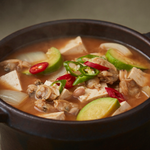
A Korean meal often brings together rice, a bowl of soup or stew, and several side dishes called banchan (반찬). At home, the meal might be simple: rice, kimchi, soup, and a few sides. At a restaurant, a set meal called baekban (백반) may come with rice, soup or stew, and a selection of banchan.
There is no single menu that represents every Korean meal. The foods vary by household, region, season, and occasion. Still, rice and something warm with broth are familiar parts of the table. Some older Koreans remember feeling that a meal was incomplete without soup or stew.
Quick Facts About a Korean Meal
- Main staple: Rice, or bap (밥)
- Soup and stew: Guk (국), jjigae (찌개), or tang (탕)
- Side dishes: Banchan (반찬), such as kimchi, vegetables, fish, or meat
- Everyday set meal: Baekban (백반)
- Traditional formal meal setting: Bansang (반상)
Rice, Soup, and Banchan (반찬)
Rice is the center of many Korean meals. It is usually served in an individual bowl, with soup or stew nearby. Guk (국) means soup, jjigae (찌개) usually refers to a thicker stew, and tang (탕) is another word used for broth-based dishes. The categories can overlap, but all three are familiar parts of Korean dining.
Many Koreans enjoy having soup or stew with a meal. Some older people remember a time when they felt they could not eat properly without guk or jjigae. That is why a basic Korean meal is often described as rice served with soup or stew, along with side dishes.
The side dishes, or banchan (반찬), are eaten with rice. Kimchi is one of the best-known examples. Other banchan might include seasoned vegetables, grilled fish, braised dishes, pancakes, dried foods, pickles, or fermented seafood.
At many modern meals, each person has an individual bowl of rice and soup, while the banchan are set in the middle of the table for everyone to share. This combination of individual bowls and shared side dishes is one of the first things visitors may notice at a Korean restaurant.
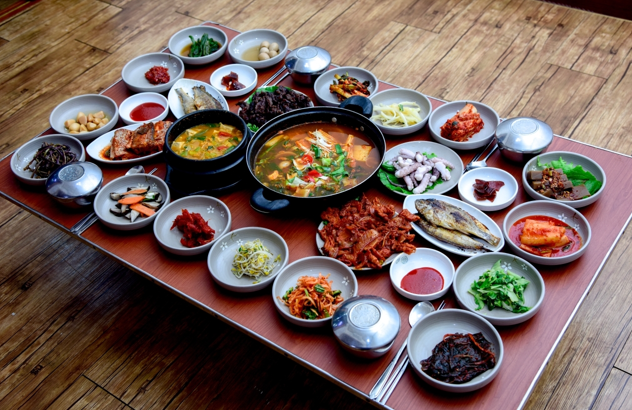
Photo: Korea Tourism Organization
What Are Bansang and Baekban?
Bansang (반상) refers to a Korean meal arranged with a sense of order and formality. The related term bansanggi (반상기) means a set of bowls and dishes used for a meal.
Baekban (백반), by contrast, is a familiar everyday term for a meal of rice served with soup or stew and a selection of side dishes. At a baekban restaurant, the specific sides may change from day to day.
Traditional Individual Tables and Cheop Settings
In formal traditional dining, people often ate at individual small tables called doksang (독상). A traditional bansang could be described by the number of side dishes, using the word cheop (첩): for example, a 3-cheop, 5-cheop, 7-cheop, or 9-cheop setting.
The cheop number counted the side dishes, not everything placed on the table. Rice, soup, kimchi, and sauces were not included. In traditional classifications, dishes such as stews, hot pots, and steamed foods were also counted separately.
These formal settings were not the everyday meal of every Korean household. They show how traditional dining could be organized for particular occasions and households. The foods themselves were flexible, with cooks choosing ingredients available in their region and season.
What Was Served in a Traditional Bansang?
The side dishes were chosen to offer different ingredients and cooking methods. A setting might include fresh or cooked vegetables, grilled or braised food, and a dried side dish, pickle, or fermented seafood.
A 3-cheop setting (3첩 반상) included three side dishes, such as:
- A fresh or cooked vegetable dish
- Grilled or braised food
- A dried side dish, pickle, or fermented seafood
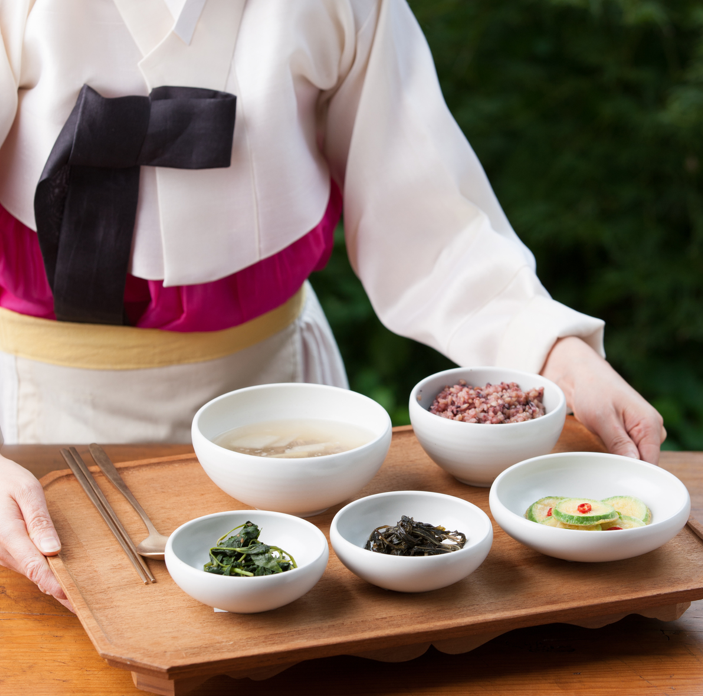
Photo: Korea Tourism Organization
A 5-cheop setting (5첩 반상) added more variety, often including vegetables, grilled food, braised food, a pan-fried dish called jeon (전), and a dried side dish, pickle, or fermented seafood.
A 7-cheop setting (7첩 반상) could include fresh and cooked vegetables, grilled and braised dishes, jeon, a dried side dish or pickle, and raw fish or pyeonyuk (편육), pressed and sliced meat.
A 9-cheop setting (9첩 반상) offered an even wider selection, with additional vegetable and grilled dishes. The exact ingredients were not fixed.
The royal meal table, called sura-sang (수라상), is traditionally associated with a 12-cheop setting (12첩 반상). It included a larger selection of side dishes than an everyday meal.
Variety and Nutritional Balance
The number of cheop described how many side dishes were served; it was not a modern system for calculating nutrients. Still, the variety of foods in a bansang could bring vegetables together with grilled or braised meat and fish dishes. Even a simple 3-cheop setting was described as offering nutritional balance.
This variety also meant that diners could enjoy different flavors, textures, and ingredients in one meal. The traditional table included grains, vegetables, meat, seafood, and fermented foods, depending on the setting.
Regional Ingredients and Seasonal Food
Traditional Korean meals reflected the ingredients available nearby. Coastal areas could serve more seafood and jeotgal (젓갈), salted and fermented seafood. Mountain villages might use more mushrooms and wild greens. Cities brought together ingredients from different regions, making a wider range of foods available.
Seasonality also shaped the table. Fresh vegetables were used when they were available, while drying and fermentation helped preserve food through Korea’s long winters. Kimchi, dried vegetables, dried fish, and other preserved foods became lasting parts of Korean food culture.
How a Korean Table Is Arranged
In a traditional place setting, the rice bowl is placed on the diner’s left and the soup bowl on the right. Side dishes are arranged nearby so everyone can reach them.
Traditional meal etiquette emphasized respect and consideration for others. The precise customs varied by household and occasion, but the way food was arranged could express care for the people sharing the meal.
What to Expect at a Korean Meal Today
A Korean meal today can be simple or elaborate. A home meal might include rice, kimchi, soup, and a few side dishes. At a baekban restaurant, rice may arrive with soup or stew and several banchan. Special meals and formal occasions may include many more dishes.
The traditional bansang helps explain the variety of Korean dining, while baekban shows how rice, soup, and side dishes continue to come together in everyday meals. When you sit down at a Korean table, try a little of each banchan with your rice, and enjoy the soup or stew while it is warm.
Read Next
10 Korean Restaurant Tips Every First-Time Visitor Should Know –
Free Korean Side Dishes (Banchan) Refills at Restaurants –