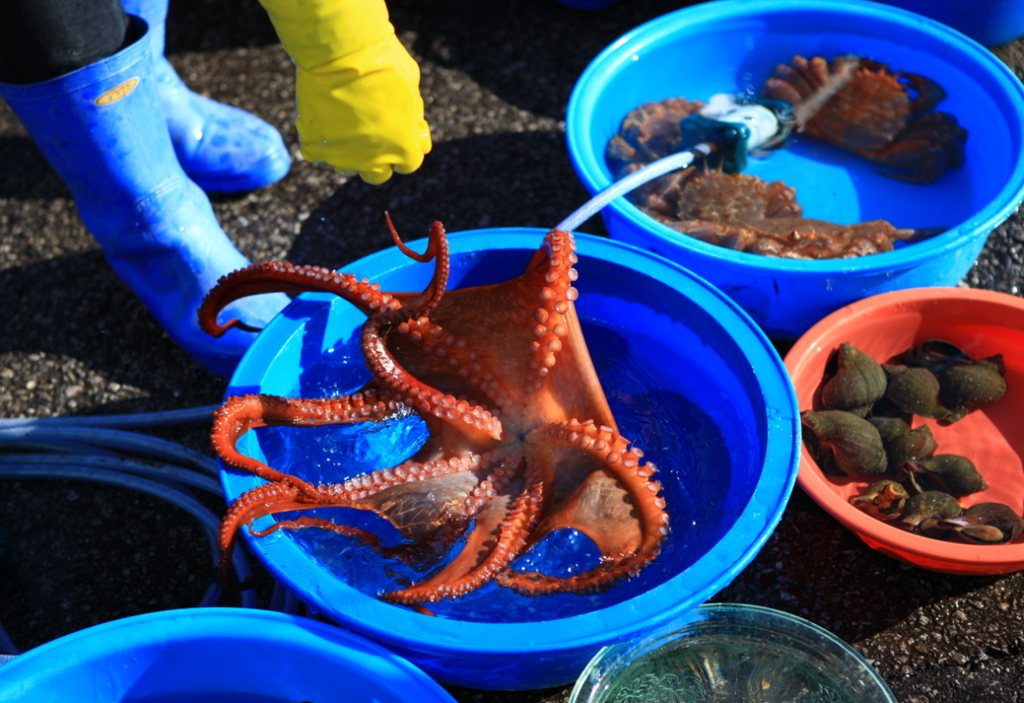

For many visitors, trying sannakji (산낙지), Korea’s famous wriggling octopus dish, is a food adventure. The version they often see in videos is called nakji-tangtangi (낙지탕탕이): fresh nakji chopped into small pieces and served while the pieces may still move. This chopped dish is a popular way to serve sannakji (산낙지), commonly known in English as Korean live octopus.
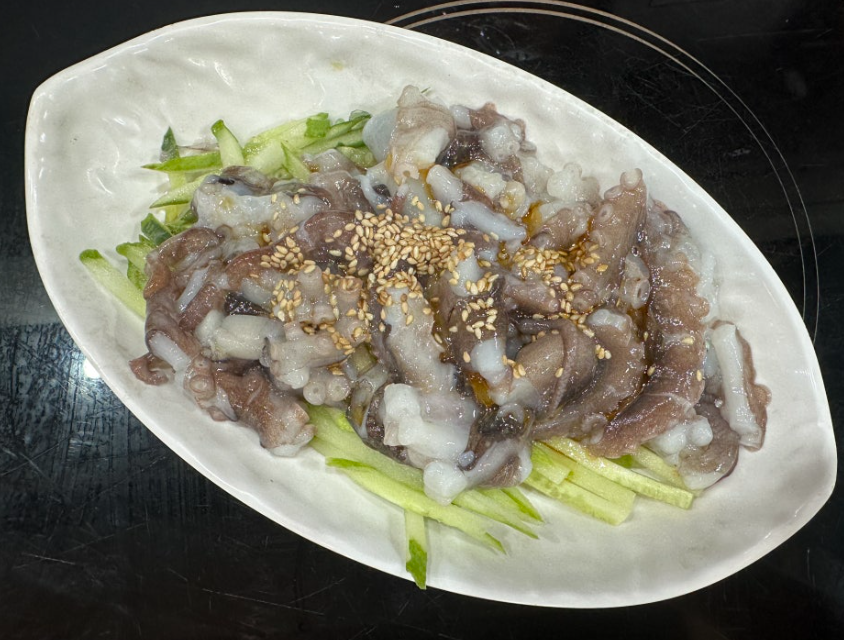
The two names are related, but they describe different things. Sannakji broadly refers to freshly prepared raw nakji, while nakji-tangtangi describes the chopped preparation. Serving styles can vary by restaurant. Nakji is also enjoyed in many cooked dishes, including spicy stir-fries and clear soup.
Quick Facts About Nakji and Sannakji
- Nakji: 낙지, a Korean long-arm octopus used in both raw and cooked dishes
- Sannakji: 산낙지, raw nakji commonly described in English as “Korean live octopus”
- Nakji-tangtangi: 낙지탕탕이, freshly chopped nakji, often served while the pieces are still moving
- Popular cooked dish: Nakji-bokkeum (낙지볶음), spicy stir-fried octopus
- Common dipping sauce: Sesame oil with salt and sesame seeds
What Is the Difference Between Nakji, Sannakji, and Nakji-Tangtangi?
Nakji is the name of the octopus itself. Sannakji is the raw dish made with freshly prepared nakji. The word san (산) means “living,” which is why sannakji is often translated as “live octopus.”
Nakji-tangtangi is a particular way of preparing it. The nakji is chopped into small pieces—the name tangtangi comes from the repeated sound of chopping—and served with a simple sesame-oil seasoning. The Korea Tourism Organization describes nakji-tangtangi as chopped octopus enjoyed with sesame oil and salt.
The movement is what makes the dish so striking to first-time diners. The pieces may still wriggle on the plate, but movement alone does not tell you exactly how the octopus was prepared. Restaurants may serve sannakji in different ways, so you can ask how it is presented before ordering.
What Does Sannakji Taste Like?
Sannakji has a mild, fresh seafood flavor. Its most memorable feature is the texture: slippery, springy, and chewy. It is often served with sesame oil, salt, and sesame seeds, which add a nutty, savory taste without overpowering the octopus.
For adventurous visitors, trying a piece of nakji-tangtangi can feel like a challenge because of the movement and unusual texture. Some people find it exciting; others would rather watch than taste. You can enjoy Korean nakji dishes without trying sannakji—there are plenty of cooked options, too.
How to Eat Sannakji Carefully
Sannakji is a dish to eat slowly. Octopus pieces and suction cups can stick in the mouth or throat and create a choking risk. Take small bites, chew thoroughly, and never swallow a large piece whole. A Korean forensic medicine study documented fatal choking cases involving octopus, including cases where large or intact pieces blocked the airway.
If raw seafood, chewy textures, or moving tentacles make you uncomfortable, choose a cooked nakji dish instead. There is no need to treat sannakji as a test of courage; it is simply one of several ways to enjoy octopus in Korea.
Other Korean Nakji Dishes
Nakji-Bokkeum (낙지볶음): Spicy Stir-Fried Octopus
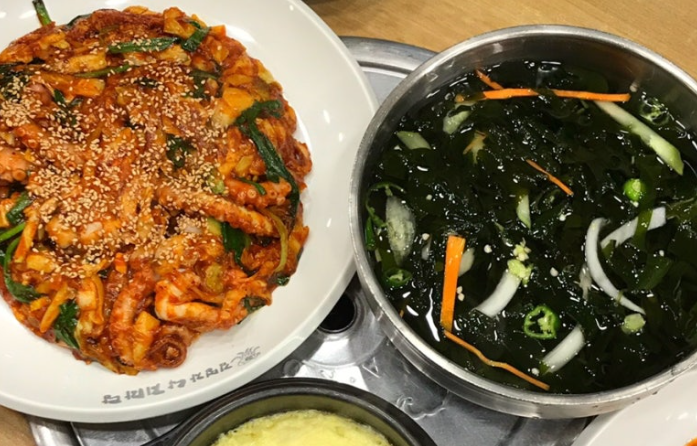
Nakji-bokkeum is made by stir-frying octopus with vegetables in a spicy, savory sauce, often seasoned with gochujang (고추장, Korean red chili paste). It is commonly served with rice. You can eat the octopus and vegetables with rice, or mix everything together to make nakji-bibimbap (낙지비빔밥). The rice helps balance the spicy sauce.
Yeonpo-Tang (연포탕): Clear Octopus Soup
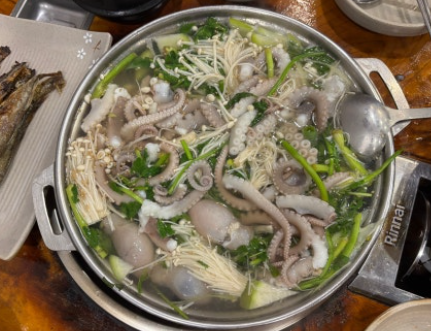
Yeonpo-tang is a mild Korean soup made with octopus in a clear, savory broth. Vegetables and mushrooms are often added, giving the soup extra flavor while letting the taste of the seafood come through. Compared with spicy nakji-bokkeum (낙지볶음), its gentle seasoning makes it a comforting way to try cooked nakji.
It is usually served in a pot for the table to share rather than as an individual bowl. The octopus and vegetables cook in the broth, and diners ladle portions into their own bowls. Depending on the restaurant, the octopus may arrive whole and be cut into bite-sized pieces with food scissors after it cooks. Recipes vary, but the clear broth is the defining feature.
Nakji-Chomuchim (낙지초무침): Sweet-and-Sour Octopus Salad
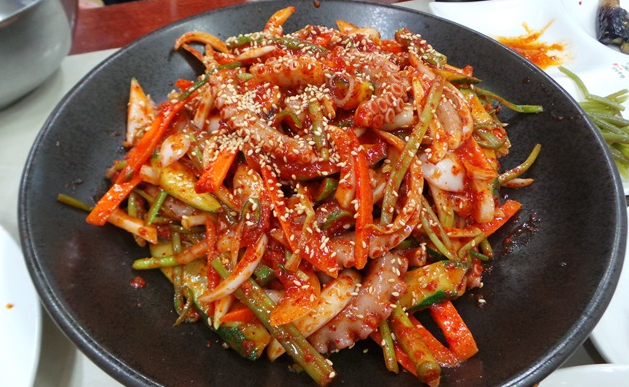
Nakji-chomuchim combines octopus and vegetables with a spicy, sweet-and-sour dressing, often made with gochujang (고추장), vinegar, and sugar. Cucumber, onion, carrot, or water parsley may be added for freshness and crunch, and sesame seeds are often sprinkled on top. The octopus is chewy, while the crisp vegetables and tangy dressing make each bite bright and refreshing.
It is usually served as a banchan (반찬, side dish) to share with a meal. Its bold seasoning also pairs well with plain rice. In Mokpo, a local version may be served with the octopus whole; diners cut it into bite-sized pieces at the table with food scissors. It can also be mixed with rice.
Similar muchim dishes are made with other seafood, including squid (ojingeo-muchim, 오징어무침) and webfoot octopus (jukkumi-muchim, 주꾸미무침). They follow a similar spicy, tangy style, but each has its own texture and flavor.
Nakji-Horong (낙지호롱): Grilled Octopus on a Skewer
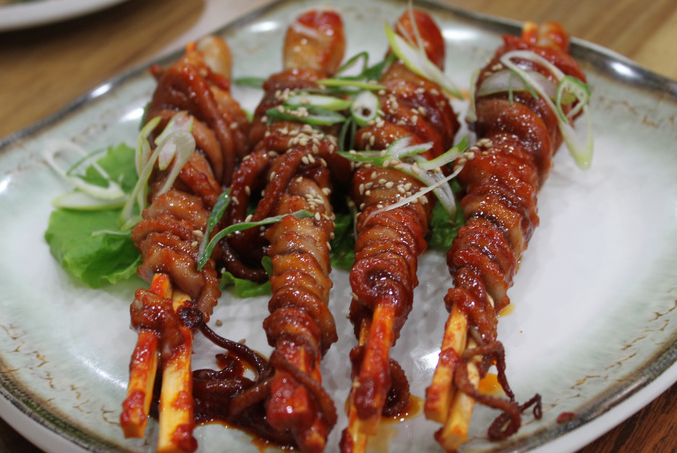
Nakji-horonggui is a regional octopus dish associated with southwestern Korea, especially areas such as Muan, Mokpo, and Yeongam. A cleaned octopus is wrapped around a rice straw or skewer, brushed with seasoning, and grilled. Some preparations begin with a sweet soy sauce glaze, while restaurant recipes may use savory or spicy seasonings.
Grilling gives the outside a flavorful coating while keeping the octopus chewy inside. The skewer also makes it easy to serve and share. Nakji-horonggui is less commonly found than familiar dishes such as nakji-bokkeum, but visitors may come across it at octopus restaurants in southwestern Korea.
Nakgopsae (낙곱새): Octopus, Beef Intestine, and Shrimp
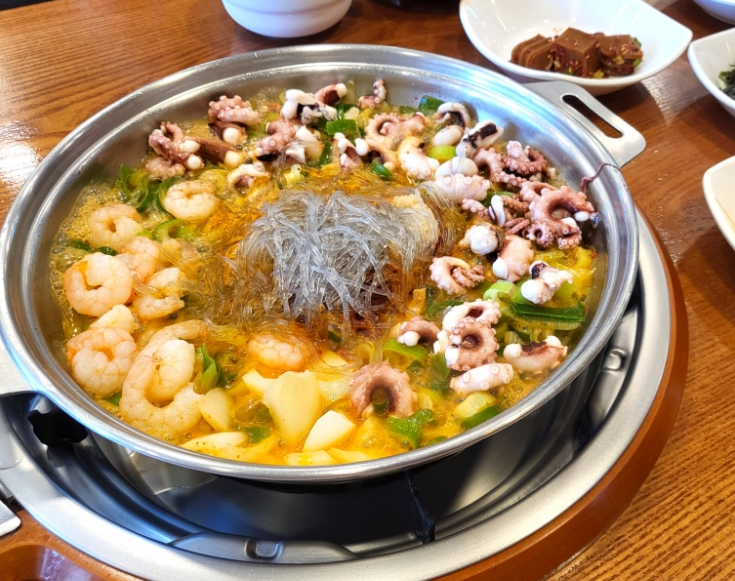
Nakgopsae combines nakji, gopchang (곱창, beef small intestine), and saeu (새우, shrimp). The name explains what goes into it: nak comes from nakji (낙지, octopus), gop from gopchang (곱창, beef small intestine), and sae from saeu (새우, shrimp). Put together, the syllables form nak-gop-sae (낙곱새).
Nakgopsae is closely associated with Busan, where the dish originated. It grew out of the city’s love of spicy octopus dishes, combining nakji with beef small intestine and shrimp in one hearty, spicy pot. Although nakgopsae is now served across Korea, many visitors still seek it out as a Busan specialty.
Where Is Nakji Popular in Korea?
Muan and Mokpo in Jeollanam-do are well known for nakji dishes. Muan has extensive tidal flats and restaurants specializing in octopus. The Korea Tourism Organization highlights local dishes such as nakji-bokkeum, yeonpo-tang, and nakji-tangtangi.
Busan is another place to look for octopus dishes, especially spicy preparations and nakgopsae. Across Korea, you may find nakji at seafood restaurants, traditional markets, and specialty restaurants.
When you see nakji on a menu, check the dish name to find out how it is prepared. Choose nakji-bokkeum for a spicy cooked dish, yeonpo-tang for a mild soup, or nakji-tangtangi if you want to try the famous chopped sannakji experience.
Nakji is more than the moving octopus often seen in travel videos. It is a versatile Korean seafood ingredient enjoyed raw, stir-fried, grilled, and in soup. Trying nakji-tangtangi may be an adventure, but cooked nakji dishes offer an approachable way to discover its distinctive texture and flavor.
Read Next
10 Korean Restaurant Tips Every First-Time Visitor Should Know –