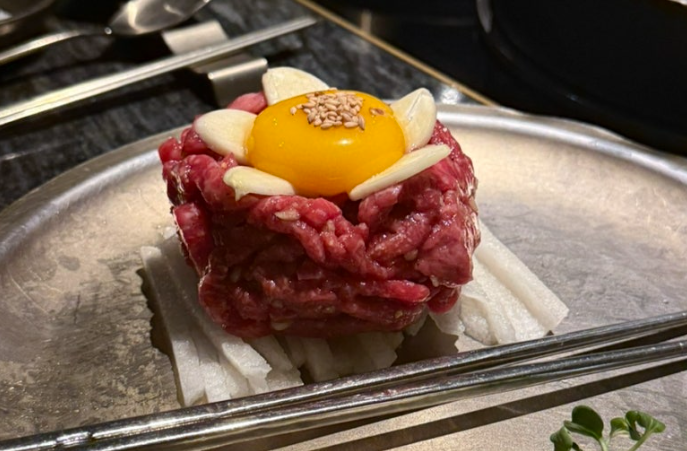
Yukhoe (육회) is a Korean dish of seasoned raw beef, often served with thin strips of Asian pear and a golden egg yolk. For visitors who have never tried raw beef, the idea may sound unfamiliar. Yukhoe is enjoyed for its tender texture, clean beef flavor, and simple, savory-sweet seasoning.
Yukhoe is prepared fresh and served at the table, where it can be eaten on its own or as yukhoe-bibimbap (육회비빔밥), a rice bowl topped with raw beef and vegetables. It is not a snack to carry around while sightseeing; it is best eaten soon after it is served.
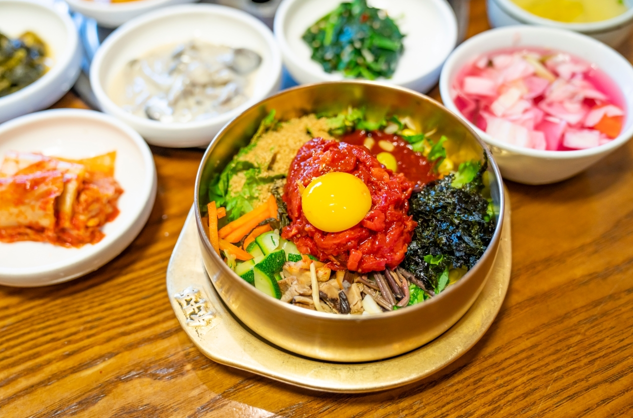
Photo: Korea Tourism Organization
Quick Facts About Yukhoe
- Korean name: 육회 (yukhoe)
- What it is: Thinly sliced or cut raw beef seasoned with sauces and aromatics
- Common accompaniments: Asian pear, egg yolk, sesame oil, garlic, and sesame seeds
- A popular meal version: Yukhoe-bibimbap (육회비빔밥)
- Where to try it: Korean beef restaurants and yukhoe specialty restaurants
What Is Yukhoe?
Yukhoe is often translated as “Korean beef tartare,” but its flavor and presentation can differ from Western-style steak tartare. The beef is commonly cut into thin strips and lightly seasoned. Depending on the restaurant or regional style, the seasoning may include soy sauce, sesame oil, garlic, sugar, or salt. Lean cuts such as beef round are often used, though recipes and cuts vary.
A familiar presentation includes a nest of julienned Asian pear topped with seasoned beef and a raw egg yolk. The pear adds a crisp texture and gentle sweetness, while the egg yolk makes the beef rich and silky when mixed in. Some restaurants serve the ingredients separately so diners can combine them at the table.
Why Do Koreans Eat Yukhoe?
Yukhoe has been part of Korean food culture for centuries. Recipes for yukhoe appear in Joseon-era culinary books, and records of royal banquets include raw beef and raw beef offal dishes. In the past, fresh beef was harder to obtain, so yukhoe was associated with special meals and feasts.
Today, people enjoy yukhoe for its delicate beef flavor and distinctive texture. Because it is not cooked, the beef stays cool and tender. Its light seasoning lets the flavor of the meat stand out, while pear, sesame oil, and egg yolk add sweetness, nuttiness, and richness. Yukhoe can be shared as part of a meal or enjoyed as anju (안주), food served with drinks.
Yukhoe also reflects Korea’s regional food traditions. In Jinju, yukhoe-bibimbap became a well-known local dish. Other regional versions use different seasonings, such as salt or gochujang (고추장, Korean red chili paste).
Is Yukhoe Eaten in Summer?
Because yukhoe is raw beef, people have traditionally been more cautious about eating it in hot weather. Some restaurants serve yukhoe throughout the year, but freshness and careful handling matter in every season. If you are unsure about eating raw beef in warm weather, choose a cooked beef dish instead.
How to Eat Yukhoe
If the beef is served with pear and egg yolk, mix the ingredients gently so each bite includes a little of everything. You can also try a piece before mixing to taste the beef and seasoning on their own.
Yukhoe is often served with rice, kimchi, or other side dishes. Yukhoe-bibimbap comes with seasoned raw beef arranged over rice and vegetables. Mix the ingredients together just before eating. The warm rice contrasts with the cool beef, while the vegetables add freshness and crunch.
Yukhoe and Yuk-sashimi: What Is the Difference?
Yukhoe is usually seasoned, while yuk-sashimi (육사시미) is thinly sliced raw beef served with little or no seasoning, often with a dipping sauce. Names and preparations can vary by region and restaurant. In Daegu, a similar style of raw beef is known as mungtigi (뭉티기).
Where Can You Try Yukhoe in Korea?
Yukhoe is served at Korean beef restaurants and specialty restaurants focused on raw beef dishes. It is prepared fresh and brought to the table, so it is best enjoyed at the restaurant soon after serving rather than packed to take away.
If this is your first time trying raw beef, choose a restaurant known for yukhoe and ask about the ingredients or serving style. You can also order yukhoe-bibimbap if you would like to try it as part of a rice meal.
A Note for First-Time Visitors
Yukhoe is raw beef, and some versions are served with raw egg yolk. Raw meat can carry germs that cooking would normally destroy, so it is not risk-free. If you decide to try it, choose a reputable restaurant. If you prefer to avoid raw meat or egg, Korean beef dishes such as bulgogi (불고기) are cooked alternatives.
Yukhoe may be new to visitors who usually eat beef cooked, but its appeal is easy to understand once you taste it: cool, tender beef, light seasoning, crisp pear, and the richness of sesame oil and egg yolk. It is a distinctive Korean way to enjoy beef, with a history that reaches from traditional feasts to today’s restaurants.
Read Next
10 Korean Restaurant Tips Every First-Time Visitor Should Know –