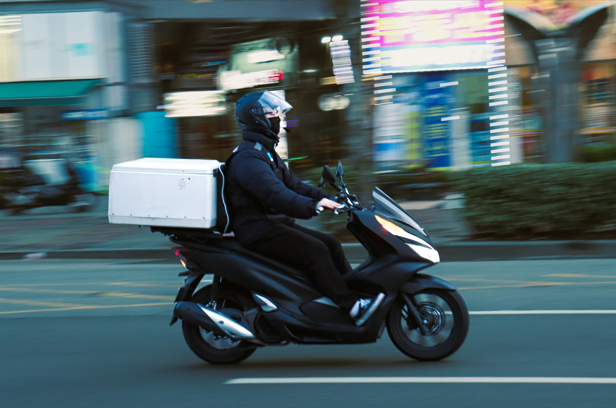

“Baedal wasseumnida!” (배달 왔습니다!)
This Korean expression means, “Your delivery is here.” Today, it can announce the arrival of fried chicken, coffee, groceries, cake, fresh fruit, bottled water, or even household goods. In many Korean cities, ordering something for delivery is so ordinary that people may use a delivery application several times a week without giving the process much thought.
The modern system, however, did not begin with hundreds of restaurants displayed on a smartphone screen.
For many Koreans, food delivery was once almost synonymous with calling the neighborhood Korean-Chinese restaurant and ordering jjajangmyeon (짜장면), noodles covered in a thick black bean sauce. The menu was limited, payment was usually made at the door, and the delivery worker was employed directly by the restaurant.
Over several decades, the choices gradually expanded. Fried chicken and pizza joined jjajangmyeon as familiar delivery foods. Then came jokbal, bossam, tteokbokki, hamburgers, sushi, soup, coffee, desserts, and complete Korean meals.
After smartphones and delivery applications became widespread, the meaning of delivery changed again. It was no longer simply a restaurant bringing dinner to a nearby home. It became a large digital system connecting customers, restaurants, riders, supermarkets, convenience stores, warehouses, and payment services.
The Korea Tourism Organization dates the beginning of Korea’s modern food-delivery industry to the 1960s and notes that it grew significantly after delivery applications became popular in the 2010s.
The story of Korean food delivery is therefore also a story about urbanization, technology, changing households, the famous ppalli-ppalli culture, and the Korean expectation that convenience should be both fast and widely available.
When Delivery Meant Calling a Chinese Restaurant
Strictly speaking, Korean-Chinese restaurants were not the only businesses that delivered food in the past. Nevertheless, they became the most memorable symbol of early home delivery.
A typical order began with a landline telephone.
A customer called a neighborhood restaurant and said something like:
“Two jjajangmyeon (짜장면) and one tangsuyuk (탕수육), please.”
The customer then gave an address, often with directions based on a nearby school, shop, or apartment building. There was no digital map, automatic address search, or moving icon showing the rider’s location.
The restaurant prepared the food and placed it inside a square metal carrying case. A delivery worker transported the order by bicycle or motorcycle. The metal case became such a familiar object that it appeared in cultural exhibitions about modern Korean eating habits alongside fried chicken, beer, rice, and other symbols of everyday food culture.
In the older system, jjajangmyeon was often delivered in actual restaurant bowls rather than disposable containers. After finishing the meal, customers placed the empty dishes outside the front door. The restaurant worker later returned to collect them.
It was a simple arrangement based on neighborhood familiarity. The restaurant trusted the customer to return the dishes, and the customer trusted the restaurant to remember where they had been delivered.
Jjajangmyeon was especially suitable for this system. It was inexpensive, filling, familiar to both adults and children, and relatively quick to prepare. The sauce and noodles could also be transported separately and mixed after arrival.
Korean-Chinese restaurants usually offered a small but reliable delivery menu. In addition to jjajangmyeon, customers could order jjamppong (짬뽕), a spicy seafood noodle soup; tangsuyuk (탕수육), fried pork with sweet-and-sour sauce; fried rice; and dumplings.
The experience was direct and local. The customer knew the restaurant’s telephone number, and the restaurant knew the neighborhood. There was no delivery platform between them.
The Paper Menu and Refrigerator Magnet Era
As Korean cities expanded and apartment living became increasingly common, delivery became more practical.
A single restaurant could serve many households within a relatively small area. Apartment buildings placed hundreds of potential customers close together, while motorcycles allowed food to move through narrow urban streets more quickly than cars.
Before smartphone applications, restaurants advertised through paper menus, flyers, telephone directories, and refrigerator magnets. A household might have several menus stored in a kitchen drawer: one for a Chinese restaurant, one for fried chicken, one for pizza, and another for jokbal or bossam.
People often chose a restaurant not by reading hundreds of online reviews but by remembering which menu was attached to the refrigerator.
The ordering process was short:
- Choose a restaurant from a paper menu.
- Call the telephone number.
- Say the name and quantity of the dishes.
- Give the delivery address.
- Pay the delivery worker when the food arrived.
Regular customers did not always need to explain everything. A restaurant worker might recognize the customer’s voice, address, or usual order.
This system also had clear limits. A restaurant normally delivered only within its own neighborhood. Customers could not easily compare prices across dozens of businesses. Photographs of the food were uncommon, and first-time customers had little information about quality.
Delivery also depended on whether the restaurant employed its own rider. A small restaurant might have excellent food but no practical way to deliver it.
Nevertheless, the telephone-based system created the foundation on which today’s application-based industry was later built. Delivery apps did not introduce Koreans to the idea of ordering food from home. They reorganized a habit that was already well established.
Fried Chicken, Pizza, and the Expansion of Choice
As delivery culture developed, Korean-Chinese food was joined by new categories.
Fried chicken became one of the most important. It was easy to divide among family members or friends, traveled relatively well, and could be sold in many flavors. Original fried chicken was joined by yangnyeom chicken (양념치킨), covered in a sweet and spicy sauce, as well as garlic, soy sauce, cheese, and extra-spicy varieties.
Pizza also became a familiar delivery meal. It appealed to families, children, office gatherings, and parties. Unlike a bowl of noodles intended for one person, a pizza could be placed at the center of a table and shared.
Other foods followed.
Jokbal, or braised pig’s feet, became popular for evening gatherings. Bossam, consisting of sliced pork served with cabbage and side dishes, was also well suited to group delivery. Tteokbokki shops delivered spicy rice cakes with fried foods, fish cakes, and sundae, a type of Korean blood sausage.
Eventually, delivery was no longer limited to foods that people considered naturally “deliverable.” Restaurants adapted their packaging and preparation methods so that soups, grilled meat, sashimi, noodles, rice dishes, and side dishes could survive the journey.
Sauces were placed in separate containers. Hot and cold ingredients were divided. Ventilation holes were added to some packages to prevent fried foods from becoming soggy. Restaurants began thinking not only about how a dish tasted in the dining room but also about how it would taste after traveling on a motorcycle.
The range of delivery food grew because both restaurants and customers were willing to experiment.
The Smartphone Changed the Meaning of Delivery
The decisive transformation came with smartphones.
Baedal Minjok (배달의 민족), commonly called Baemin (배민), began in 2010. The company’s own history describes 2012 as the period when ordering shifted “from phone orders to app orders.”
The early delivery application performed a relatively simple function: it placed neighborhood restaurant menus on one digital screen. However, even this basic change solved several problems.
Customers no longer needed to collect paper menus. They could search by food category, location, price, and business hours. They could see photographs, read reviews, compare restaurants, and save previous orders.
The process of choosing food also changed.
In the telephone era, people normally decided what they wanted before making the call. In the application era, people often open the app first and decide what to eat while browsing.
The question changed from:
“Which Chinese restaurant should we call?”
to:
“What do we feel like eating tonight?”
Digital payment reduced another inconvenience. Customers no longer needed to prepare cash or hand a credit card to the delivery worker. Saved addresses made repeat orders easier, while estimated delivery times reduced uncertainty.
Reviews created a new type of competition. Restaurants were evaluated not only on taste but also on packaging, portion size, delivery speed, accuracy, and customer service. A missing side dish or poorly sealed container could influence later customers.
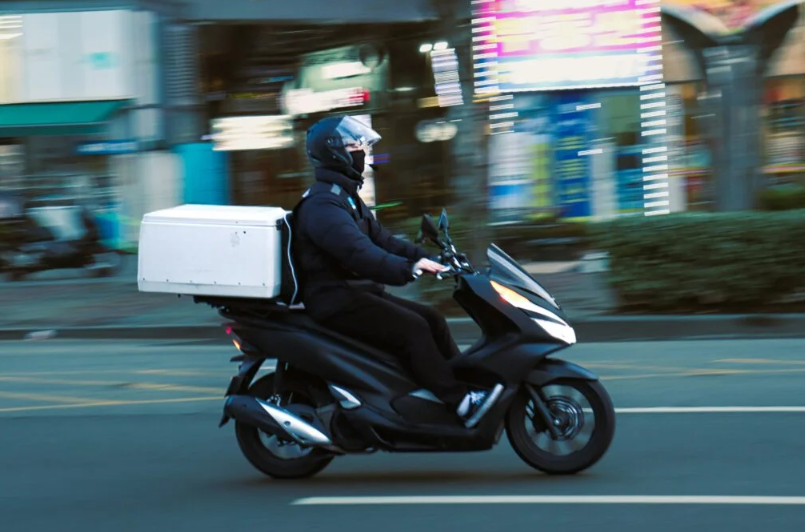
Applications also changed the organization of delivery work. Traditionally, a restaurant often employed its own delivery worker. Platform-based systems made it possible for independent or contracted riders to collect orders from many different restaurants.
This allowed more restaurants to offer delivery without maintaining their own motorcycle and full-time rider. A small café, bakery, salad shop, or specialty restaurant could suddenly reach customers outside its immediate street.
The delivery application was no longer merely an electronic menu. It became a marketplace, advertising service, payment system, review platform, mapping service, and delivery network at the same time.
From Dinner to Coffee, Dessert, and Groceries
Once the platform and rider network existed, delivery expanded far beyond traditional restaurant meals.
A person could order one cup of coffee to an office. A family could receive a birthday cake without visiting a bakery. Someone studying late at night could order ice cream, snacks, or a convenience-store meal.
The boundaries between restaurant delivery, grocery shopping, and ordinary retail began to disappear.
Prepared food expanded to include salads, sandwiches, porridge, dosirak lunch boxes, premium sushi, grilled meat, soups, stews, bakery items, fruit bowls, and specialty desserts.
Grocery and quick-commerce services added eggs, milk, vegetables, meat, frozen food, bottled water, toilet paper, cleaning products, and other daily necessities.
Baemin currently describes its range as extending from fried chicken and lobster to eggs, books, and flower bouquets. Its stated goal is to provide customers with what they need in real time.
This does not mean that literally every product can be delivered without restriction. Certain products are regulated, and availability differs according to location and time. However, in major Korean cities, the range is broad enough that it can feel as though almost anything will come to the door.
An official Korea.net article was already describing Korea as a “Republic of Delivery” in 2015. Its example of an ordinary urban day included delivered newspapers, yogurt, breakfast, groceries, business documents, flowers, laundry, fried chicken, and coffee.
Food delivery had become part of a much larger culture of bringing services directly to the customer.
Delivery Is Not Limited to the Home
Another distinctive feature of Korean delivery culture is that the destination does not always need to be a house or apartment.
People order food to offices, hotels, university buildings, hospitals, study rooms, and outdoor locations. A hotel may require the guest to meet the rider in the lobby, while an office worker may collect food near the main entrance.
The most famous outdoor example is the Hangang River (한강) in Seoul.
On weekends, people gather in riverside parks with mats, small tables, and rented picnic equipment. Instead of preparing food in advance, they may order fried chicken, pizza, tteokbokki, or other meals after arriving.
Because large parks can be confusing, some areas have designated delivery meeting points. Customers receive a call or message and walk to the agreed location to meet the rider.
The Korea Tourism Organization presents ordering delivered food at the Hangang River as a popular activity, particularly among younger Koreans, and advises visitors to use designated pickup areas.
This practice shows how deeply delivery is integrated into social life. The service does not merely replace cooking. It makes spontaneous gatherings easier.
Friends do not need to decide who will shop, cook, carry dishes, and clean afterward. They can meet in a park, place an order, and begin eating when the food arrives.
Why Delivery Works So Well in Korea
Several conditions helped Korean delivery culture grow.
The first is urban density. Large numbers of people live and work close together, particularly in metropolitan areas. A rider can complete several deliveries within a relatively compact district.
Apartment complexes are especially efficient delivery destinations. Although finding the correct entrance or building can sometimes be difficult, many customers are concentrated in one area.
The second condition is Korea’s strong preference for speed and convenience. Delivery fits naturally into ppalli-ppalli culture (빨리빨리 문화), the expectation that services should be completed quickly and unnecessary waiting should be reduced.
A delivery that takes too long can feel like poor service even when the food eventually arrives in good condition. Customers often want both speed and predictability.
The third condition is Korea’s highly developed digital environment. Smartphones, online payments, mapping systems, and real-time notifications allow many separate stages of the process to operate together.
The fourth condition is the structure of everyday life. Long working hours, commuting, late-night studying, and irregular schedules can make cooking difficult. Delivery provides a meal without requiring travel, food preparation, or washing many dishes.
The rise of one-person households has also influenced the industry. Restaurants increasingly offer smaller portions, individual meals, and menus designed for solo customers. Although minimum-order requirements can still be inconvenient, the general direction has been toward making delivery useful for individuals as well as families and groups.
More Than a Convenient Way to Eat
Korean food delivery is sometimes presented as a simple example of advanced technology. Technology is certainly important, but it does not explain everything.
Delivery succeeded because it matched Korean urban life.
It suited apartment living, busy work schedules, late-night activity, one-person households, digital payments, and the social preference for quick service. It also built upon a much older neighborhood habit.
The delivery application did not replace a society in which everyone cooked at home. It replaced the paper menu, refrigerator magnet, telephone call, handwritten address, and restaurant-owned motorcycle.
What changed was the range.
In the past, a family might have asked, “Should we order jjajangmyeon?”
Later, the question became, “Should we get Chinese food, chicken, or pizza?”
Today, the question may be, “What can’t we have delivered?”
From the Metal Box to the Digital Map
The history of Korean food delivery can be understood through two images.
The first is a motorcycle carrying a square metal box filled with bowls of jjajangmyeon. The customer orders by telephone, eats the noodles, and places the empty bowls outside the door.
The second is a smartphone displaying hundreds of restaurants. The customer reads reviews, selects extra toppings, pays digitally, watches the rider move across a map, and receives several carefully sealed disposable containers.
Between these two images lies a major social transformation.
Korean food delivery expanded from one familiar category to fried chicken and pizza, from group meals to individual portions, from telephone calls to applications, and from restaurant food to groceries and everyday goods.
It has become so extensive that delivery is no longer treated as a special service. For many people, it is simply one of the normal ways in which food and daily necessities enter the home.
The old metal box has largely disappeared, but the promise behind it remains recognizable:
Call—or tap—and something warm will soon arrive.
