
What Is Tteok?
Tteok is one of the foods most closely connected to Korean life.
Often translated as “Korean rice cake,” tteok is made mainly from rice or other grains. It can be soft or chewy, dense or delicate, plain or filled. The texture and taste vary depending on how the rice is prepared and how the tteok is made.
But tteok is more than a type of food.
In Korea, tteok has long been part of holidays, family celebrations, religious and seasonal traditions, and ordinary daily life. It has been served when something important happens and shared when people want to celebrate, wish someone well, or welcome others.
That is what makes tteok interesting. It is food, but it also carries memories and meaning.
There are many different kinds of tteok, each with its own ingredients, shape, texture, and history. We will introduce them separately, but first, it helps to understand why tteok has such an important place in Korean culture.
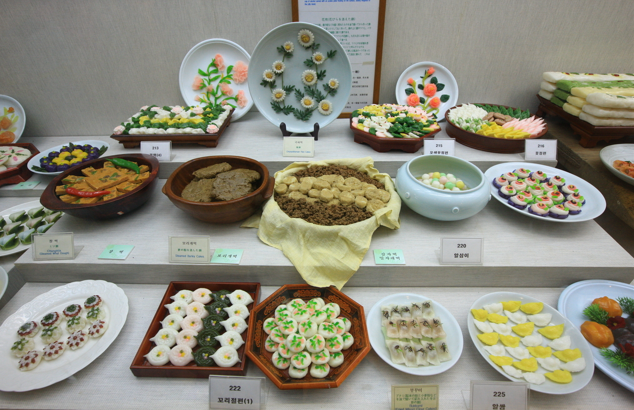
Photo: Korea Tourism Organization
Tteok and Important Moments in Life
For generations, Koreans have associated certain foods with important moments in life.
Tteok appears frequently on these occasions because it is closely connected with wishes for health, happiness, prosperity, and a good future.
One example is a baby’s 100th day celebration, known as baek-il (백일). White rice cake is traditionally prepared and shared as part of the celebration. The color white has traditionally been associated with purity and a fresh beginning.
Tteok is also part of a child’s first birthday, or dol (돌). The first birthday is a major family celebration in Korea, and the food prepared for the occasion has traditionally carried symbolic meaning.
At weddings and other family celebrations, tteok can also be served or given as a gift. When someone opens a new business or moves into a new home, sharing tteok with neighbors and acquaintances has been a familiar way of expressing good wishes.
In these situations, the important thing is not simply what the tteok tastes like.
It is what it means to share it.
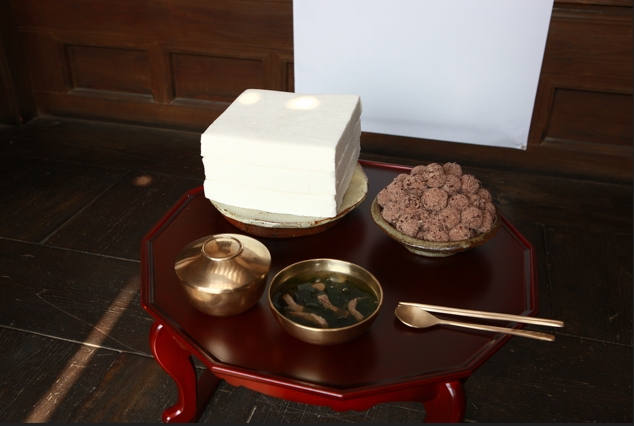
Photo: Korea Tourism Organization
Tteok and Korean Holidays
Tteok is closely tied to the Korean calendar.
During Seollal (설날), the Korean Lunar New Year, families traditionally eat tteokguk(떡국). The rice cake in the soup represents the beginning of a new year, and eating the dish is associated with getting one year older.
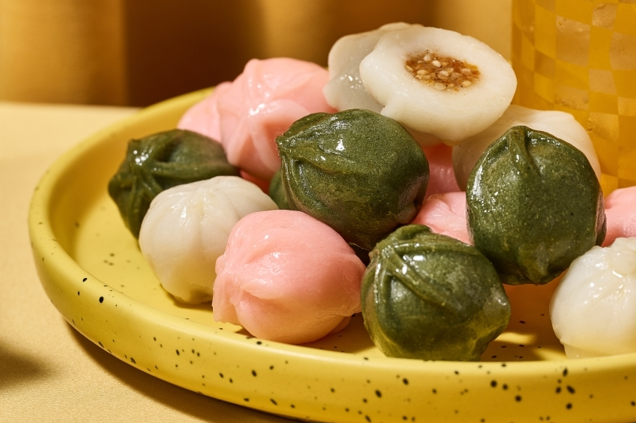
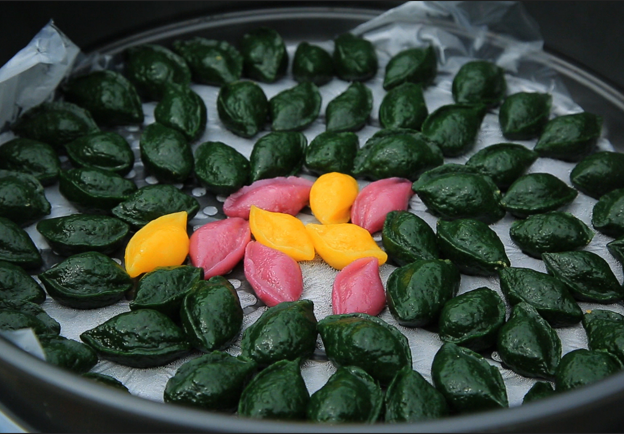
During Chuseok (추석), one of Korea’s most important holidays, families traditionally prepare and eat songpyeon (송편). The holiday is connected to the harvest, family gatherings, and giving thanks for the year’s crops.
These traditions show an interesting side of Korean food culture.
Food can tell people what time of year it is.
The arrival of a holiday brings certain ingredients and dishes to the table, and those foods become part of people’s memories of the season. For many Koreans, the taste of a particular tteok can bring back memories of a holiday spent with parents, grandparents, or relatives.
Tteok at the Table and in the Neighborhood
Tteok is not reserved for holidays and special occasions.
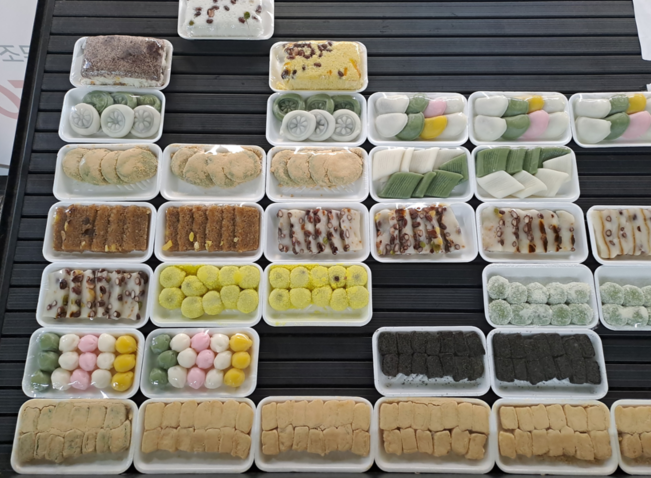
Koreans also eat tteok throughout the year. Traditional markets, neighborhood rice cake shops, supermarkets, and online stores sell many varieties. Some people have tteok with tea or coffee, while others enjoy it as a filling snack or a simple breakfast.
Tteok is also often given as a gift.
A box of neatly arranged tteok can be taken to someone’s home when visiting, shared with coworkers, or given to friends and family on a special occasion. It is a familiar way of saying, “I brought something for you.”
There is also a strong connection between tteok and local communities. In the past, making tteok was often something families and neighbors did together, especially before important celebrations. Although modern lifestyles have changed the way people prepare food, the custom of sharing tteok remains.
The Texture Is Part of the Experience
If you are trying tteok for the first time, the texture may be one of the most noticeable things.
Korean tteok can be very different from the cakes and desserts that visitors may be familiar with. Some are soft and tender, while others are pleasantly chewy. Some have a smooth texture, while others have a slightly grainy or powdery surface.
Rice flour, glutinous rice, cooking methods, fillings, and coatings all affect the final texture.
This is one reason why tteok is worth trying in several different forms.
Rather than expecting it to taste like a Western dessert, it is better to think of tteok as its own category of Korean food. Some are sweet, but sweetness is not always the main feature. The flavor can be mild, allowing the texture, aroma, and natural taste of the ingredients to stand out.
For many Koreans, that subtlety is part of what makes tteok comforting.
Tteok and Good Wishes
Tteok is also connected to the Korean habit of expressing good wishes through food.
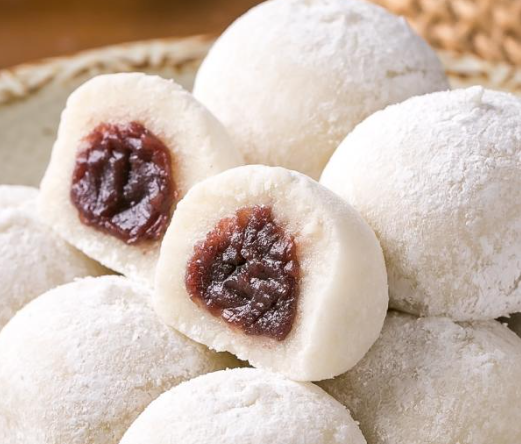
Before an important exam, students may receive chapssaltteok (찹쌀떡) from their parents, relatives, friends, or teachers.
Chapssaltteok is made from glutinous rice, giving it a soft and sticky texture. Its stickiness has a special meaning in Korean culture. The Korean word “붙다” (butda) means “to stick,” but it can also mean to pass an exam or be accepted into a school or job.
That is why giving chapssaltteok to someone before an important exam carries a simple wish:
“I hope you pass.”
The connection between the texture of the rice cake and the meaning of the Korean word makes this tradition especially interesting. The food itself becomes a small way of expressing encouragement and good luck.
The tradition is still familiar in Korea today, especially around major examination periods such as the College Scholastic Ability Test (CSAT).
Why Tteok Still Matters Today
Korean food has changed considerably over the years.
Modern bakeries, cafés, desserts, and international foods are now part of everyday life. Even so, tteok continues to have a place in Korean homes, markets, celebrations, and gift shops.
Part of the reason is tradition. But tradition alone does not explain its lasting popularity.
Tteok has also adapted to modern tastes and lifestyles. Today, you can find traditional tteok alongside newer versions with different fillings, flavors, shapes, and packaging. Many shops sell small individual portions, gift boxes, and frozen products that can be stored at home.
The way Koreans eat tteok may change, but the connection between tteok and sharing remains.
A family can buy tteok for a holiday.
A friend can bring a box when visiting someone’s new home.
Parents can give it to a child before an important exam.
Someone can simply stop by a neighborhood rice cake shop and buy a few pieces on the way home.
These are ordinary moments, but they are part of the reason tteok remains familiar to Koreans.
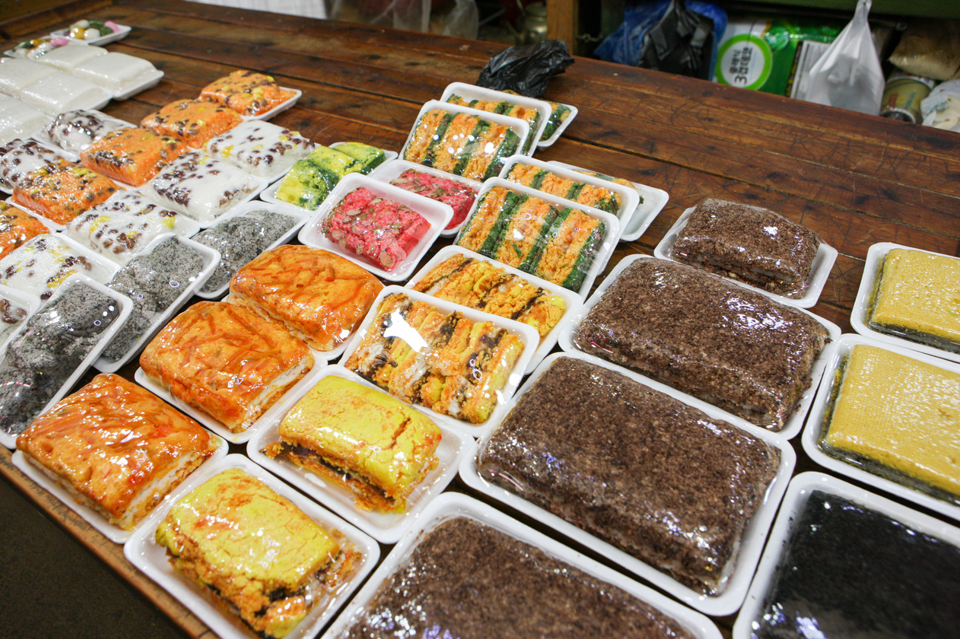
Photo: Korea Tourism Organization
Where to Try Korean Tteok
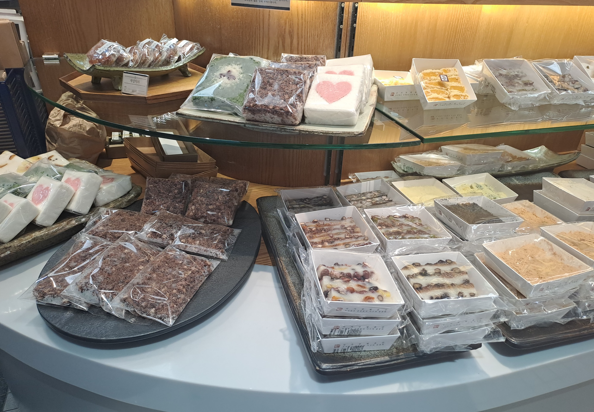
Traditional markets are one of the best places to see different types of tteok in one place.
Many Korean traditional markets have small tteokjip (떡집), or rice cake shops, displaying rows of freshly made tteok. Some shops specialize in particular varieties, while others sell assorted boxes with several different types.
Neighborhood tteok shops are also worth visiting. Many prepare their products early in the morning, and some varieties are best enjoyed fresh on the day they are made.
Tteok is also easy to find in Korean supermarkets and department stores. Larger stores often have dedicated sections for traditional rice cakes, and some sell individually packaged tteok that is convenient to take home or enjoy later.
You can also order tteok online. Many tteok shops and specialty stores offer delivery, including gift boxes and frozen tteok that can be stored at home. This has made it much easier to enjoy traditional tteok even when there is no tteok shop nearby.
For something more modern, look for a tteok cake shop. These specialty shops create cakes using tteok and traditional rice cake techniques. Tteok cakes are often made for birthdays, first-birthday celebrations, weddings, and other special occasions. Some are decorated with colorful designs, flowers, or personalized messages.
If you see a colorful display of rice cakes at a Korean market, take a closer look. You may discover a type of tteok you have never seen before. Whether you buy it at a traditional market, a neighborhood tteok shop, a supermarket, a specialty cake shop, or online, tteok is one of the easiest ways to experience an everyday part of Korean food culture.