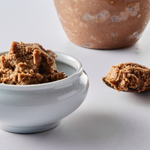
Ganjang (간장) is Korean soy sauce, a seasoning used to add saltiness, savory flavor, and color to food. It is part of the Korean family of fermented seasonings called jang (장), along with doenjang (된장) and gochujang (고추장). Soy sauce is used in many countries, but Korean ganjang has its own traditional method and several types for different dishes. Some kinds are best for seasoning soup, while others are used for marinades, braised dishes, or dipping sauces.
Quick Facts About Ganjang (간장)
- Korean name: 간장 (ganjang)
- What it is: Korean soy sauce
- Traditional main ingredients: Meju (메주, fermented soybean blocks), water, and salt
- Common uses: Soup, namul, marinades, braised dishes, and dipping sauces
- Traditional storage: Onggi (옹기, earthenware jars) on a jangdokdae (장독대)
- Related Korean seasonings: Doenjang and gochujang
What Is Ganjang?
Ganjang is a liquid seasoning made from fermented soybeans. It adds saltiness and umami, and its color can also deepen the appearance of a dish. Korean cooks use it to season food as it cooks, so it is often an ingredient in the dish rather than a sauce served separately. Traditional Korean ganjang is made by fermenting meju in salted water. After fermentation, the liquid is separated from the solids. The liquid becomes ganjang, while the soybean solids are used to make doenjang. This traditional process connects two seasonings that appear in many Korean home-cooked meals.
Jangdokdae and Traditional Ganjang
A jangdokdae (장독대) is the area around a traditional Korean home where families kept jars of jang and other preserved foods. Many jars were made from onggi (옹기), Korean earthenware. Families placed them outdoors, often where they could receive sunlight and be tended as the contents fermented and matured.
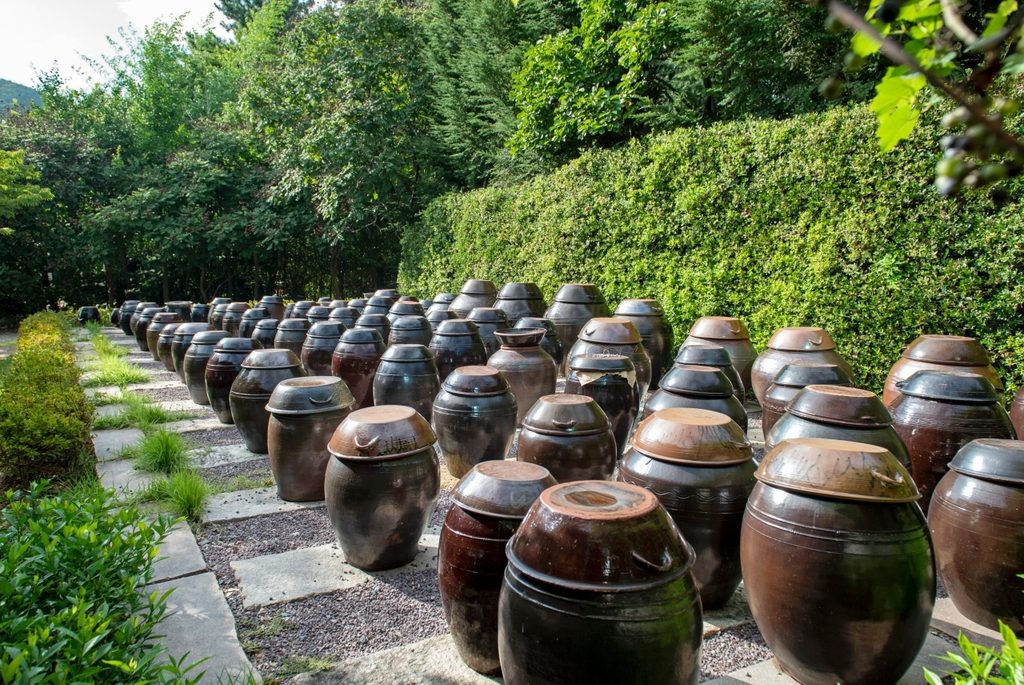
In the traditional method, meju is placed in a jar with salted water and left to ferment. After a period of fermentation, the liquid is drawn off as ganjang, and the remaining solids become doenjang. The exact ingredients, timing, and handling vary by recipe and household.
The jangdokdae was part of the household’s everyday food life. Making ganjang involved preparing meju, mixing salt water, watching the jars, and later separating and storing the finished jang. Today, many people buy bottled ganjang, but rows of earthenware jars remain a familiar image of traditional Korean food culture.
Types of Korean Soy Sauce
Korean soy sauce is sold under several names. Some names describe the sauce’s traditional use, while product labels may classify it by how it was made. The flavor and best use can vary by brand, so check the label when choosing one.
Hansik Ganjang (한식간장): Traditional Korean Soy Sauce
Hansik ganjang (한식간장), also called guk-ganjang (국간장) or Joseon-ganjang (조선간장), is made using Korean-style meju and salted water. It is often lighter in color but quite salty, so cooks use a small amount to season soup, stew, or namul (나물), seasoned vegetables. Because it seasons without darkening the dish as much as some other soy sauces, it is a common choice for clear soups and pale-colored foods.
Yangjo Ganjang (양조간장): Brewed Soy Sauce
Yangjo ganjang (양조간장) is brewed by fermenting soybeans or defatted soybeans with grains and salt water. It is a common bottled soy sauce used in Korean kitchens. It works well in marinades, dipping sauces, and everyday seasoning.
Jin Ganjang (진간장): A Common Kitchen Label
Jin ganjang (진간장) is a familiar name on Korean supermarket shelves. It is often used for braising, stir-frying, and marinades, where a deeper color and fuller seasoning are welcome. However, “jin ganjang” does not by itself tell you the product’s exact manufacturing method. Check the label for terms such as yangjo ganjang or honhap ganjang (혼합간장, blended soy sauce). Korean food standards classify soy sauce by production method into categories such as Korean-style, brewed, acid-hydrolyzed, enzyme-hydrolyzed, and blended soy sauce.
Honhap Ganjang (혼합간장): Blended Soy Sauce
Honhap ganjang (혼합간장) is blended soy sauce. It may combine brewed soy sauce with other soy sauce types. Because products differ, the label is the best way to see what kind you are buying.
Different types of Korean soy sauce, including guk-ganjang, brewed soy sauce, and jin ganjang.
How Koreans Use Ganjang
Ganjang is a versatile seasoning used in many everyday dishes.
- Guk and jjigae (국·찌개): Guk-ganjang is commonly used to season soups and stews.
- Namul (나물): A little soy sauce seasons vegetables such as spinach or bean sprouts.
- Bulgogi (불고기): Soy sauce is part of the savory marinade for Korean-style beef.
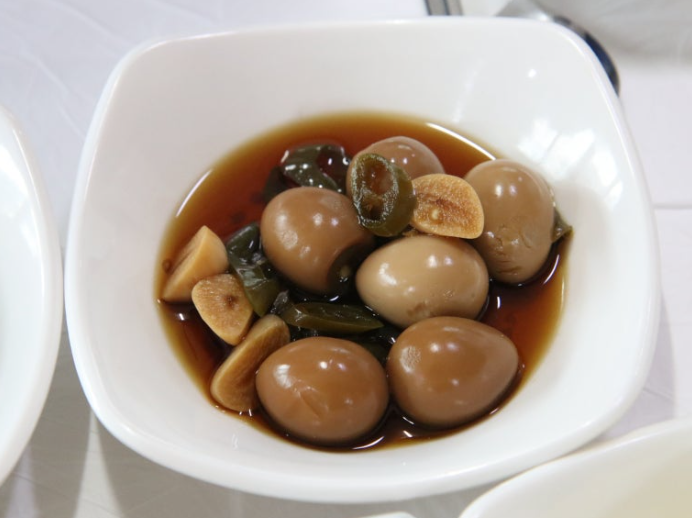
- Jangjorim (장조림): Meat or eggs are braised in a soy-based seasoning.
- Yangnyeom ganjang (양념간장): Soy sauce mixed with ingredients such as scallions, sesame seeds, or chili can be served with dumplings, tofu, or pancakes.
Different kinds of ganjang can make the same dish taste and look different. A lighter soup soy sauce seasons broth with a small amount, while a darker type can add more color to braised food.
Ganjang’s History in Korea
Ganjang has been part of Korean food culture for centuries. The Samguk Sagi (삼국사기) records that in 683, during the Silla period, jang and fermented soybean foods were included among the gifts sent for a royal marriage. Later, records from the Goryeo period describe salt and jang being distributed to people in need. These accounts show that jang was valued not only as seasoning but also as an important food supply.
For a long time, making ganjang was an important household task. Families prepared meju, fermented it in salted water, separated the liquid and solids, and stored the finished jang. Recipes and flavors varied from one home to another. The practice of making, keeping, and using Korean jang was inscribed on UNESCO’s Intangible Cultural Heritage list in 2024.
Choosing Ganjang for a Dish
If a Korean recipe simply says “soy sauce,” look for any additional clue in the dish. For soup or namul, guk-ganjang is often the intended choice. For marinades, dipping sauces, or everyday cooking, a brewed soy sauce is commonly used. For braised dishes, many Korean cooks reach for jin ganjang or another darker soy sauce. Because saltiness varies, add soy sauce gradually and taste as you cook. Once you become familiar with the different types, it is easier to understand why Korean recipes may specify one kind of ganjang rather than another.
Read Next
Korean Jang (장): Gochujang, Doenjang, and Ganjang –