
What Is Kimjang?
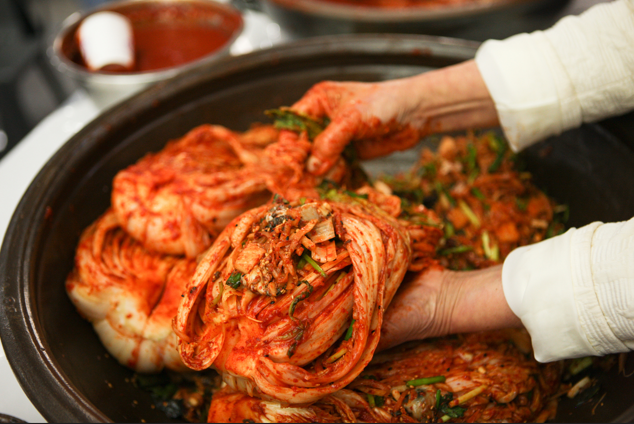
Kimjang is the traditional Korean practice of making and sharing large quantities of kimchi before winter. It is a seasonal event, a family activity, a community practice, and a cultural tradition.
In 2013, UNESCO inscribed “Kimjang, making and sharing kimchi in the Republic of Korea” on the Representative List of the Intangible Cultural Heritage of Humanity. UNESCO describes kimjang as a collective practice that reaffirms Korean identity, strengthens family cooperation, and reminds people of the need to live in harmony with nature. (UNESCO listing)
Timing and Ingredients
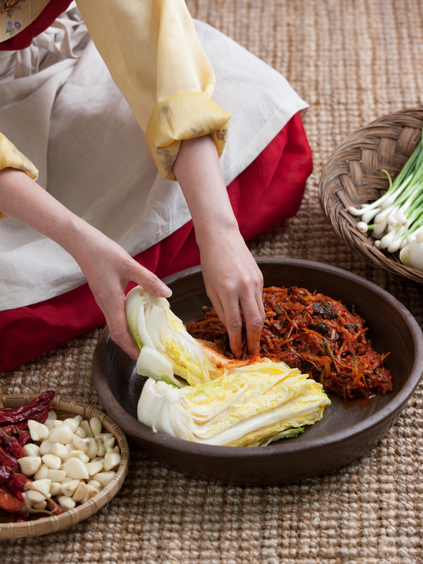
Traditionally, kimjang took place in late autumn, when the weather became cold enough for kimchi to keep through winter. Families bought large amounts of napa cabbage, radish, chili powder, garlic, ginger, salt, fish sauce, and salted shrimp.
UNESCO notes that kimjang follows a yearly cycle:
- Spring: seafood is salted and fermented
- Summer: sea salt is prepared
- Late summer: chili peppers are dried and ground
- Late autumn: communities make and share enough kimchi for winter
The cycle links kimchi to the seasons: it is more than food.
The Process
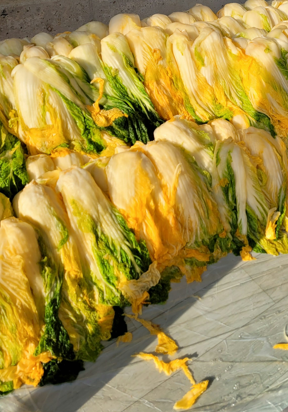
1. Salt the Cabbages
- Trim the root end of each napa cabbage and cut a cross (X) partway through the base, so the head holds together but the leaves can be pulled apart by hand later.
- Wash the cabbages, then salt them: either soak them in brine — water with coarse salt (굵은소금) dissolved in it — or sprinkle coarse salt between the leaves.
- Let them sit for several hours (typically 4–6, depending on size and temperature), turning the cabbages once or twice so they salt evenly.
- The cabbage is ready when the thick white stem bends without snapping. Over-salting makes the kimchi unpleasantly salty; under-salting leaves it too crisp to absorb seasoning.
- Rinse the cabbages two or three times to remove the excess salt, then drain them well. Some cooks keep a little of the salted water to adjust the seasoning paste later.
2. Make the Seasoning Paste
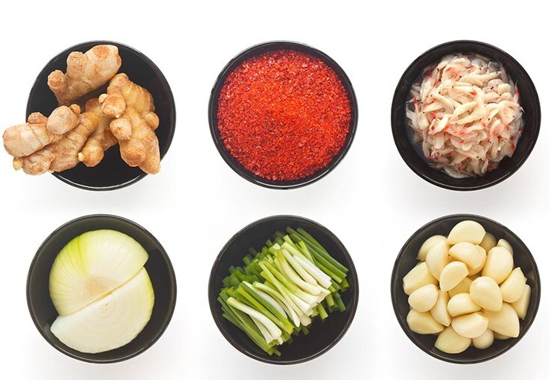
- Soak gochugaru (고춧가루, Korean red chili pepper flakes) in fish sauce (액젓) or water for a while, so it hydrates and deepens in color — this is the base of the paste.
- Mix in plenty of minced garlic and ginger, and finely chopped salted shrimp (새우젓).
- Add Korean radish cut into thin matchsticks, sliced scallions (쪽파), and, if you like, chives (부추) or other greens.
- Some families also add a spoonful of sweet rice porridge (찹쌀풀) or grated apple or pear; the natural sugars help fermentation and round out the heat.
- The finished paste should be thick and slightly wet — dry paste ferments unevenly.
3. Fill the Leaves
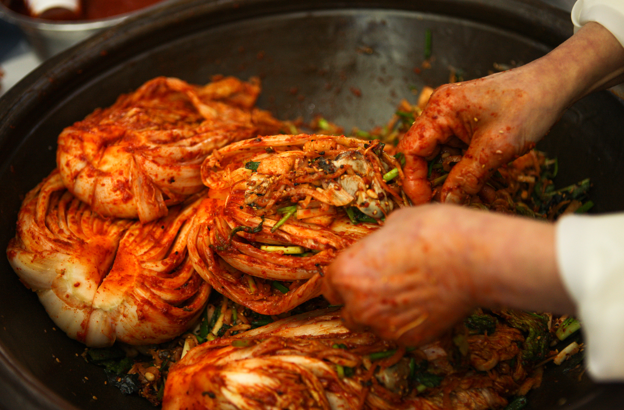
- Pull the salted cabbage leaves apart by hand without separating the head, or cut the head in half or quarters first if you prefer smaller pieces.
- Spread the seasoning paste on every leaf, one by one. Put more paste near the thick white stems — they take up seasoning slowly — and less toward the leaf tips, which absorb it quickly.
- When all the leaves are filled, fold the outer leaves over the top to wrap the head closed.
4. Pack and Ferment
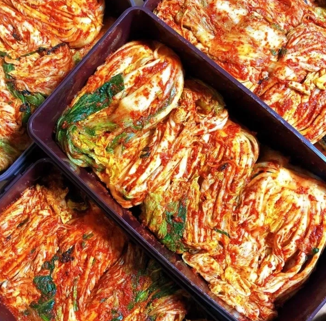
- Pack the kimchi tightly into a jar, traditionally an onggi, pressing it down firmly with your hands to push out air pockets. Add the reserved salted water so it rises above the kimchi and keeps the top submerged — exposure to air spoils kimchi.
- Leave the jar at room temperature for a day or two so fermentation starts; the kimchi becomes lightly bubbly and develops the first hint of sourness.
- Then move it to cold storage — a kimchi refrigerator, or the coldest part of a regular fridge — to slow the fermentation. This serves the same purpose as the buried onggi of the past: a stable, cool temperature.
- Kimchi keeps changing in the cold: fresh kimjang kimchi eaten within days is bright, sharp, and crisp, while kimchi aged for weeks or months deepens in sourness.
Storage
In the past, kimchi was stored in large earthenware jars called onggi (옹기), sometimes placed outdoors or buried partly underground to keep a stable temperature during winter. Modern households more commonly use kimchi refrigerators instead.
Sharing and Passing Down Knowledge
Kimjang is hard work — it takes time, strength, planning, and cooperation — but it also brings people together. Families share the labor, relatives gather, neighbors may exchange kimchi, and older generations teach younger ones. Recipes are passed down not only in writing but through hands, taste, smell, and memory.
[Image: photo of kimjang scene — Photo: Korea Tourism Organization]
Suyuk and Bossam: Boiled Pork with Fresh Kimchi
One of the most anticipated moments of kimjang day comes after the work is done. Many Korean families boil pork and eat it with the freshly made kimchi.
- Suyuk (수육) — boiled pork, usually sliced and served warm. It is tender, mild, and rich.
- Bossam (보쌈) — a way of eating pork wrapped in cabbage or other leafy vegetables. On kimjang day, people commonly place a slice of boiled pork on a salted napa cabbage leaf, add a piece of newly made kimchi or fresh kimchi seasoning, and wrap it into one bite.
The combination balances its components: the pork is soft and savory; the fresh kimchi is spicy, garlicky, salty, and bright; the cabbage is crisp and slightly sweet.
Fresh Kimchi vs. Aged Kimchi
Fresh kimjang kimchi tastes very different from the aged kimchi eaten months later. It has not yet developed deep sourness — at this stage it is raw, lively, and powerful, with sharp garlic and chili and crisp cabbage. Fresh kimchi with warm boiled pork is one of the most comforting combinations in Korean home cooking.
The meal is also part of the ritual: family members gather around the table, taste the new kimchi, and discuss the seasoning — “it needs more time to ferment” versus “it’s already delicious.” For many Koreans, kimjang day is remembered through this meal: cold air outside, red seasoning on gloves, large containers of kimchi, the smell of boiled pork, and family eating together after a long day. Suyuk with fresh kimchi is, in effect, the celebration of kimjang itself.
[Image: photo of suyuk and fresh kimchi — Photo: Korea Tourism Organization]
Kimjang as Family Memory
For many Koreans, kimjang is also a powerful memory. People recall the smell of salted cabbage, red seasoning on plastic gloves, someone tasting the paste, large bowls and outdoor work areas, cold late-autumn air, piles of cabbage, and fresh kimchi with boiled pork after the work is finished.
The tradition also reflects family structure. Historically, women did much of the labor: mothers, mothers-in-law, daughters, daughters-in-law, sisters, and neighbors often worked together. Today, many families make smaller batches, buy prepared kimchi, or skip kimjang entirely, but the memory remains strong.
Kimchi: A Deep Guide to Korea’s Fermented Soul Food (https://kimbaplife.com/kimchi-a-deep-guide-to-koreas-fermented-soul-food/)