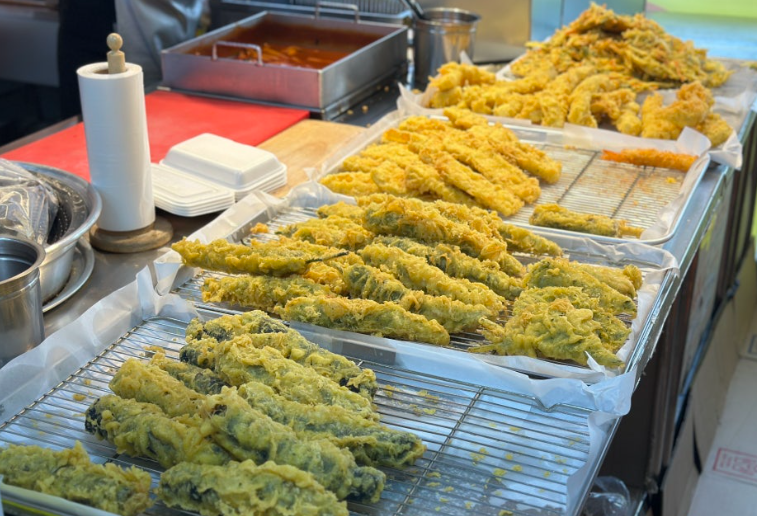

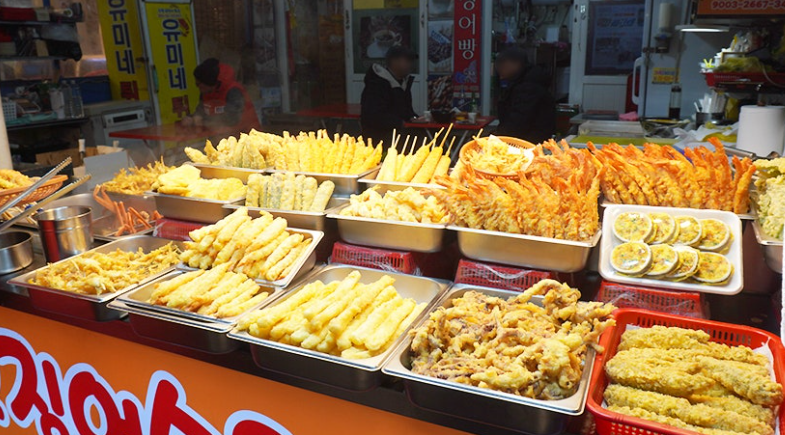
At a Korean snack stall, you may see a tray of golden fried foods beside bubbling tteokbokki and skewers of eomuk. These crunchy bites are called twigim (튀김), a broad category of Korean deep-fried dishes. Popular ingredients include sweet potato, squid, shrimp, vegetables, and seaweed rolls filled with glass noodles.
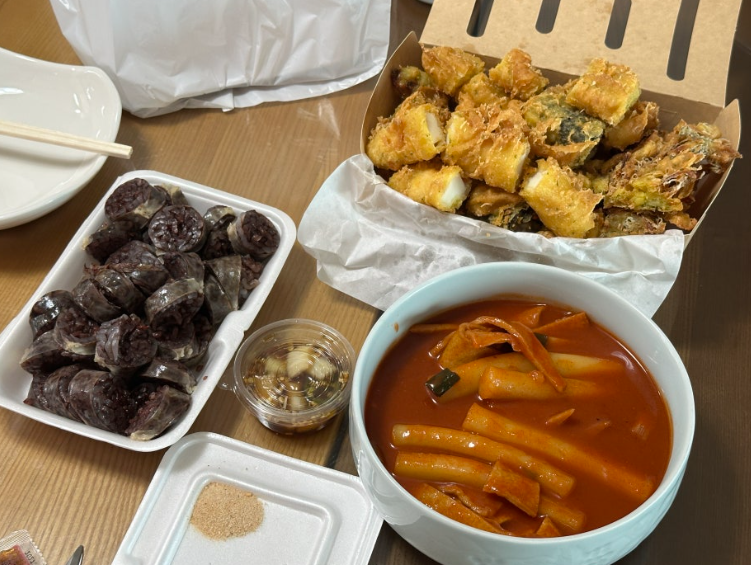
Twigim is often sold at traditional markets, street-food stalls, and bunsik restaurants. You can order a few pieces as a snack or add them to a meal with tteokbokki, sundae, or kimbap.
Quick Facts About Twigim
- Korean name: 튀김 (twigim)
- What it is: Korean deep-fried food made with a variety of ingredients
- Common varieties: Sweet potato, squid, shrimp, vegetables, dumplings, and gimmari
- Popular pairing: Tteokbokki, especially its spicy sauce
- Where to find it: Street stalls, traditional markets, and bunsik restaurants
What Is Twigim?
Twigim comes from the Korean word twigida (튀기다), meaning “to fry.” It is not one specific dish. The name covers many ingredients that are coated in batter and deep-fried, as well as some foods prepared with a light coating. Depending on the stall, the batter may be thin and crisp or thicker and more substantial. The ingredients, batter, and way it is served vary from one place to another.
Korean Frying Mix (Twigim-garu, 튀김가루)
Many home cooks in Korea use twigim-garu (튀김가루), a pre-mixed flour blend made for frying. It commonly contains wheat flour and starch, along with salt and other seasonings. Some products may include additional ingredients to help create a light, crisp coating, so the exact blend varies by brand.
To make batter, the mix is stirred with water according to the package directions. It can also be used to lightly coat ingredients before frying. Using a prepared mix is convenient because some of the seasoning is already included. Twigim-garu is sold in many Korean supermarkets, usually near flour and other cooking mixes.
Popular Types of Twigim
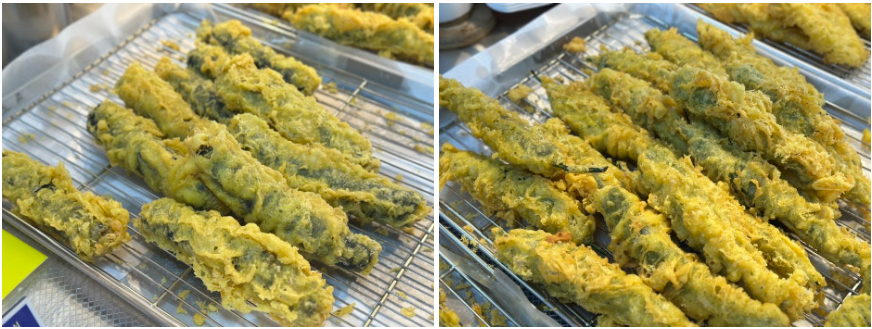
Gimmari (김말이)
Gimmari is made by wrapping seasoned glass noodles in dried seaweed, cutting the rolls into pieces, dipping them in batter, and deep-frying them. The seaweed becomes crisp while the noodles inside stay soft and chewy. Gimmari is especially popular with tteokbokki because it can be dipped into the sauce.
Gochu Twigim (고추튀김)
Gochu twigim is made by stuffing green chili peppers, coating them in batter, and deep-frying them until golden. The filling often includes minced pork and tofu, though ingredients vary by recipe and stall. The crisp coating and tender filling contrast with the pepper’s fresh, slightly sharp flavor. Some peppers are mild, while others have more heat, so the spice level can vary. You can enjoy gochu twigim on its own or dip it into tteokbokki sauce. At a street-food stall, ask whether the peppers are spicy and what filling they contain before ordering.
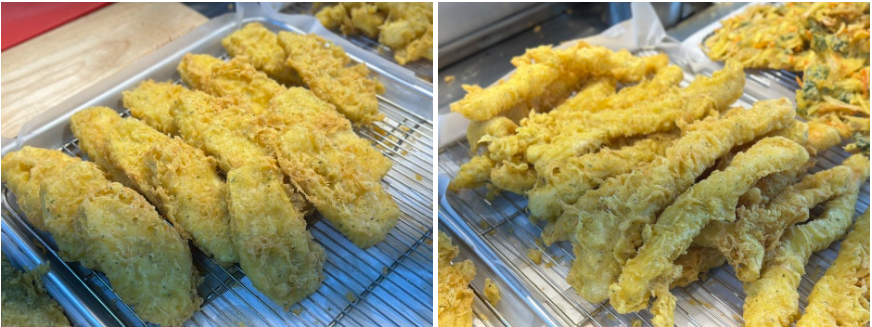
Goguma Twigim (고구마튀김)
Sweet potato slices are coated in batter and fried until crisp outside and tender inside. Their mild sweetness makes them a good choice for anyone who prefers a less savory snack.
Ojingeo Twigim (오징어튀김)
Squid is cut into strips or rings, battered, and fried. It has a savory flavor and a pleasantly chewy texture beneath its crisp coating.
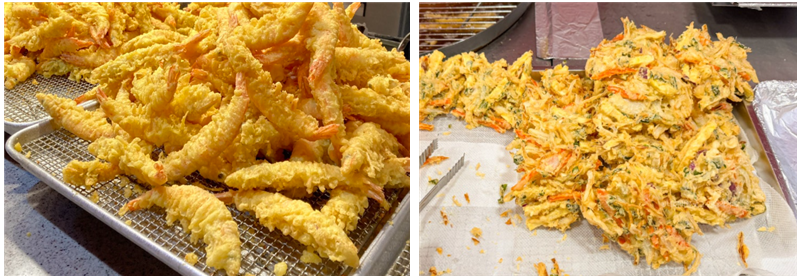
Saeu Twigim (새우튀김)
Shrimp is coated and fried, often with the tail left on. The shrimp stays tender inside, making this one of the easiest varieties to recognize for first-time visitors.
Vegetable Twigim (야채튀김)
Vegetable twigim can include ingredients such as sweet pumpkin, onion, carrot, perilla leaves, or crown daisy leaves. Some stalls fry individual vegetables; others combine several vegetables in one portion.
Fried Dumplings and Other Varieties
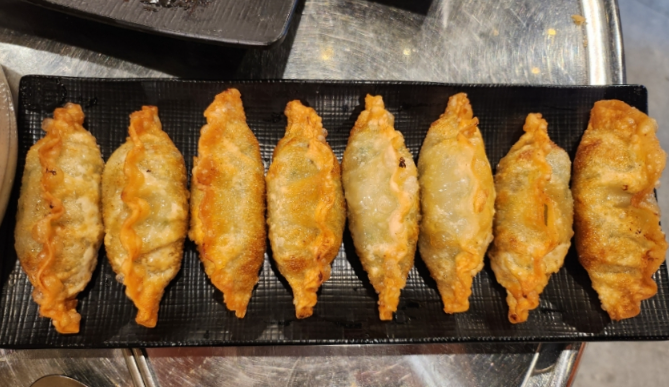
Some stalls also sell fried dumplings (gun-mandu, 군만두) and other battered or fried snacks alongside twigim. The selection is not fixed, so the tray may include different items depending on the stall.
Why Is Twigim So Popular?
Twigim offers a satisfying contrast of textures: a crisp coating around soft vegetables, tender seafood, or chewy glass noodles. The variety also makes it easy for a group to share several different pieces rather than choosing just one snack.
It fits naturally into Korea’s casual bunsik food culture. At many snack stalls, twigim is sold alongside tteokbokki, sundae, and eomuk. The combination of crunchy fried food and spicy, saucy tteokbokki is especially familiar; Korea Tourism Organization describes twigim as one of the popular foods enjoyed with tteokbokki.
Twigim is also easy to order in small portions. You can choose a mix of ingredients, share a plate, or add a few pieces to a simple meal of kimbap and tteokbokki. Since the selection varies, each stall offers a slightly different combination.
How to Order Twigim at a Stall
At many stalls, the fried pieces are displayed together in a tray. Point to the varieties you want and tell the vendor how many pieces to serve. You can order them on their own, ask for them with tteokbokki, or have some cut into the tteokbokki sauce if that option is available.
A simple order is twigim juseyo (튀김 주세요), meaning “Twigim, please.” To ask for a mix, say seokkeoseo juseyo (섞어서 주세요), meaning “Please mix them.” The exact phrasing and serving options can vary by shop.
Tips for First-Time Visitors
- Try a few different kinds. Gimmari, sweet potato, and squid offer noticeably different textures.
- Pair them with tteokbokki. Dip a piece into the sauce for a spicy, savory bite.
- Eat them while they are warm. The coating is crispest soon after frying.
- Ask what is inside. Mixed vegetable pieces and filled varieties can differ from stall to stall.
- Check for allergens if needed. Batter recipes vary and may include wheat, egg, or other ingredients.
Read Next
10 Korean Restaurant Tips Every First-Time Visitor Should Know –
Tteokbokki (떡볶이): A Guide to Korea’s Spicy Rice Cakes –
Eomuk (어묵): Korea’s Savory Ground-Fish Favorite –
Twigim (튀김): Korea’s Crispy Street-Food Favorite –
Kimbap (김밥): Types, Ingredients, and How to Eat It
Sundae (순대): Korea’s Beloved Food and Regional Sausage –