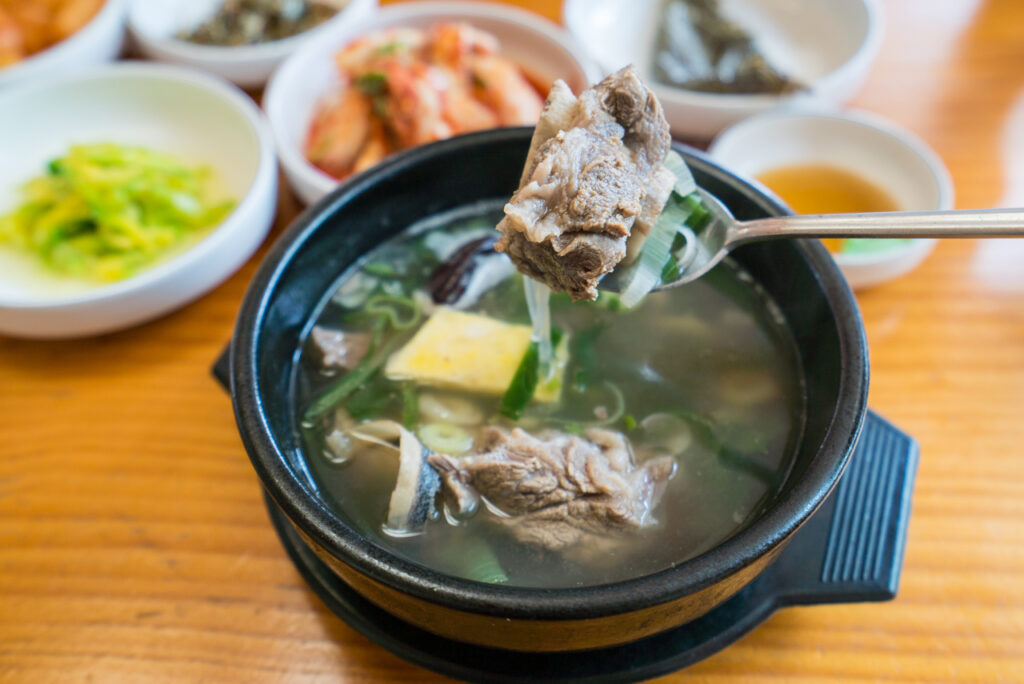

A steaming bowl of galbitang (갈비탕) comes with tender beef ribs in a savory broth. Pick up a rib and enjoy the meat, then add rice to the soup—or eat it on the side. Tangy kimchi (김치) or kkakdugi (깍두기), cubed radish kimchi, balances the rich beef flavor.
Galbitang is a hearty meal of ribs, broth, rice, and side dishes. You can find it at Korean restaurants and order ready-to-heat versions online.
Quick Facts About Galbitang
- Korean name: 갈비탕 (galbitang)
- What it is: Korean beef short rib soup
- Main ingredient: Beef ribs, often served on the bone
- Broth: Savory and usually clear
- Often served with: Rice (bap, 밥), kimchi, and kkakdugi
- Where to find it: Korean restaurants, galbi restaurants, soup restaurants, and online food shops
What Is Galbitang?
Galbi (갈비) means ribs, and tang (탕) refers to soup. Galbitang is made by simmering beef ribs with ingredients such as radish, green onions, and garlic. The ribs cook until tender, giving the broth a deep beef flavor. Chopped green onions are often added before serving, and some versions include glass noodles. Recipes vary from restaurant to restaurant.
The ribs are the heart of the dish. They make the bowl feel generous, while the broth is usually lighter and clearer than the milky broth of some long-simmered beef-bone soups.
Galbitang, Seolleongtang, and Gomtang: What’s the Difference?
These are all Korean beef soups, but their main ingredients and typical broth styles differ.
- Galbitang (갈비탕) centers on beef short ribs. The bowl often includes large pieces of rib in a savory, usually clear broth.
- Seolleongtang (설렁탕) is known for its pale, milky broth, made by simmering ox bones and beef cuts for a long time.
- Gomtang (곰탕) is a broader style of beef soup made by simmering beef and, depending on the recipe, bones or other cuts.
The line between gomtang and seolleongtang is not always strict; recipes and restaurant names can overlap. The easiest way to recognize galbitang is that the ribs themselves are central to the dish.
Why Do People Love Galbitang?
Galbitang combines tender meat, savory broth, and rice in one comforting meal. The ribs make it filling, while the broth is easy to sip between bites. Kimchi and kkakdugi add a crisp, tangy contrast.
You can also season the soup to your taste. Try the broth first, then add salt, pepper, or green onions if you like. For many diners, part of the pleasure is taking time with the ribs before mixing rice into the broth.
Which Restaurants Serve Galbitang?
You can often find galbitang at galbi restaurants and Korean beef restaurants. Some barbecue restaurants offer it as a meal alongside grilled meat, but it is not on every menu. A few serve it only at certain times, such as weekday lunch, so check before you visit.
Korean soup restaurants and general hansik (한식, Korean food) restaurants may serve it, too. Some restaurants known for seolleongtang also offer galbitang. Look for 갈비탕 or 한우갈비탕 (hanwoo galbitang, Korean native beef short rib soup) on the menu.
Galbitang and Korea’s Gukbap Culture
Gukbap (국밥) literally means “soup and rice.” It describes a familiar Korean way of eating: rice served in soup or alongside it. Galbitang usually comes with rice on the side, and many people add some rice to the broth as they eat. Gukbap has long been valued as a quick, filling meal. Travelers once stopped at inns for a bowl, and soup-and-rice dishes remain a familiar everyday meal across Korea. Busan, for example, is known for dwaeji-gukbap (돼지국밥), pork soup with rice. Galbitang is part of this broader soup-and-rice tradition, though it is usually called tang rather than gukbap.
How to Enjoy Galbitang
Galbitang is often served piping hot in a large bowl. In many Korean restaurants, you’ll be given jipge (집게, tongs) and gawi (가위, kitchen scissors) with the soup. Hold a rib steady with the tongs, then use the scissors to cut the meat into bite-sized pieces or separate it from the bone. Food scissors are commonly used at Korean tables to cut meat and other foods into easy-to-eat portions.
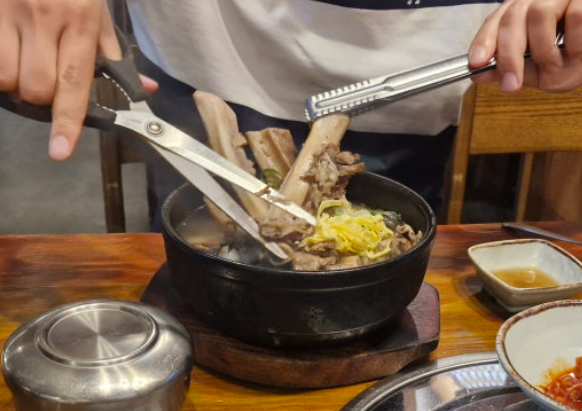
Start by tasting the broth, then enjoy the rib meat. Add rice to the soup, or eat it separately, alternating bites of rice and spoonfuls of broth. Pair the soup with kimchi or kkakdugi for a crisp, tangy contrast. Take care with the first spoonful—the soup and meat can stay hot for a while.
Buying Galbitang Online
You don’t have to visit a restaurant to enjoy galbitang. Online shops sell ready-to-heat versions, including shelf-stable pouches and frozen packs. Products vary: some contain bone-in ribs, while others offer boneless meat. Check the listing for storage instructions, serving size, and delivery options. If ordering from outside Korea, check whether the seller ships internationally.
How to Heat Packaged Galbitang
Heating instructions depend on the product. Some shelf-stable pouches can be warmed unopened in boiling water; others should be opened and poured into a pot first. Frozen packs may need a different method or heating time. Follow the package directions. If using a microwave, transfer the soup to a microwave-safe bowl unless the package specifically says it can be microwaved. Let it cool slightly before eating.
Tips for Trying Galbitang
- Taste the broth before seasoning it. Each restaurant has its own recipe.
- Enjoy the ribs while they’re hot. Take your time removing the tender meat from the bone.
- Add rice to the soup or eat it on the side.
- Pair it with kimchi or kkakdugi for a crisp, tangy contrast.
- Check the package directions when preparing a ready-to-heat version.
Read Next
10 Korean Restaurant Tips Every First-Time Visitor Should Know –