On a rainy day in Korea, a sizzling pan of pajeon (파전) and a bowl of makgeolli (막걸리), a lightly sparkling Korean rice wine, make a familiar combination. Pajeon is a savory pancake made with green onions and batter, often with seafood or other ingredients mixed in. It is served at restaurants, market stalls, and homes as a snack or a dish to share.
Quick Facts About Pajeon
- Korean name: 파전 (pajeon)
- Main ingredient: Green onions
- Common additions: Seafood, egg, and other vegetables
- Popular pairing: Makgeolli
- Where to find it: Korean restaurants, traditional markets, and pubs serving Korean snacks
What Is Pajeon?
Pajeon belongs to the broad family of Korean pan-fried dishes called jeon (전). The word combines pa (파), meaning green onion, with jeon. Unlike sweet breakfast pancakes, pajeon is savory and is usually eaten as a shared dish or snack.
The batter is poured into a pan with green onions and cooked until the outside is browned. Depending on the recipe, the pancake may be thin and crisp around the edges, or thicker and softer in the middle. It is usually cut into pieces and served with a soy-based dipping sauce.
Popular Types of Pajeon
Plain Pajeon (기본 파전)
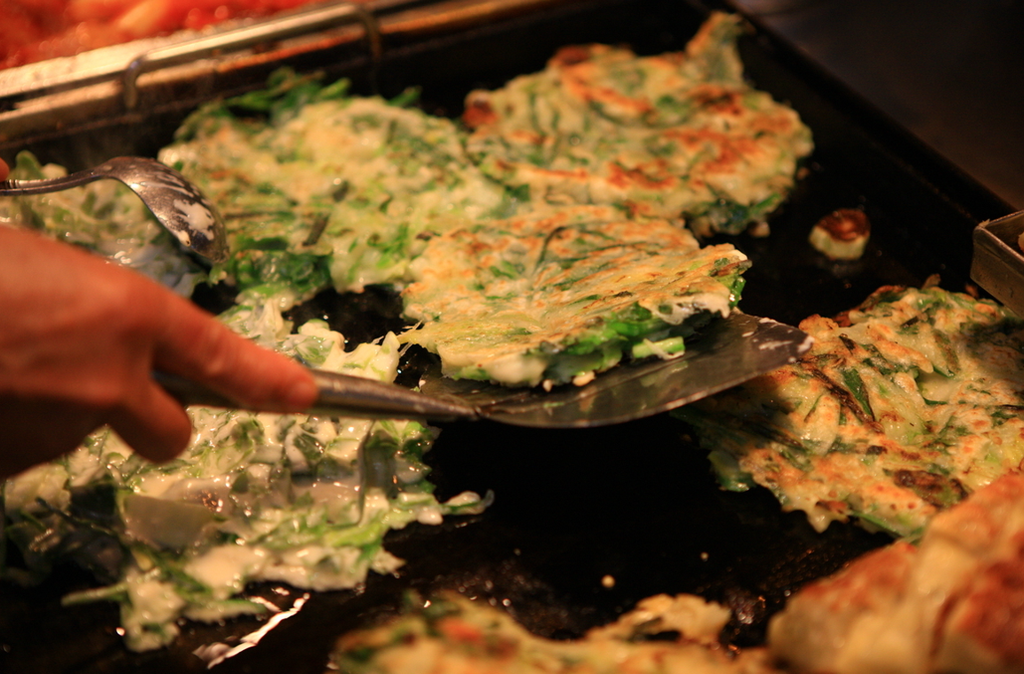
Photo: Korea Tourism Organization
The simplest version highlights green onions in a light batter. It may include egg, but recipes vary. This is a good choice if you want to focus on the flavor of the onions and the crisp edges.
Haemul Pajeon (해물파전)
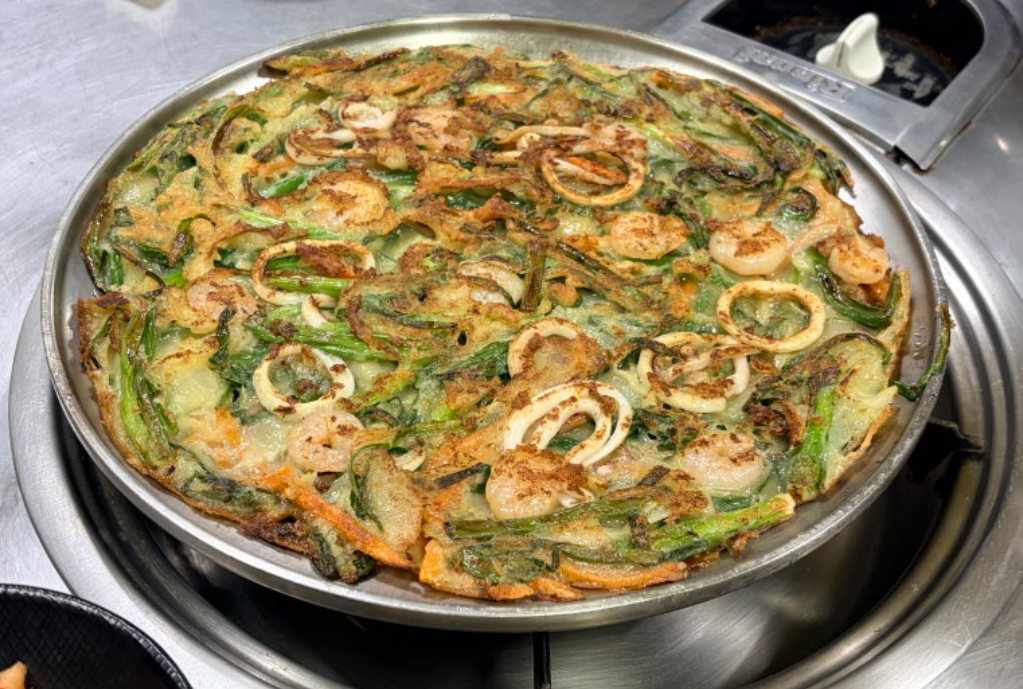
Haemul pajeon adds seafood such as squid, shrimp, oysters, or mussels to green onions and batter. The seafood makes it heartier and adds a savory flavor. It is one of the best-known versions of pajeon.
Dongnae Pajeon (동래파전)
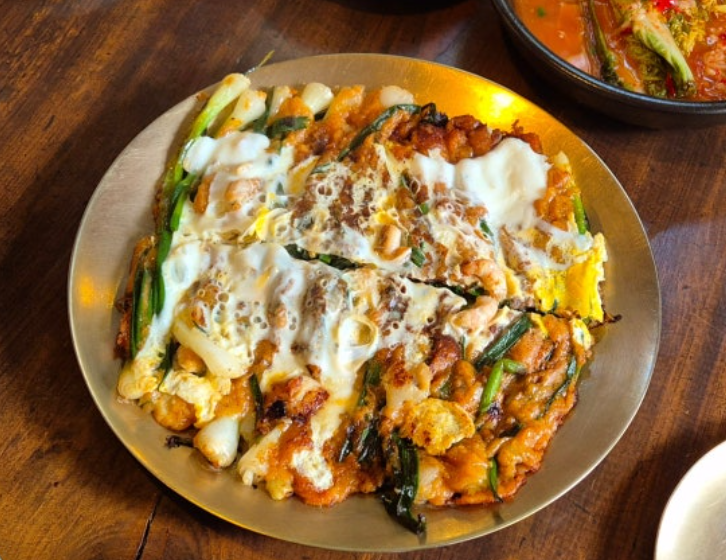
Dongnae pajeon is a regional specialty associated with the Dongnae area of Busan. It is made with plenty of scallions and seafood, and may include egg. Compared with a thin, crisp pancake, this style is often softer and moister because it is cooked with a thicker, rice-based batter. Recipes and textures differ among restaurants. Stories about Dongnae pajeon’s early origins vary. Local accounts describe it as a regional market food that became more widely known and commercialized over time.
Why Is Pajeon Popular on Rainy Days?
Pajeon and makgeolli are widely associated with rainy weather in Korea. One popular explanation is that the sound of rain brings to mind batter sizzling in a frying pan. Others connect the pairing to the way the aroma of cooking jeon seems especially noticeable on a damp day. These are familiar cultural explanations rather than a single confirmed origin story.
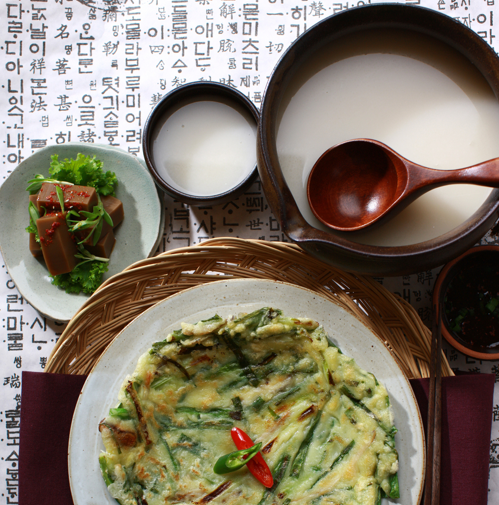
Photo: Korea Tourism Organization
Pajeon is also easy to share. A large pancake can be cut into bite-sized pieces for everyone at the table, and its savory flavor pairs well with makgeolli. You can enjoy it without alcohol, too; it also works as a side dish or snack with other Korean food.
How to Eat Pajeon
Pajeon is usually served hot and cut into wedges or squares. Pick up a piece with chopsticks and dip it lightly into the sauce, which is often made with soy sauce and may include vinegar, sesame seeds, or chili. At some restaurants, the pancake arrives on a hot plate so it stays warm at the table. If you are sharing, take a piece from the edge first: the outside is often the crispiest part. Seafood versions may contain shellfish, so ask about the ingredients if you have an allergy.
Where to Try Pajeon
Look for pajeon at Korean restaurants, traditional markets, and pubs that serve jeon with makgeolli. Some restaurants specialize in seafood pancakes, while others offer several kinds of jeon on the same menu. Pajeon is also commonly made at home, especially when family or friends gather to share food.
Read Next
10 Korean Restaurant Tips Every First-Time Visitor Should Know –