
What fruit can you find in Korea, and when is it in season? Korean markets sell both locally grown fruit and imports from around the world. The domestic selection changes with the seasons, while imported fruit such as bananas and pineapples is available for much of the year.
This guide covers the fruits you are most likely to encounter in Korean homes, markets, supermarkets, and cafés. Harvest periods can shift with the weather, variety, and growing method; greenhouses and cold storage also keep some fruits available beyond their main season.
Korean Fruit by Season
| Season | Korean fruits commonly available |
|---|---|
| Spring | Strawberries (딸기), late-season Jeju citrus (감귤), maesil or green plums (매실) |
| Summer | Watermelon (수박), chamoe or Korean melon (참외), peaches (복숭아), plums (자두), blueberries (블루베리), early grapes (포도) |
| Autumn | Apples (사과), Korean pears (배), grapes (포도), persimmons (감), fresh jujubes (대추), figs (무화과), kiwi (참다래) |
| Winter | Tangerines (귤), premium Jeju citrus, strawberries, and stored apples and pears |
Spring: Strawberries and Green Plums
Strawberries (딸기, ttalgi)
Korean strawberries are especially popular in winter and spring. Greenhouse growing makes fresh strawberries available during the colder months, and some farms offer picking experiences. Cafés and bakeries feature strawberries in cakes, drinks, and seasonal desserts.
Strawberries are familiar around the world, but Korea has its own varieties, including Seolhyang (설향), Maehyang (매향), and Kingsberry (킹스베리). They vary in sweetness, acidity, aroma, size, and texture.
Maesil (매실, maesil)
Maesil is a green plum harvested in late spring and early summer. It is not usually eaten fresh like an apple or peach. People most often use it to make maesil-cheong (매실청), a sweet syrup added to drinks and cooking.
Summer: Melons, Peaches, Plums, and Berries
Watermelon (수박, subak) and chamoe (참외, chamoe)
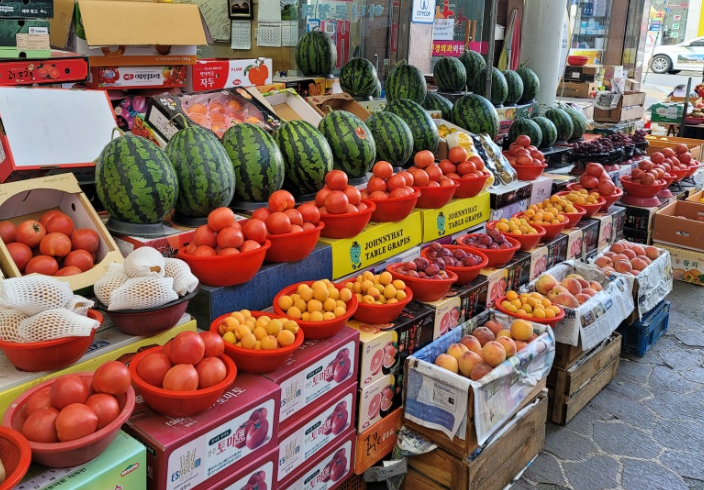
Watermelon and chamoe are two fruits strongly associated with Korean summer. Both are usually served chilled. Families may bring a watermelon to the beach, a mountain valley, or a vacation home to share. Chamoe is often peeled, sliced, and eaten as a crisp, refreshing snack.
Watermelon is also used in subak hwachae (수박화채), a chilled fruit punch, and some cafés sell watermelon juice. The watermelon-shaped subak-bar (수박바) is a familiar packaged ice cream.
Chamoe is a small, yellow melon with white stripes and pale, crunchy flesh. Its sweet center and seeds are often eaten along with the rest of the fruit.
Korean Fruit: Korean Watermelon (Subak, 수박) –
Korean Fruit: Korean Melon (Chamoe, 참외) –
Peaches (복숭아, boksunga) and plums (자두, jadu)
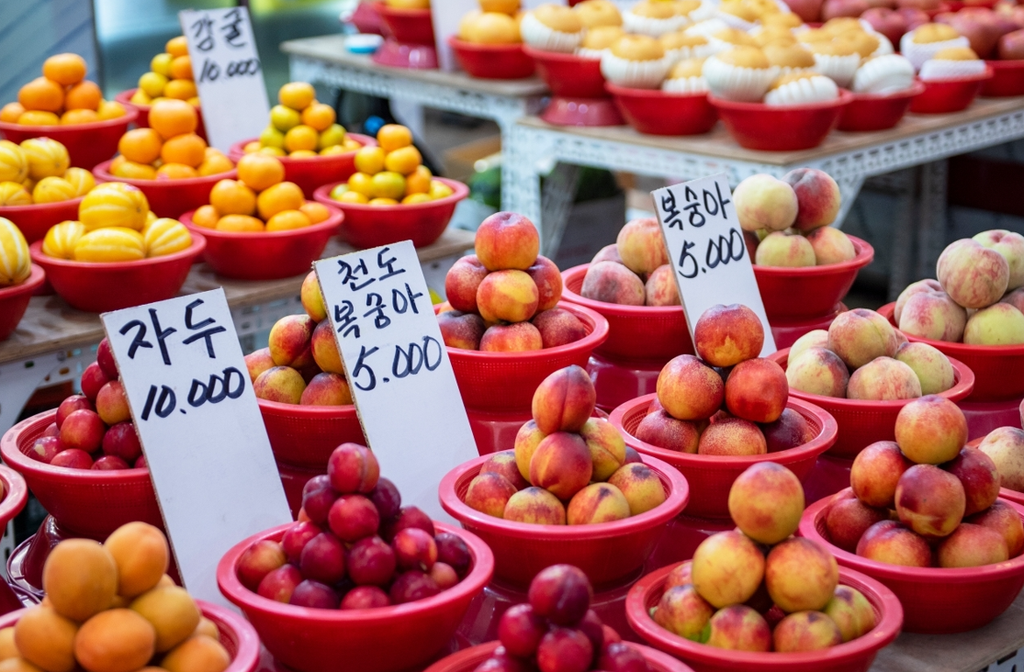
Peaches and plums are juicy summer fruits with sweet-tart flavors. Korean peaches include soft, fragrant varieties and firmer types such as cheondo (천도복숭아), or nectarines. Plums are usually eaten with their skin on; the skin and the flesh near the pit can taste especially tart.
Fresh peaches are seasonal favorites. Canned yellow peaches, hwangdo (황도), are also a familiar pantry food in Korea.
Korean Fruits: Korean Peaches (Bok-sunga, 복숭아) –
Korean Fruits: Korean Plums (Jadu, 자두) –
Blueberries (블루베리, beulluberi) and grapes (포도, podo)
Korean-grown blueberries are harvested mainly during the warmer months, though timing varies by region and growing method. Grapes appear from summer into autumn. Familiar Korean varieties include Campbell Early (캠벨얼리), while Shine Muscat (샤인머스캣) is known for its large berries and crisp bite.
Korean Fruit: Korean Grapes (Podo, 포도) –
Autumn: Apples, Pears, Grapes, and Persimmons
Autumn is one of Korea’s richest seasons for fruit. Apples, pears, grapes, and persimmons are harvested, and fruit gift boxes are common around family visits and holidays.
Apples (사과, sagwa) and Korean pears (배, bae)
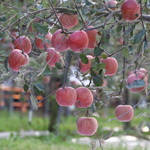
Korean apples are crisp and sweet-tart. Korean pears are round, pale, juicy, and often eaten fresh. Pear is also used in Korean cooking to add sweetness and moisture or to help tenderize meat.
Apples and pears can be stored after harvest, so they remain available beyond autumn.
Korean Fruit: Korean Apple (Sagwa, 사과) –
Korean Fruits: Korean Pear (Bae, 배) –
Persimmons (감, gam) and jujubes (대추, daechu)
Persimmons are among Korea’s signature autumn fruits. Sweet, crisp persimmons are eaten fresh; softer ones become hongsi (홍시), while dried persimmons are called gotgam (곶감). Gotgam has long been enjoyed as a winter snack and is also served on traditional holiday tables.
Fresh jujubes are crisp and mildly sweet. They are eaten as fruit in autumn, while dried jujubes are commonly used in tea and cooking.
Korean Fruits: Korean Persimmon (Gam, 감) –
Figs (무화과, muhwagwa) and kiwi (참다래, chamdaerae)
Fresh figs are a seasonal fruit with soft flesh and a delicate sweetness. They are easily damaged, so they are often best enjoyed close to where they are grown or soon after purchase.
Korean-grown kiwi, also called chamdaerae (참다래), is harvested in autumn and can be stored or ripened before eating. Kiwi is also imported, so it is available at other times of the year.
Winter: Tangerines, Jeju Citrus, and Strawberries
Tangerines (귤, gyul)
Small, easy-to-peel tangerines are a familiar winter snack in Korea. Many households keep a box at home and eat them while watching TV or chatting with family. Some schools serve a tangerine as dessert with lunch in winter.
Jeju Island is Korea’s best-known citrus-growing region. Alongside ordinary tangerines, shoppers may find larger varieties such as Hallabong (한라봉), Cheonhyehyang (천혜향), and Redhyang (레드향). These are usually more expensive than everyday tangerines and are often sold in gift boxes.
Korean Fruit: Korean Tangerine (Gyul, 귤) –
Imported Fruit in Korean Markets
Traditional markets, supermarkets, and fruit shops may carry imported fruit alongside Korean-grown produce. The selection and country of origin change with the season and supply. Common imports include:
- Bananas (바나나): A familiar everyday fruit, usually available year-round.
- Oranges (오렌지): Imported oranges are also sold in Korean markets and supermarkets.
- Pineapples (파인애플): Common in supermarkets and fruit shops.
- Mangoes (망고): Sold fresh, with the selection varying by season and store.
- Grapes (포도): Imported grapes may appear when locally grown grapes are out of season.
- Cherries (체리): A seasonal import often sold in small boxes.
- Kiwi, blueberries, and avocados (키위, 블루베리, 아보카도): Availability depends on the store and season.
Korea’s fresh-fruit imports include bananas, mangoes, pineapples, oranges, cherries, and kiwis, among other products. Imported grape shipments also come from several countries, including Chile, Australia, Peru, and the United States.
Larger supermarkets and specialty fruit shops may also stock more occasional imports such as papaya, dragon fruit, mangosteen, or durian. Smaller traditional markets may offer a more limited selection.
Are Fruit Prices High in Korea?
Fruit can feel expensive in Korea, especially premium gift-box fruit and certain locally grown varieties. An international comparison using 2021 data from the World Bank’s International Comparison Program placed South Korea among the countries with the highest fruit price levels. This is a broad comparison for that reference year; it does not mean every fruit in Korea is always more expensive than the same fruit elsewhere. Prices vary by fruit, season, harvest, and store.
Fruit prices can also change sharply when weather affects the harvest or supply. For example, the Korean government has reported that production changes and unusual weather can contribute to price increases for major fruits.
Are Korean Fruits Especially Sweet?
Sweetness is a quality that Korean shoppers and fruit sellers often highlight. Fruit labels and advertisements may emphasize dangdo (당도), or sugar content, and some popular varieties are selected for a sweet flavor. However, not every Korean fruit is sweeter than fruit from other countries. Taste depends on the variety, growing conditions, ripeness, and season.
Fruit in Everyday Korean Life
Fruit is eaten as a snack, served after meals, packed into school lunches, and given as a gift. Some Korean restaurants offer a small piece of seasonal fruit after a meal—for example, watermelon in summer or pear in autumn. At home, fruit may be washed, peeled, sliced, and shared among the family. Korean fruit culture includes both locally grown seasonal favorites and imported fruits from around the world. Trying what is in season is a good way to discover how fruit fits into everyday life in Korea.