In Korea, a hot bowl of chicken soup is a popular meal even in the middle of summer. Samgyetang (삼계탕) is made by simmering a small whole chicken with glutinous rice, ginseng, garlic, and jujubes. It is closely associated with the hottest days of summer, but restaurants serve it throughout the year.
Quick Facts About Samgyetang
- Korean name: 삼계탕 (samgyetang)
- What it is: Chicken soup with ginseng and glutinous rice
- Common ingredients: Young chicken, glutinous rice, ginseng, garlic, and jujubes
- Best-known season: Summer, especially the three Boknal days
- Where to find it: Samgyetang restaurants, Korean restaurants, supermarkets, and online shops
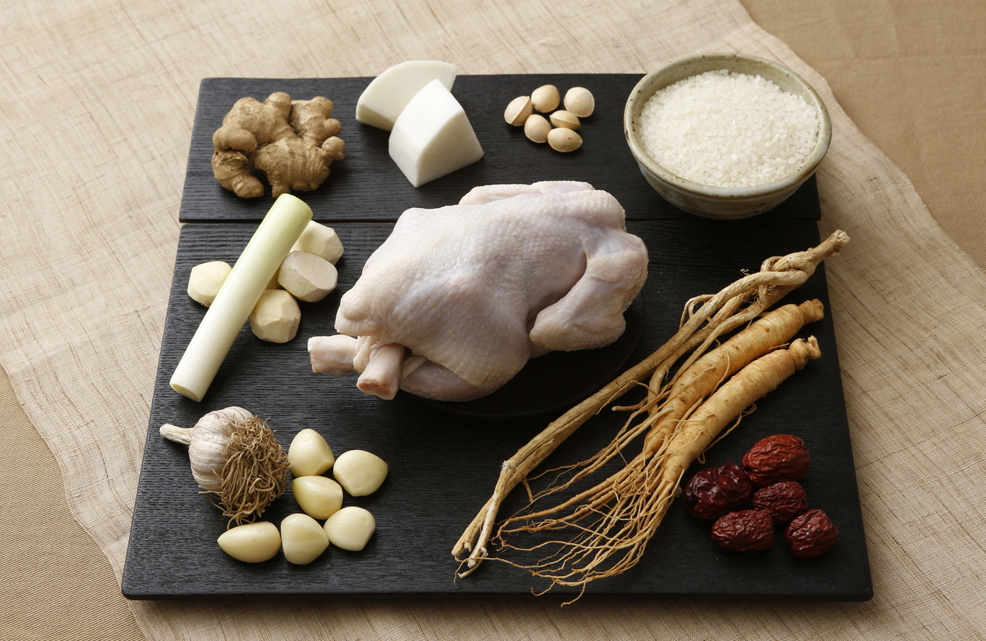
Photo: Korea Tourism Organization
What Is Samgyetang?
A small whole chicken is stuffed with glutinous rice and simmered with ginseng, garlic, and jujubes. Depending on the restaurant, the broth may also include chestnuts, astragalus root, or other herbs. The chicken becomes tender, and the rice inside absorbs the flavor of the broth. Samgyetang is usually served in an individual pot, often still bubbling when it reaches the table. The broth is savory and mild, with a subtle earthy aroma from the ginseng. Jujubes add a gentle sweetness. The distinctive ginseng flavor is part of the dish, but it usually does not overpower the chicken and broth.
A Brief History
Chicken soups have long been part of Korean cooking, but the ginseng chicken soup now known as samgyetang developed more recently. The Rural Development Administration notes that during the Japanese colonial period, some well-to-do households began adding powdered ginseng to chicken soup or baeksuk. The dish later became a popular restaurant meal.
Boknal: Korea’s Three Hottest Days
Samgyetang is closely associated with Boknal (복날), a group of three traditional summer days: Chobok (초복), Jungbok (중복), and Malbok (말복). Together, they are also called Sambok (삼복). They fall during the hottest part of summer, and their dates change each year. On these days, it is common to see long lines outside restaurants serving samgyetang.
The custom is often connected to iyeolchiyeol (이열치열), or “fighting heat with heat.” Rather than choosing only cold foods, many people enjoy a steaming, filling meal during hot weather. Samgyetang is valued as a hearty dish of chicken, rice, and broth. This describes a food tradition, not a medical remedy.
Popular Types of Samgyetang
Classic Samgyetang (기본 삼계탕)
The classic version features a small whole chicken stuffed with glutinous rice and simmered with ginseng, garlic, and jujubes. It is a good choice for a first taste of the dish.
Deulkkae Samgyetang (들깨삼계탕)
Deulkkae samgyetang is made with ground perilla seeds (deulkkae, 들깨). They give the broth a nutty flavor and a thicker, creamier texture than the lighter broth of many classic versions. It is a popular choice for diners who enjoy rich, savory soups. Recipes and consistency vary by restaurant.
Jeonbok Samgyetang (전복삼계탕)
Some restaurants add abalone (jeonbok, 전복) to samgyetang. It brings a briny flavor and a firmer texture, and is often offered as a more elaborate version of the dish.
Hanbang Samgyetang (한방삼계탕)
This version includes additional herbs, such as astragalus root. The ingredients vary by restaurant, so check the menu if you want to know what is used in the broth.
Mushroom Samgyetang (버섯삼계탕)
Mushrooms add an earthy flavor to the broth. Some restaurants use particular varieties, such as neungi mushrooms (능이버섯), while others offer a mixed-mushroom version.
How to Eat Samgyetang
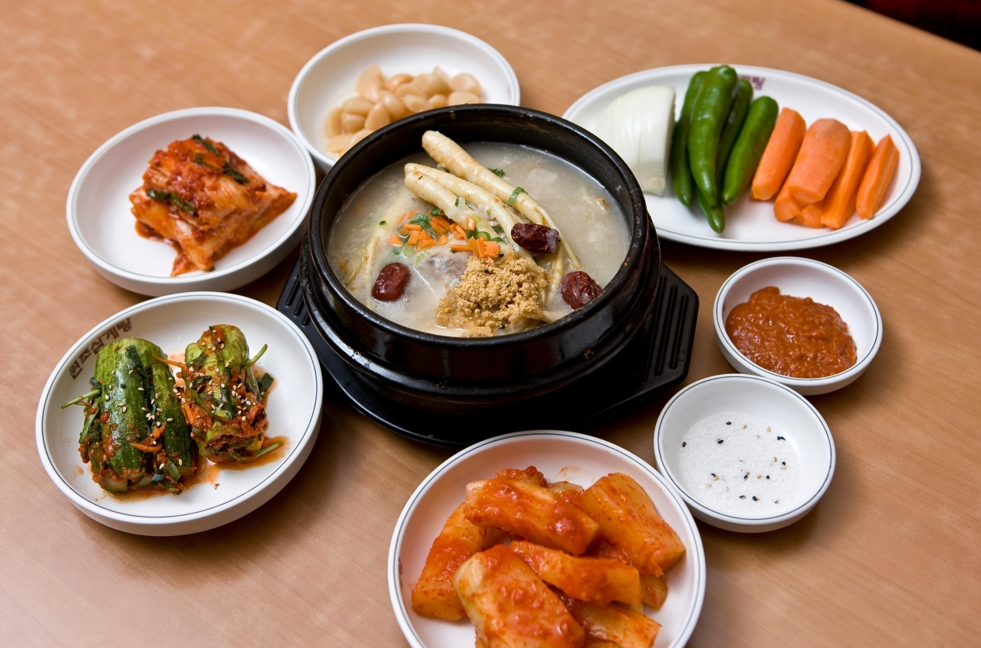
Photo: Korea Tourism Organization
The chicken is served whole, so diners pull off the tender meat as they eat. Place the bones on a small plate or at one side of the bowl. The glutinous rice inside the chicken is soft and sticky; some people mix it into the broth. Restaurants often serve salt and pepper separately so you can season the broth to taste. Kimchi or kkakdugi (깍두기), cubed radish kimchi, is commonly served alongside. Its crisp, tangy flavor pairs well with the warm soup. Be careful when the pot arrives. Samgyetang can be extremely hot and may continue bubbling at the table, so let it cool briefly before taking your first spoonful.
Where to Find and Buy Samgyetang
Restaurants
Samgyetang restaurants serve the dish throughout the year, but they can be especially busy on Chobok, Jungbok, and Malbok. If you plan to visit on one of these days, expect a wait or go outside the busiest meal times. Some Korean restaurants also offer samgyetang as part of a larger menu.
Supermarkets Around Boknal
In the weeks around Boknal, Korean supermarkets often make it easier to prepare samgyetang at home. You may find small chickens labeled for samgyetang, dried herb packets for the broth, ginseng, glutinous rice, garlic, and jujubes. Traditional markets and herbal-medicine shops may also sell ingredients such as ginseng and astragalus. Seasonal promotions and product selection vary by store.
Online Shops and Ready-to-Eat Options
Samgyetang ingredients and broth packets are available through Korean online grocery stores. You can also buy ready-to-eat samgyetang, including packaged versions that need reheating. Some online stores sell multi-pack sets, which can be convenient for keeping at home or sharing with family. Check whether a product is refrigerated, frozen, or shelf-stable, and follow its storage and heating instructions.
Read Next
10 Korean Restaurant Tips Every First-Time Visitor Should Know –
Korean Ginseng (Insam, 인삼): A Guide to Korea’s Famous Root –