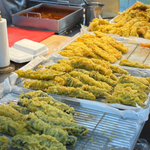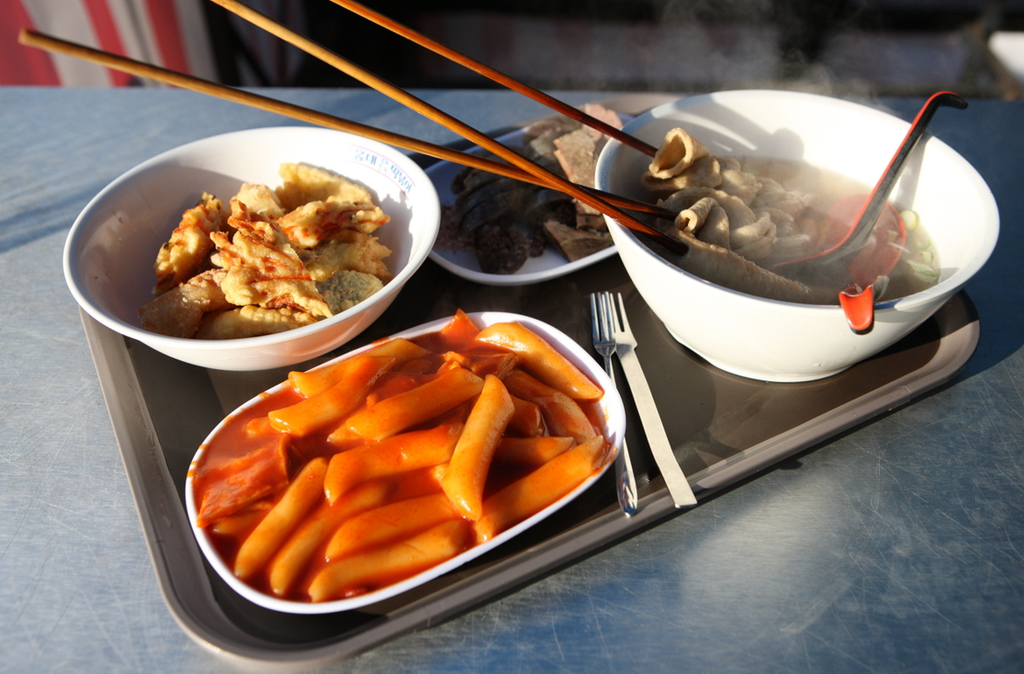

Eomuk (어묵) is a familiar Korean food made by seasoning and shaping ground fish. It appears on street-food stalls as skewers in hot broth, in home-cooked side dishes, and in popular meals such as tteokbokki. In English, it is often given a literal translation, but “cake” can create the wrong impression. This guide uses the Korean word eomuk and explains what it is, how it became popular, and where to try or buy it.
Quick Facts About Eomuk
- Korean name: 어묵 (eomuk)
- Main ingredient: Ground fish, often made into a paste called surimi
- Common ingredients: Wheat flour or starch, seasonings, and other ingredients that vary by product
- Popular ways to eat it: Eomuk-tang, skewers, stir-fried eomuk, and tteokbokki
- Where to find it: Street-food stalls, markets, supermarkets, and online shops
- Known for: Its many shapes and textures, from soft and springy to crisp on the outside
What Is Eomuk?
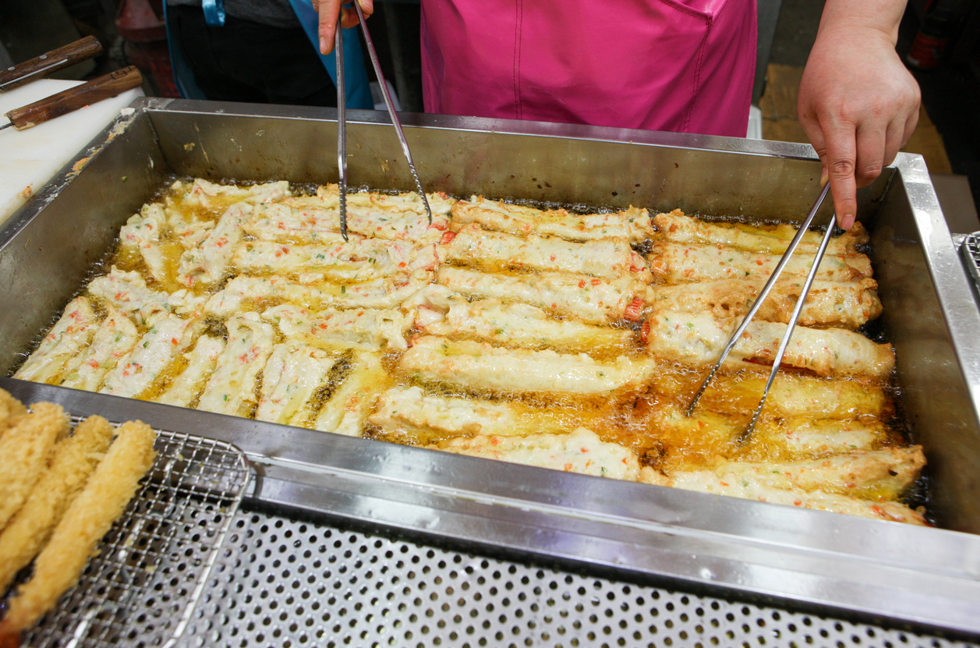
Eomuk is made by grinding fish into a smooth paste, seasoning it, and shaping it into pieces that are then cooked. Depending on the recipe, the mixture may include wheat flour or starch, salt, sugar, vegetables, seafood, or other ingredients. The fish content and texture vary from one maker and product to another.
Pollock is commonly used in fish paste, along with other white-fleshed fish. Some products are formed into flat sheets, while others are rolled, folded, stuffed, or shaped into balls and long skewers. Eomuk can be steamed, grilled, or fried, which gives it a range of textures and flavors.
The word eomuk is useful when ordering or shopping because it refers to this Korean food without suggesting that it is a baked cake. On menus, you may also see odeng, a word associated with Japanese oden and often used in Korea for skewered eomuk served in broth.
A Brief History of Eomuk in Korea
Korean cookbooks from the late Joseon period describe dishes made with fish, including minced-fish preparations. The eomuk commonly eaten in Korea today, however, developed later. Its modern production is linked to Japanese kamaboko and the growth of processed-fish production after Korea’s ports opened in the late 19th century.
Historical accounts date the beginning of Japanese-run eomuk factories in Busan to 1907, with production becoming concentrated there by the 1920s. Korean-owned producers also appeared during the colonial period. After liberation, makers in Busan helped develop a local industry centered around markets such as Bupyeong Kkangtong Market.
The Korean War helped eomuk spread beyond Busan. Many refugees came to the city, where fish was available and eomuk could be made as an affordable, filling food. When people later returned to their hometowns, they continued to seek it out, helping introduce the food across the country.
Today, Busan remains especially associated with eomuk. The city’s markets and long-established producers helped build its reputation, while newer shops have introduced a wider range of flavors, shapes, and ready-to-eat products.
What Goes Into Eomuk?
Many eomuk products are made with surimi, a paste produced by grinding and processing fish. White-fleshed fish such as pollock are commonly used. Wheat flour or starch may be added to help shape the mixture and create a particular texture, though recipes differ by maker and product.
A product’s fish content can vary, so check the ingredient label if that matters to you. Some Busan eomuk certification programs have used a benchmark of at least 70% fish flesh. This refers to certified Busan products; it is not a standard that applies to every eomuk sold in Korea.
Popular Ways to Eat Eomuk
Eomuk-Tang and Skewers
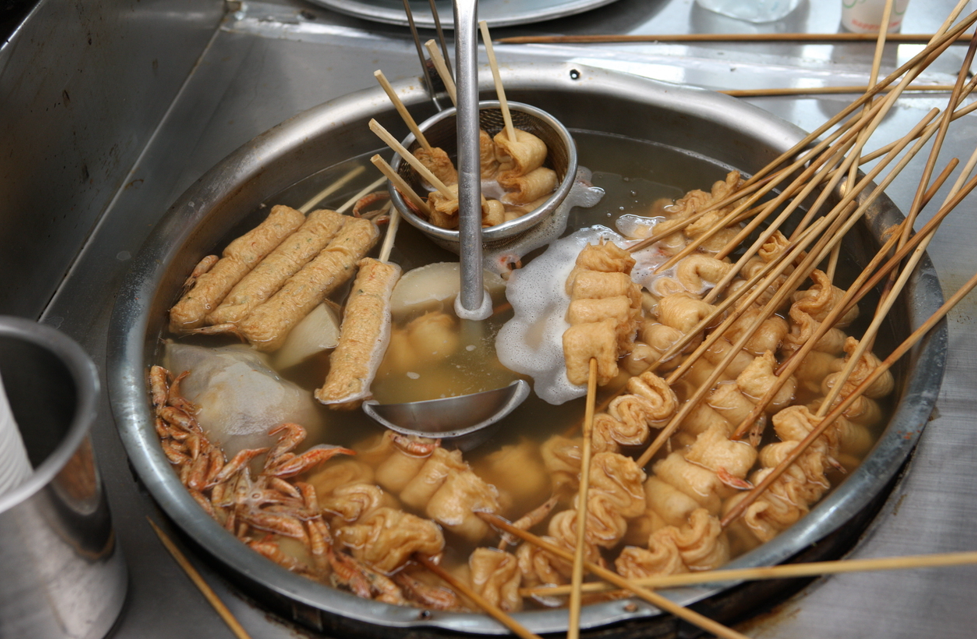
At street stalls and markets, eomuk is often served on a skewer in a pot of hot broth. The pieces soften as they warm, and the broth takes on a savory flavor. Some stalls offer several shapes and textures, so you can choose a thin sheet folded onto a skewer or a thicker, springier piece. In restaurants and homes, eomuk-tang may include vegetables, radish, or other ingredients. It is especially popular in cool weather, but street stalls serve it throughout the year.
Stir-Fried Eomuk
For eomuk-bokkeum (어묵볶음), sliced eomuk is stir-fried with vegetables and a savory sauce. A soy-based version is common as a home-style side dish; some recipes add chili paste or chili flakes for heat. It is often served with rice and other banchan.
Eomuk in Tteokbokki
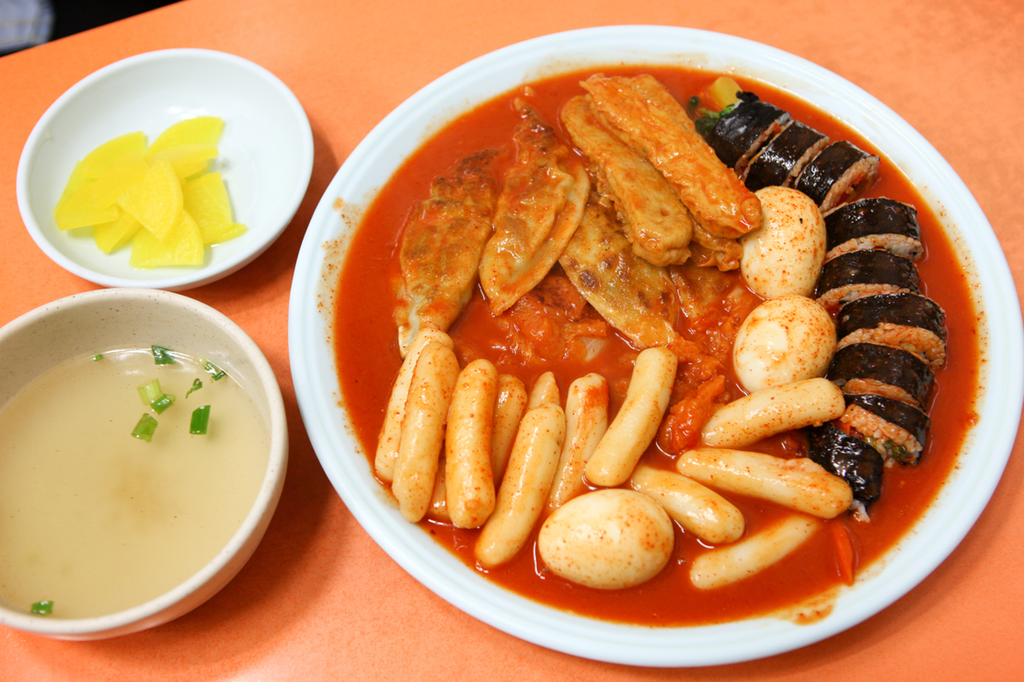
Eomuk is a familiar ingredient in tteokbokki (떡볶이), where it cooks in a spicy-sweet sauce alongside rice cakes. It adds a savory flavor and a softer, chewy texture to the dish.
Eomuk Bars and Filled Varieties
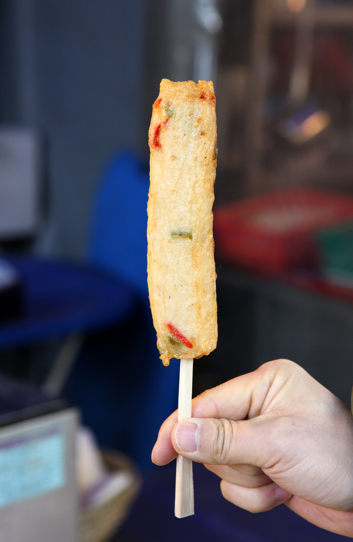
Many shops sell eomuk as a hot snack on a stick, sometimes called an eomuk bar. Modern varieties may include cheese, vegetables, seafood, or other fillings. These are easy to eat while walking around a market or shopping street.
Where to Buy Eomuk
Supermarkets
Supermarkets usually sell packaged eomuk in refrigerated sections. Depending on the store, you may find flat sheets for soup or stir-frying, assorted pieces, or ready-to-cook packs. Frozen eomuk is also available and can be useful for making broth-based dishes at home. Check the package for storage instructions and ingredients.
Traditional Markets and Street Stalls
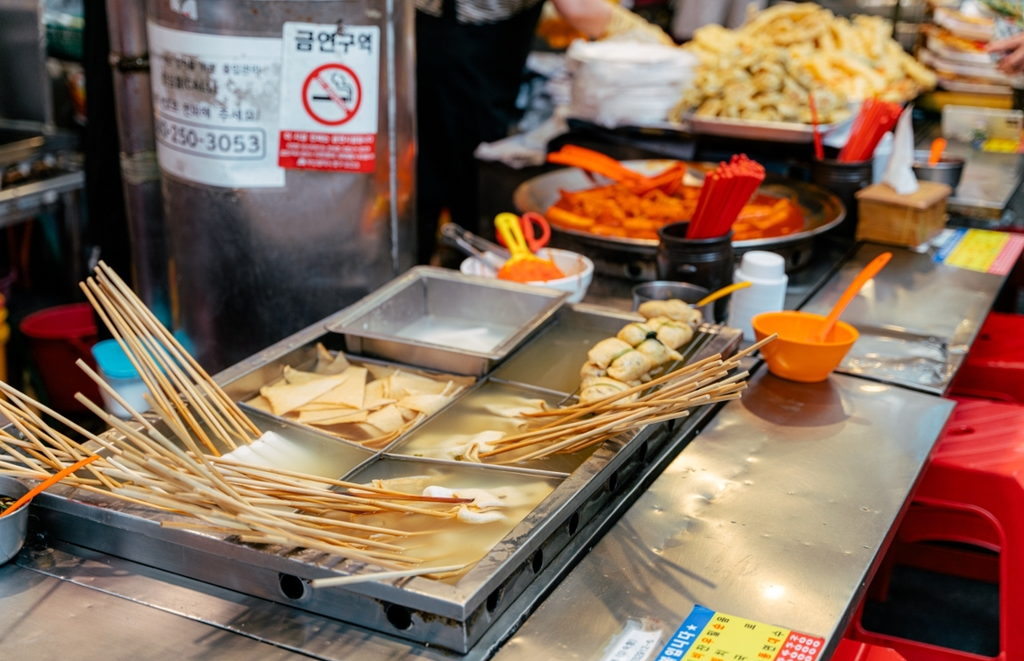
Traditional markets are good places to try freshly cooked eomuk. Stalls may sell skewers in broth, fried pieces, and different shapes made by local producers. In Busan, Bupyeong Kkangtong Market is known for its eomuk shops and variety. Some shops also sell packaged products to take home or arrange delivery.
Online Shops
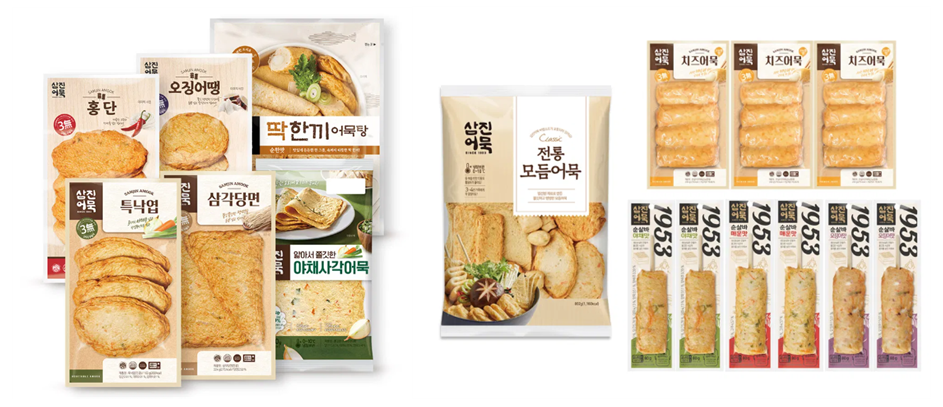
Many eomuk makers sell assorted packs, soup ingredients, snacks, and frozen products through their own online stores. Some market shops also ship products nationwide. If you are ordering from overseas, check whether the seller ships to your country and whether the products arrive refrigerated or frozen.
Well-Known Eomuk Makers
Busan has several long-established eomuk makers, as well as brands that sell a broad range of products nationwide. Their products differ in shape, texture, ingredients, and the way they are sold.
Samjin Eomuk (삼진어묵)
Samjin Eomuk was established in Busan in 1953. Its Yeongdo main store presents eomuk in a bakery-style setting, with a wide selection of freshly made products. The company also operates an eomuk history hall and offers making experiences at selected locations.
삼진어묵 공식 쇼핑몰 | SINCE 1953 부산
Goraesa Eomuk (고래사어묵)
Goraesa, established in 1963, is known for developing a wide range of products, including eomuk noodles, croquettes, and other ready-to-eat varieties. Its product range also includes items for soup, snacks, side dishes, and frozen meals.
고래사어묵 공식쇼핑몰
Hwangong Eomuk (환공어묵)
Hwangong is a long-established Busan brand. Its history is associated with the city’s local eomuk industry, and it is one of the names visitors may encounter among Busan producers.
환공어묵
Mido Eomuk (미도어묵)
Mido began in Busan in 1963 and has continued as a family business across generations. It remains associated with its original location and traditional-style production.
대한민국을 대표하는 부산의 먹거리 해참부산미도어묵
Youngjin Eomuk
Youngjin was established in Busan in the 1960s. The company sells a range of eomuk products and offers online ordering, including delivery within Korea.
영진어묵 1966본점 공식 온라인몰
Other Busan Names
Hyoseong, Daewon, Beom Pyo, and Busan Eomuk are other names associated with Busan’s eomuk industry. Their products are sold through different shops and retailers, so the selection you find will depend on the market or store.
Tips for Trying or Buying Eomuk
- Try a skewer at a market stall to experience eomuk served hot in broth.
- Look at the ingredient list if you want to compare fish content or avoid particular ingredients.
- Choose the right cut for the dish: thin sheets work well in soup or stir-fries, while thicker pieces are convenient for skewers.
- Check storage instructions when buying packaged eomuk, especially if it is sold chilled or frozen.
- Sample a few shapes and textures. Eomuk can be soft, springy, dense, or lightly crisp depending on how it is made.
Read Next
10 Korean Restaurant Tips Every First-Time Visitor Should Know –
Tteokbokki (떡볶이): A Guide to Korea’s Spicy Rice Cakes –
Twigim (튀김): Korea’s Crispy Street-Food Favorite –
Kimbap (김밥): Types, Ingredients, and How to Eat It
Sundae (순대): Korea’s Beloved Food and Regional Sausage –