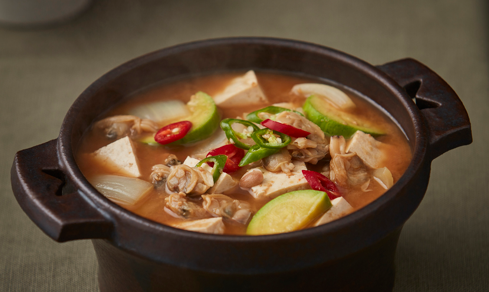

A pot of doenjang jjigae simmering on the table is a familiar part of a Korean meal. Made with doenjang (된장), a traditional fermented soybean paste, this hearty stew is often cooked with tofu and vegetables and served with rice and side dishes.
Along with kimchi jjigae (김치찌개), doenjang jjigae is often described as Korean comfort food. Its deep, savory flavor comes from doenjang, an ingredient that has long been part of Korean cooking.
Quick Facts About Doenjang Jjigae
- Korean name: 된장찌개 (doenjang jjigae)
- What it is: A Korean stew made with fermented soybean paste
- Common ingredients: Doenjang, tofu, zucchini, onion, potato, and green onion
- Often served with: Rice and side dishes
- Where to find it: Korean homes, Korean restaurants, and casual lunch spots
What Is Doenjang Jjigae?
Doenjang jjigae is a Korean stew made by simmering doenjang with water or broth and ingredients such as tofu and vegetables. Depending on the recipe, it may also include mushrooms, chili peppers, garlic, or seafood.
The paste gives the stew its deep, savory flavor. As the vegetables and tofu cook, they absorb the broth, making each spoonful hearty and satisfying. Recipes vary between households and restaurants. Some cooks use anchovy or kelp broth for extra depth, while others keep the recipe simple.
What Is Doenjang?
Doenjang (된장) is a traditional Korean fermented soybean paste with a rich, savory flavor. As a fermented soybean food, it is often valued as a wholesome and nourishing part of Korean cooking.
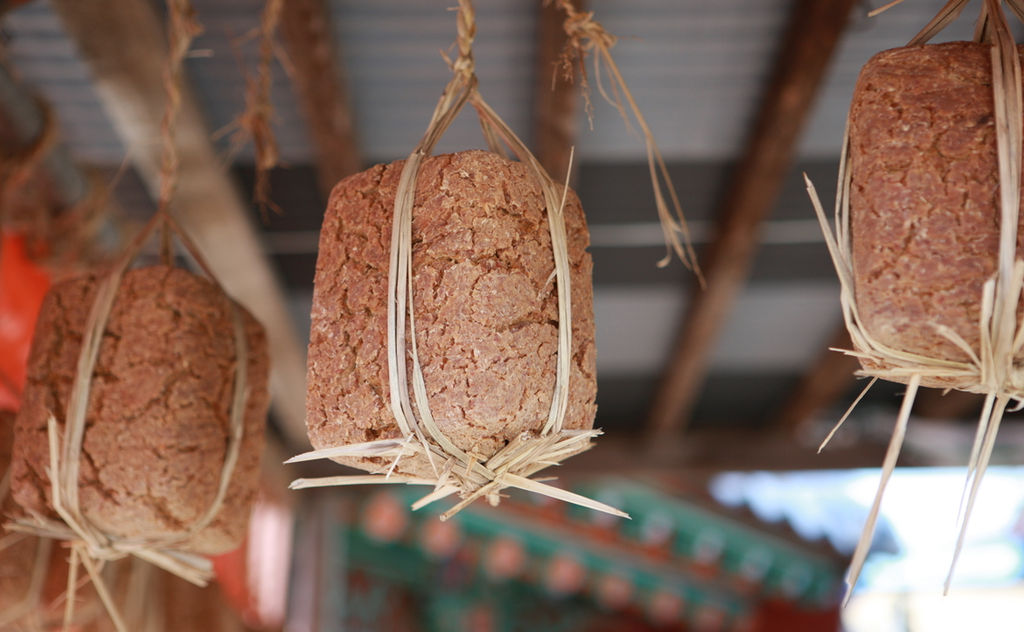
Photo: Korea Tourism Organization
In the traditional jang-making process, doenjang and ganjang (간장), or Korean soy sauce, come from the same fermented soybean blocks called meju (메주). After the meju ferments in salted water, the solid part is aged into doenjang, while the liquid becomes ganjang.
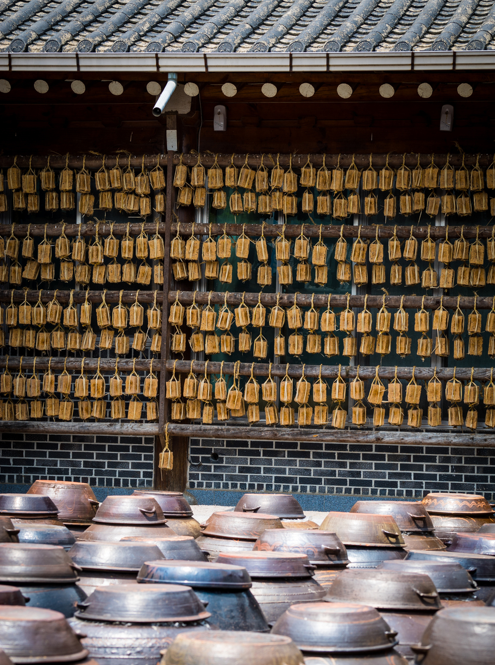
Photo: Korea Tourism Organization
Common Ingredients and Variations
Tofu doenjang jjigae (두부 된장찌개) includes pieces of tofu that soak up the broth. It is a familiar version served at homes and restaurants.
Vegetable doenjang jjigae (야채 된장찌개) may include zucchini, potato, onion, mushrooms, and green chili peppers. The vegetables add sweetness and texture.
Seafood doenjang jjigae (해물 된장찌개) may contain clams, shrimp, or other seafood, which give the broth a briny flavor.
Some versions include beef, while others use seasonal vegetables. The ingredients depend on the cook and the restaurant.
Why Koreans Enjoy Doenjang Jjigae
Doenjang jjigae is hearty, full of savory flavor, and easy to pair with rice. It is a familiar home-style dish, and the ingredients can change depending on what is available. A few vegetables and tofu make a simple meal, while meat or seafood can make the stew more substantial.
It also fits naturally into a Korean meal, which often includes rice, side dishes, and a warm soup or stew. Doenjang jjigae is a comforting choice at home and a common lunch menu at Korean restaurants.
How to Eat Doenjang Jjigae
Doenjang jjigae is usually served hot with a bowl of rice and banchan (반찬), or Korean side dishes. Try the tofu and vegetables with a spoonful of rice, or add a little broth to your rice.
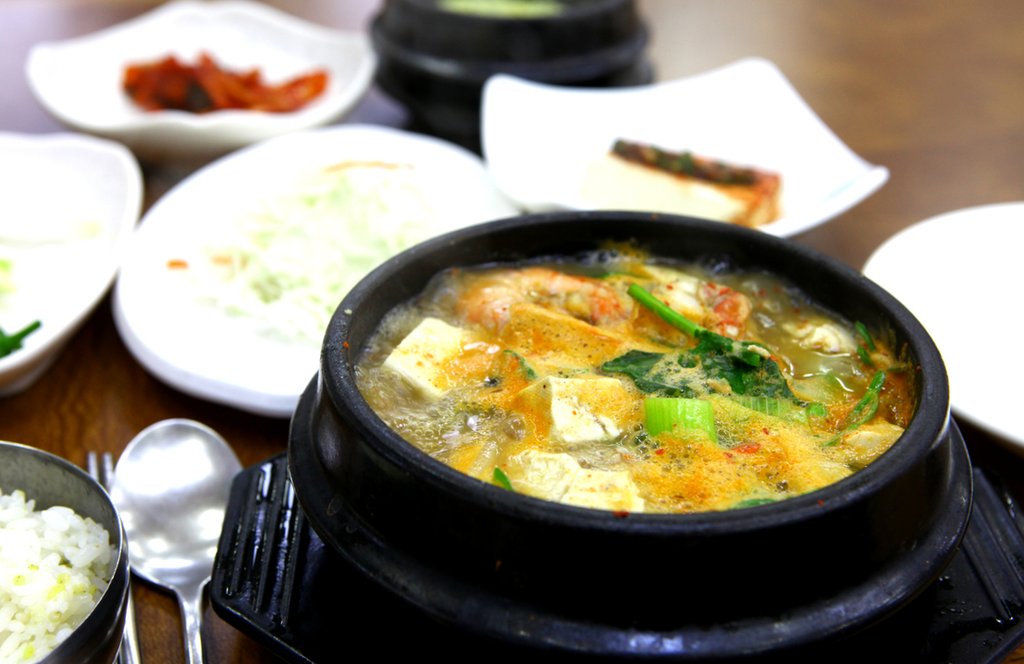
Photo: Korea Tourism Organization
The stew may arrive bubbling in a stone pot or small serving pot. Let it cool briefly before eating, since both the broth and pot can be very hot. Its savory flavor pairs well with simple side dishes such as kimchi.
Where to Eat Doenjang Jjigae in Korea
You can find doenjang jjigae at Korean restaurants, baekban (백반) restaurants serving rice with a set of side dishes, and casual lunch spots. Some barbecue restaurants also serve it as a meal or as a stew to share.
Menus may list versions such as seafood doenjang jjigae or beef doenjang jjigae. If the ingredients are not specified, the stew may come with tofu and a mix of vegetables. The flavor and thickness can vary from one restaurant to another.
Tips for Trying Doenjang Jjigae
- Try it with rice. Rice pairs well with the stew’s deep, savory flavor.
- Look for tofu and vegetables. They are common ingredients and soak up the broth.
- Start with a small taste. Doenjang has a distinctive fermented flavor that may be new to you.
- Let it cool before eating. It is often served very hot.
- Try kimchi jjigae, too. It is another beloved Korean stew, with a tangier and usually spicier flavor.
Read Next
Kimchi Jjigae (김치찌개): Korea’s Comforting Kimchi Stew –
What Is a Typical Korean Meal? Rice, Soup, and Side Dishes –