
A “hanok village” in Korea can be a residential neighborhood in a capital city, a busy cultural district, or a historic settlement surrounded by countryside. The houses may share features such as tiled roofs and wooden structures, but the places around them—and the stories they tell—can be very different.
This guide compares Bukchon Hanok Village (북촌한옥마을) in Seoul, Jeonju Hanok Village (전주한옥마을), and Andong Hahoe Folk Village (안동 하회마을). Instead of ranking them by which is “most traditional,” it looks at how each developed, what visitors can learn there, and which one may suit a particular trip.
| Place | What it is today | A useful way to understand it |
|---|---|---|
| Bukchon Hanok Village | A residential neighborhood in central Seoul | Hanok as part of a changing modern city |
| Jeonju Hanok Village | An urban heritage and tourism district | Hanok alongside food, cultural activities, and historic sites |
| Andong Hahoe Folk Village | A historic settlement and continuing community | Houses, landscape, and village history considered together |
Bukchon Hanok Village (북촌한옥마을): Traditional houses in a modern capital
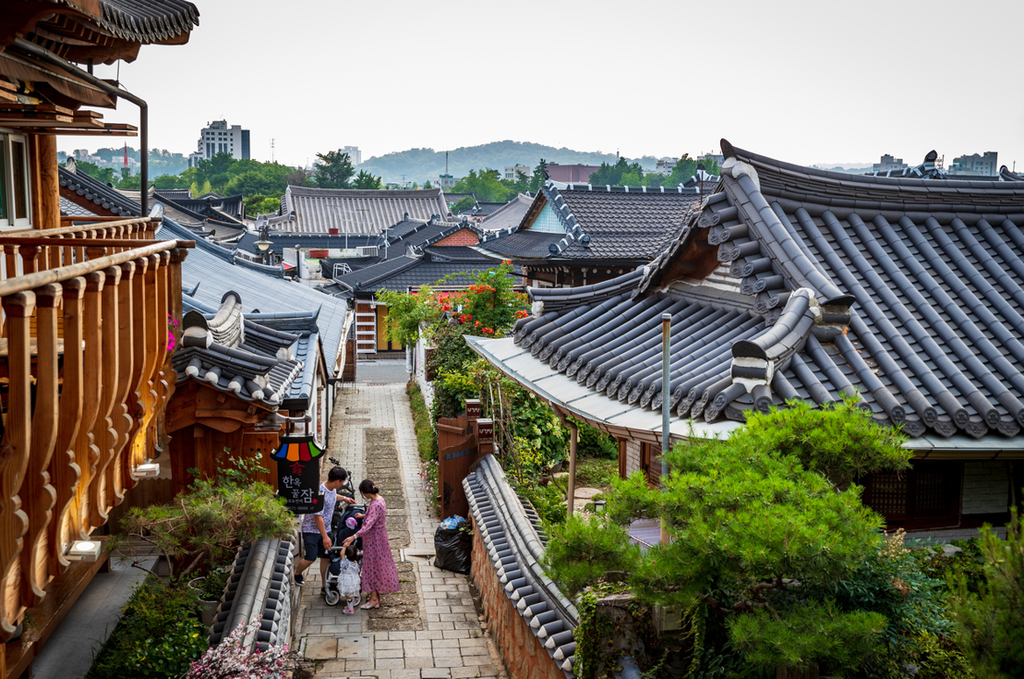
Bukchon sits between Gyeongbokgung Palace and Changdeokgung Palace, close to the center of Seoul. Its narrow lanes and tiled roofs can make the city feel far away, even though major roads and modern buildings are nearby.
Bukchon is best understood as a residential neighborhood, not an isolated village preserved outside the city. The area has a long history, but the hanok landscape visitors see today was also shaped by Seoul’s twentieth-century growth. In the 1930s, the city expanded and urban hanok neighborhoods were developed in the area. These homes were part of a changing capital and its housing needs.
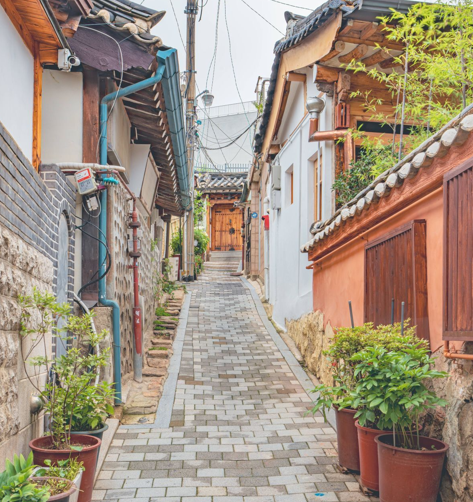
Photo: Korea Tourism Organization
What to look for
As you walk, notice how the lanes follow the hillside and how the houses fit into a dense city block. Look for the relationship between the rooflines, stone walls, small courtyards, and the larger urban landscape. Bukchon’s value is not only that it has hanok; it also shows how traditional-style houses became part of a modern city.
Bukchon works well for travelers who are already exploring central Seoul. It can be combined with nearby palaces, but the lanes are steep and popular, so allow time to walk without rushing. A map is especially useful here: mark the neighborhood’s main lanes and nearby palace entrances, rather than treating every photo viewpoint as a separate destination.
Remember that people live here
Many visitors come to photograph the houses, but Bukchon is also home to residents. Keep your voice low, stay out of private homes and courtyards, and follow posted visitor guidance. Access rules can change, so check current information before your visit.
Official Visitor Information
- Bukchon Hanok Village visitor guide — Visit Seoul
- Bukchon history and hanok information — Seoul Hanok Portal
- Seoul Hanok Portal — English
Jeonju Hanok Village (전주한옥마을): Heritage and visitor activities in one district
Jeonju Hanok Village is a large hanok district in the center of Jeonju. It brings historic buildings and cultural sites together with restaurants, shops, craft spaces, performances, and visitor experiences. This makes it more explicitly tourism-oriented than Bukchon.
The district developed around heritage sites such as Gyeonggijeon Shrine, Omokdae, and Jeonju Hyanggyo, a Confucian school. The Korea Tourism Organization describes the village as taking shape in the early twentieth century around these sites. It also reports that the district has more than 700 hanok.
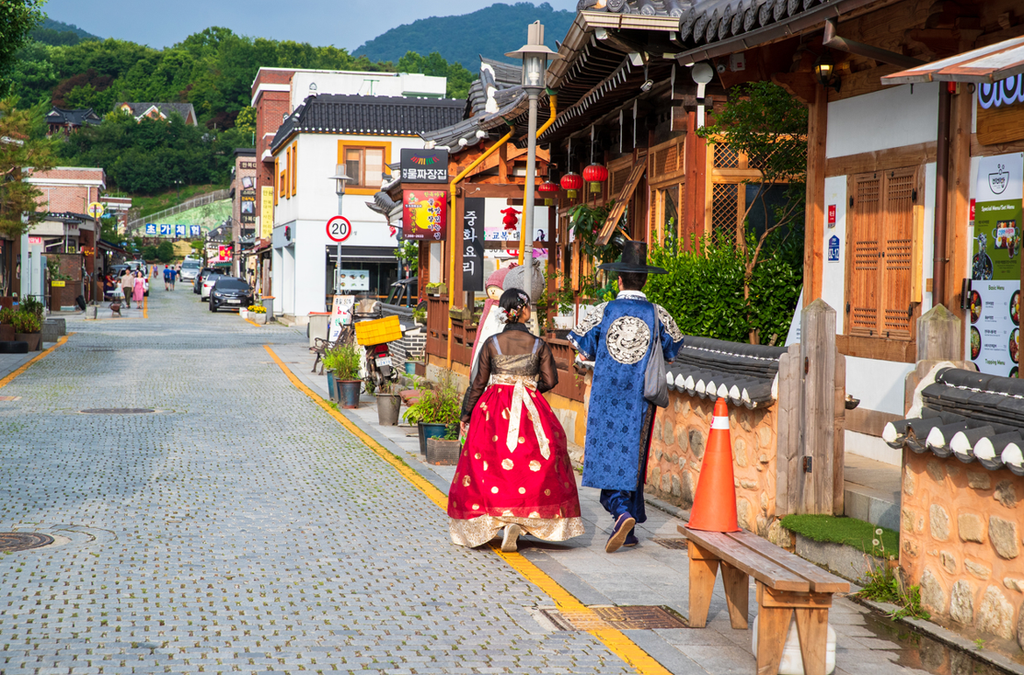
Photo: Korea Tourism Organization
What to do beyond taking photos
Jeonju is a good choice if you want a full day of activities in one area. You can visit heritage sites, try local food, browse traditional crafts, or look for cultural programs. Staying overnight in a hanok is another option, though the buildings and facilities vary. Some accommodations preserve more traditional features; others combine a hanok exterior with modern conveniences.
The visitor district can be lively, especially on weekends and holidays. That atmosphere is part of the experience, but it also means that not every street feels like a quiet historic village. To get a fuller sense of Jeonju, plan time for both the busy streets and the cultural sites around them.
Jeonju suits travelers who want architecture and heritage along with food and activities. It can also show how a historic district functions as a contemporary visitor destination. Check the official visitor resources below for current attractions, cultural programs, and travel information.
Official Visitor Information
- Jeonju travel information — VISIT JEONJU
- Jeonju Hanok Village information — Jeonju Hanok Village
- Jeonju Hanok Village visitor guide — Korea Tourism Organization
Andong Hahoe Folk Village (안동 하회마을): A village understood through its landscape
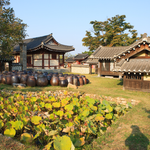
Hahoe is in Andong, in southeastern Korea. It is known for traditional houses, thatched-roof homes, its setting by the Nakdong River, and its association with the Ryu clan of Pungsan. Unlike the city neighborhoods of Bukchon and Jeonju, Hahoe is recognized as part of the UNESCO World Heritage property Historic Villages of Korea: Hahoe and Yangdong.
At Hahoe, the setting is central to the visit. The river, surrounding landscape, and village layout belong in the same picture. Rather than focusing only on individual houses, notice how homes and lanes sit within the larger settlement. The village also includes different kinds of traditional homes, a reminder that historic communities were not made up of one uniform house type.
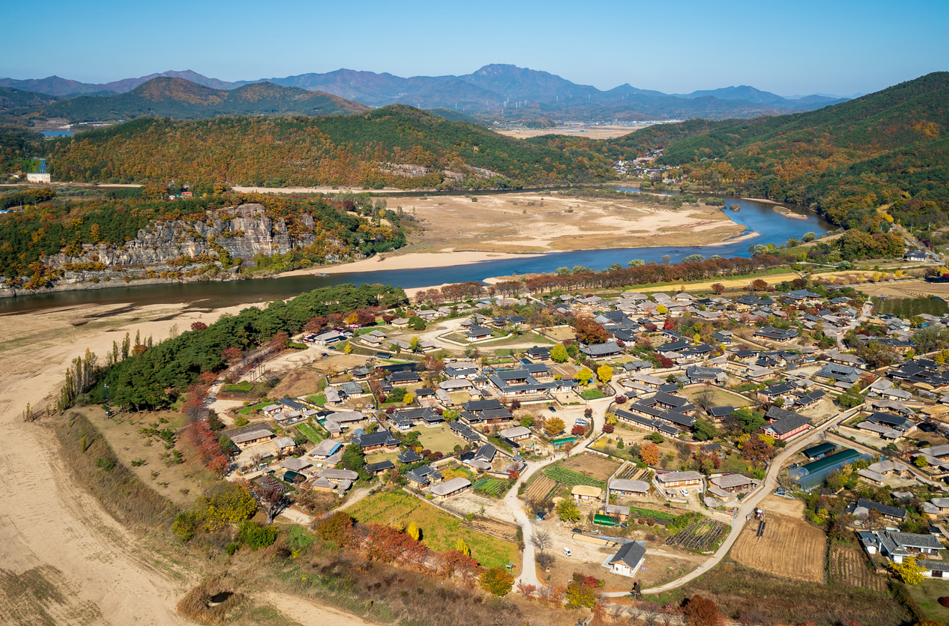
Photo: Korea Tourism Organization
Plan Hahoe as a destination, not a quick stop
Hahoe requires more travel planning than the two urban destinations. It is a better fit for travelers with a particular interest in historic settlements, traditional culture, or the relationship between architecture and landscape. Check transport options and visitor information before setting out, and leave enough time to explore on foot.
Hahoe is a continuing community, not simply a collection of historic buildings. Stay on visitor routes, respect residents’ privacy, and follow local instructions. The official visitor resources below include English information from Andong City, the Korea Tourism Organization, and UNESCO.
Official Visitor Information
- Hahoe Village area visitor information — TourAndong, Andong City
- Andong Hahoe Village visitor guide — Korea Tourism Organization
- Historic Villages of Korea: Hahoe and Yangdong — UNESCO World Heritage Centre
Which one should you choose?
Choose Bukchon if you want to see traditional-style houses within Seoul and are curious about how a residential hanok neighborhood fits into a modern city. It is convenient to combine with nearby palace visits, but remember that it is also a place where people live.
Choose Jeonju if you want a broad visitor experience with heritage sites, food, cultural activities, and the option of a hanok stay. It has the most developed tourism atmosphere of the three.
Choose Hahoe if your main interest is a historic settlement and its relationship with the surrounding landscape. It takes more planning to reach, but its setting and village history offer a different experience from the urban districts.
If you have time for only one, decide based on the kind of visit you want—not on which place appears most “traditional” in photographs.
Why the term “hanok village” can be confusing
In English, hanok village is often used as a broad travel label. It does not automatically mean that every place is an unchanged village from the same historical period. It may describe a residential neighborhood with hanok, a city district developed around heritage and tourism, or a historic village recognized for its settlement and cultural landscape.
That distinction is what makes Bukchon, Jeonju, and Hahoe worth comparing. Bukchon shows how hanok became part of a growing capital. Jeonju combines traditional architecture with a contemporary cultural visitor district. Hahoe connects buildings and community history with a historic landscape. Together, they offer three different ways to understand Korea’s traditional villages.
Read Next
Korean Floor Heating (Ondol): How It Works in Korean Homes –
Bukchon Hanok Village (북촌한옥마을)
Jeonju Hanok Village (전주한옥마을)