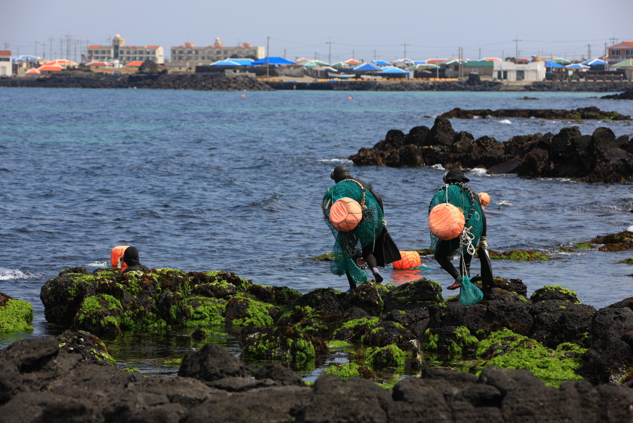

The haenyeo are one of the most important cultural symbols of Jeju Island.
Haenyeo are women divers who make their living from the sea. They dive into coastal waters to gather seafood such as abalone, sea urchins, conch, shellfish, and seaweed. They work without oxygen tanks, relying on their breath, experience, knowledge of the sea, and skills developed over many years.
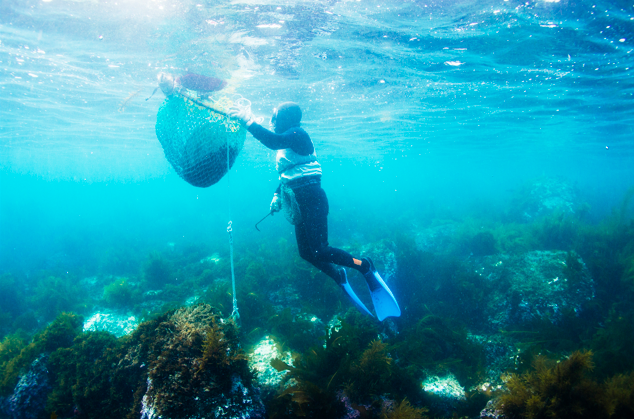
Their work is known as muljil (물질), the practice of diving and harvesting from the sea. A dive may last only a short time, but haenyeo can spend hours working in the water. UNESCO describes their knowledge as including the sea and marine life, diving techniques, local fishing practices, community traditions, and rituals connected to safety and a good catch. The culture of Jeju haenyeo was inscribed on the UNESCO Representative List of the Intangible Cultural Heritage of Humanity in 2016.
UNESCO -Culture of Jeju Haenyeo (women divers)
Life Beneath the Surface
For many visitors, haenyeo may look like a romantic image of Jeju — women in diving suits emerging from the sea with baskets of seafood.
Their real lives are much more demanding.
Working in the sea requires strength, patience, and careful judgment. Haenyeo need to understand the tides, weather, currents, rocks, seasons, and marine life around them. They also need to know when to dive, where to look, and when to stop.
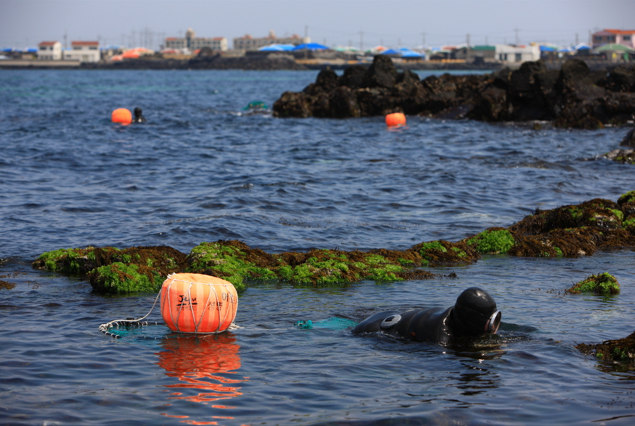
One of the sounds associated with haenyeo is sumbisori (숨비소리), a distinctive breathing sound made when they return to the surface after holding their breath underwater. It is a small but memorable part of the experience of haenyeo culture.
Haenyeo traditionally worked according to the conditions of the sea rather than following a fixed schedule. Their knowledge was built through years of experience and passed from older divers to younger women.
A Culture Built Around Community
Haenyeo culture is deeply connected to the communities where the women live and work.
Experienced divers teach younger haenyeo how to read the sea and work safely. Haenyeo are traditionally divided according to experience, with the most experienced divers taking a leading role and guiding others.
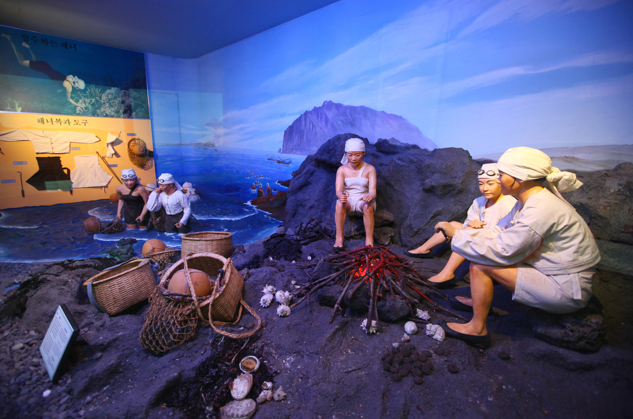
Another important part of this community is the bulteok (불턱).
A bulteok is a traditional gathering place where haenyeo could change clothes, rest, warm themselves by a fire, and talk with other divers. It was also a place where women shared information about the sea, their work, and village life.
The bulteok shows that haenyeo culture has always been about more than diving. The sea brought the women together, and their work was closely connected to family and village life.
https://www.grandculture.net/jeju/toc/GC00700961
Women, Work, and Jeju
The history of haenyeo is also part of the history of women in Jeju.
For generations, women earned income through fishing and farming and played an important role in supporting their households. Their work from the sea contributed to the local economy and gave women an important economic role within their families and communities.
This history is especially interesting when compared with traditional gender roles in Korea. Haenyeo developed a strong economic and social presence in their communities through their knowledge and work at sea.
Their story is therefore about more than a traditional occupation. It also tells us something about how Jeju society developed and how women contributed to the island’s economy and community life.
Respect for the Sea
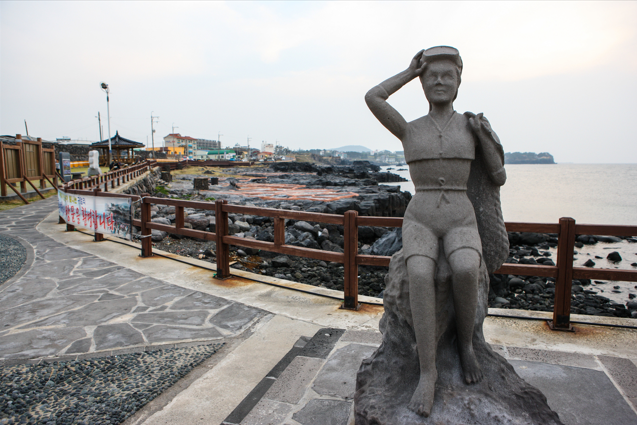
Haenyeo have also developed their own ways of managing marine resources.
Their communities have traditionally followed local rules about what can be harvested and when. Experienced divers pass on knowledge about the sea and the appropriate ways to collect marine life. UNESCO recognizes these community-based practices as part of the cultural heritage of Jeju haenyeo and notes their contribution to environmental sustainability.
This relationship with the sea is important because the ocean is both their workplace and a part of their cultural identity.
Today, however, haenyeo culture faces new challenges. The number of active haenyeo has declined, and many remaining divers are older women. Changes in the marine environment and the difficulty of passing the tradition on to younger generations also raise questions about the future of the culture. UNESCO notes that haenyeo schools and educational programs are being used to help pass the tradition on to new generations.
Jeju Haenyeo Museum
When visiting Jeju, it is easy to think of haenyeo as one of the island’s most recognizable sights.
But they are living members of Jeju’s communities — workers, mothers, grandmothers, teachers, and keepers of local knowledge.
If you see haenyeo working along the coast, give them space. Avoid interrupting their work or entering areas used by local divers. Photography should also be approached with respect.
A better way to learn about haenyeo culture is to visit a museum, join an official cultural program, or learn about the communities and traditions behind the diving.
One of the best places to begin is the Jeju Haenyeo Museum. The Jeju Haenyeo Museum offers a deeper look at the history and everyday lives of haenyeo.
The museum was established to document, preserve, and share haenyeo culture. Its exhibitions cover the lives of haenyeo, the marine environment, fishing villages, local folk culture, and the fishing industry. The museum also includes a reconstruction of a traditional haenyeo house and exhibitions related to food, family life, and village traditions.
One of the interesting things about the museum is that many of the objects on display were donated by haenyeo themselves. This gives the collection a personal connection to the women whose lives and work are being presented.
The museum also helps visitors understand haenyeo as a living culture. Its educational programs have included opportunities for young people to learn about haenyeo history, diving practices, songs, and tools, as well as programs involving haenyeo themselves.
For visitors who want to understand Jeju beyond its beaches and scenic roads, the museum is a worthwhile stop. It provides context for what you may see along the coast and helps you understand why haenyeo remain such an important part of Jeju’s identity.
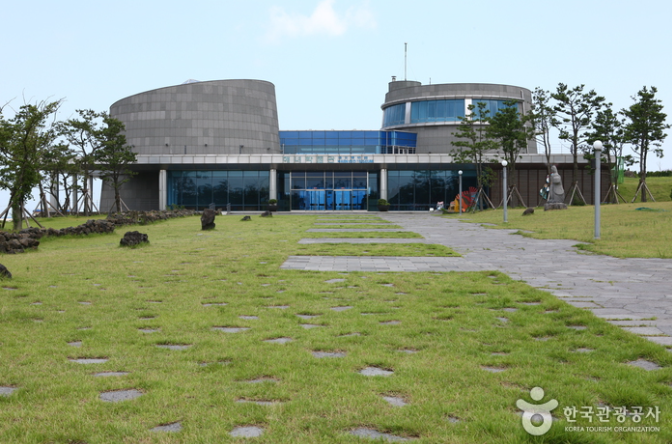
Photo: Korea Tourism Organization
The museum is located at 26 Haenyeobangmulgwan-gil, Gujwa-eup, Jeju-si, Jeju-do.
Current visitor information lists opening hours as 9:00 AM to 6:00 PM, with last admission at 5:00 PM. The museum is closed on Mondays and certain public holidays according to the current Korea Tourism Organization listing. Admission is currently listed at KRW 1,100 for adults and KRW 500 for teenagers.
Opening days, admission fees, and other visitor information can change, so it is a good idea to check the official museum information before visiting.
HAENYEO MUSEUM https://www.jeju.go.kr/haenyeo/index.htm