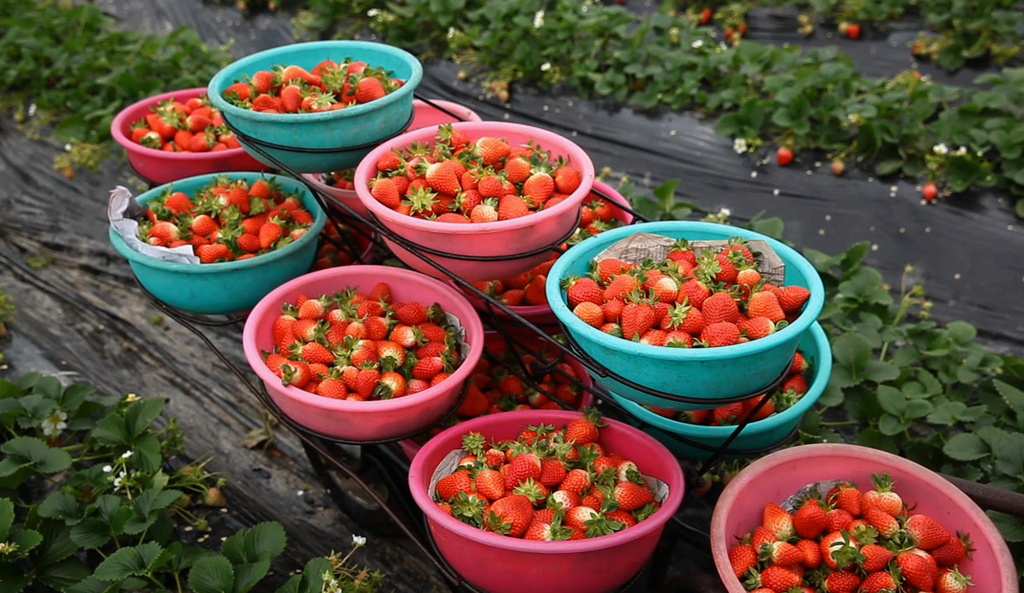

Strawberries, called ttalgi (딸기) in Korean, are one of Korea’s signature spring fruits. Greenhouse-grown strawberries may appear before spring, but many Koreans especially associate strawberries with springtime, when they are enjoyed fresh and featured in seasonal desserts.
Quick Facts About Korean Strawberries
- Korean name: 딸기 (ttalgi)
- Season Koreans associate with strawberries: Spring
- Popular varieties: Seolhyang (설향), Maehyang (매향), Geumsil (금실), Jukhyang (죽향), and Kingsberry (킹스베리)
- Where to find them: Markets, supermarkets, cafés, bakeries, and some pick-your-own farms
A Brief History of Strawberries in Korea
Cultivated strawberries are believed to have arrived in Korea around 1903, during the Korean Empire period. For much of the following decades, Korean farms grew varieties developed abroad. Korean strawberry breeding began in the 1980s, and homegrown varieties such as Maehyang (매향), released in 2001, and Seolhyang (설향), released in 2005, helped transform the industry. By the time of a 2025 report from Korea’s National Institute of Crop Science, 66 Korean strawberry varieties had been developed. The development of different varieties has helped offer berries with a range of flavors, sizes, and textures.
Strawberry Season in Korea
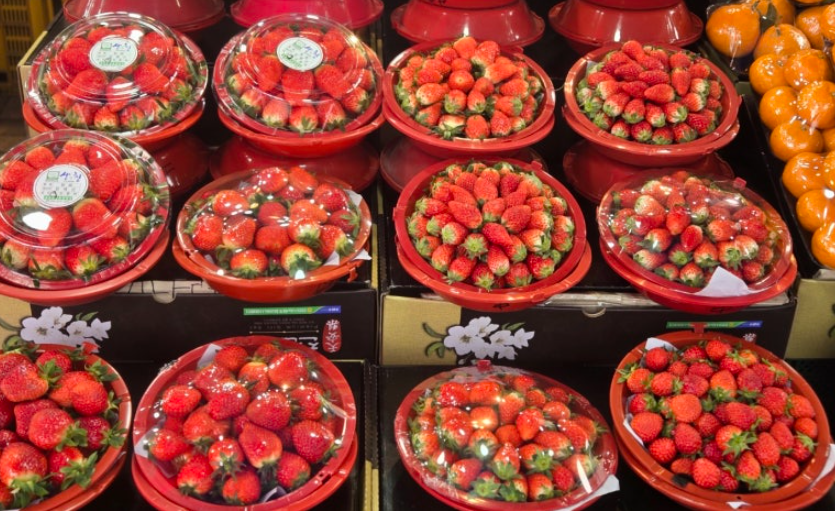
Korea grows strawberries in greenhouses, so some are available before spring. But spring is when strawberries feel like a seasonal fruit: shops feature fresh berries, and cafés and bakeries bring out strawberry cakes, tarts, drinks, and other treats. Strawberries are also popular as gifts. During the season, shops sell carefully arranged boxes as well as smaller packs for everyday eating.
Korean Strawberry Varieties
Korea grows several strawberry varieties, each with its own balance of sweetness, acidity, firmness, size, and aroma.
- Seolhyang (설향): A widely grown variety with juicy flesh and balanced sweetness and acidity.
- Maehyang (매향): Relatively firm, with a sweet-and-tart flavor. Its firmness makes it suitable for shipping and export.
- Geumsil (금실): Known for its sweetness and subtle peach-like aroma.
- Jukhyang (죽향): A sweet variety with comparatively firm flesh.
- Kingsberry (킹스베리): A large strawberry with juicy, soft flesh.
The flavor can vary even among strawberries of the same variety. Ripeness and growing conditions affect how sweet or firm each berry is.
How Koreans Enjoy Strawberries
Many people eat fresh strawberries on their own after washing them and removing the green tops. Their natural sweetness also makes them popular in spring desserts and drinks.
During strawberry season, cafés and bakeries serve strawberry cakes, tarts, shaved ice, and drinks. At home, strawberries may be eaten with yogurt or cereal, added to fruit bowls, or made into jam.
Korean Strawberries for Export
Korean strawberries are also enjoyed outside Korea. In 2025, South Korea exported about 4,864 tonnes of fresh strawberries, worth approximately US$70 million. Thailand and Singapore were the largest markets, followed by Hong Kong, Vietnam, and Malaysia.
Some Korean varieties are valued for their firmness, which helps the fruit travel. Maehyang and Geumsil, for example, are among the varieties grown for export. Strawberry exports require careful handling and inspection to keep the fruit in good condition during transport. In 2025, Brazil also approved imports of Korean fresh strawberries, opening a new market in South America.
Strawberry Picking and the Nonsan Strawberry Festival
Some farms offer strawberry-picking experiences during the season. Opening dates and reservation rules differ, so check with the farm before visiting.
Nonsan (논산), in Chungcheongnam-do, is one of Korea’s well-known strawberry-growing areas. Its annual Nonsan Strawberry Festival includes strawberry sales and tastings, hands-on activities, performances, and exhibitions. It is usually held in spring, but the dates and program change each year.
Choosing and Storing Strawberries
Choose berries with bright color and fresh-looking green tops. Avoid fruit with visible bruises or mold. Strawberries are delicate, so handle them gently and keep them refrigerated. Rinse them shortly before eating, then remove the green tops.
Read Next
Korean Fruits by Season: A Guide to Fruit in Korea –