
Bulgogi (불고기) is one of Korea’s best-known meat dishes. Thin slices of beef are seasoned with a savory-sweet marinade and then grilled or cooked in a pan. The name is commonly understood as “fire meat,” and the dish is served in several styles, from smoky charcoal-grilled beef to a broth-rich meal cooked at the table.
Bulgogi’s history also reflects how Korean food changes over time. Beef dishes were once associated with royal and noble households, while 20th-century restaurants and regional food traditions helped make bulgogi familiar to a wider public.
Quick Facts About Bulgogi
- Korean name: 불고기 (bulgogi)
- Best-known version: Thinly sliced beef in a soy sauce-based marinade
- Common seasonings: Soy sauce, garlic, sugar, sesame oil, and pepper
- Cooking methods: Grilled over a flame or cooked with broth in a pan
- Often served with: Rice, banchan, lettuce, and ssamjang
- Popular variations: Pork bulgogi, osam-bulgogi, and regional styles
What Is Bulgogi?
The best-known type of bulgogi is made with thinly sliced beef. The meat is seasoned before cooking, often with soy sauce, garlic, sugar, sesame oil, and black pepper. Some recipes also use onion, ginger, or grated pear. Each cook or restaurant has its own proportions, so bulgogi can range from gently sweet to deeply savory.
Bulgogi may be grilled directly over a flame or cooked in a pan with broth and vegetables. Grilling gives the meat browned edges and a smoky aroma. Pan-cooking makes it tender and moist, with seasoned liquid that can be spooned over rice.
Menus may also use the word bulgogi for dishes made with pork or other ingredients. The sections below group common types by cooking method, seasoning, and main ingredient. These categories can overlap: pork, for example, can be grilled or pan-cooked and seasoned with soy sauce or gochujang.
A Special-Occasion Dish and Its 20th-Century Restaurant History
The Korea Tourism Organization describes bulgogi as a dish once served at the royal court and in yangban, or noble, households. A related court-style dish, neobiani (너비아니), was made with seasoned beef. This history gives beef bulgogi a connection to special meals and more formal dining.
By the 1930s, bulgogi was also a celebrated local food in Pyongyang. Newspaper accounts from the period describe people gathering at Moran Hill in spring to grill seasoned beef outdoors. Restaurants in the area, including Eulsongjeong, Bonghwanggak, and Girimjeong, were reported to serve it. These records show bulgogi being enjoyed in restaurant and outdoor dining settings as well as in more formal meals.
One notable restaurant in the history of 20th-century Korean dining is Hanilkwan (한일관). It opened in Jongno, Seoul, in 1939 as Hwasunok. Its early menu included rice soup, grilled offal, and loach soup; it adopted the name Hanilkwan in 1945. The restaurant later became known for Seoul-style bulgogi cooked with broth. The exact timeline for that style varies between accounts, but it was part of the restaurant’s menu by the postwar decades.
In the 1960s through the 1980s, a domed bulgogi grill pan helped make the meal especially memorable. Meat cooked on the raised center, while juices collected in a groove around the edge. Diners spooned the savory-sweet liquid over white rice and ate it with well-fermented napa cabbage kimchi. Some later versions added broth to the rim from the start. Dangmyeon or buckwheat noodles could be cooked in the flavorful liquid after the meat was eaten.
Types of Bulgogi by Cooking Method
Broth-Style Bulgogi
Broth-style bulgogi is cooked with a small amount of seasoned liquid. In Seoul-style bulgogi, the pan often has a raised center for the meat and a shallow groove around the edge for broth, vegetables, and dangmyeon (당면). The meat cooks on the hot center while juices and broth gather around the sides. Diners can dip the beef into the liquid or let it simmer in the broth.
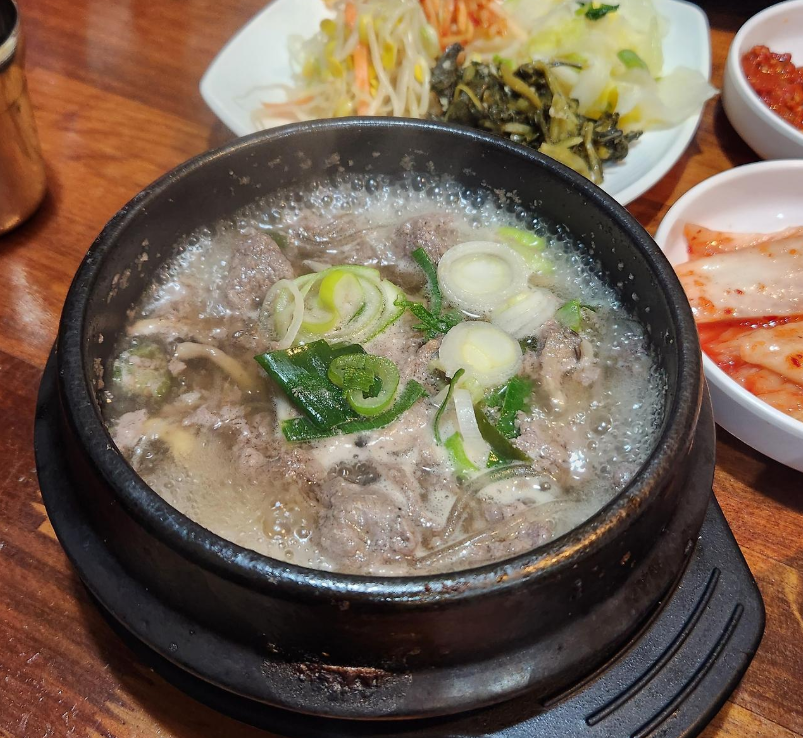
Photo: Korea Tourism Organization
Some versions use more broth and vegetables, making the dish closer to a hot pot. Bulgogi jeongol (불고기전골) is cooked with plenty of broth and vegetables in a shallow pot. Ttukbaegi bulgogi (뚝배기불고기) is a single-serving version cooked and served bubbling hot in a Korean earthenware pot.
Grilled Bulgogi
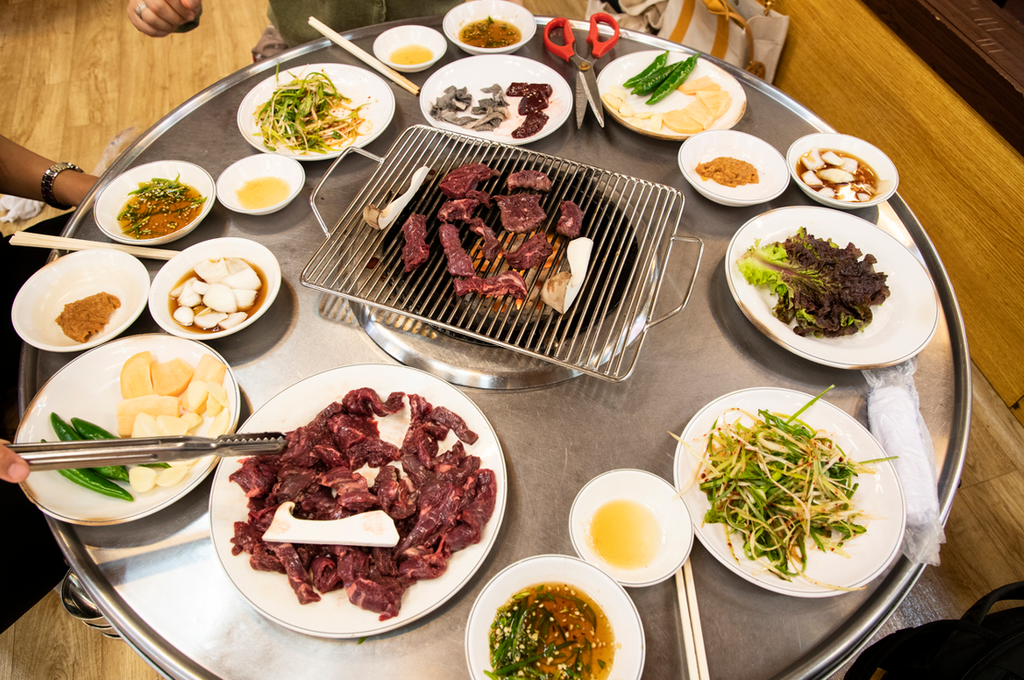
Grilled bulgogi is cooked directly over a flame on a wire grill or mesh. The meat develops browned edges and a smoky aroma. Seoksoe bulgogi (석쇠불고기) is a general name for this grilled style. Eonyang and Gwangyang bulgogi are two well-known regional examples.
Types of Bulgogi by Seasoning
Soy Sauce Bulgogi
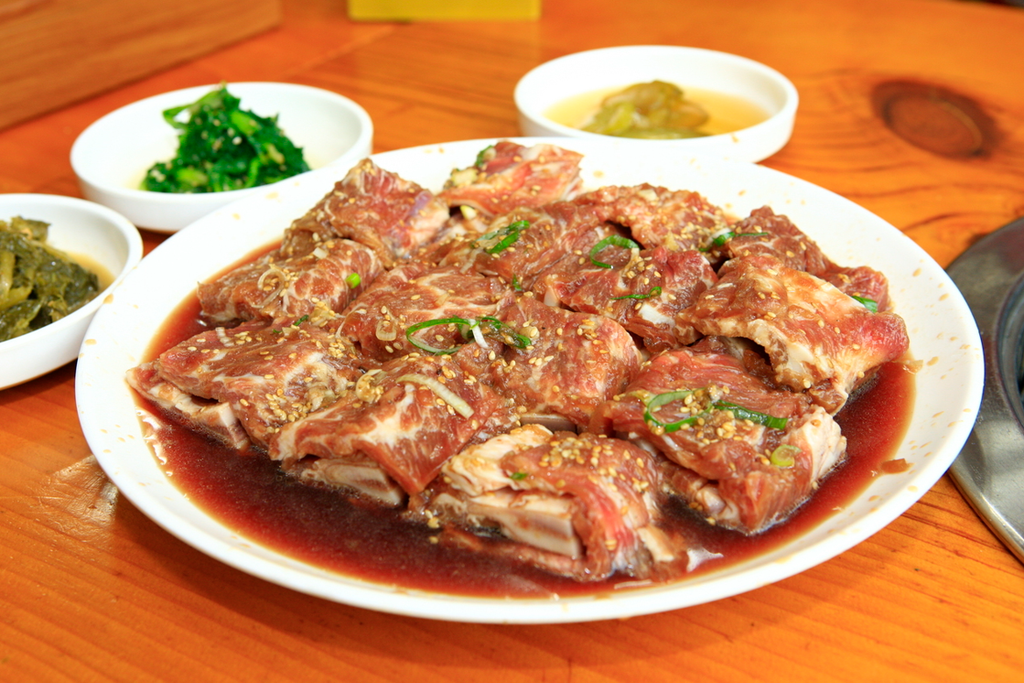
Photo: Korea Tourism Organization
When a menu simply says bulgogi, it usually means beef seasoned with a soy sauce-based marinade. Garlic, sugar, sesame oil, and pepper are common additions. The taste is savory and gently sweet rather than spicy. Pork bulgogi can also use soy sauce. This version is generally milder than the gochujang-seasoned style.
Gochujang Bulgogi
Gochujang bulgogi (고추장 불고기) is seasoned with Korean red chili paste. It is usually spicy, savory, and slightly sweet. Gochujang seasoning is especially common for pork bulgogi, though recipes differ.
Types of Bulgogi by Main Ingredient
Beef Bulgogi
Beef is the ingredient most commonly associated with bulgogi. It is thinly sliced so it absorbs the marinade well and cooks quickly. The marinade usually includes soy sauce, garlic, sugar, sesame oil, and sometimes grated pear or apple, which adds a gentle sweetness.
Pork Bulgogi
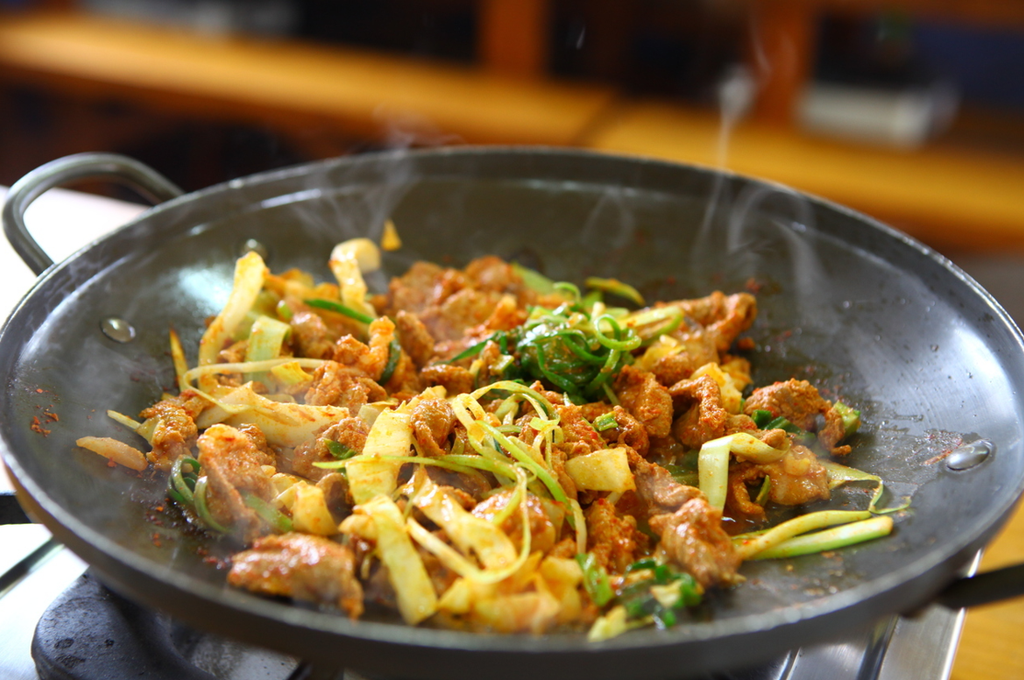
Photo: Korea Tourism Organization
Pork bulgogi, or dwaeji-bulgogi (돼지불고기), is made with thinly sliced pork, often shoulder, marinated in a savory soy sauce mixture or a spicy gochujang sauce. It is usually stir-fried or grilled with vegetables such as onions and green onions. Depending on the recipe, it can taste sweet and savory or spicy and bold.
It is a familiar dish in Korea and often appears as a banchan (반찬, side dish) in school meals (geupsik, 급식). It is commonly served with rice and other sides, making it a popular choice for lunch. At home and in restaurants, people also enjoy pork bulgogi wrapped in lettuce or served over rice.
Osam Bulgogi
Osam bulgogi combines ojingeo (오징어, squid) and samgyeopsal (삼겹살, pork belly)—the name brings together o from squid and sam from pork belly. The two ingredients are stir-fried with vegetables, often in a spicy gochujang-based sauce.
The dish pairs the chewy texture of squid with rich, tender pork. It is usually served with rice, and diners can wrap the meat and squid in lettuce or perilla leaves. Some restaurants serve it in a sizzling pan, with rice added to the leftover sauce at the end of the meal.
Regional Bulgogi Styles
Seoul-Style Bulgogi
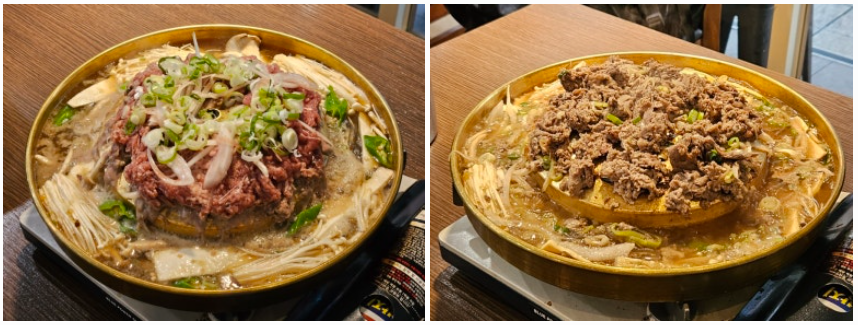
Photo: Korea Tourism Organization
Seoul-style bulgogi is known for its distinctive pan and savory broth. Thinly sliced, seasoned beef cooks alongside vegetables and dangmyeon. The broth gathered around the rim can be spooned over rice or used to cook noodles.
Eonyang Bulgogi (언양 불고기)
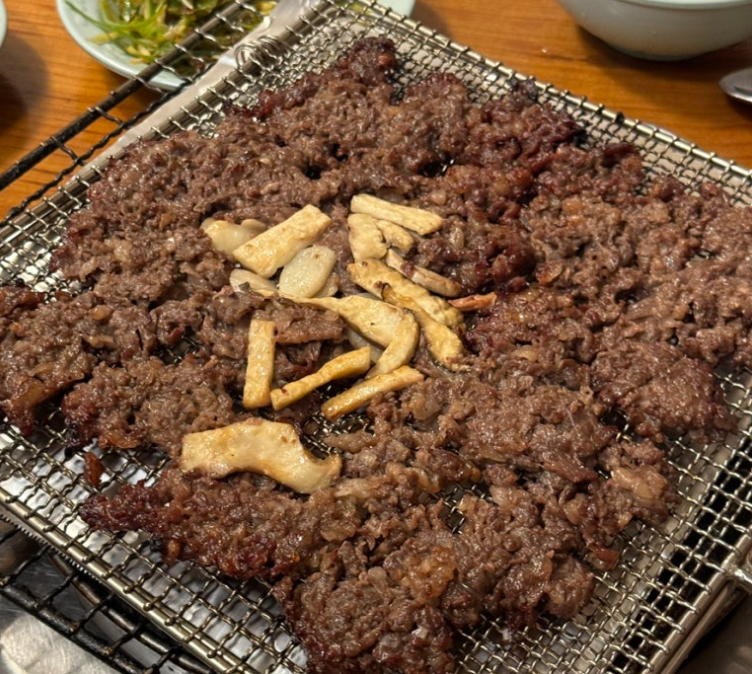
Photo: Korea Tourism Organization
Eonyang bulgogi comes from the Eonyang area of Ulsan. The beef is seasoned, shaped into a relatively flat portion, and grilled on a roasting net rather than simmered in broth. Its direct-fire cooking gives the meat a smoky flavor.
Gwangyang Bulgogi (광양 불고기)
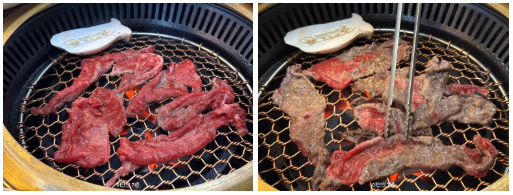
Photo: Korea Tourism Organization
Gwangyang bulgogi is associated with Gwangyang in South Jeolla Province. Thinly sliced beef is seasoned and grilled over charcoal. Its smoky flavor and direct-grilling method distinguish it from Seoul’s broth-style bulgogi.
How to Eat Bulgogi
Bulgogi is often served with steamed rice and small side dishes. Try a bite with rice first to enjoy the marinade and the flavor of the meat. You can also make a ssam (쌈), or lettuce wrap. Place a little rice and bulgogi on a lettuce or perilla leaf, add garlic or a slice of chili if you like, and finish with a small amount of ssamjang. Fold the leaf and eat it in one bite.For broth-style bulgogi, spoon the seasoned liquid and vegetables over rice. If the restaurant offers dangmyeon or buckwheat noodles, try them in the remaining broth after the meat is gone.
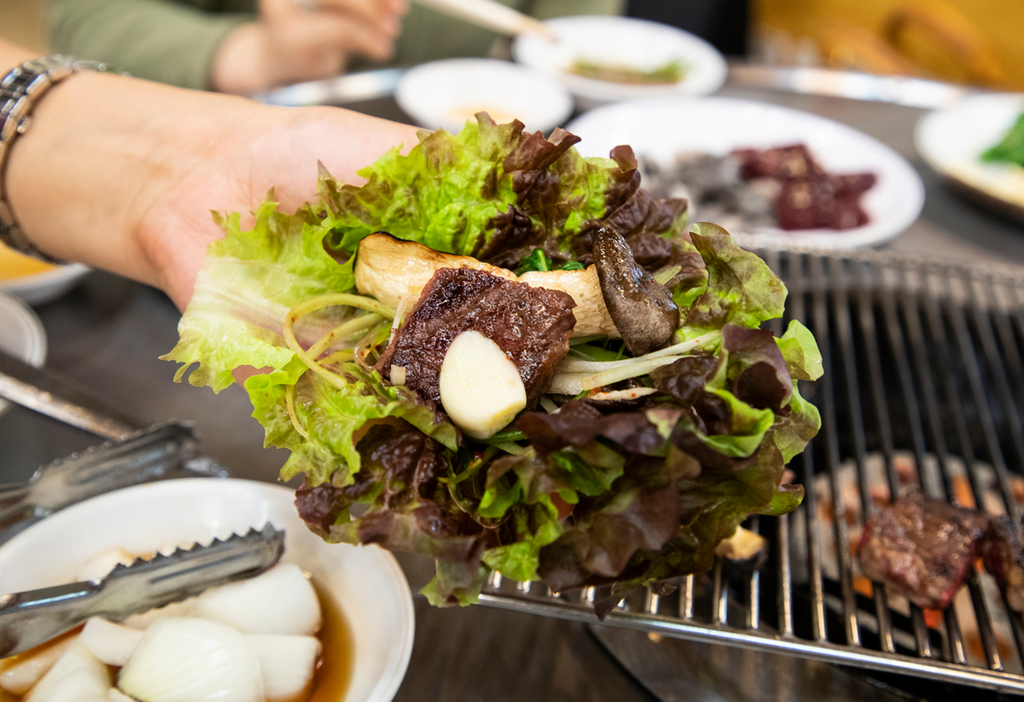
Photo: Korea Tourism Organization
Ordering Bulgogi at a Korean Restaurant
Bulgogi is available at Korean barbecue restaurants and casual Korean restaurants. Some places grill it over charcoal, while others serve it sizzling in a pan. It may be ordered as an individual meal or as a shared dish. Look for so-bulgogi (소불고기) for beef bulgogi and dwaeji-bulgogi for pork. If you have a preference, ask whether the dish is spicy and whether it is grilled or cooked with broth. A set meal may include rice, soup, and banchan.
Read Next
10 Korean Restaurant Tips Every First-Time Visitor Should Know –
Samgyeopsal (삼겹살): A Complete Guide to Korean BBQ Pork Belly
Galbi (갈비): A Guide to Korean BBQ Short Ribs –