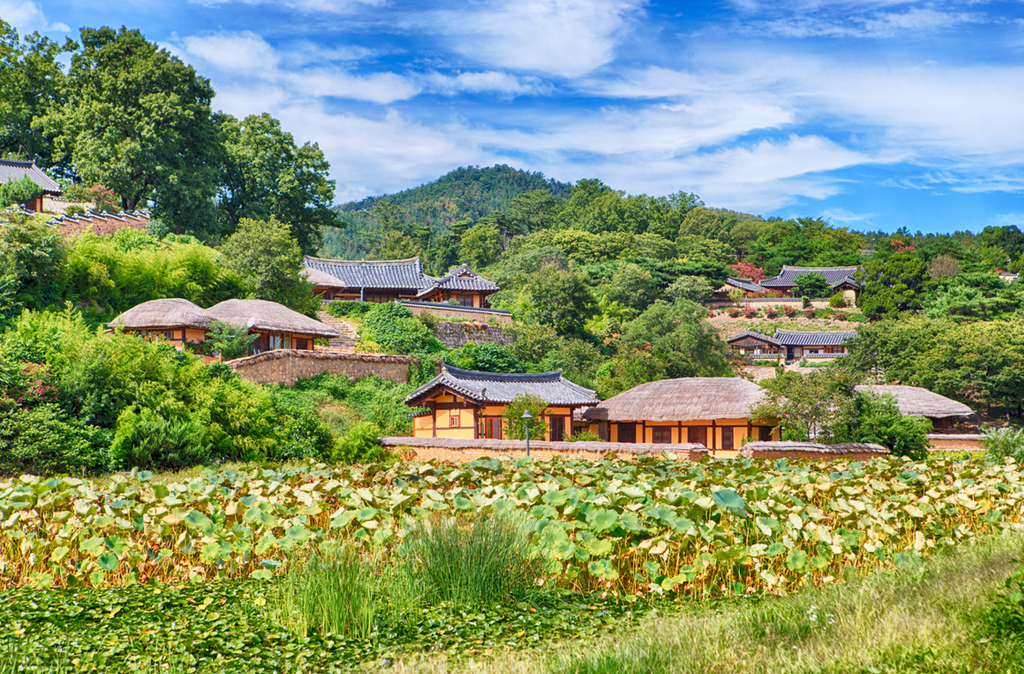

Gyeongju Yangdong Folk Village (경주 양동마을) is one of Korea’s best-preserved historic villages. Traditional tiled-roof houses, thatched homes, old walls, and narrow lanes sit among the ridges and valleys of Seolchangsan Mountain (설창산). The village’s layout reflects the family traditions and Confucian culture of the Joseon Dynasty.
Yangdong is also a living village. People still reside here, and many historic houses belong to families whose ancestors have lived in the area for generations. Visitors can walk the village paths, see notable old residences such as Hyangdan and Seobaekdang, and learn about the two clans closely associated with Yangdong.
Together with Andong Hahoe Folk Village (안동 하회마을), Yangdong forms the UNESCO World Heritage property “Historic Villages of Korea: Hahoe and Yangdong.” The two villages share a place on the World Heritage list, but their landscapes and individual stories are distinct. UNESCO World Heritage Centre
Quick Facts About Gyeongju Yangdong Folk Village
- Korean name: 경주 양동마을 (Gyeongju Yangdong Maeul)
- Location: Gangdong-myeon, Gyeongju, Gyeongsangbuk-do
- UNESCO status: Part of “Historic Villages of Korea: Hahoe and Yangdong”
- Best known for: Historic clan houses, hillside village scenery, and Joseon-era architecture
- Village size: About 160 traditional houses; 54 are more than 200 years old
- Admission: ₩4,000 for adults, ₩2,000 for teenagers, and ₩1,500 for children
- Best experiences: Walking the village lanes, visiting the cultural center, and seeing the historic houses
- Getting around: Bus 203 connects Gyeongju’s central area with Yangdong, but service is infrequent
A Village Shaped by Hills and Valleys
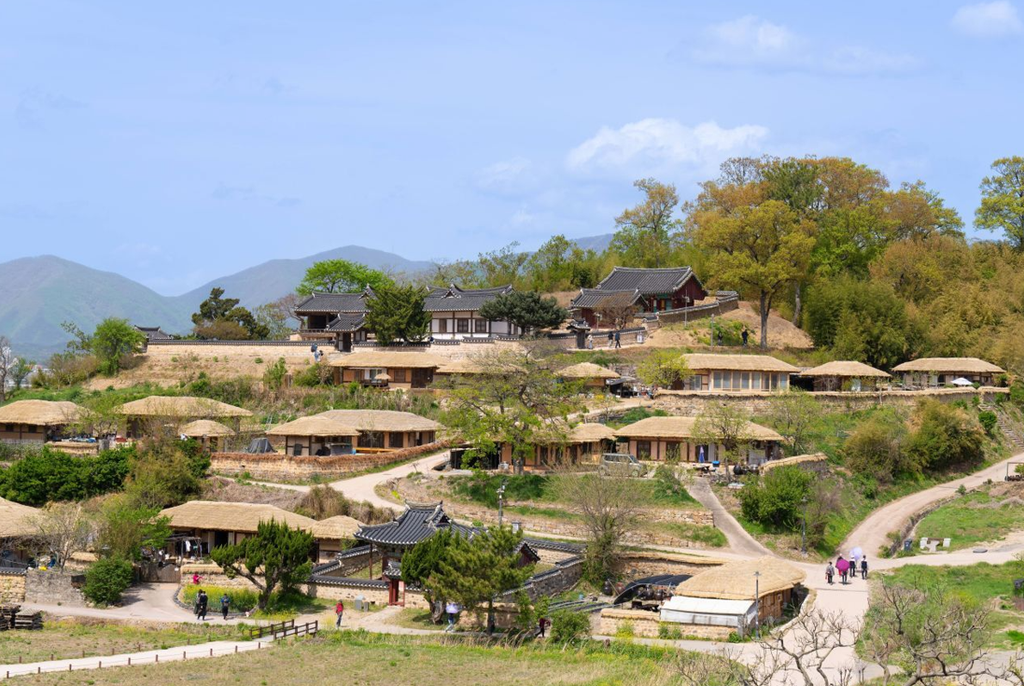
Yangdong lies among the ridges extending from Seolchangsan. The slopes and valleys create a village layout that is sometimes described as resembling the Chinese character 勿 (mul). Tiled-roof homes stand on higher ground, while many thatched-roof houses are lower down. The arrangement reflects the social structure of the Joseon period, when prominent families and commoners lived in different kinds of homes.
The village has around 160 old houses, including 54 homes more than 200 years old. Houses, pavilions, study spaces, and family buildings are woven into the landscape rather than arranged in a uniform grid. Walking the paths gives visitors a sense of how the village grew over time and how its homes related to the hills and fields around them.
Yangdong is not an open-air museum where every building is simply a display. Residents still live in the village, and some homes are private. Follow the public paths, respect signs, and do not enter houses or courtyards without permission.
A Brief History of Yangdong
Yangdong was established in the 14th and 15th centuries and grew to its present size over the following centuries. Its history is closely connected with two prominent lineages: the Wolseong Son family (월성 손씨) and the Yeogang Yi family (여강 이씨).
The village produced notable scholars and government officials, including Son Jung-don (손중돈) and Yi Eon-jeok (이언적). The houses and shared spaces reflect the influence of family relationships, learning, Confucian values, and social rank during the Joseon period.
In 2010, Yangdong and Hahoe were inscribed together on the UNESCO World Heritage List. UNESCO recognizes them as representative historic clan villages whose houses, layout, and landscape preserve important aspects of Joseon-era society and Confucian culture.
What to See and Do in Yangdong Folk Village
Walk the Village Lanes
Walking is the best way to explore Yangdong. The paths pass tiled-roof houses, thatched homes, stone walls, trees, and small open spaces. Because the village follows the slopes, some routes are uphill and uneven. As you walk, notice how houses sit at different heights and how the paths connect residences and shared spaces. Take your time rather than trying to see every building from the outside. Some areas are still residential, and certain historic houses may not be open to visitors.
See Hyangdan and the Historic Family Houses
Several well-known traditional homes help tell Yangdong’s story:
- Hyangdan (향단): A distinctive residence associated with Yi Eon-jeok. It is said to have been given to him by King Jungjong.
- Seobaekdang (서백당): The head house of the Wolseong Son family, also known as Songcheom Jongtaek (송첨종택). Its grounds include an old juniper tree.
- Mucheomdang (무첨당): A residence associated with Yi Eon-jeok’s family. Its sarangchae (사랑채), or men’s quarters, was used for receiving guests and study.
- Gwangajeong (관가정): A traditional house associated with Son Jung-don, set on a hillside overlooking the surrounding landscape.
These houses are important cultural heritage sites, but access to their interiors can be limited. Check signs at each building and follow local visitor guidance.
Visit the Yangdong Village Cultural Center
The Yangdong Village Cultural Center (양동마을 문화관) is near the village entrance. Exhibits introduce the village’s history and traditional homes, making it a useful first stop before walking through the lanes. The center has separate operating hours from the village and may close on Mondays. Check the current schedule before your visit.
Join a Traditional Culture Program
Traditional culture programs are offered at Yangdong during parts of the year, generally from spring through autumn. Programs may introduce local customs and traditional culture, but availability and reservations can vary. Check with the village before planning your visit around a specific activity.
Enjoy the Seasonal Scenery
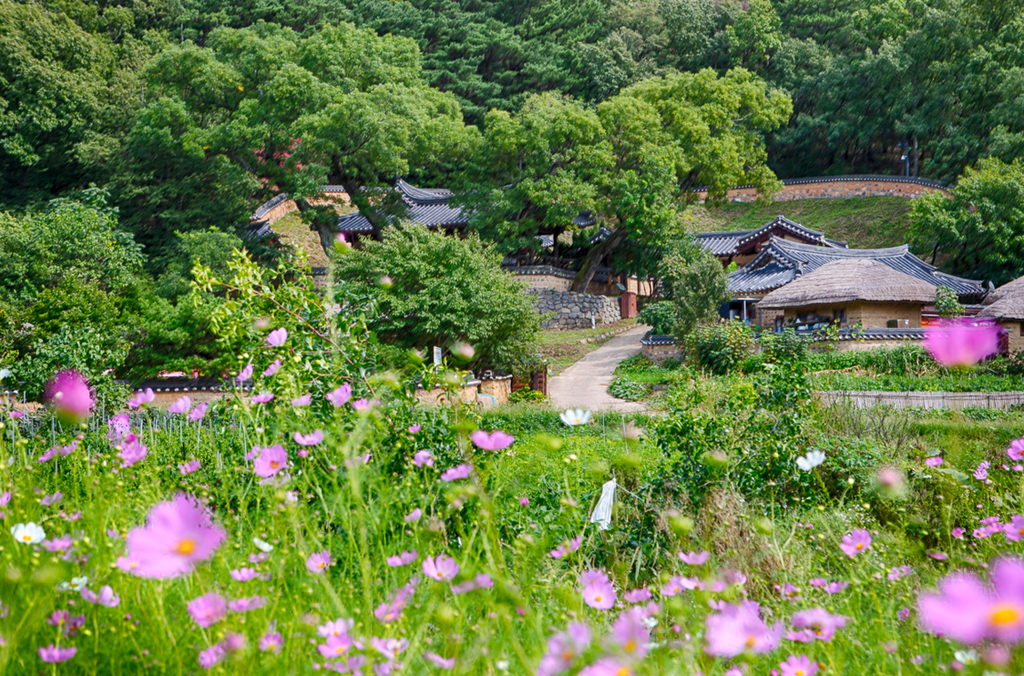
Yangdong changes with the seasons. In spring and summer, the hills and trees turn green, and the village feels closely connected to the surrounding countryside. In autumn, colorful leaves and traditional roofs create a different atmosphere along the stone walls and paths. The scenery is part of Yangdong’s heritage. The village’s location among mountains, trees, and fields was important not only to its appearance but also to how people understood and used the landscape.
Experiences to Try in Yangdong
Take a Slow Heritage Walk
Yangdong is best enjoyed at an unhurried pace. Pause to look at rooflines, courtyards, stone walls, and the way homes fit into the hills. The village is large, and the walking routes include slopes, so allow several hours if you want to explore comfortably.
Ask About an English-Speaking Guide
Gyeongju’s cultural interpretation service lists Yangdong among the sites where foreign-language guides may be available in English, Japanese, or Chinese. Advance reservations are recommended for groups, and same-day requests may be possible depending on availability. Confirm the arrangements with Gyeongju’s official tourism service before visiting.
Stay in the Area
Traditional accommodation may be available in or near Yangdong, but each property has its own facilities and house rules. Staying nearby can give you more time to explore the village and nearby historic sites. A booking does not necessarily include access to private homes or heritage buildings, so check the details before reserving.
Taste Gyeongju’s Local Food
Yangdong is primarily known for its historic village and architecture. For a wider choice of restaurants, visitors can return to central Gyeongju.
Gyeongju is known for ssambap (쌈밥), a meal of rice, leafy vegetables, and a variety of side dishes. The city also has many places selling Hwangnam-ppang (황남빵), a small pastry filled with sweet red-bean paste. Restaurant hours and menus vary, so check before making a special trip.
How to Visit Yangdong Folk Village
Yangdong is in Gangdong-myeon, north of central Gyeongju. It is open year-round, and free parking is available near the village entrance.
Opening Hours and Admission
Current visitor information lists the following schedule:
- April–September: 9:00 a.m.–7:00 p.m.
- October–March: 9:00 a.m.–6:00 p.m.
- Last ticketing: One hour before closing
- Admission: ₩4,000 for adults, ₩2,000 for teenagers, and ₩1,500 for children
- Free admission: Seniors aged 65 and older and children aged 6 and under, with identification
Hours may change to respect residents’ privacy, so check the village’s current notice before your trip. The village and its cultural center may have different schedules.
Getting There
Bus 203 connects central Gyeongju with Yangdong and other northern Gyeongju attractions, including Oksanseowon Confucian Academy (옥산서원). The route runs infrequently—Gyeongju’s tourism site lists about ten trips a day—so check the latest timetable and real-time bus information before setting out. When taking the bus, look for the Yangdong Folk Village (양동민속마을) stop.
A taxi or rental car offers more flexibility, especially if you plan to visit other sites in northern Gyeongju. Gyeongju’s public transportation information and schedules can change, so confirm your route on the day of travel.
Tips for Planning Your Visit
- Wear comfortable shoes. The village paths include hills and uneven surfaces.
- Allow several hours. Walking the village and visiting the cultural center takes time.
- Respect residents’ privacy. People still live in Yangdong; do not enter private homes or courtyards.
- Check bus times in advance. Bus 203 is useful but does not run frequently.
- Check the cultural center’s schedule separately. Its hours may differ from the village’s.
- Travel light. Bicycles and pets are not permitted inside the village, according to Gyeongju’s visitor information.
Why Yangdong Folk Village Is Worth Visiting
Yangdong brings together historic houses, family lineages, Confucian culture, and a landscape shaped by hills and valleys. Its story is connected to Andong Hahoe Folk Village through their shared UNESCO World Heritage status, yet Yangdong has its own character and history.
Walk the village lanes, look for the houses associated with the Son and Yi families, and take time to notice how the architecture follows the land. Because people still live here, a visit is also a chance to see how a historic village continues as a community today.
Official Visitor Resources
- 경주 양동마을
Bus No. 203 ‘From Silla to Joseon’ | Bus Trip to Gyeongju | Recommended Itinerary | Gyeongju Travel | Gyeongju Culture & Tourism
Read Next
Hanok Villages in Korea: Bukchon, Jeonju, and Hahoe
Korean Floor Heating (Ondol): How It Works in Korean Homes –
Bukchon Hanok Village (북촌한옥마을)
Jeonju Hanok Village (전주한옥마을)