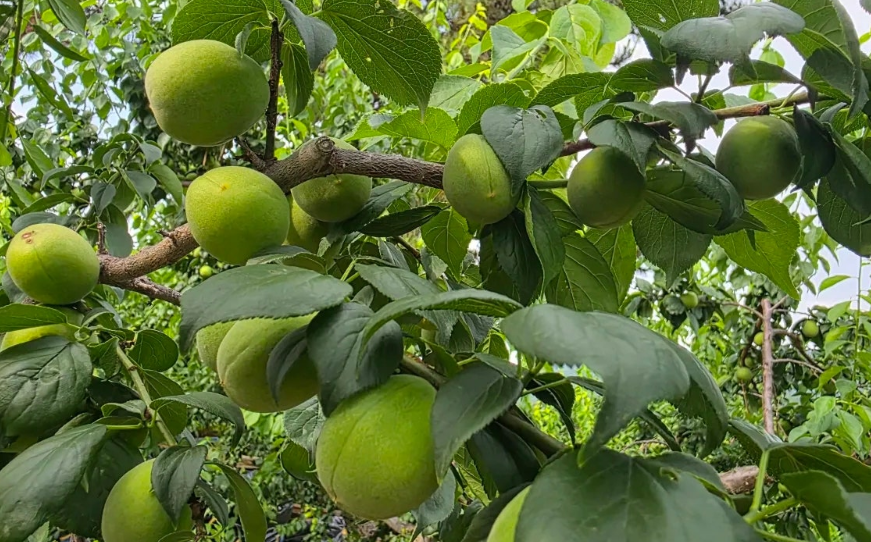

Maesil (매실) is a small, tart fruit harvested in Korea in late spring and early summer. Unlike jadu (자두), the sweet, purple plum often eaten fresh, maesil is usually preserved or used to make drinks and seasonings.Maesil is also connected to a famous Korean flower. The maesil tree’s blossoms are called maehwa (매화), and the flowers and fruit each have their own place in Korean culture.
Quick Facts About Maesil
- Korean name: 매실 (maesil)
- Common English name: Green plum
- Main season: Late spring to early summer
- Taste: Very tart and fragrant
- Common uses: Syrup, tea, bottled drinks, cooking, and pickles
- Best-known growing area: Gwangyang (광양), in South Jeolla Province
Maesil and Jadu: What’s the Difference?
The names can be confusing because both are often translated into English as “plum.”
- Maesil (매실): Small and tart, usually preserved or processed into drinks, syrup, and pickles.
- Jadu (자두): A sweet-tart plum, often purple or red, commonly eaten fresh.
Green maesil is very sour and is usually processed rather than eaten raw. In Korea, it is most familiar in the form of syrup, tea, drinks, and jangajji pickles.
Maehwa (매화): The Flower of the Maesil Tree
The flower of the maesil tree is called maehwa (매화). It has been admired in Korean poetry and art for centuries. Because it blooms in late winter or early spring, sometimes while the weather is still cold, it is associated with resilience and integrity. Maehwa is one of the Four Gentlemen (sagunja, 사군자)—plum blossom, orchid, chrysanthemum, and bamboo—which have long been celebrated in traditional literati painting.
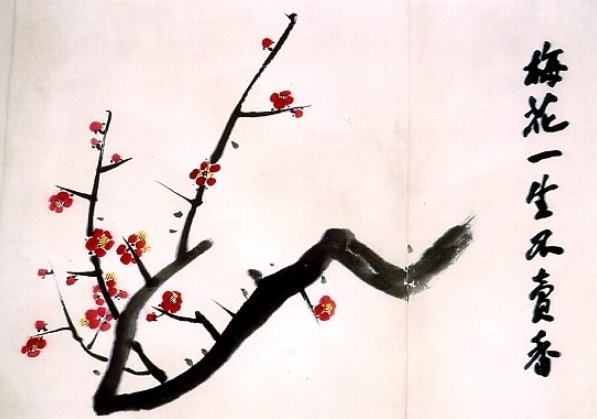
The blossoms appear before the fruit. Around Gwangyang’s Seomjingang River, maehwa blooms in March, while the green plums are harvested later in the season.
Gwangyang Maehwa Village and Plum Blossom Festival
Gwangyang is famous for its plum blossoms as well as its maesil. In March, Gwangyang Maehwa Village (광양 매화마을), beside the Seomjingang River, fills with white and pink blossoms. The village is home to the annual Gwangyang Maehwa Festival (광양매화축제), where visitors can walk beneath the flowering trees and find local plum products. The festival is held in March; its exact dates vary each year.
The blossoms are a major attraction in early spring, while the green fruit is picked later, generally around May and June. Some local activities also introduce visitors to maesil products and processing.
Maesil-cheong (매실청): Green Plum Syrup
Maesil-cheong (매실청) is made by preserving green plums with sugar until the fruit releases its juice. The syrup has a sweet-and-sour flavor and a fruity aroma. Korean cooks use it in marinades, sauces, and salad dressings. It adds sweetness and a tangy note to food. Many households prepare maesil-cheong during the short early-summer season and use it throughout the year.
Maesil-cha (매실차): Hot or Iced Green Plum Tea
Maesil-cha (매실차) is made by mixing maesil syrup with water. It is a sweet fruit drink, not tea brewed from tea leaves. It can be served warm or chilled with ice. The iced version is called maesil-naengcha (매실냉차). Some Korean restaurants serve maesil tea after a meal, while others offer it on the drink menu. Its light, sweet-and-tart taste makes it a refreshing way to finish a meal.
Bottled Maesil Drinks
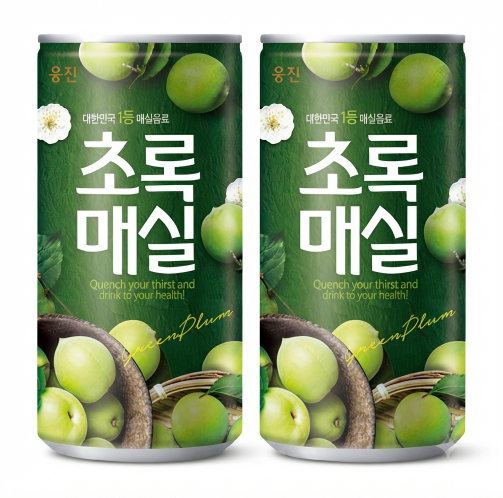
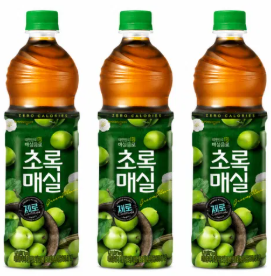
Maesil is also sold as a ready-to-drink beverage. Bottled or canned green-plum drinks can be found in Korean supermarkets and convenience stores. One familiar product is Chorok Maesil (초록매실), which means “green plum.”
Maesil-jangajji (매실장아찌): Pickled Green Plums
Maesil-jangajji (매실장아찌) is made from preserved pieces of green plum. The fruit is often pitted and pickled; some versions are seasoned with gochujang (고추장), Korean red chili paste. Recipes vary, but the pickles are typically sweet, sour, and sometimes spicy, with a chewy texture.
It is served in small portions as banchan (반찬), alongside rice and other dishes. Some recipes also use the fruit left over after making maesil syrup.
A Seasonal Fruit with Two Stories
Maesil offers two ways to experience the season: the maehwa blossoms that draw visitors to Gwangyang in spring, and the tart green fruit harvested later for syrup, tea, drinks, and pickles. A cup of maesil-cha or a small serving of maesil-jangajji lets you taste how Koreans preserve the flavor of this short-season fruit.
Read Next
Korean Fruits by Season: A Guide to Fruit in Korea –