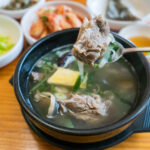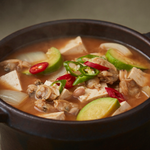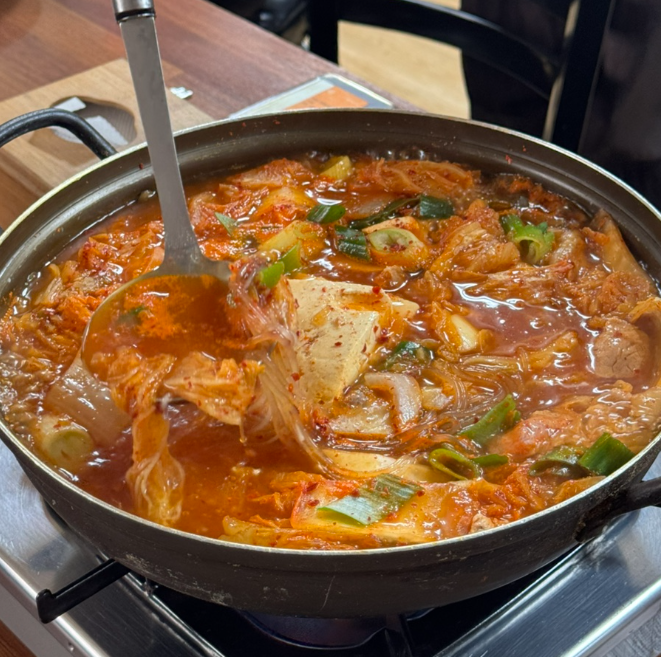

A bubbling pot of kimchi jjigae is a familiar sight in Korean homes and restaurants. Made with well-fermented kimchi and often pork or tofu, this hearty stew has a tangy, savory broth that pairs naturally with a bowl of rice.
Kimchi jjigae is often described as Korean comfort food, alongside doenjang jjigae (된장찌개), a stew made with fermented soybean paste. To understand why these dishes feel so familiar, it helps to know how important soups and stews are in Korean meals.
Quick Facts About Kimchi Jjigae
- Korean name: 김치찌개 (kimchi jjigae)
- What it is: A Korean stew made with kimchi and other ingredients
- Common additions: Pork, tuna, tofu, onion, garlic, and green onion
- Often served with: Rice and side dishes
- Where to find it: Korean homes, restaurants, lunch spots, and casual eateries
What Is Kimchi Jjigae?
Kimchi jjigae is a stew made by simmering kimchi with broth and other ingredients. Pork is a popular addition, but tuna and tofu are also common. As the kimchi cooks, it gives the broth a tangy, savory flavor. Pork adds richness, while tofu makes the stew soft and filling.
Recipes vary from home to home. Some cooks fry the pork and kimchi before adding liquid; others simmer everything together. The amount of broth and level of spice also depend on personal preference.
Kimchi Jjigae and Korean Soup Culture
Korean meals often include rice, side dishes, and something warm with broth. That dish might be guk (국), a soup; jjigae (찌개), a stew; or tang (탕), another kind of soup or broth dish. The categories can overlap, but all are familiar parts of Korean food culture.
Galbitang (갈비탕), made with beef short ribs, and seolleongtang (설렁탕), a milky soup made by simmering beef bones, are well-known examples of tang. Kimchi jjigae and doenjang jjigae are also everyday favorites. Along with rice and side dishes, these warm, savory dishes help make a meal feel complete.
Some older Koreans remember a time when a meal without soup or stew felt incomplete. Eating habits have become more varied, and people today may choose meals without soup or stew more often. Still, a bowl of kimchi jjigae remains a familiar and comforting choice.
Kimchi Jjigae and Aged Kimchi
Kimchi jjigae is especially good with well-fermented kimchi. In the past, many households made kimjang kimchi (김장김치)—kimchi prepared in large batches for the colder months—and kept it to eat over time. As the kimchi grew more sour, families often used it in dishes such as kimchi jjigae.
Today, there are many more food options, so some people may eat kimchi jjigae less often than before. But aged kimchi is still a good reason to make a pot. Meugeunji (묵은지), or long-aged kimchi, holds its bold flavor during cooking and pairs especially well with pork.
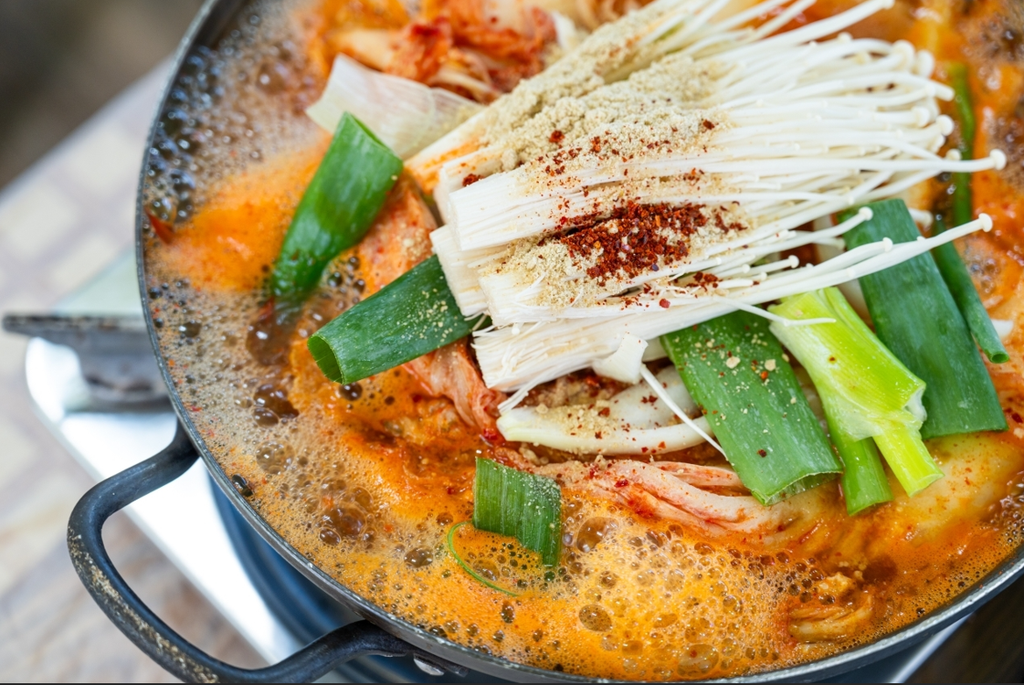
Photo: Korea Tourism Organization
Popular Types of Kimchi Jjigae
Pork kimchi jjigae (돼지고기 김치찌개) is one of the most familiar versions. Pork belly or pork shoulder adds a rich, savory taste to the broth.
Tuna kimchi jjigae (참치 김치찌개) is easy to make with canned tuna. The tuna’s flavor blends well with the tangy kimchi.
Tofu kimchi jjigae (두부 김치찌개) includes plenty of tofu, which softens the spicy broth and makes the stew more filling. Some versions combine tofu with pork or tuna.
How to Eat Kimchi Jjigae
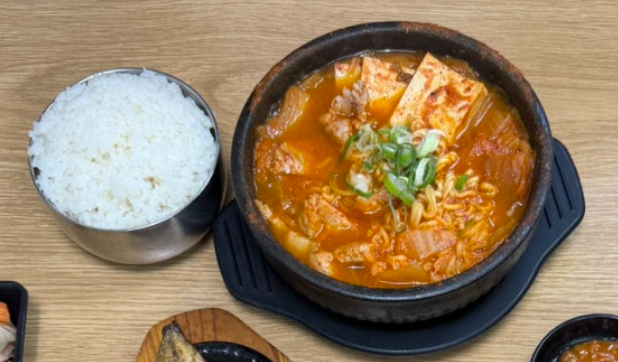
Kimchi jjigae is usually served with a bowl of rice and several banchan (반찬), or Korean side dishes. Try a spoonful of rice with kimchi and pork, or mix a little broth into your rice.
At some restaurants, the stew arrives in a pot that is still bubbling. Let it cool for a moment before taking a bite. The broth can be spicy, and the pot stays hot at the table.
Where to Eat Kimchi Jjigae in Korea
You can find kimchi jjigae at Korean restaurants, baekban (백반) restaurants serving rice with a set of side dishes, and casual eateries. Some bunsik (분식) restaurants also include it on the menu.
Depending on the restaurant, you may be able to order an individual serving or a larger pot to share. Check the menu for options such as pork or tuna kimchi jjigae, since the main ingredients vary by place.
Tips for Trying Kimchi Jjigae
- Eat it with rice. Rice balances the stew’s tangy, spicy broth.
- Try the aged-kimchi version. It has a deeper, more pronounced kimchi flavor.
- Check the ingredients. Pork, tuna, and tofu are common, but recipes differ.
- Let it cool before eating. Restaurant pots may arrive bubbling hot.
- Try doenjang jjigae, too. It offers a savory, fermented-soybean flavor and is another beloved Korean comfort stew.
Read Next
Doenjang Jjigae (된장찌개): Korea’s Savory Soybean Paste Stew –
What Is a Typical Korean Meal? Rice, Soup, and Side Dishes –