
Ondol (온돌), Korea’s traditional underfloor heating system, remains a common feature of modern homes. Traditional ondol used heat from a kitchen hearth to warm the floor. Today, many homes use hot water that circulates through pipes beneath the floor.
The heating equipment varies by home. Some households have an individual boiler, while others receive heat through a district heating network. Thermostat labels and functions also differ by model and building.
What Is Ondol?
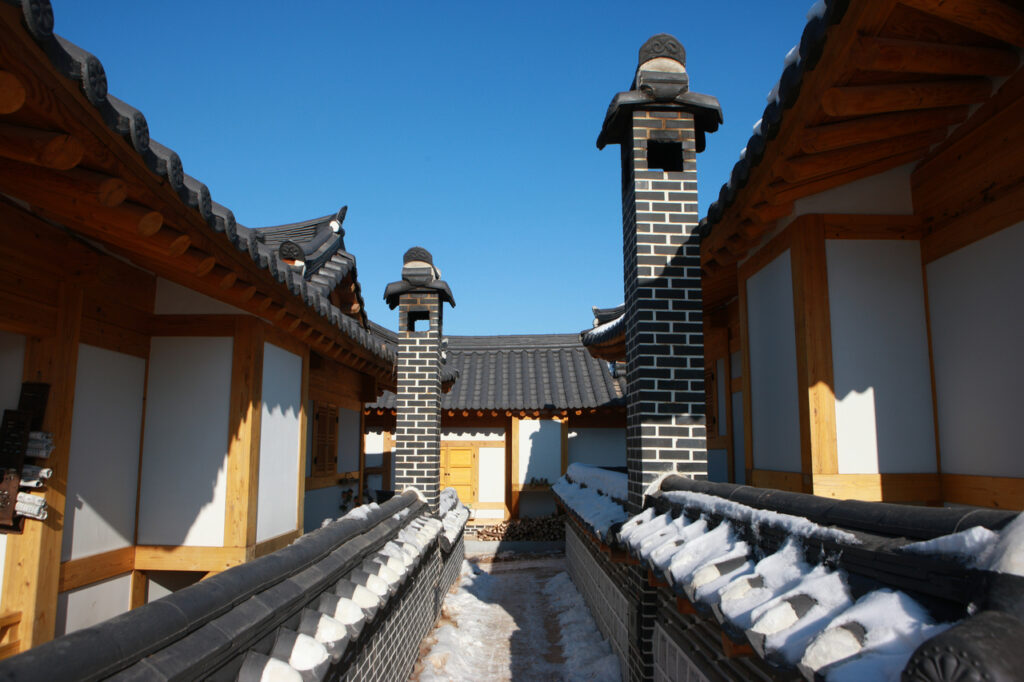
Traditional ondol heated a room through channels beneath the floor. Heat from a kitchen hearth passed through these channels before escaping through a chimney. This traditional system was also known as gudeul (구들).
In modern homes, a boiler or central heating system warms water that flows through pipes under the floor. The warm floor then transfers heat to the room. Unlike a radiator or vent that releases heat directly into the air, ondol heats the floor surface and the objects around it.
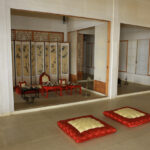
Because the floor stores heat, it can take time to warm up and may remain warm after the heating stops. In some Korean-style guest rooms, bedding is placed directly on the heated floor. In most modern homes, the heating pipes are hidden beneath the finished flooring.
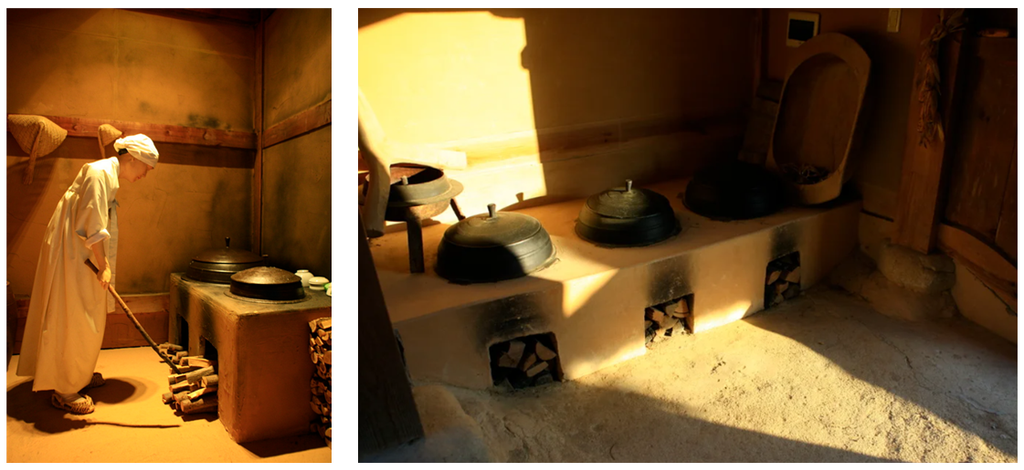
Photo: Korea Tourism Organization
Individual Boilers and District Heating
Korean homes commonly use individual heating or district heating, though the equipment and controls vary from one building to another.
Individual heating
With individual heating, a boiler serves one home or apartment. It usually heats water for the underfloor pipes and may also provide hot water for showers, sinks, and other household uses. Residents generally control the heating through a thermostat or home control panel.
Natural gas is widely used where a gas network is available. Depending on the location and system, homes may also use LPG, kerosene, or electric heating and hot-water equipment.
District heating
Some apartment complexes and residential areas receive heat from a district heating network. Heat is produced centrally and delivered to buildings. A home may still have a controller for adjusting its heating, but it may not have an individual boiler.
A technical note on household gas boilers
Korean energy-efficiency regulations define a household gas boiler category that covers gas-fired hot-water boilers with a gas consumption of up to 70 kW under the relevant Korean standards. This is a technical classification; it does not describe the controls or temperature settings in a particular home.
Korean boiler manufacturers include Kiturami (귀뚜라미), KD Navien (경동나비엔), and Rinnai(린나이). Each makes different products, and controllers can vary even between models from the same manufacturer.
Official Visitor Resources
1. 귀뚜라미 (Kiturami): https://kiturami.co.kr/
2. 경동나비엔 (KD Navien): https://www.kdnavien.co.kr/
3. 린나이코리아 (Rinnai Korea): https://www.rinnai.co.kr/
Common Thermostat Labels
A thermostat or home control panel may display Korean words, icons, or abbreviations. Common labels include:
- 난방 (nanbang) — Heating
- 온돌 (ondol) — Floor-heating mode
- 실내 (sillnae) — Room-temperature mode
- 온수 (onsu) — Hot water
- 외출 (oechul) — Away mode
- 보일러 (boilleo) — Boiler
- 온도조절기 (ondo jojeolgi) — Thermostat or temperature controller
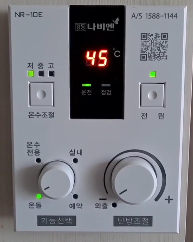
Not every controller has all of these settings. Some use icons or different labels, and some functions are available only through a menu.
실내: Room-temperature control
On some thermostats, 실내 mode uses a sensor in the controller to measure the surrounding air temperature. The heating responds to that reading and the temperature set by the user.
Because the sensor measures the air near the controller, its reading may not match the temperature in every room. A thermostat near a draft, a sunny window, or another heat source may register a different temperature from the rest of the home.
온돌: A setting on some thermostats
Some Korean boiler thermostats offer an 온돌 heating setting. When available, this setting controls heating based on the temperature of the water circulating through the floor pipes. The number shown is therefore not necessarily the room temperature.
The same number in 온돌 and 실내 modes may produce different results. Not every thermostat has an 온돌 setting, and its controls vary by model. Some controllers may use a different label or may not offer this mode at all.
온수: Domestic hot water
온수 refers to domestic hot water used for showers, dishwashing, and similar purposes. Some individual boilers have an 온수전용 setting that supplies hot water without running space heating. The exact function depends on the boiler and controller. In a home using district heating, hot water may be managed separately from space heating. The setup depends on the building.
외출 : Away mode
외출 means “away.” On some boilers, this setting is designed for periods when the home is unoccupied. Depending on the model, it may reduce heating or support a freeze-protection function. There is no universal operating rule for 외출 mode. The conditions that start a circulation pump or limited heating vary by model. Some descriptions cite figures such as 8°C for pump operation and 5°C for low-level heating. These should be treated as model-specific examples, not standard settings for all Korean boilers.
Those figures also do not guarantee that every room or section of pipe will remain above 5°C. A thermostat or boiler sensor measures conditions only where it is installed, while pipes in colder areas may be exposed to different temperatures. Freeze protection may depend on the boiler remaining connected to electricity. For some models, disconnecting the power can disable part of the protection system. The manufacturer’s manual specifies the required conditions, so the same advice should not be applied to every boiler.
Why Ondol Feels Different
Ondol warms the floor and releases heat gradually, so its response can feel slower than a system that blows warm air directly into a room. The floor may continue to feel warm after the boiler stops, and different rooms may warm at different rates.
The experience depends on several factors: the floor construction, insulation, outdoor temperature, pipe layout, and where the thermostat is located. A controller reading is useful, but it does not always describe the temperature across the entire home.
Common Questions About Korean Home Heating
Does every Korean home have an individual boiler?
No. Many homes use individual boilers, while some apartment complexes and residential areas receive district heating. The equipment and controls depend on the building.
Does every thermostat have an 온돌 setting?
No. Some controllers offer both 실내 and 온돌 settings, while others use different labels or do not offer an 온돌 setting. The available functions vary by model.
Does 외출 mode always prevent pipes from freezing?
No. The function and operating conditions vary by boiler. Freeze protection may depend on factors such as power and the model’s specific instructions. A general temperature figure should not be treated as a guarantee.
Why can the floor remain warm after the boiler stops?
The floor retains heat and releases it gradually. As a result, the floor may stay warm after the boiler has stopped circulating hot water.
Read Next
Taking Off Your Shoes in Korea: When and Where You Should –
Jeonju Hanok Village (전주한옥마을)