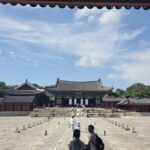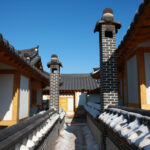

Changdeokgung Palace (창덕궁) is one of Seoul’s most memorable historic places. Built more than 600 years ago, it is known for royal halls and courtyards that follow the shape of the land. Behind them lies Huwon (후원), a wooded garden of ponds and pavilions often called the Secret Garden.
A visit here offers more than a look at traditional Korean buildings. The palace reveals how the Joseon royal court held ceremonies, managed government, and lived within a landscape of hills and trees. Its architecture and garden are part of the reason the Changdeokgung Palace Complex was inscribed on the UNESCO World Heritage List.
Quick Facts About Changdeokgung Palace
- Korean name: 창덕궁 (Changdeokgung)
- Built: 1405, during the reign of King Taejong
- Original role: A secondary palace to Gyeongbokgung
- Location: Jongno-gu, Seoul
- UNESCO inscription: 1997
- Best known for: Architecture that follows the natural terrain and Huwon, the Secret Garden
A Palace That Follows the Land
Changdeokgung does not have the rigid symmetry people might expect from a royal palace. Its halls and courtyards sit along the natural contours of the land, with the wooded slopes behind the palace forming part of the setting.
That design gives the grounds a different feeling from a large, formal square. As you walk between buildings, the view changes with the path: a courtyard opens, a pavilion appears between trees, or a hall sits against the hillside. The natural landscape is part of the experience rather than a backdrop separate from the palace.
The layout also had a practical purpose. A royal palace needed spaces for public ceremonies, government work, family life, and leisure. Changdeokgung brought these roles together across the grounds, with Huwon providing a more secluded area for rest and reflection.
UNESCO recognizes the palace as an example of East Asian palace architecture and garden design that adapts to its natural setting. Its buildings and landscape also reflect the ideas of pungsu, or geomantic principles, and the Confucian order that shaped Joseon court life.
A Brief History of Changdeokgung
King Taejong ordered the construction of Changdeokgung in 1405. It was first built as a secondary palace to Gyeongbokgung, the main palace of the Joseon Dynasty. A garden was created behind the palace the following year.
The complex continued to develop over the centuries. New buildings and garden areas were added, including the Buyongji Pond area, the Gyujanggak library and Juhamnu Pavilion, and the Yeongyeongdang complex. The Nakseonjae area was built in 1847.
Changdeokgung also witnessed the end of the Joseon monarchy and the Korean Empire. The 1910 Korea–Japan Treaty was signed at Heungbokheon, a building associated with Daejojeon. In 1917, a fire destroyed the palace’s sleeping quarters, including Daejojeon and Huijeongdang; they were later rebuilt using halls moved from Gyeongbokgung.
The palace remained connected to Korea’s royal family into the 20th century. Members of the last royal family lived in Changdeokgung, including Empress Sunjeong, Crown Princess Yi Bangja, and Princess Deokhye. Their presence adds another chapter to the palace’s long history, beyond its role in the Joseon court.
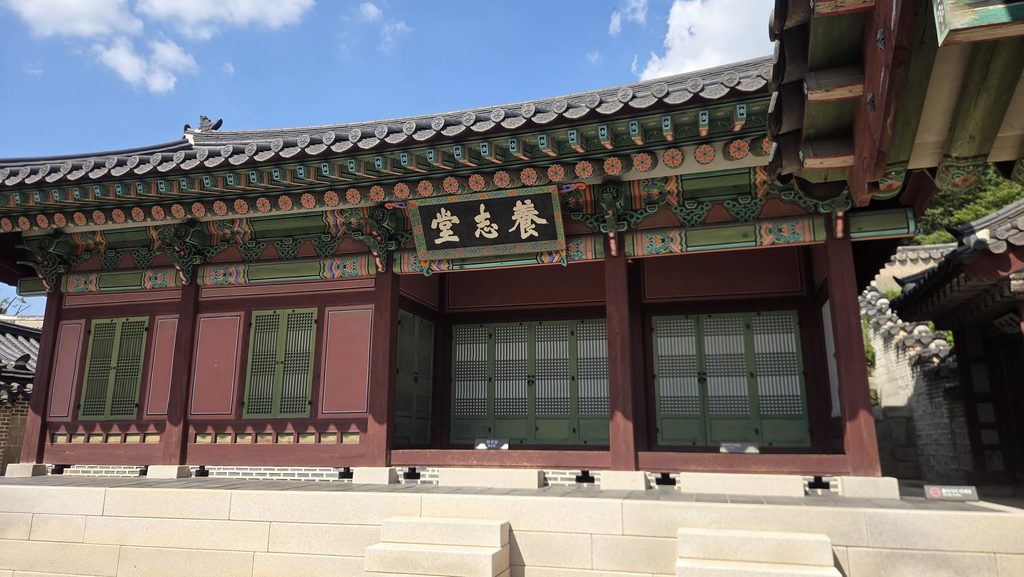
What to See at Changdeokgung Palace
In 1592, during the Japanese invasions of Korea, Changdeokgung was destroyed. It was rebuilt in 1610, before the other palaces in the capital. Over the next 270 years, many kings used it as their principal residence. It continued to serve as the de facto main palace until Gyeongbokgung was rebuilt in 1867.
Donhwamun Gate and Geumcheongyo Bridge
Donhwamun (돈화문) is the main gate and the traditional entrance to the palace. After passing through it, look for Geumcheongyo (금천교), the stone bridge inside the grounds. These entry points mark the transition from the busy streets of Seoul to the palace’s formal courtyards and halls.
Take a moment to look at the gate and bridge before moving on. The palace is best experienced at a relaxed pace, with time to notice how each section opens onto the next.
Injeongjeon Hall
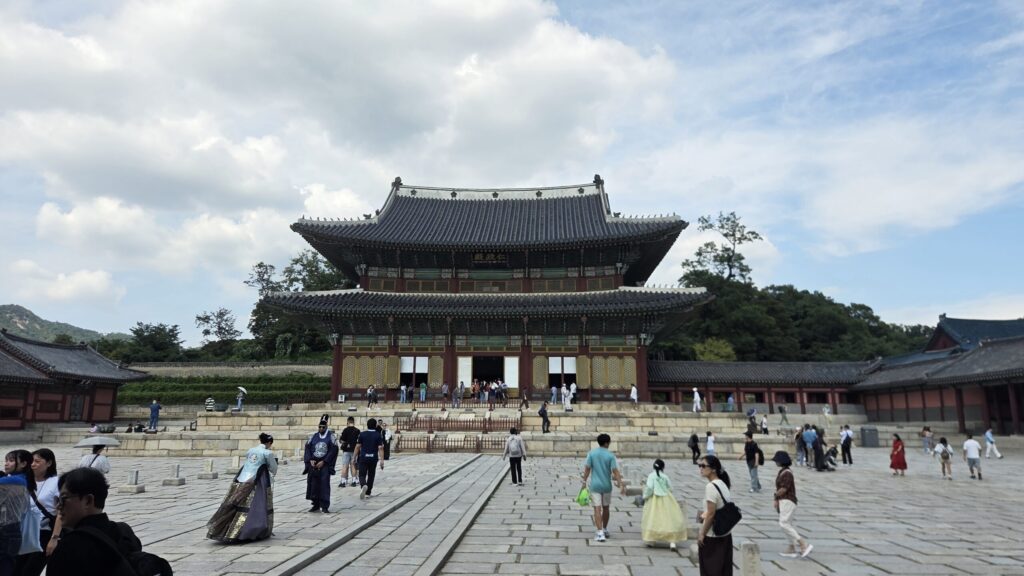
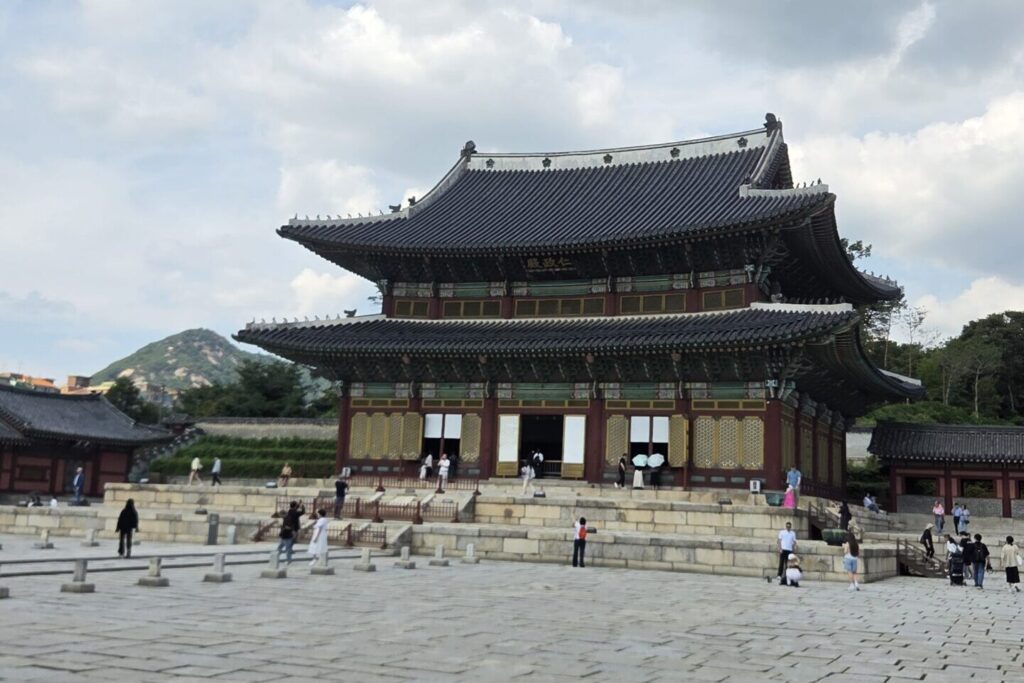
Injeongjeon (인정전) is the main ceremonial hall. Royal ceremonies and important state events took place here. Its large courtyard and carefully arranged approach communicate the formal character of the royal court.
From the courtyard, notice the relationship between the hall, the surrounding buildings, and the open space in front. The setting helps explain how a palace could function as both a place of government and a stage for public ritual.
Seonjeongjeon and the Administrative Areas
The palace was also a workplace. Halls and offices provided spaces for the king and officials to discuss state affairs and carry out daily government business. As you walk through the administrative areas, you can see how the palace was organized for more than occasional ceremonies.
The arrangement of offices, courtyards, and residential buildings reflects the many activities that took place within the walls. A royal palace was at once a government center, a home, and a ceremonial setting.
Daejojeon and Nakseonjae
Daejojeon (대조전) belonged to the palace’s residential area. Its history includes both royal life and later rebuilding after the 1917 fire.
Nakseonjae (낙선재), built in 1847, offers a quieter contrast to the main ceremonial halls. The area is associated with members of the last royal family who lived at Changdeokgung after the Korean Empire ended. It is a reminder that the palace’s story continued long after the Joseon Dynasty.
Huwon: The Secret Garden
Huwon means “Rear Garden,” a name that describes its position behind the palace. It is also widely known as the Secret Garden. The garden’s ponds, pavilions, streams, and wooded paths form a landscape that feels distinct from the formal courtyards.
Several areas were added over time. Buyongji Pond and Juhamnu Pavilion date to the reign of King Jeongjo, who became king in 1776. The Yeongyeongdang area was added in the 19th century, and the garden also includes features such as Ongnyucheon Stream.
The name “Secret Garden” can make it sound like a small, hidden attraction. In reality, Huwon is a large landscape within the palace complex, and visiting it takes additional time. Its appeal lies in the way the built features sit among trees, water, and sloping ground.
Huwon has limited, timed entry and requires a separate ticket. Reservations are recommended, especially in spring and fall when popular sessions can sell out. Garden paths include slopes and unpaved sections, so comfortable shoes are helpful.
How to Visit Changdeokgung Palace
Changdeokgung is located at 99 Yulgok-ro, Jongno-gu, Seoul. The nearest subway station is Anguk Station on Line 3. From Exit 3, the palace entrance is about a five-minute walk. Jongno 3-ga Station is another option, with a longer walk.
Opening hours vary by season. The current general schedule is:
- February–May and September–October: 9:00 a.m.–6:00 p.m. (last entry 5:00 p.m.)
- June–August: 9:00 a.m.–6:30 p.m. (last entry 5:30 p.m.)
- November–January: 9:00 a.m.–5:30 p.m. (last entry 4:30 p.m.)
The regular closing day is Monday. If a public holiday falls on the regular closing day, the palace opens and closes on the next non-holiday instead. Special schedules or temporary changes may apply, so check the official visitor page before your visit.
As of October 2026, adult admission to the palace grounds is ₩3,000. Huwon costs an additional ₩5,000 for adults, and visitors also need palace admission. Online Huwon reservations currently open six days before the visit at 10:00 a.m. Korea time and remain available until the day before. A limited number of same-day tickets are sold at the palace from 9:00 a.m.
You can explore the main palace area at your own pace. Free guided tours are also offered at scheduled times in several languages. Check the current schedule if you would like a guide to explain the buildings and their history.
Tips for Planning Your Visit
- Allow time for both areas. The palace buildings and Huwon have separate entrances and ticket arrangements. Leave enough time between your palace visit and garden session.
- Book the garden in advance. Huwon has limited timed-entry sessions. Check availability before you plan the rest of your day.
- Wear comfortable shoes. Some garden paths are sloped or unpaved, and conditions can vary with the weather.
- Check the calendar before you go. Opening hours, closing days, and special programs can change around holidays or during events.
- Look beyond the main hall. The smaller courtyards, residential areas, and garden paths help show how the palace worked as a place to govern and live.
Frequently Asked Questions
Is Changdeokgung Palace a UNESCO World Heritage Site?
Yes. The Changdeokgung Palace Complex was inscribed on the UNESCO World Heritage List in 1997. UNESCO highlights the way its buildings and garden adapt to and harmonize with the natural setting.
Is Huwon included in the palace admission ticket?
No. Huwon requires a separate ticket in addition to admission to the palace grounds. Entry is limited to scheduled times, so check the official booking page before your visit.
What is the best way to get to Changdeokgung?
Take Line 3 to Anguk Station and use Exit 3. The palace is about a five-minute walk from the station.
Which day is Changdeokgung closed?
The regular closing day is Monday. Holiday schedules can change the normal pattern, so confirm the current information before visiting.
Why Changdeokgung Is Worth Visiting
Changdeokgung brings together several sides of Korea’s royal past. Its gates and ceremonial halls show the public face of the court; its offices and residences reveal how the palace functioned day to day; and Huwon offers a quieter landscape shaped by royal life and the natural terrain.
It is a particularly rewarding place to visit if you want to see how Korean palace architecture responds to its surroundings. Take your time, look carefully at the courtyards and hills, and leave room in your itinerary for the garden.
Official Visitor Resources
- Changdeokgung Palace history — Korea Heritage Service
- Changdeokgung visitor information — Korea Heritage Service
- Changdeokgung Palace Complex — UNESCO World Heritage Centre
Read Next
The History of Seoul: From Baekje to a Global City
Changgyeonggung Palace (창경궁): Palace of the Joseon Dynasty –