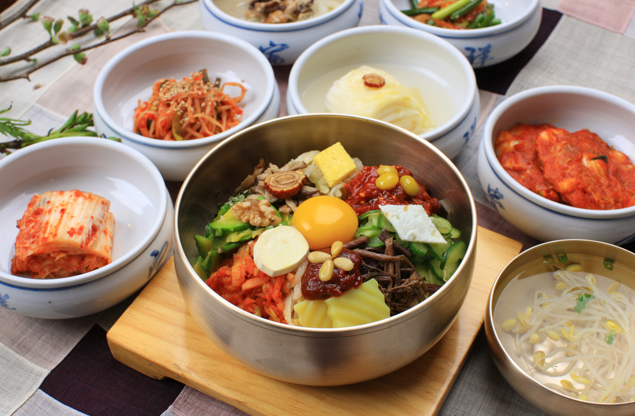

Bibimbap is a Korean rice bowl topped with vegetables, sauce, and often an egg or beef. The name combines bibim (비빔, “mixing”) and bap (밥, “rice”): the colorful toppings are arranged on the rice, then mixed together before eating.
There is no single recipe. Restaurants and households use different vegetables, sauces, and proteins. At home, bibimbap is a practical way to turn leftover side dishes into a meal. In Jeonju, it is a celebrated local specialty.
For a first taste, bibimbap is easy to customize. Add the gochujang a little at a time, and ask about meat, broth, and sauce ingredients if you have dietary restrictions.
What’s in a Bowl of Bibimbap?
A typical bowl has warm rice, several vegetable toppings, and a sauce. Common toppings include:
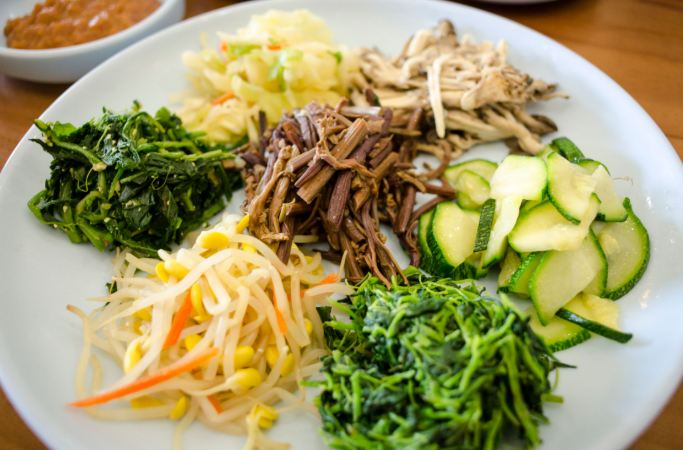
- Kongnamul (콩나물): seasoned bean sprouts
- Sigeumchi (시금치): seasoned spinach
- Gosari (고사리): bracken fern
- Doraji (도라지): bellflower root
- Mu-saengchae (무생채): spicy shredded radish
- Carrot, zucchini, mushrooms, cucumber, or lettuce
- Gyeran (계란): a fried or soft egg
- Seasoned beef, often similar to bulgogi
The vegetables are often cooked and seasoned separately before being arranged on the rice. Spinach may be blanched and seasoned with sesame oil; bean sprouts are boiled; and carrots and zucchini are quickly stir-fried. These seasoned vegetables are called namul (나물). Many are also served as banchan (반찬), the small side dishes that accompany a Korean meal.
Types of Banchan (반찬): A Detailed Side Dish Guide – Kimbap Life
The Sauce: Gochujang, Sesame Oil, and Soy Sauce
Gochujang (고추장)
Gochujang is a fermented Korean chili paste with a spicy, savory, and slightly sweet flavor. Some restaurants serve it plain; others serve a seasoned version, often loosened with ingredients such as sesame oil, sugar, vinegar, or garlic. The heat varies. Start with a little, mix, taste, and add more if you like. If you prefer a mild bowl, ask for the sauce on the side or ask whether the restaurant can serve a soy-based alternative.
Chamgireum (참기름): Sesame Oil
A small amount of sesame oil adds a roasted, nutty aroma. Add it if it is served separately, or ask the restaurant whether the bowl already contains it.
Popular Types of Bibimbap
Jeonju Bibimbap (전주비빔밥)
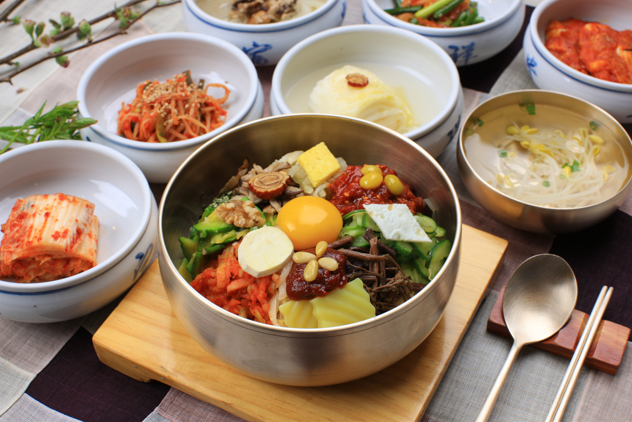
Jeonju is closely associated with bibimbap. Jeonju-style bowls are known for their variety of carefully prepared toppings and neat presentation. Some restaurants serve them in a brass bowl called notgeureut (놋그릇), and recipes differ from one restaurant to another. Ask how the rice and toppings are prepared if you have dietary restrictions.
Dolsot Bibimbap (돌솥비빔밥): Hot Stone Bowl
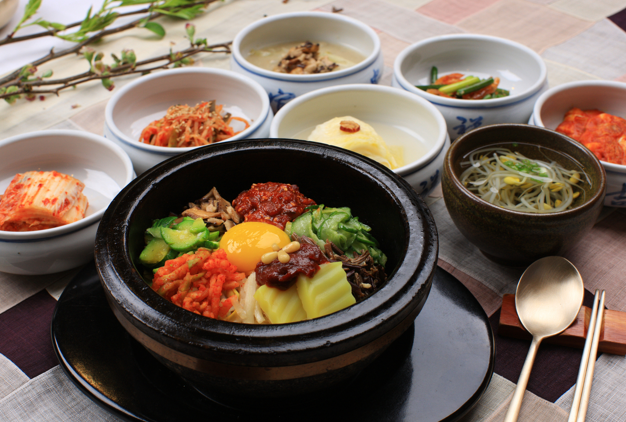
Dolsot bibimbap arrives in a heated stone bowl, where the rice at the bottom can become golden and crisp. That crisp rice is called nurungji (누룽지). For a crispier bottom, let the bowl sit briefly before mixing. You can press some rice against the sides with your spoon, but avoid touching the bowl: it stays very hot throughout the meal.
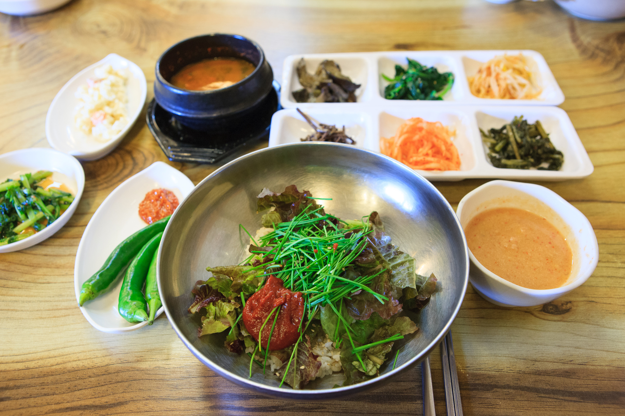
Sanchae Bibimbap (산채비빔밥): Mountain Vegetable Bibimbap
Sanchae bibimbap features mountain greens, herbs, roots, or mushrooms. It is often found near mountains and hiking areas. The flavor can be earthier and more herbal than a bowl topped with beef. Check the broth and seasoning if you are vegetarian or vegan, since recipes vary.
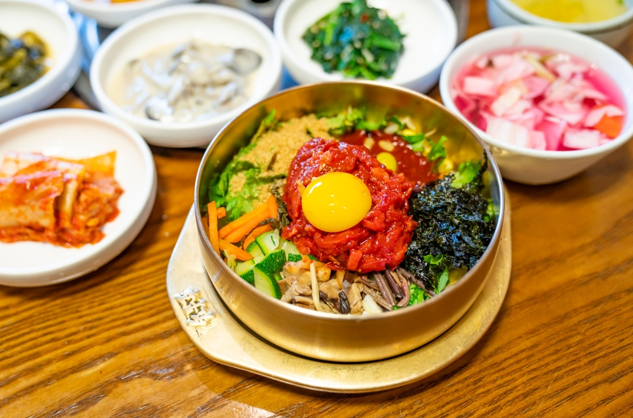
Yukhoe Bibimbap (육회비빔밥): Raw Beef Bibimbap
This version is topped with yukhoe (육회), seasoned raw beef, and may include a raw egg yolk. Order it only if you are comfortable eating raw meat and egg.
How to Eat Bibimbap
- Take a moment to look at the toppings before mixing; they are often arranged with care.
- Add a little gochujang, especially if you are unsure how spicy it will be.
- Add sesame oil if it is served separately.
- Break the egg yolk, if your bowl has an egg.
- Mix from the bottom with a spoon until the rice and toppings are evenly combined.
- Taste and add more sauce if you want.
- If you ordered dolsot bibimbap, scrape up the crisp rice at the bottom.
A spoon is the easiest utensil for mixing and eating bibimbap.
Bibimbap is often served with a light soup and a few side dishes. The soup might be kongnamul-guk (콩나물국, bean-sprout soup), doenjang-guk (된장국, soybean-paste soup), or another broth. The sides vary by restaurant.
An Easy Bowl of Bibimbap at Home
At home, bibimbap is often a quick way to use leftover banchan (side dishes). Add whatever you have in the fridge to a bowl of warm rice, then add gochujang and a little sesame oil. A fried egg is optional. There’s no need to prepare every topping from scratch.
What You Need
- 1 bowl of warm rice
- A few leftover side dishes, such as vegetables or kimchi
- Gochujang, to taste
- A little sesame oil
- 1 fried egg, optional
How to Make It
- Put the warm rice in a bowl and add the side dishes.
- Add gochujang and sesame oil.
- Top with a fried egg, if you like.
- Mix everything together and eat.
Useful Korean Words
- Bibimbap (비빔밥): mixed rice
- Dolsot (돌솥): hot stone bowl
- Gamasot (가마솥): cauldron
- Sanchae (산채): mountain vegetables
- Yukhoe (육회): seasoned raw beef
- Gochujang (고추장): Korean chili paste
- Chogochujang (초고추장): sweet-and-sour chili sauce
- Chamgireum (참기름): sesame oil
- Nurungji (누룽지): crisp rice from the bottom of a pot
- Namul (나물): seasoned vegetables
- Banchan (반찬): side dishes
How Much Does Bibimbap Cost?
Prices vary by city, restaurant, and toppings
- Jeonju specialty restaurants: The draft’s menu checks suggested roughly ₩13,000–₩18,000.
- Convenience-store lunch boxes: Often around ₩4,000–₩5,000, depending on the product and store.
- Dolsot bibimbap: Often costs a little more than a regular bowl at the same restaurant.
and menu on a current map listing before setting out. If you take a taxi, showing the Korean address can help.