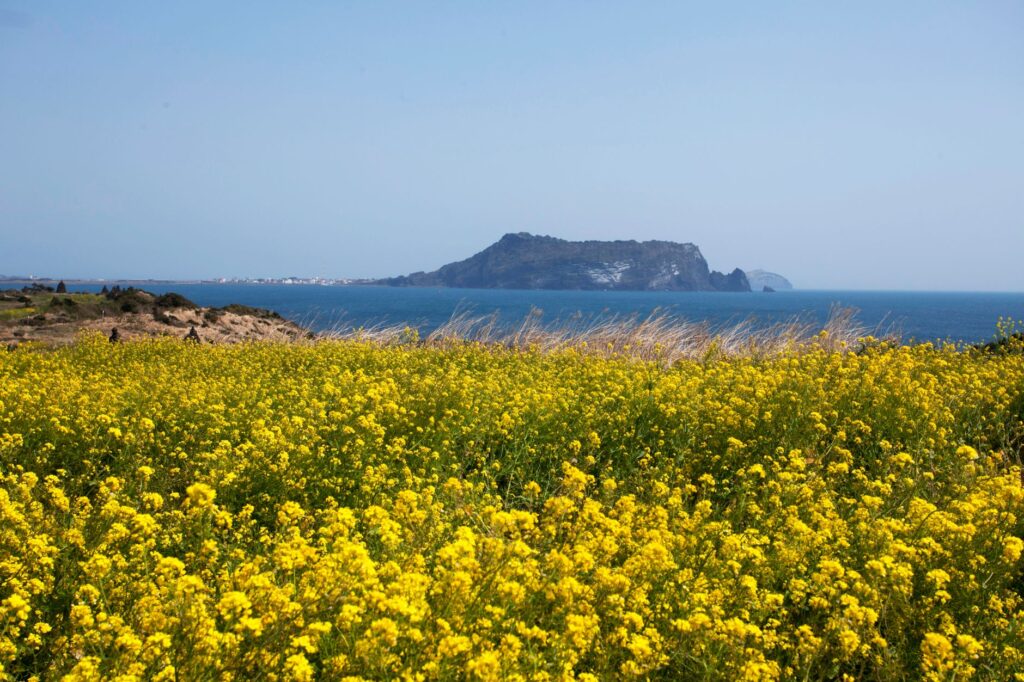

Jeju
Jeju Island is one of the most famous places in Korea, but it is also one of the easiest places to misunderstand.
Many people know Jeju as a vacation island. They imagine blue water, palm trees, beaches, cafes, black pork restaurants, tangerine fields, and honeymoon photos. All of that is real. Jeju is beautiful, and it is one of the most beloved travel destinations in Korea.
But Jeju is much deeper than a holiday image.
Jeju is an island shaped by volcanoes, wind, sea, stone, women divers, village rituals, painful modern history, local food, and a way of life that developed differently from mainland Korea. It is close to Korea, but it often feels like another world inside Korea.
To understand Jeju, you should not see it only as a place to visit. You should see it as a place with its own memory, its own language, its own landscape, and its own rhythm.
Jeju is officially part of South Korea as Jeju Special Self-Governing Province, a status created to reflect the island’s regional, historical, and human characteristics and to give it a high level of self-governing authority. But for everyday travelers, Jeju is easier to understand through feeling: the smell of the sea, the black volcanic stones, the strong wind, the wide roads, the low houses, the orange tangerines, and the slower pace outside the busy tourist zones.
This guide introduces Jeju not only as a travel destination, but as a living region of Korea.
Why Jeju Feels Different from Mainland Korea
Jeju feels different from mainland Korea for many reasons.
The first reason is geography. Jeju is an island. The sea separates it from the Korean Peninsula, and that separation helped create a distinct local culture. People on Jeju developed their own ways of farming, fishing, building houses, speaking, worshiping, cooking, and surviving.
The second reason is the land itself. Jeju is a volcanic island. Its fields, walls, roads, cliffs, caves, and mountains are shaped by lava and stone. Even ordinary village landscapes can feel different because of the black basalt walls that divide fields and protect homes from wind.
The third reason is climate. Jeju is warmer and windier than many parts of mainland Korea. Rain, fog, sudden clouds, and coastal winds are part of the island’s personality. A sunny morning can become a misty afternoon. A clear coast can quickly turn dramatic under clouds.
The fourth reason is history. Jeju has been shaped by isolation, resistance, poverty, migration, tourism, and tragedy. Its beauty is real, but so is its pain. The island’s modern history includes the Jeju 4·3 Incident, remembered today through places such as Jeju 4·3 Peace Park, which was established to commemorate victims and promote peace, human rights, reconciliation, and harmony.
The fifth reason is people. Jeju’s culture has been strongly shaped by women, especially the haenyeo, the women divers who harvest seafood without modern breathing equipment. Their culture is internationally recognized by UNESCO as intangible cultural heritage.
The Landscape of Jeju: Volcano, Sea, Stone, and Oreum
The most important thing to understand about Jeju is that the island was born from volcanic activity.
At the center of the island rises Hallasan(한라) Mountain, the highest mountain in South Korea at 1,947 meters. Hallasan(한라산) is not just a mountain. It is the heart of Jeju. The island spreads outward from it, and many local roads, weather patterns, views, and journeys are shaped by its presence.
On clear days, Hallasan can be seen from many parts of the island. Sometimes it looks gentle and distant. Sometimes it is hidden behind clouds. In winter, it can be covered with snow while the coast below remains relatively mild. In spring, flowers appear around its slopes. In autumn, the mountain becomes one of the best places to feel seasonal change.
Jeju is also famous for oreum, small volcanic cones scattered across the island. These hills are one of Jeju’s most distinctive landscape features. Some are grassy and open. Some are covered with forest. Some give views of the sea, villages, farms, or Hallasan. Walking up an oreum is one of the best ways to understand Jeju’s geography.
The island’s volcanic identity is internationally recognized. The UNESCO World Heritage property Jeju Volcanic Island and Lava Tubes includes Hallasan Natural Reserve, the Geomunoreum Lava Tube System, and Seongsan Ilchulbong Tuff Cone. These places show that Jeju’s beauty is not only scenic but geological.
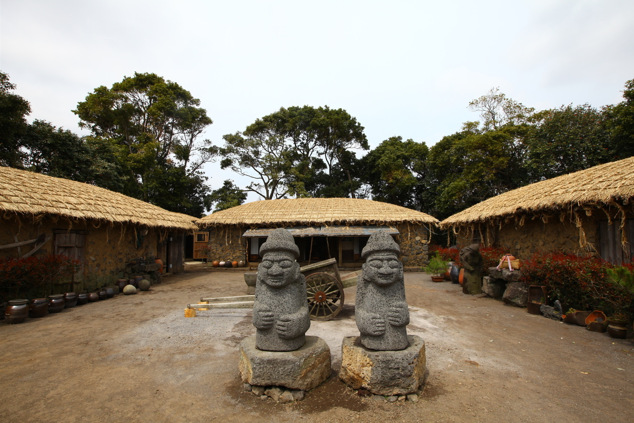
Jeju’s stones also shape daily life. Black basalt walls surround fields, guide roads, protect homes, and give villages their visual character. Stone is everywhere: in walls, statues, coastal rocks, old houses, and grave sites. Even when you are not visiting a famous attraction, Jeju’s volcanic stone quietly tells you where you are.
The sea completes the landscape. Jeju’s coastline changes constantly. Some places have white sand beaches. Some have black lava rocks. Some have cliffs, caves, ports, fishing villages, tide pools, or quiet coves. The sea is not decoration. It is a source of work, food, danger, memory, and identity.
Jeju’s Three Traditional Symbols: Wind, Stone, and Women
Koreans often describe Jeju through three things: wind, stone, and women.
This old expression does not explain everything about Jeju, but it gives a useful doorway into the island’s culture.
Wind is everywhere in Jeju. It shapes trees, farms, houses, and daily life. Traditional homes were built low and strong. Stone walls protected fields from wind. Even today, visitors quickly notice that Jeju’s weather has a force of its own.
Stone is the visible body of the island. Jeju’s black rocks remind people that this is a volcanic land. Stone walls are not only beautiful; they are practical. They show how people adapted to the land with the materials around them.
Women are central to Jeju’s cultural memory. Because many men were away for fishing, trade, labor, or other work, women often played a powerful role in household economies. The haenyeo are the most famous example, but women’s labor in farming, markets, family life, and community life has also shaped Jeju deeply.
To understand Jeju, it helps to look beyond famous views and ask: how did people live here? How did they survive the wind? How did they farm volcanic soil? How did they gather food from the sea? How did they build homes from stone? How did women hold communities together?
These questions make Jeju more meaningful.
Haenyeo (해녀): The Women Divers of Jeju
The haenyeo are one of the most important cultural symbols of Jeju.
Haenyeo are women divers who enter the sea to gather seafood such as abalone, sea urchin, shellfish, and seaweed. They dive without modern oxygen tanks, relying on breath, experience, knowledge of the sea, and community discipline. UNESCO describes Jeju haenyeo culture as involving knowledge of the sea and marine life, diving work, community practices, and rituals connected to safety and abundance.
For many visitors, haenyeo may seem romantic or picturesque. But their work is difficult, dangerous, and physically demanding. It requires strength, patience, skill, and deep knowledge of tides, rocks, seasons, and marine life.
Haenyeo culture is also about community. Divers learn from older women. Work is organized by experience and local rules. There is respect for the sea and for the limits of harvest. The culture carries ideas of cooperation, sustainability, and shared responsibility.
The haenyeo also show how Jeju’s history differs from many mainland regions. They represent women’s economic power and social importance. In many families, women’s labor from the sea helped support children, elders, and households.
When writing about Jeju, it is important not to treat haenyeo simply as a tourist attraction. They are living workers, culture bearers, mothers, grandmothers, and community members. Their story is one of dignity, labor, survival, and change.
A respectful Jeju itinerary should include learning about haenyeo culture, but it should do so carefully. Visitors should avoid interrupting working divers, entering private workspaces, or treating people like objects for photos. A better approach is to visit museums, local programs, coastal villages, or official cultural explanations that help visitors understand the meaning behind the work.
Jeju City and the North: The Island’s Gateway
Most visitors first arrive in Jeju City, located on the northern side of the island.
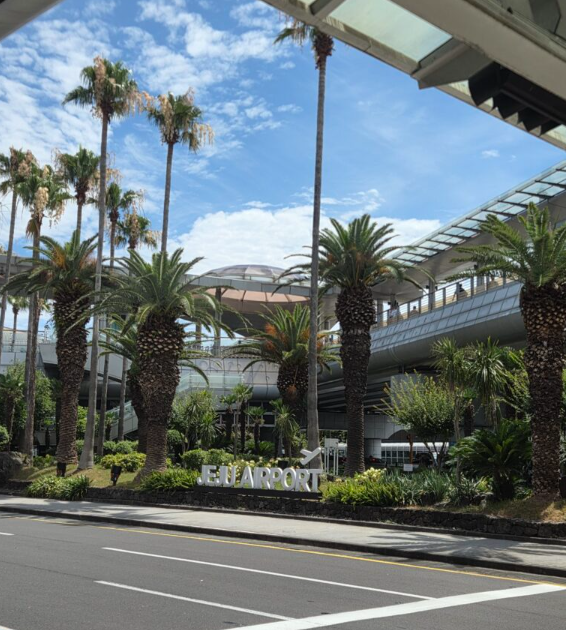
Jeju City is the island’s main urban center and transportation gateway. The airport is nearby, and many hotels, restaurants, markets, government offices, shops, and bus routes are connected to this area. For first-time visitors, Jeju City often becomes the practical starting point.
But Jeju City is not only a place to land and leave.
The old downtown area has markets, local restaurants, streets with everyday island life, and historical traces. Dongmun Market is one of the most popular places to experience local food and market culture. Visitors can find seafood, tangerines, snacks, souvenirs, and night-market energy. It is tourist-friendly, but it also remains part of local food life.
The northern coast near Jeju City includes places such as Yongduam Rock, Iho Tewoo Beach, and coastal roads where people walk, drink coffee, or watch planes land and take off. The city has a different feeling from Seoul or Busan. It is urban, but the sea is always close.
Jeju City is also useful for understanding the modern side of island life. Many residents work, study, shop, and commute here. If you only visit remote landscapes, you may miss the fact that Jeju is also home to ordinary schools, apartments, hospitals, offices, and families.
For Kimbap Life, Jeju City is a good place to write about “everyday Jeju,” not only sightseeing. You can introduce local markets, airport arrival tips, simple meals, bus use, cafes, bookstores, local neighborhoods, and the contrast between tourism and daily life.
Aewol, Hallim, and the Northwest Coast
The northwest side of Jeju, especially areas such as Aewol (애월), Hallim (한림), Hyeopjae (협재), and Geumneung (금능), is loved for its coast, cafes, beaches, and sunset views.
Aewol has become famous for coastal cafes and scenic drives. Many visitors come here for ocean views, coffee, desserts, and photos. At times, it can feel trendy and crowded, but the coastline is genuinely beautiful. The blue sea against black volcanic rocks creates a strong Jeju atmosphere.
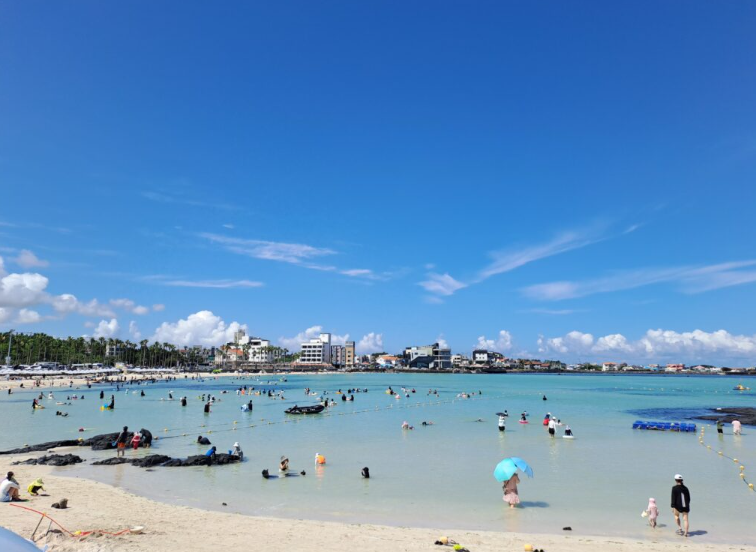
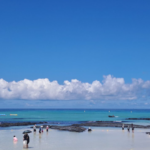
Hallim and Hyeopjae offer a softer beach feeling. Hyeopjae Beach and Geumneung Beach are known for bright water, pale sand, and views toward Biyangdo Island. This area is especially good for travelers who want a relaxed beach day without going too far from Jeju City.
The northwest also has rural landscapes, small villages, fields, stone walls, and quiet roads. A traveler who moves slowly will see a different side of this region beyond the famous cafes.
This part of Jeju is good for writing about how tourism changes local places. Cafes bring visitors and money, but they also change village rhythms, traffic, land use, and the feeling of the coast. A thoughtful article can show both sides: the beauty of the area and the need to travel respectfully.
The West and Southwest: Sanbangsan (산방산), Daejeong (대정), Moseulpo(모슬포), Gapado(가파도), and Marado(마라도)
Western Jeju has a more open and spacious feeling.
This area includes Sanbangsan Mountain, Yongmeori Coast, Sagye, Daejeong, Moseulpo, Songaksan, Gapado, and Marado. It is a region where the sea, cliffs, fields, and low villages create a slower mood.
Sanbangsan is one of the most dramatic landmarks in western Jeju. Its shape rises strongly from the surrounding landscape, and the nearby coast gives a powerful view of rock, sea, and mountain together. Yongmeori Coast, when accessible, shows layered volcanic coastal formations that feel very different from ordinary beaches.
Moseulpo and Daejeong have a more local and less polished feeling than some resort areas. They are connected to fishing, military history, agriculture, and everyday island life. This region is a good place to understand Jeju as a lived island rather than only a vacation island.
From the southwest, visitors can also reach Gapado and Marado. Gapado is often associated with flat island scenery, barley fields, and quiet cycling or walking. Marado is known as the southernmost island area of Korea and is often visited as a symbolic destination.
Western Jeju is also connected to green tea fields and museums, which have become popular tourist stops. But the deeper charm of the west is not only in one famous place. It is in the open sky, the stone walls, the roads between fields, and the feeling of being closer to the edge of the island.
For Kimbap Life, western Jeju is useful for articles about slow travel, island day trips, local ports, coastal geology, quiet villages, and the difference between famous attractions and ordinary landscapes.
Seogwipo (서귀포) and the South: Waterfalls, Citrus, Cliffs, and Warmth
The southern side of Jeju is centered around Seogwipo, the island’s second major city and one of its most beloved travel areas.
Seogwipo feels different from Jeju City. It is warmer, greener, and more relaxed in many places. The southern coast has cliffs, waterfalls, harbors, citrus farms, walking paths, small restaurants, and sea views. Many travelers find Seogwipo easier to enjoy slowly.
The city is known for places such as Cheonjiyeon Waterfall, Jeongbang Waterfall, Saeyeongyo Bridge, Oedolgae Rock, Seogwipo Maeil Olle Market, and streets connected to the painter Lee Jung-seop. These places show Seogwipo’s mixture of nature, art, food, and local town life.
Seogwipo is also closely connected to tangerines. Jeju’s citrus culture is one of the strongest symbols of the island. In winter, tangerines become a part of daily life: sold in markets, offered in homes, used in desserts, and carried as edible souvenirs.
The south is also a good place to experience Jeju’s walking culture. Coastal paths, village roads, and parts of the Jeju Olle Trail pass through this side of the island. Walking in Seogwipo can reveal small details: stone walls, old houses, sea winds, fishing boats, neighborhood restaurants, and trees shaped by weather.
Unlike the fast pace of large mainland cities, Seogwipo invites visitors to slow down. It is a good place to stay for several nights rather than rush through in one day.
Good Kimbap Life topics for Seogwipo could include:
Jungmun (중문): Resorts, Cliffs, and Tourist Comfort
The Jungmun area is one of Jeju’s most developed resort zones.
It is known for hotels, beaches, museums, landscaped spaces, convention facilities, and scenic coastal features. Many families, couples, and package travelers stay in or near Jungmun because it is comfortable and convenient.
Jungmun can feel less local than other parts of Jeju, but it still has value. For some travelers, especially first-time visitors, families with children, or people who want easy hotel access, Jungmun is a practical base. The area offers a more polished version of Jeju tourism.
Nearby coastal formations such as columnar joints show Jeju’s volcanic geology in a dramatic way. The coast here is powerful, with waves, cliffs, and dark rock patterns.
When writing about Jungmun, it is useful to explain what kind of traveler it suits. It is not the best place for deep village life, but it is good for resort stays, family trips, scenic walks, and easy access to southern attractions.
A balanced article should not dismiss tourist areas simply because they are developed. Tourism is part of Jeju’s economy and modern identity. The key is to help visitors understand what kind of experience they are choosing.
Eastern Jeju: Seongsan, Udo, Woljeong, Gimnyeong, and Coastal Roads
Eastern Jeju is one of the most iconic parts of the island.
The most famous landmark is Seongsan Ilchulbong, also known as Sunrise Peak. It is part of the UNESCO World Heritage property Jeju Volcanic Island and Lava Tubes, together with Hallasan Natural Reserve and the Geomunoreum Lava Tube System. Its shape rising from the coast makes it one of Jeju’s most recognizable views.
The Seongsan area is especially popular for sunrise, coastal scenery, seafood, and trips to Udo Island. Udo is a small island near the eastern coast of Jeju, known for beaches, fields, local snacks, cycling routes, and sea views back toward Jeju. It is one of the easiest island-within-an-island experiences for travelers.
Eastern Jeju also includes places such as Woljeong-ri, Gimnyeong, Sehwa, and Jongdal-ri. These areas have become known for beaches, cafes, coastal roads, haenyeo culture, and village scenery. Some parts are trendy, while others remain quiet and local.
The east is one of the best regions for understanding the relationship between Jeju and the sea. You can see fishing villages, haenyeo-related places, ports, beaches, and volcanic coastlines within a relatively small area.
But eastern Jeju also shows the pressure of popularity. Famous photo spots can become crowded. Small villages can change quickly because of cafes and tourism. This makes the region interesting not only for travel writing but also for cultural writing.
A thoughtful Kimbap Life article might ask:
Eastern Jeju is beautiful, but it is best experienced with patience.
Central Jeju: Hallasan, Forests, Oreum, and Quiet Roads
The center of Jeju is dominated by Hallasan and the highland areas around it.
This part of the island feels very different from the beaches and coastal cafes. The air is cooler. The roads can be foggy. Forests, fields, ranches, and volcanic cones create a more inland atmosphere.
For hikers, Hallasan is a major destination. Climbing Hallasan is not just a physical activity; it is a way to experience the island from its center. The mountain’s ecosystems, weather, and views remind visitors that Jeju is not only a beach island.
Central Jeju also has forests and roads that are good for slow drives or walks. Some areas feel mysterious in fog. Others open suddenly to views of oreum and fields. This region is especially good for travelers who prefer nature over shopping or nightlife.
The center of Jeju also helps explain the island’s water, agriculture, and settlement patterns. Villages are mostly around the coast, while the mountain and highland areas shape the island’s climate and geography.
For Kimbap Life, central Jeju is a good area for writing about hiking culture, mountain respect, volcanic landscapes, forest walks, weather changes, and the feeling of Jeju beyond the sea.
Jeju Food: Seafood, Black Pork, Tangerines, and Island Flavor
Food is one of the best ways to understand Jeju.
Because Jeju is an island, seafood is central. Abalone, sea urchin, hairtail fish, mackerel, squid, shellfish, and seaweed all appear in local food culture. Some dishes are simple and direct, reflecting the freshness of ingredients rather than heavy seasoning.
Abalone porridge is one of the most famous Jeju foods for visitors. It is often associated with nourishment, comfort, and the sea. Sea urchin soup and seaweed-based dishes show how closely local meals are connected to marine life.
Black pork is another major symbol of Jeju food. Many visitors come to Jeju expecting to eat grilled black pork. It has become a popular tourism food, but it is also tied to local livestock traditions and island identity.
Hairtail fish, often cooked as stew or grilled, is another important Jeju dish. It is especially popular among Korean travelers who want a full local meal.
Jeju is also famous for tangerines. They are more than fruit; they are part of the island’s image. Tangerines appear in markets, farms, cafes, desserts, souvenirs, drinks, and winter memories. A box of Jeju tangerines can feel like a small piece of the island.
Other local foods and ingredients include barley, buckwheat, peanuts from Udo, local greens, momguk, gulfweed soup, and simple village-style meals. Some foods may feel unfamiliar to visitors, but they reveal Jeju’s older food culture.
Food in Jeju can be divided into several experiences:
A good Jeju food article should not only list restaurants. It should explain why the food exists, what local ingredients are used, and how island life shaped the table.
Jeju’s Memory: Beauty and Pain Together
Jeju is beautiful, but it is not only beautiful.
One of the most important parts of modern Jeju history is the Jeju 4·3 Incident. For visitors who want to understand Jeju deeply, this history should not be ignored. Jeju 4·3 Peace Park exists to remember victims and to teach future generations about peace, human rights, reconciliation, and historical memory.
This history can be difficult to approach, especially for visitors who are unfamiliar with modern Korean history. But learning about it changes the way you see the island.
A quiet village is no longer just picturesque. A stone wall is no longer only decorative. A peaceful landscape may carry memories of loss, silence, and survival.
For Kimbap Life, writing about Jeju should include respect for this memory. Not every travel article needs to be heavy, but a site that introduces Korean life and culture should make room for the island’s full story.
A respectful article might introduce Jeju 4·3 Peace Park, explain why memory matters, and encourage visitors to approach the topic with humility. This kind of writing makes Kimbap Life different from a simple tourist blog.
It shows that Korea is not only food, views, and entertainment. It is also history, pain, recovery, and dignity.
Jeju by Season
Jeju changes with the seasons.
Spring
Spring is one of the most beautiful times to visit Jeju. Flowers appear, the weather becomes softer, and the island feels fresh. Canola flowers, cherry blossoms, and early green fields bring color to the landscape.
Spring is also a good time for walking. The weather is usually more comfortable than summer, and coastal roads feel lively without the strongest heat.
Summer
Summer is beach season. Many visitors come for swimming, water activities, resorts, and coastal cafes. The sea looks bright and inviting, but summer can also be humid, crowded, and affected by rain or storms.
Travelers should plan with flexibility. Jeju’s summer weather can change quickly, and popular beaches or restaurants may become busy.
Autumn
Autumn is one of the best seasons for slow travel. The air becomes clearer, walking becomes easier, and the island feels calmer after the summer rush.
It is a good time for oreum walks, coastal drives, markets, and photography. Autumn also brings harvest feelings, including tangerines later in the season.
Winter
Winter in Jeju is quieter and more atmospheric. The coast can be windy, but the island has a special winter mood. Hallasan may be covered with snow, while tangerines become one of the most comforting symbols of the season.
Winter is good for travelers who do not need beach swimming and prefer quiet roads, warm food, markets, cafes, and mountain views.
How to Travel Around Jeju
Jeju looks small on the map, but it takes time to move around.
Many visitors underestimate distances. Driving from one side of the island to another can take longer than expected, especially with stops, traffic, weather, and winding roads. Public buses exist, but they require patience and planning.
For flexible travel, many visitors rent a car. This is especially useful for coastal roads, remote cafes, oreum, beaches, and small villages. However, driving also means responsibility. Visitors should be careful on narrow village roads, avoid illegal parking, and respect local residents.
Without a car, it is still possible to enjoy Jeju by choosing a base carefully. Jeju City, Seogwipo, and some coastal towns can work well if you focus on nearby areas instead of trying to see the whole island.
Instead of trying to see everything, choose one or two regions and experience them slowly.
Jeju rewards slow travel.
Suggested Jeju Itinerary for First-Time Visitors
Three Days in Jeju
For a short trip, focus on balance.
On the first day, stay around Jeju City. Visit a market, walk along the coast, eat local food, and settle into the island mood.
On the second day, explore eastern Jeju. Visit Seongsan Ilchulbong, take time near the coast, and consider Udo if the weather and schedule allow.
On the third day, move south to Seogwipo. Visit a waterfall, walk through a market, enjoy seafood or black pork, and experience the warmer southern atmosphere.
This route gives a first-time visitor a taste of city life, coastal scenery, volcanic landmarks, and local food.
Five Days in Jeju
With five days, Jeju becomes much more enjoyable.
You can spend two nights in Jeju City or the north, then two or three nights in Seogwipo or the south. This reduces travel stress and gives you time to experience both sides of the island.
A five-day trip could include:
Day 1: Jeju City, Dongmun Market, northern coast
Day 2: Aewol, Hyeopjae, Hallim, western coast
Day 3: Seogwipo, waterfalls, Olle Market, southern walks
Day 4: Seongsan, eastern coast, Udo or haenyeo culture
Day 5: Hallasan, oreum, forest road, slow cafe or local meal
One Week or More
With a week or more, Jeju becomes less about attractions and more about rhythm.
You can walk parts of the Jeju Olle Trail, visit smaller villages, explore local markets, spend time in cafes without rushing, visit a peace memorial, learn about haenyeo culture, and take day trips to smaller islands.
This is the best way to experience Jeju as a region, not just a checklist.
Travel Manners and Respect in Jeju
Jeju is a popular destination, but it is also home to local residents.
Visitors should remember that many beautiful places are near villages, farms, graves, fishing areas, or private land. A quiet road may be someone’s daily route. A stone wall may protect someone’s field. A coastal spot may be part of a working haenyeo community.
Respectful travel in Jeju means:
Do not climb over stone walls.
Do not enter private fields or houses.
Do not photograph working people without permission.
Do not block village roads for photos.
Do not leave trash at beaches or oreum.
Do not treat haenyeo as tourist props.
Support local markets and small businesses.
Learn basic local history before visiting memorial places.
This kind of travel makes the experience better for both visitors and residents.


Pingback: Geumneung (금능) Beach: A Quiet Jeju Shore of White Sand, Shallow Water, and Biyangdo Views - Kimbap Life