
Every March 1, Korea marks Samiljeol (삼일절) — the day in 1919 when Koreans declared independence from Japanese colonial rule and launched the largest non-violent protest movement in the country’s history. It did not win independence. It produced something that outlasted the movement: the government that the Republic of Korea still traces its legitimacy to.
For a visitor or a newcomer, March 1 is easy to file away as “another national holiday.” It is a different kind of day from Gwangbokjeol in August, which marks a liberation that actually happened. Samiljeol marks a protest that was crushed — and that is precisely why it carries the weight it does. Here is what happened on that day, what happened in the six weeks after it, and what changes on the ground.
What Samiljeol marks
Korea had been under Japanese colonial rule since 1910. On March 1, 1919, a group of 33 people — religious leaders, educators, publishers — signed the Proclamation of Korean Independence (기미독립선언서) and read it aloud at noon inside the Taehwagwan restaurant in Insadong, central Seoul. They then telephoned the police and reported themselves. They were arrested.
The timing was not arbitrary. Three things converged:
- World War I had just ended. US President Woodrow Wilson’s Fourteen Points had raised the principle of national self-determination, and Korean activists abroad were watching the Paris Peace Conference closely.
- Korean students in Tokyo had already tested the idea, issuing a declaration of their own on February 8, 1919.
- Emperor Gojong died on January 21, 1919. Rumours that he had been poisoned spread widely, and his funeral on March 3 was expected to draw crowds to Seoul from all over the country.
The organisers moved the date forward to March 1 to use that gathering. Because 1919 was the gimi year of the sixty-year cycle, the movement is also known as the Gimi Independence Movement (기미독립운동).
The plan — and the two places it actually happened
This is the detail most retellings compress, and separating it explains why two different Seoul locations both claim the day.
The original plan was Tapgol Park, in central Seoul. One of the organisers argued against it: Pagoda Park sat in the middle of the city, the funeral would pull people out of the capital, and a public reading risked turning violent. So the leaders moved the declaration indoors, to Taehwagwan — roughly 300 metres away. 29 of the 33 signatories were present; four were outside Seoul.
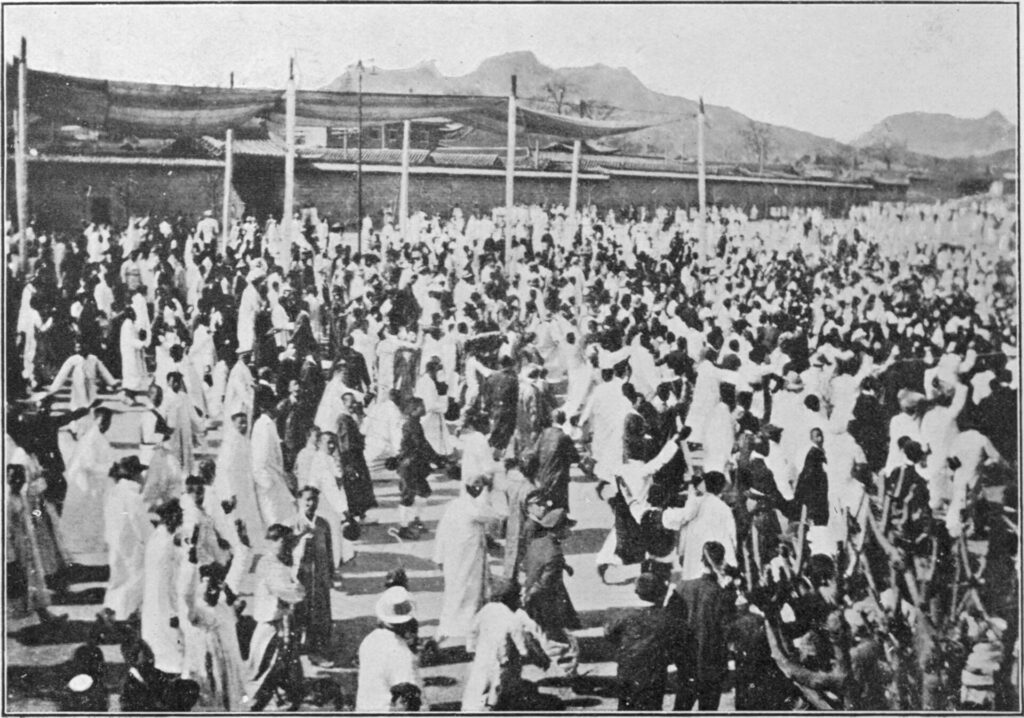
Tapgol Park did not stay empty. Students had been told to gather there, and by around 2 p.m. a crowd of more than a thousand had assembled. A student representative climbed the octagonal pavilion and read the declaration aloud, and the crowd began chanting for independence. That is where the street movement began — and it is the image most Koreans have in mind when they picture March 1.
So the declaration was read in a restaurant, and the movement was launched in a park. Both are commemorated, which is why you will see the day described in two different places at once.
Where it went, and what it cost
From Seoul the demonstrations spread across the country and beyond — to Manchuria, the Russian Far East, Japan and the United States. The movement is generally dated from March 1 to April 11, 1919.
The numbers are genuinely contested, and it is worth saying so rather than picking one.
| Figure | Estimate |
|---|---|
| Participants — Governor-General’s official record | about 1,060,000 |
| Participants — higher Korean figures | over 2,020,000 |
| Participants — scholars who put turnout at ~2.8% of the population | roughly 460,000–500,000 |
| Deaths — colonial administration’s own record | about 900 |
| Deaths — Korean estimates | roughly 500 to over 7,000 |
| Injured | over 45,000 |
| Arrested | over 49,000 |
Korea’s population in March 1919 was about 16.79 million, so the participation estimates translate to somewhere between 2.8% and 3% of the entire population on the scholars’ reading — which is easier to grasp than any of the raw totals. The gap between the colonial authority’s figures and Korean estimates is itself part of the history.
The result that outlasted the movement
Japan suppressed the movement by force, and independence did not come for another 26 years. But two things came directly out of it:
A change of colonial method. The Governor-General shifted from the so-called military rule of the 1910s to a policy known as cultural rule (문화 통치) — a change in method rather than in intent.
The Provisional Government. On April 11, 1919 — one month after the protests began — the Provisional Government of the Republic of Korea was established in Shanghai. The Republic of Korea’s constitution traces its legitimacy to that government. This is the reason Samiljeol is treated as the origin point of the modern Korean state rather than simply a protest anniversary.
The movement also rippled outward, and is often cited as one of the influences on China’s May Fourth Movement.
The face of the movement
The single most recognisable figure is Yu Gwan-sun (유관순), born in 1902 and a student at Ewha Hakdang in Seoul.
She took part in the March 1 demonstrations in the capital. When her school was closed, she returned to her home region near Cheonan and helped lead the Aunae market demonstration on April 1, 1919, which drew around 3,000 people. The suppression there killed 19 people — including both of her parents — and injured around 30.
She was arrested and held at Seodaemun Prison in Seoul, where she died in 1920 at the age of 18. Before that, she had marked the movement’s first anniversary by leading a demonstration inside the prison.
She is the reason her name appears on schools and streets across Korea, and the reason Seodaemun Prison — now a history museum — is one of the places where March 1 is most legible for a visitor.
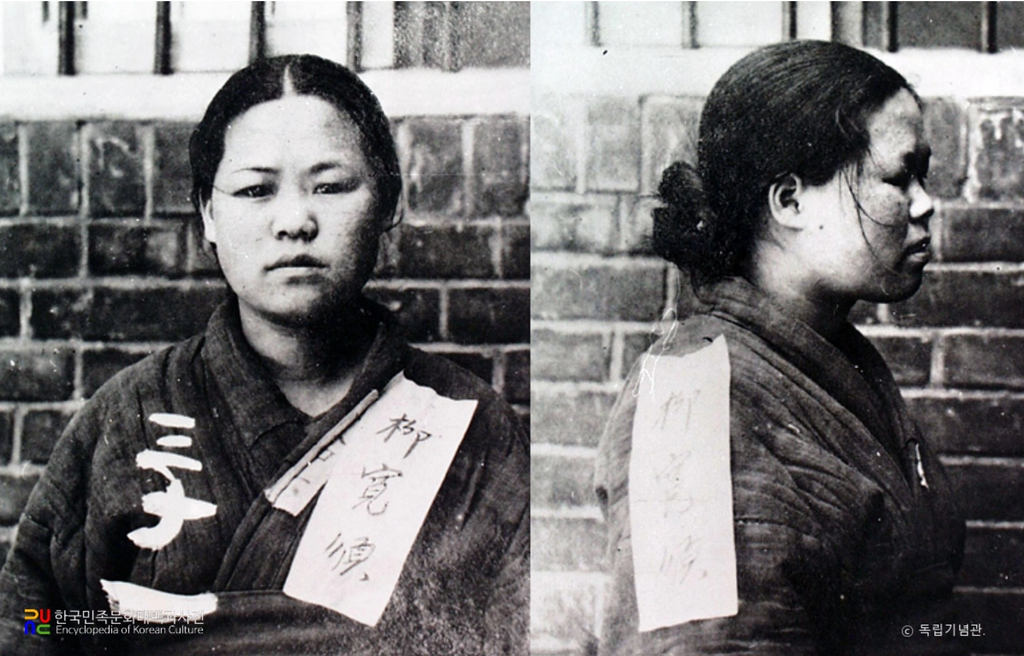
Photo: Encyclopedia of Korean Culture
The five national holidays — and what changed in 2026
Korea designates five national holidays (국경일). For years, one of them was not a day off. As of 2026, that is no longer true.
| National holiday | Date | A day off? |
|---|---|---|
| Samiljeol (Independence Movement Day) | March 1 | Yes |
| Jeheonjeol (Constitution Day) | July 17 | Yes — since 2026 |
| Gwangbokjeol (Liberation Day) | August 15 | Yes |
| Gaecheonjeol (National Foundation Day) | October 3 | Yes |
| Hangeul Day | October 9 | Yes |
Jeheonjeol was designated in 1949 but was dropped as a public holiday in 2008 during the adjustment that followed the introduction of the five-day work week. In April 2026 the government restored it, so that for the first time all five national holidays are days off. The same revision also made May 1 (Labour Day) a public holiday, and both new holidays carry substitute-holiday coverage.
One practical consequence: Samiljeol is the earliest national holiday in the calendar year, which makes it feel like the point where the Korean public-calendar year properly begins.
How the day is marked
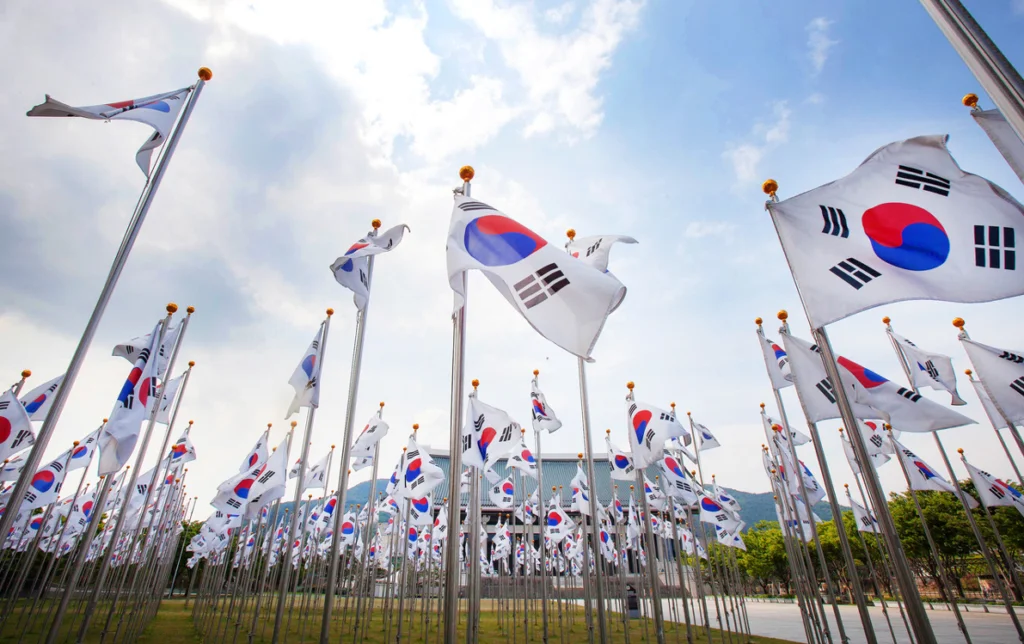
The flag goes up. On national holidays Koreans raise the Taegukgi (태극기) to the very top of the pole, with no gap between the pole’s ball ornament and the cloth. That distinguishes it from days of mourning — Memorial Day in June, or Gyeongsul Gukchi on August 29 — when the flag is flown at half-staff (조기).
The commemoration. The government holds a formal ceremony, and the reading of the declaration is re-enacted — including at Tapgol Park, where it drew its first crowd. Surviving independence activists and their descendants are honoured.
The tradition that comes and goes. March 1 is one of the dates historically associated with presidential special pardons (특별사면), alongside Gwangbokjeol, Buddha’s Birthday, Christmas and presidential inaugurations. It is a practice, not an obligation — it depends on the administration in office, not on the calendar.
If you are in Korea on March 1
Because Samiljeol is a public holiday, the day behaves like any other Korean public holiday:
- Closed: government offices, public schools, banks and most public institutions. Administrative errands wait.
- Open: convenience stores, most cafés and restaurants, department stores, cinemas and tourist sites. Korean public holidays do not shut the country down.
- Where the day is legible: Tapgol Park in central Seoul, where the street movement began and the declaration is re-enacted; Seodaemun Prison History Hall, where Yu Gwan-sun died and where the colonial-era prison buildings remain; and the Independence Hall of Korea in Cheonan, the largest museum of the independence movement and a short trip from the site of the Aunae market demonstration.
- Expect flags. You will see the Taegukgi on government buildings, schools, and a good number of private homes and shopfronts.
For a visitor, the summary is: it will not disrupt your trip, but it is one of the better days to visit the historical sites, because the day is about them.