
In one line: On August 15 every year, Korea marks Gwangbokjeol (광복절) — the day in 1945 that Japanese colonial rule ended after 35 years. It is one of Korea’s five national holidays, and it carries a second meaning most visitors miss: the same date in 1948 was when the Republic of Korea’s government was established.
What Gwangbokjeol marks
Japan’s surrender in the Pacific War was announced on August 15, 1945, ending 35 years of colonial rule over the Korean peninsula. Korea had been annexed in 1910 — the Japan–Korea Annexation Treaty was signed on August 22, 1910 and took effect on August 29, the date Koreans still call Gyeongsul Gukchi (경술국치, “the national humiliation of the Gyeongsul year”).
Gwangbokjeol celebrates the end of that period. The year 1945 is counted as year one, so 2025 was the 80th anniversary and 2026 is the 81st.
The day is observed in both Koreas — South Korea calls it Gwangbokjeol, while North Korea marks it as Joguk Haebang-ui Nal (조국해방의 날, “Day of Fatherland Liberation”). It is a rare date that both states treat as a national holiday.
The name means “the light came back”
The Korean name is worth unpacking, because it explains the tone of the day.
| Character | Meaning |
|---|---|
| 광 (光) | light |
| 복 (復) | to restore, to return |
| 절 (節) | festival, holiday |
So Gwangbokjeol is “the festival of the restoration of light” — the darkness being the colonial period. The English rendering “Liberation Day” is accurate but flatter; the Korean name carries the metaphor of a light switching back on.
That name was not the original plan. When the government drafted its national holidays in 1949, August 15 was proposed as Independence Memorial Day (독립기념일). The National Assembly’s Legislation and Judiciary Committee changed it to Gwangbokjeol, and separately renamed Constitution Promulgation Day to Jeheonjeol. The revised bill passed the National Assembly on September 21, 1949, and the Act on National Holidays (법률 제53호) was promulgated on October 1, 1949 — which is when Gwangbokjeol formally became a national holiday.
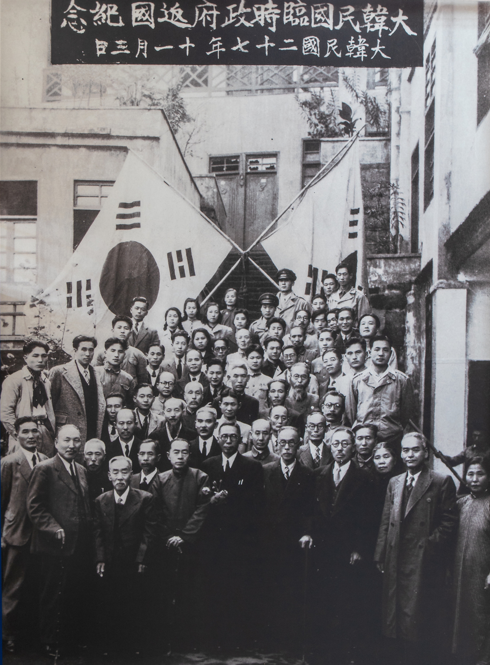
Photo: Korea Tourism Organization
Why August 15 carries two meanings
This is the part that confuses newcomers, and it is genuinely a double anniversary.
- August 15, 1945 — liberation from Japanese rule
- August 15, 1948 — the Republic of Korea’s government was formally established
The same calendar date, three years apart. Because of that overlap, Gwangbokjeol in practice commemorates both the end of colonial rule and the founding of the state, which is why official ceremonies pair the liberation narrative with the founding-government narrative. Korean encyclopedias describe the day as having a “superimposed” meaning for exactly this reason.
The five national holidays — and why one is not a day off
Korea designates five national holidays (국경일). They are now all public holidays, which trips people up.
| National holiday | Date | A day off? |
|---|---|---|
| Samiljeol (Independence Movement Day) | March 1 | Yes |
| Jeheonjeol (Constitution Day) | July 17 | Yes |
| Gwangbokjeol (Liberation Day) | August 15 | Yes |
| Gaecheonjeol (National Foundation Day) | October 3 | Yes |
| Hangeul Day | October 9 | Yes |
Jeheonjeol was the odd one out: it is a national holiday in name, but it was no longer a day off. But, It is a public holidays after 2026. So, every national holiday are public holidays — which also matters for the substitute-holiday rule below.
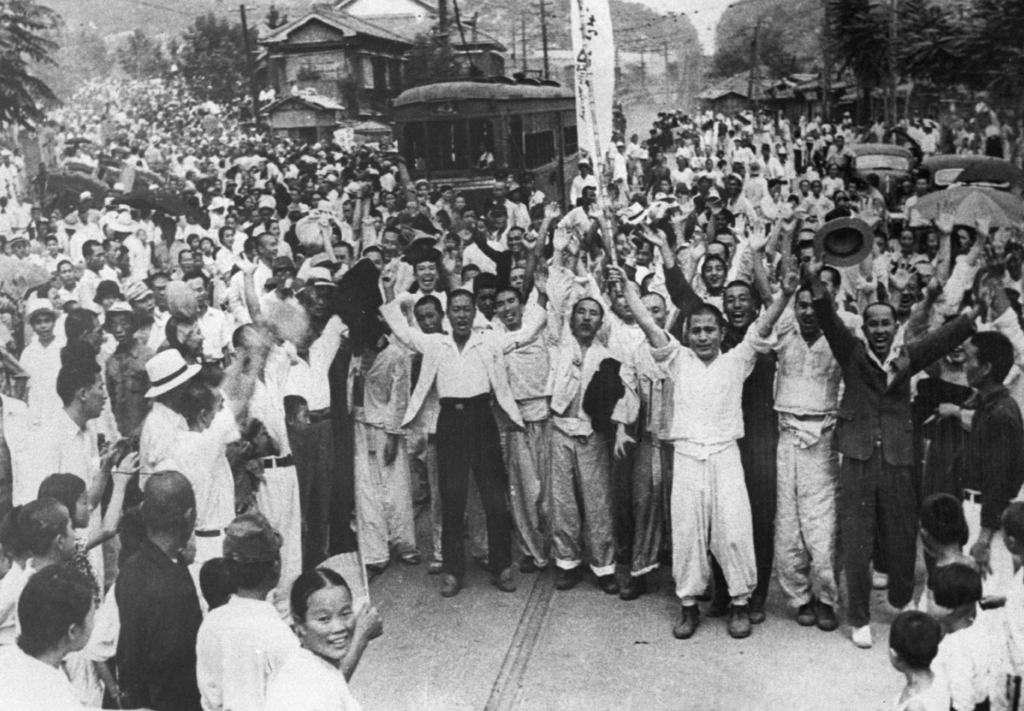
Photo: National Archives of Korea
How the day is marked
Three things happen on August 15.
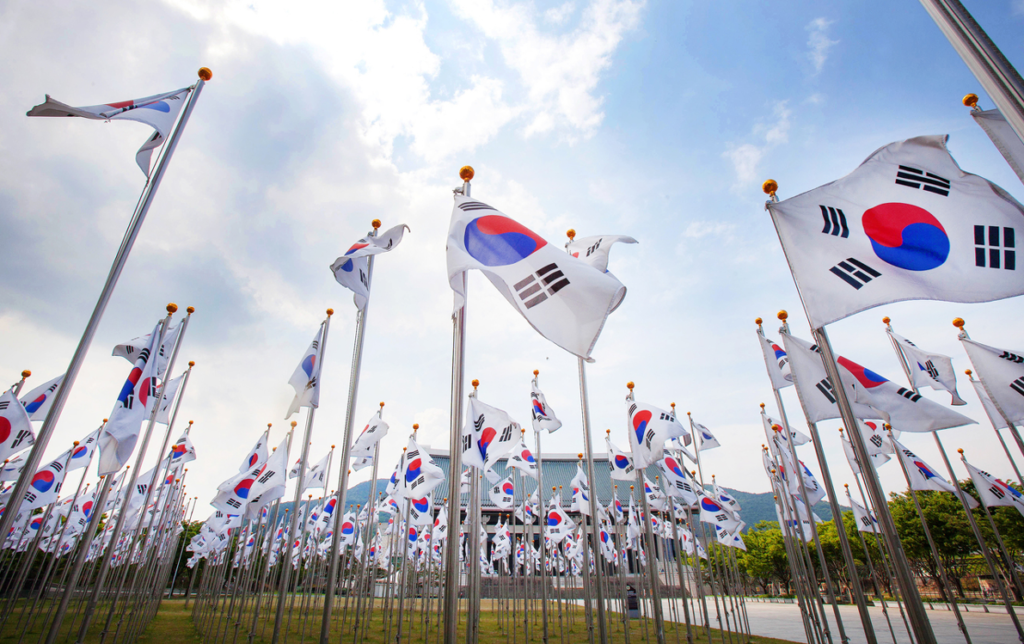
The flag goes up. On national holidays, Koreans raise the Taegukgi (태극기) — and there is a specific rule: the flag is hoisted to the very top of the pole, with no gap between the pole’s ball ornament and the cloth. That distinguishes it from days of mourning, such as Memorial Day in June or Gyeongsul Gukchi on August 29, when the flag is flown at half-staff (조기). Households, schools, government offices and businesses are all encouraged to display it, and public buildings do so automatically.
The official ceremony. The government holds a formal commemoration, presenting honours to surviving independence activists and their descendants — people whose family histories are bound up with the colonial period. The Gwangbokjeol song is performed at these events.
A long weekend, if the calendar cooperates. Which brings us to the part most useful if you live here.
The special pardon tradition
One of the more unusual features of Gwangbokjeol is that it has historically been a day for presidential special pardons (특별사면). Korea has a tradition of granting clemency on significant holidays — Gwangbokjeol, March 1, Buddha’s Birthday, Christmas, and presidential inaugurations. The 80th anniversary in 2025 saw a large-scale pardon covering 2,188 people.
It is a tradition, not a legal requirement, and it can be skipped. In 2026, for the 81st anniversary, the government decided not to grant a special pardon — a decision widely reported at the time, and a useful reminder that the practice depends on the administration rather than the calendar.
If you are in Korea on August 15
Because Gwangbokjeol is a public holiday, the day behaves like any other Korean public holiday:
- Closed: government offices, public schools, banks, and most public institutions. If you have a residency or administrative errand, it has to wait.
- Open: convenience stores, most cafés and restaurants, department stores, cinemas, and tourist sites. Korean public holidays are not the kind of day when the country shuts down.
- Busier: long weekends push domestic travel, so trains, expressways and hotels fill up the same way they do around Chuseok.
- Expect flags. You will see the Taegukgi on government buildings, schools, and a good number of private homes and shopfronts.
For a visitor, the practical summary is: it will not disrupt your trip, but it will change how the day feels — and if you happen to be near a government building or a palace district, you will notice the ceremony.