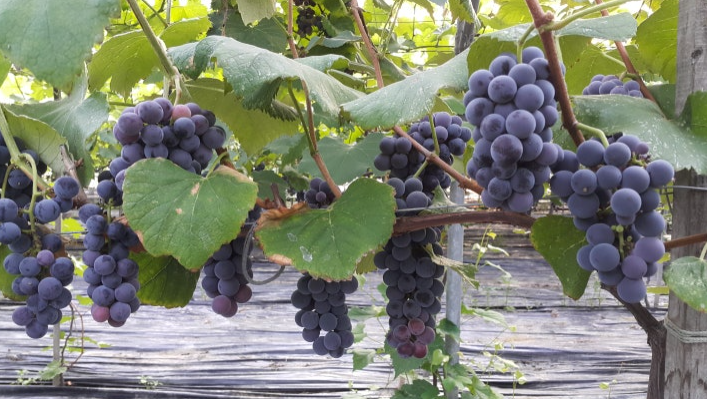

Grapes are a familiar late-summer and autumn fruit in Korea. At markets and supermarkets, you may see dark purple Campbell Early (캠벨얼리), large Kyoho (거봉), and pale green Shine Muscat (샤인머스캣). Each variety has its own flavor, aroma, and texture.
In recent years, Shine Muscat has become especially popular in Korea. Its crisp flesh, fragrant aroma, and edible skin make it convenient to eat, and it is often sold in gift boxes. Korean shoppers can also find many other varieties, including familiar purple grapes and newer varieties with different colors and textures.
Quick Facts About Korean Grapes
- Korean name: 포도 (podo)
- What “Korean grapes” means: Grapes grown in Korea; the varieties are not necessarily Korean-bred
- Main season: Late summer to autumn, generally from August through October, depending on the variety and region
- Common varieties: Campbell Early, Kyoho, Shine Muscat, and Muscat Bailey A
- How to enjoy them: Fresh, chilled, or made into juice, jam, wine, and other products
- Grape-growing areas: Yeongdong, Gimcheon, Yeongcheon, and other parts of Korea
Are Korean Grapes Different from Imported Grapes?
“Korean grapes” usually means grapes grown in Korea, while “imported grapes” means grapes grown in another country and brought to Korea. The distinction does not describe one particular taste or texture. Both Korean-grown and imported grapes come in many varieties, and the flavor depends on the variety, growing conditions, and harvest timing.
Some grapes commonly grown in Korea have dark skins and juicy flesh. Campbell Early has a refreshing sweet-and-tart flavor, while Kyoho is known for its large, sweet berries. Shine Muscat is green, crisp, and fragrant. Imported grapes sold in Korea may include green or red varieties, including seedless types. Check the country-of-origin label if you want to know where a particular bunch was grown.
A variety’s country of origin can differ from where it is grown. Campbell Early was developed in the United States, and Shine Muscat was developed in Japan, but both are cultivated in Korea. So a grape can be a Korean-grown grape without being a Korean-bred variety.
Popular Grape Varieties in Korea
Campbell Early (캠벨얼리)
Campbell Early is a familiar purple grape in Korea. Its berries are juicy, with a refreshing balance of sweetness and tartness. Some people peel the skin before eating, while others eat the whole berry. Campbell Early is also used to make grape juice and other products. In Yeongdong, it is generally harvested around late August.
Kyoho (거봉)
Kyoho grapes are known for their large, dark-purple berries. They are sweet and juicy, with a soft texture. The skin is often peeled before eating, and some grapes may contain seeds. Their large size and rich flavor make them a popular choice for eating fresh.
Shine Muscat (샤인머스캣)
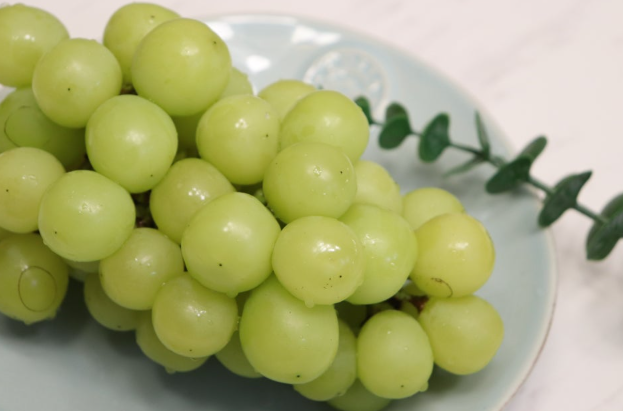
Shine Muscat is a pale green grape with a fragrant Muscat aroma. Its firm flesh is crisp, and it is commonly eaten with the skin. It is often sold seedless, although seeds may occasionally be present. Shine Muscat’s popularity grew quickly in Korea, and it became a familiar sight in supermarkets and fruit gift boxes. Its success also led to a rapid expansion in cultivation. Today, Korean growers are developing and promoting more grape varieties, giving consumers a wider choice of flavors and textures.
Muscat Bailey A (머스캣 베일리 A)
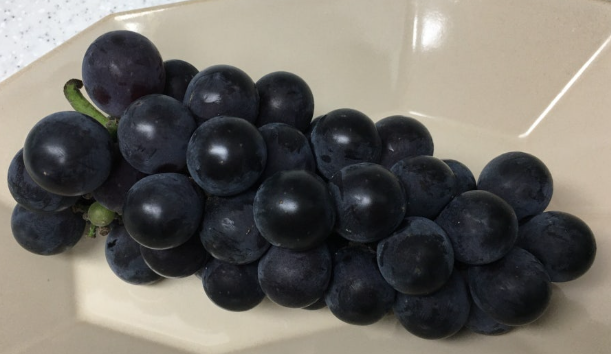
Muscat Bailey A is a dark grape with a sweet flavor and a Muscat-like aroma. It can be eaten fresh or used for processing. In Yeongdong, it is generally harvested around early October, later than Campbell Early.
What Does “Green Grapes” Mean?
Cheongpodo (청포도) literally means “green grapes.” It is generally a color description, not the name of one specific variety. Shine Muscat is one type of green grape, but not every green grape is Shine Muscat.
Korea also grows locally bred green grape varieties, such as Cheongsu (청수), which is used to make white wine. But the word cheongpodo by itself does not tell you which variety it is.
Green Grapes in a Korean Poem
The Korean poet and independence activist Lee Yuk-sa (이육사) was from Andong (안동), a city in southeastern Korea. His poem Green Grapes (Cheongpodo, 청포도) opens with an image of July, when green grapes ripen in his hometown. The speaker imagines a long-awaited guest arriving and sharing the grapes, turning the fruit into an image of welcome, hope, and anticipation.
The poem does not identify a specific grape variety or establish that Lee’s village was a major grape-growing area. It was published in 1939, decades before Shine Muscat was developed, so the poem’s grapes should not be identified as Shine Muscat.
When Is Grape Season in Korea?
Korean grape season usually runs from late summer into autumn. The exact timing depends on the variety, region, and growing conditions. Campbell Early is often harvested in August, while later-ripening grapes may be picked in September or October. Shine Muscat’s harvest timing also varies by growing area.
During the harvest season, fresh grapes appear at markets and supermarkets, sometimes in gift boxes. Some farms offer grape-picking experiences, where visitors can walk through a vineyard and pick grapes themselves. Programs and opening dates vary by farm, so check ahead before visiting.
Where Are Grapes Grown in Korea?
Grapes are cultivated in different parts of Korea. Yeongdong in Chungcheongbuk-do is known for grape growing and produces varieties such as Campbell Early, Shine Muscat, and Muscat Bailey A. Gimcheon and Yeongcheon are also among Korea’s grape-growing areas. Visiting a grape-growing area in late summer or autumn can be a chance to taste seasonal fruit and learn about local farming. Some farms welcome visitors for grape-picking experiences, though availability differs from place to place.
How Koreans Enjoy Grapes
The simplest way to enjoy grapes is to rinse them and eat the berries fresh. Many people chill grapes before serving them, especially on a warm day. With varieties such as Campbell Early and Kyoho, some people peel the skins. Shine Muscat is commonly eaten skin and all.
Grapes are also used to make:
- Grape juice (포도주스): A sweet drink made from grapes
- Grape jam (포도잼): A spread for toast, bread, or pastries
- Wine (와인): Some Korean vineyards make wine from locally grown grapes
- Other grape products: Grapes can also be made into vinegar, jelly, and raisins
Fresh grapes are also given as seasonal gifts, particularly during the autumn harvest period.
Are Korean Grapes Healthy?
Grapes contain water, natural sugars, dietary fiber, and nutrients such as vitamin K and potassium. Their skins also contain plant compounds, including polyphenols. Nutritional content varies by variety and serving size, so grapes are best enjoyed as part of a varied diet.
A Practical Tip for Trying Korean Grapes
Rinse grapes before eating and keep them refrigerated if you are not serving them right away. If you are trying a variety for the first time, taste one berry first to see whether you like the skin and whether it contains seeds. From juicy Campbell Early to crisp, fragrant Shine Muscat, Korean-grown grapes come in a range of flavors and textures. If you visit Korea in late summer or autumn, look for seasonal grapes at a market—or see whether a nearby farm offers a grape-picking experience.