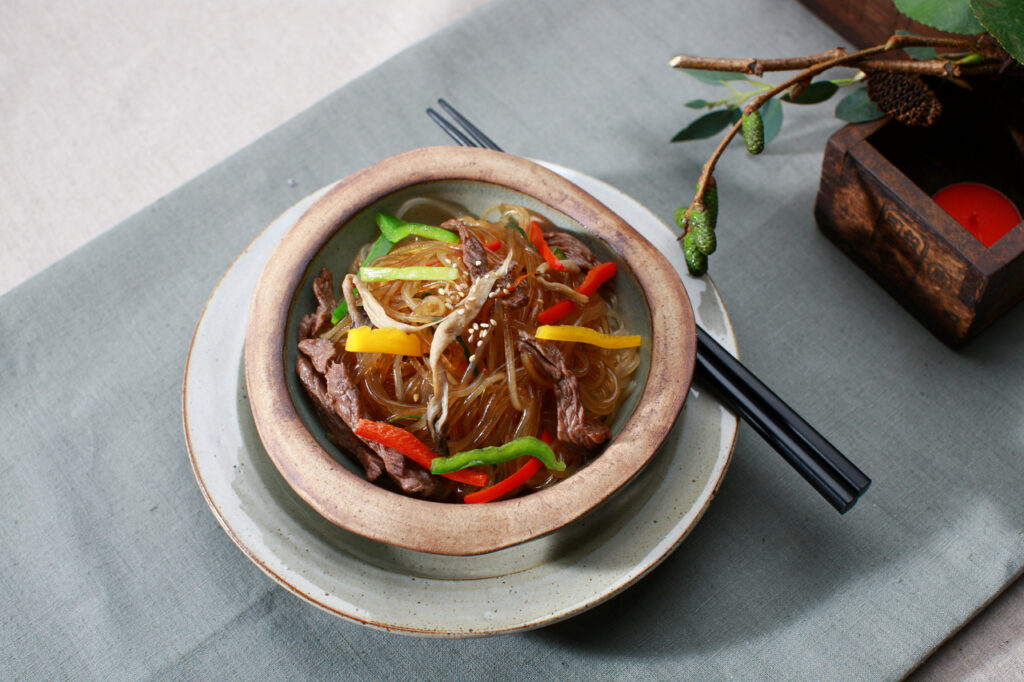

Japchae (잡채) is a Korean dish of chewy glass noodles tossed with vegetables, mushrooms, and a savory-sweet seasoning. Beef is often added, and sesame oil gives the dish its nutty aroma.
Japchae is served at holiday meals, family gatherings, and celebrations. It can be enjoyed as a side dish with rice or served over rice as japchaebap (잡채밥). The noodles are now a defining feature of the dish, but they have an interesting story of their own.
Quick Facts About Japchae
- Korean name: 잡채 (japchae)
- Main noodle: Dangmyeon (당면), Korean starch noodles
- Common ingredients: Vegetables, mushrooms, soy sauce, sesame oil, and sometimes beef
- Flavor: Savory and lightly sweet, with a nutty sesame aroma
- How it is served: As a side dish, a celebratory dish, or japchaebap over rice
What Is Japchae?
A typical japchae combines dangmyeon with vegetables such as carrots, spinach, onions, mushrooms, and bell peppers. Beef is a common addition, but it is not essential. The ingredients are seasoned with soy sauce, sesame oil, garlic, and a little sugar. Sesame seeds are often sprinkled on top.
The name japchae refers to a mixture of ingredients. Earlier versions of the dish featured vegetables and mushrooms but did not include dangmyeon. Starch noodles became part of japchae much later, after commercial production expanded in the early 20th century. The japchae familiar today reflects that change.
What Is Dangmyeon?
Dangmyeon (당면) is a type of noodle made from starch. Depending on the product, the starch may come from sweet potatoes, potatoes, or other sources. Many Korean dangmyeon products are made mainly with sweet potato starch. In English, these noodles are often called glass noodles or cellophane noodles.
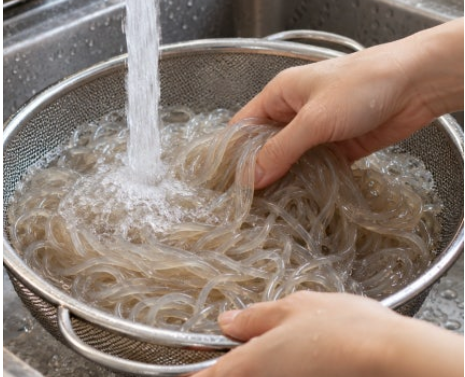
Photo: Korea Tourism Organization
Dangmyeon is usually sold dried. Before cooking, the strands are firm and somewhat opaque, with a little flexibility. Once soaked or cooked in hot water, they become more translucent and develop their familiar springy, chewy texture. Their mild flavor lets them absorb the seasoning and the flavors of the other ingredients.
Dangmyeon is believed to have come to Korea from China during the late Joseon period. The name is associated with noodles introduced from China. It later became widely available in Korea as production grew. A large dangmyeon factory was established in Sariwon in 1919, and the noodles became a familiar ingredient in Korean cooking.
How Japchae Is Made
The dangmyeon is cooked separately, then tossed with vegetables and other ingredients. In many recipes, the vegetables and beef are stir-fried individually before being combined with the noodles and seasoning. This helps preserve their color and texture.
The soy-based seasoning coats the noodles, while sesame oil adds a rich, nutty aroma. Japchae is often served warm, but it can also be enjoyed at room temperature. Recipes differ from household to household: some are sweeter, some have a stronger soy sauce flavor, and others use a generous amount of vegetables.
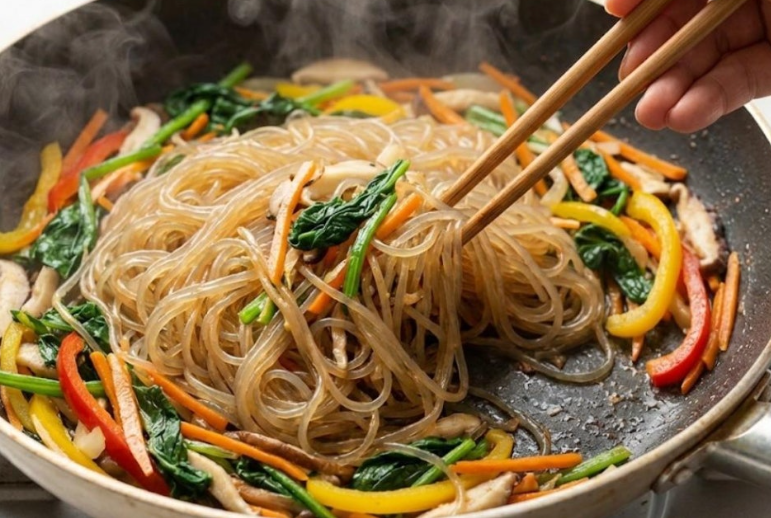
Photo: Korea Tourism Organization
A Dish for Holidays and Celebrations
Japchae is often served at Korean holidays, family gatherings, and celebratory meals. It is easy to prepare in a large batch and share at the table. It is also commonly associated with Chuseok, one of Korea’s major holidays. english.visitkorea.or.kr
Today’s japchae is different from the earlier vegetable dish of the same name. As dangmyeon became more widely available, it became a central ingredient in the version many people now recognize. encykorea.aks.ac.kr
Japchae Variations and Japchaebap (잡채밥)
There is no single required combination of ingredients. Some versions include plenty of beef, while others focus on mushrooms or vegetables. Recipes may also use bean sprouts or seafood. These variations keep the chewy noodles but change the flavor and texture.
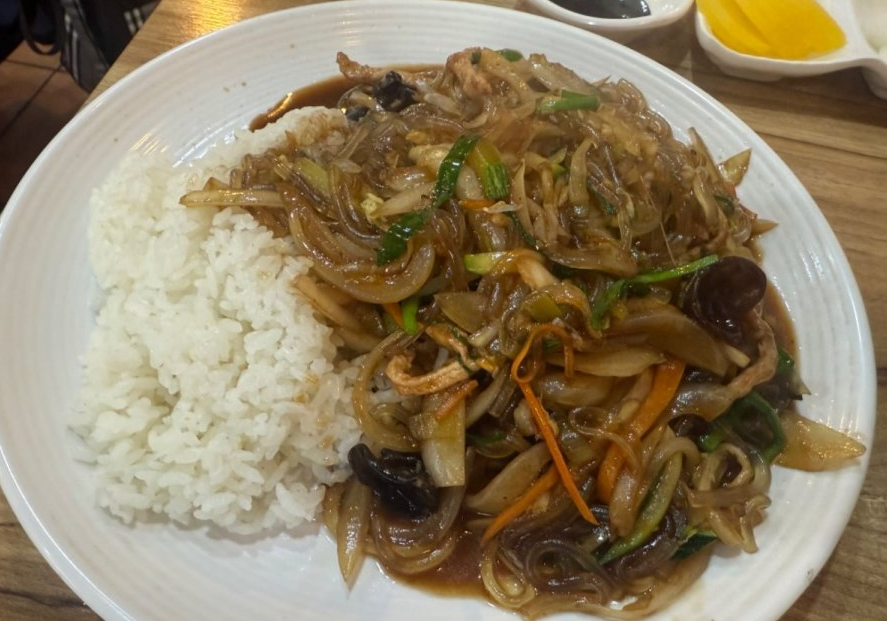
Photo: Korea Tourism Organization
When japchae is served over rice, it is called japchaebap. The rice makes the noodles and vegetables into a filling meal and balances their savory-sweet seasoning.