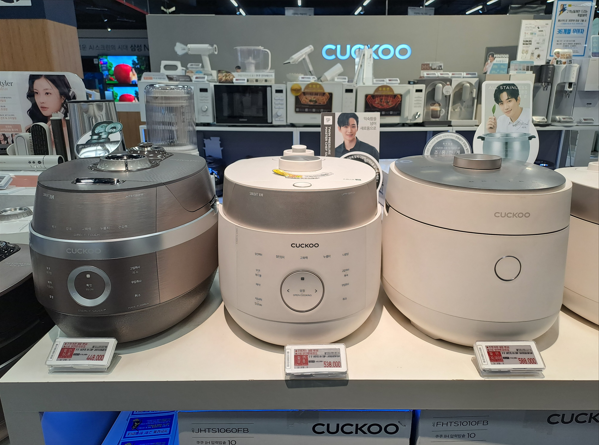

Rice is the center of a Korean meal.
In almost every Korean home, one machine cooks it: the rice cooker (밥솥). It beeps, sings, keeps rice warm all day, and rarely stops. But this was not always how rice was made.
Rice the Old Way: Agungi and the Iron Pot
Long ago, there was no electricity. Rice was cooked over a wood fire.
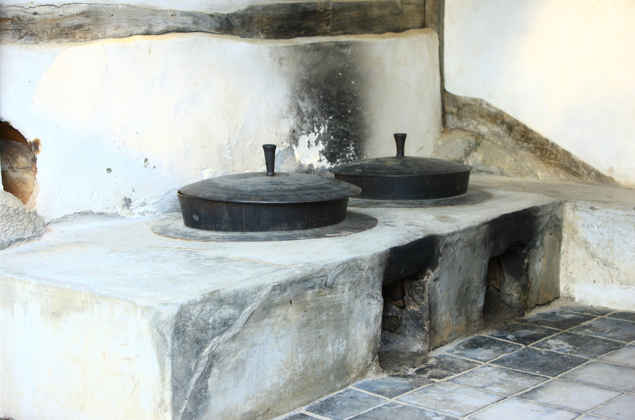
The traditional stove was called agungi (아궁이). It was a stone firebox built under the floor of the ondol heating system. Above it sat a heavy pot called musoet sot(무쇠솥), a cast-iron pot with a thick bottom.
Cooking rice was careful work. The steps were simple, but the timing had to be right.
Rinse the rice. Soak it. Add water up to the first knuckle of your index finger — that was the old measuring rule. Cook over a strong fire. When the water boiled, lower the flame. Let the rice steam on the smallest heat. Do not open the lid. Listen to the pot. When its sounds change, the rice is ready.
The bottom of the pot formed a golden crust called nurungji (누룽지). Koreans did not throw it away. They poured hot water over it and boiled it again. The result, sungnyung (숭늉), was a warm, nutty drink served after the meal.
Someone had to watch the fire. Rice was cooked at least twice a day. A good pot was treasured, and the person who could read the pot’s sounds was respected.
The Electric Age
The automatic electric rice cooker was invented in Japan in 1955. Ten years later, in 1965, the first domestic electric rice cookers appeared in South Korea.
The first models were simple. They boiled the rice and kept it warm. In the 1970s and 1980s, keep-warm functions improved. In the 1980s and 1990s, microcomputer models began to adjust the heat automatically.
Then Koreans added their own twist: pressure. In a pressure rice cooker, rice cooks under high pressure. The grains become plumper, stickier, and sweeter. Korean home rice began to taste like restaurant rice. Pressure rice cookers became the standard in Korea in a way that never happened in most other countries.
Modern Rice Cookers
A modern Korean rice cooker is a small computer.
It cooks under pressure. It heats with induction (IH), like a high-end stove, for even heat. It has menus for white rice, mixed grains, brown rice, glutinous rice, porridge, and GABA rice. Some models play a song or talk when the rice is ready. Some connect to a smartphone and can be started from outside the house.
The keep-warm function is the heart of Korean use. Rice is cooked in the morning and stays warm until dinner. Modern models keep it moist and fresh for a day or more. In Korea, rice is cooked once and eaten all day. That daily rhythm explains why the rice cooker is the most used appliance in the kitchen.
There is a reason Koreans say bap (밥) for both rice and meal. “밥 먹었어요?” — “Did you eat?” — is the most common greeting of care. The rice cooker makes that meal possible every day.
Cuckoo (쿠쿠): The Market Leader
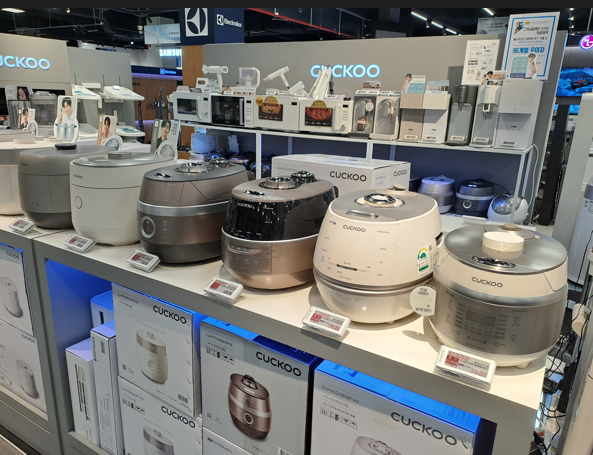
Cuckoo is the name Koreans say first when they talk about rice cookers.
The company started in 1978 as Sungkwang Electronics and later became Cuckoo. Its founder was the businessman Koo Ja-sin. From the beginning, Cuckoo focused on making rice cookers well.
Cuckoo built its reputation on pressure technology. Its high-pressure and induction models became the family standard. Today, Cuckoo calls itself the number one rice cooker brand in South Korea. Industry analyses put its market share around 70 percent. Only one brand seriously competes: Cuchen.
Many Cuckoo models play a cuckoo bird’s call when the rice is ready — the brand’s signature sound. The company has grown beyond rice cookers into water purifiers, air purifiers, and other home appliances.
Cuchen (쿠첸): The Premium Challenger
Cuchen is the other name on Korean rice cookers.
The company was founded in 1976, even before Cuckoo. It began as a kitchen appliance maker and expanded into electric rice cookers in 1994. Cuchen positions itself as premium.
Cuchen rice cookers are known for design and for clean cooking. The inner pots are stainless steel and free of PFAS coatings — a point that matters to health-conscious buyers. In 2022, Cuchen launched Korea’s first triple-pressure smart IoT rice cooker, which can be operated by smartphone.
In 2025, Cuchen’s “123 Rice Cooker” became a strong seller, with sales rising sharply. Cuchen also wins design awards, attracting buyers who want a rice cooker that looks as good as it cooks.
Cuckoo vs Cuchen
How do Koreans choose?
Cuckoo is the safe, trusted default. It is everywhere in Korea. Its pressure rice cookers are proven, and many families have used the same brand for decades. Ask people on the street which brand is best, and most will answer Cuckoo.
Cuchen is the stylish challenger. It appeals with stainless steel pots, modern design, and a younger image. The choice is often emotional: family habit versus fresh design.
Both brands are Korean-made and exported around the world. In the end, both cook the same thing: perfect rice.
For Visitors
A few practical notes.
Korean electricity is 220V, 60Hz. If you buy a rice cooker in Korea to take home, check your country’s voltage first. A Korean-spec cooker will not work in a 110V country without a transformer.
In Korea, expect rice to stay warm all day. A guesthouse or rental may already have a rice cooker waiting. Rice, kimchi, and a few banchan are a complete meal — that is how Koreans eat on most days.
The Heart of It
The machine changed. The meal did not.
From the wood-fire pot to the smart pressure cooker, the goal stayed the same: one perfect bowl of rice. Koreans cared for the pot in the old days. Today, the rice cooker cares for the meal, and Koreans trust it completely.
Maybe that is why the rice cooker is the one appliance a Korean kitchen cannot live without.