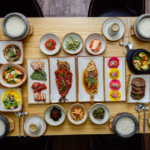

To understand Korean dining culture deeply, you need to understand Korean drinking etiquette.
In Korean, drinking etiquette is often called judo, written as 주도. In this context, ju means alcohol, and do means way, method, or etiquette. So judo can be understood as the way of drinking properly.
Korean drinking culture is not only about alcohol itself. It is about relationships. It is about who pours for whom, who drinks first, how a glass is received, how respect is shown to elders, how friends become closer, how coworkers build social bonds, and how food and alcohol sit together at the table.
For foreign visitors, Korean drinking customs can feel unfamiliar at first. But the basic idea is not difficult. Korean drinking etiquette is built around respect, awareness, and shared rhythm. You do not need to memorize every rule perfectly. If you are polite, observant, and respectful, most Koreans will understand that you are learning.
Korean drinking etiquette is not meant to make drinking stiff or uncomfortable. At its best, it helps people drink together smoothly, respectfully, and warmly.
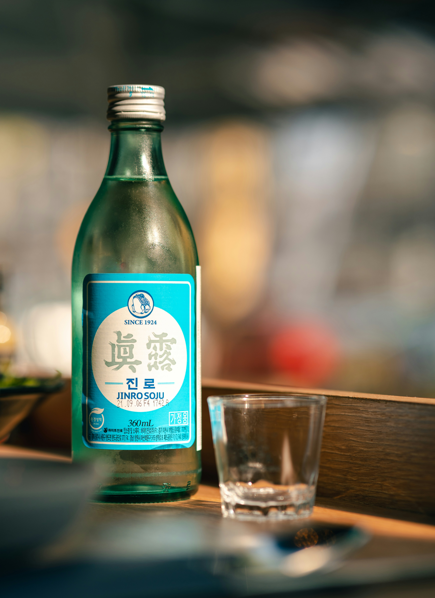
Photo: Korea Tourism Organization
What Is Judo?
Judo (주도), means Korean drinking etiquette.
It refers to the manners, customs, and social habits related to drinking alcohol with others. These customs are especially important when drinking with elders, seniors, teachers, bosses, hosts, or people you do not know very well. With close friends, the rules may be much more relaxed, but the basic ideas still remain.
Judo includes pouring drinks for others, receiving drinks with both hands, turning slightly away when drinking in front of elders, waiting for senior people to begin, not filling your own glass in formal settings, watching other people’s glasses, drinking with food, and knowing how to refuse politely if you cannot or do not want to drink.
Korean drinking etiquette is closely connected to Confucian-influenced ideas of respect and hierarchy. Age and seniority often matter in Korean social life, and this appears clearly at the drinking table. A younger person usually shows respect to an older person through small gestures, such as using both hands, lowering posture slightly, or waiting for the elder to drink first.
However, modern Korea is changing. Younger generations are often more casual. Many workplaces are becoming more careful about drinking pressure. More people choose not to drink for health, religion, personal preference, pregnancy, medication, or lifestyle reasons. Korean drinking culture still exists, but it is not the same everywhere. A dinner with close friends is very different from a formal company dinner. A university gathering is different from a meal with grandparents. A traditional makgeolli tavern is different from a hotel bar.
This is why the most important skill is not blind rule-following. It is reading the table.
Alcohol at the Korean Table
Alcohol in Korea is usually connected to food.
Koreans rarely think of drinking as something completely separate from eating. Alcohol is usually served with anju (안주), food eaten with alcohol. This can be very simple, such as dried snacks, fruit, or chips, or it can be a full table of grilled meat, stew, fried chicken, pajeon, jokbal, bossam, seafood, or spicy stir-fried dishes.
Soju with samgyeopsal, beer with fried chicken, makgeolli with pajeon, soju with hoe, somaek with barbecue, makgeolli with bindaetteok, and soju with gamjatang are all familiar combinations.
This is important because Korean drinking etiquette is also dining etiquette. You do not only hold a glass. You share food, watch the grill, refill side dishes, pour drinks, make toasts, and move with the rhythm of the meal.
In Korea, drinking together can create closeness. People may become more open after a few drinks. Coworkers may speak more comfortably. Friends may share personal thoughts. Family members may talk longer over soju and food. Of course, alcohol can also create problems if people drink too much or pressure others. Good judo means knowing how to drink respectfully, not simply drinking a lot.
A person with good drinking manners is not the person who drinks the most. A person with good drinking manners knows how to make the table comfortable.
The First Rule: Do Not Pour Only for Yourself
One of the most important Korean drinking customs is that people usually pour drinks for one another.
In many Western settings, a person may pour their own beer or wine without thinking much about it. In Korean drinking culture, especially with soju or traditional alcohol, pouring only for yourself can seem lonely, careless, or socially unaware in a formal group.
Instead, you watch the glasses around you. If someone’s glass is empty, you may offer to pour. If someone offers to pour for you, you receive the drink politely.
This creates interaction.
A bottle of soju moves around the table. Someone pours for an elder. A friend pours for another friend. A senior pours for a junior. A host pours for a guest. Each pour is a small social gesture.
The act of pouring says, “I see you, I am paying attention, we are drinking together.”
This is why pouring for others is so central to Korean drinking etiquette. It turns alcohol from an individual drink into a shared relationship.
In a casual group of close friends, people may sometimes pour for themselves, especially with beer or when the mood is relaxed. But when you are unsure, it is safer to pour for others and receive drinks politely rather than only serving yourself.
Pouring with Both Hands
When pouring alcohol for someone older or senior, use both hands.
This is one of the clearest signs of respect in Korean drinking etiquette. You can hold the bottle with one hand and support your wrist or forearm with the other hand. You may also hold the bottle with both hands if it is comfortable. The point is not the exact shape of the gesture, but the respectful intention.
If you pour for a close friend of the same age, one hand is usually fine. But if you are pouring for an elder, a boss, a teacher, a host, or someone you should treat respectfully, use both hands.
This custom is not limited to alcohol. In Korea, giving or receiving something with both hands often shows respect. You may see this when giving business cards, receiving gifts, accepting a cup, or handing something to an elder.
Receiving a Drink with Both Hands
Just as you should pour respectfully, you should also receive respectfully.
When an elder or senior pours alcohol for you, hold your glass with both hands. One hand can hold the glass, and the other can support the bottom, side, wrist, or forearm. The gesture may vary, but the meaning is clear: you are receiving with respect.
If the person pouring is a close friend, one hand may be fine. But with elders or in formal settings, both hands are safer.
Do not leave the glass sitting on the table while a senior person pours into it. Pick it up slightly and hold it. This shows that you are actively receiving the drink.
After receiving the drink, you do not always have to drink immediately, but often the first round or toast is taken together. If an elder gives you a first drink, it is polite to take at least a small sip if you drink alcohol. If you cannot drink, explain politely before the pour if possible.
A useful phrase is:
Sul jal mot masyeoyo.(술 잘 못 마셔요)
This means, “I cannot drink alcohol well.”
Another phrase is:
Sul an masyeoyo.(술 안 마셔요)
This means, “I do not drink alcohol.”
If you cannot drink for health, religion, medication, driving, or personal reasons, it is better to say so clearly and politely. Modern Korean manners increasingly recognize that people should not be forced to drink.
Turning Away When Drinking in Front of Elders
Another famous Korean drinking custom is turning slightly away when drinking in front of elders.
If an older person or senior gives you a drink, especially in a formal setting, it is polite to turn your head or upper body slightly to the side when you take a sip. You do not need to turn dramatically. A small turn is enough. The idea is that you do not drink directly facing the elder, especially during the first drink or formal toast.
This gesture shows respect and modesty.
You may hold the glass with both hands, turn slightly away, drink, and then return to the table. This custom is especially noticeable in work dinners, family gatherings, or formal social situations.
With close friends, this rule may not matter. With younger people in casual settings, many do not follow it strictly. But if you are drinking with elders, teachers, bosses, or parents of a friend, knowing this gesture is useful.
Waiting for the Senior Person
At formal Korean drinking tables, the oldest or most senior person may begin the first drink.
This is similar to waiting for elders to begin eating. If you are at a formal dinner with older people, do not immediately grab the bottle, pour for yourself, and start drinking alone. Wait for the host, elder, boss, or senior person to guide the first round.
Often, someone will pour the first drink, propose a toast, and everyone will drink together. After that, the atmosphere may become more relaxed.
Toasting: Geonbae (건배)
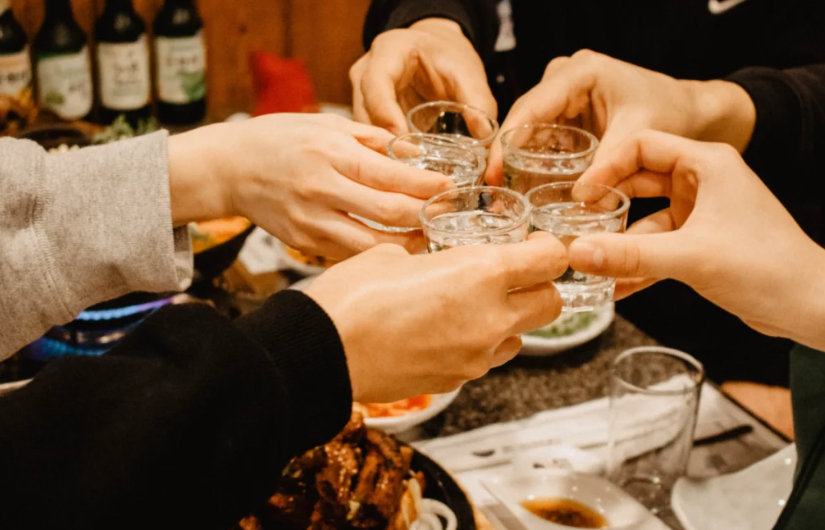
The most common Korean toast is Geonbae (건배).
It means “cheers.”
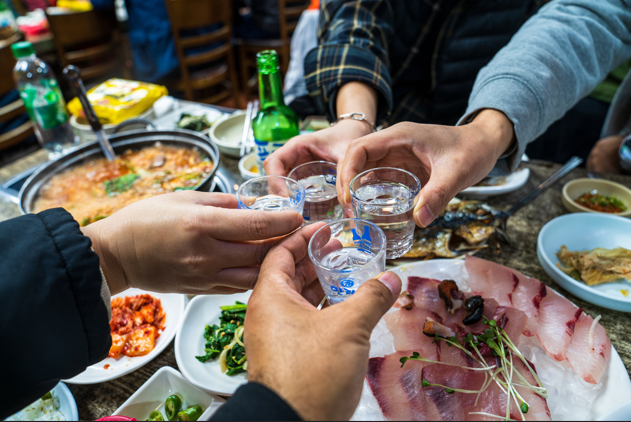
When people say geonbae, they raise their glasses and drink together. In casual settings, people may clink glasses. In more formal settings, you may raise your glass slightly. If you clink glasses with elders or seniors, it is often polite to hold your glass slightly lower than theirs. This small lowering gesture shows respect.
There are also many other toast phrases depending on the situation. At company dinners, people may use motivational slogans. Among friends, toasts can be funny, casual, or playful. At family gatherings, toasts may express health, happiness, or success.
One-Shot (원샷) Culture
In Korea, you may hear the word one-shot, meaning to drink the whole glass at once.
This can happen with soju, beer, or somaek, especially in lively groups. Someone may say “one-shot” during a toast, encouraging people to empty their glasses.
However, this is not always required, and modern drinking culture is becoming more flexible. You do not need to drink everything at once if you cannot or do not want to. It is acceptable to take a small sip, especially if you explain that you do not drink much.
A useful phrase is:
Cheoncheonhi masilgeyo (천천히 마실게요).
This means, “I will drink slowly.”
Another phrase is:
Jogeumman masilgeyo (조금만 마실게요).
This means, “I will drink just a little.”
In older or more intense drinking cultures, people sometimes pressured others to drink. This still exists in some settings, but it is less acceptable than before. Younger generations and many modern workplaces are more aware of personal choice.
Filling an Empty Glass
In Korean drinking culture, people often notice empty glasses.
If someone’s glass is empty, another person may offer to refill it. This is considered attentive and friendly. But there is an important detail: people often wait until the glass is empty before refilling, especially with soju.
Topping off a half-full soju glass is not always the usual custom. It can happen, but the more classic rhythm is to refill when the glass is empty. With beer, topping up may be more common, depending on the group.
If you do not want more alcohol, do not completely empty your glass. Leaving some alcohol in the glass can quietly signal that you are not ready for a refill. If someone still offers, you can politely cover your glass slightly with your hand and say you are okay.
You can say:
Gwaenchanseumnida (괜찮습니다).
This means, “It is okay,” or “No, thank you.”
Or:
Jogeum itda masilgeyo (조금 있다가 마실게요).
This means, “I will drink a little later.”
This is useful because if your glass is empty, someone may naturally refill it.
Soju (소주) Etiquette
Soju is the most iconic Korean alcohol.
It is usually served in small glass cups and shared from a bottle. Because soju glasses are small, the pouring and receiving etiquette becomes very visible.
When drinking soju, people usually pour for one another. If an elder pours for you, receive with both hands. If you pour for an elder, use both hands. If drinking in front of elders, turn slightly away when taking a sip. If toasting with seniors, keep your glass slightly lower when clinking.
Soju is often drunk with food, especially grilled meat, spicy stews, seafood, fried chicken, jokbal, bossam, or snacks. It can be easy to drink quickly because the glasses are small, but soju can be stronger than it feels. Drink slowly if you are not used to it.
Soju culture can be friendly and warm, but it can also lead to overdrinking if people are not careful. A good soju drinker eats enough anju, drinks water, knows their limit, and does not pressure others.
The etiquette around soju is simple but meaningful.
Pour for others, receive respectfully, drink at your own pace, and keep the table comfortable.
Beer and Somaek (소맥)
Beer is also very popular in Korea, especially with fried chicken, pizza, barbecue, pub food, and casual gatherings.
A famous Korean combination is somaek, a mix of soju and beer. The word combines soju and maekju (맥주), which means beer. Somaek is usually made by pouring soju into a beer glass and adding beer. People may mix it gently or dramatically, depending on the group.
Somaek is common at company dinners, barbecue restaurants, fried chicken places, and casual drinking gatherings. It can be fun, but it is also easy to drink too quickly because it tastes lighter than straight soju while still containing alcohol.
Somaek etiquette follows the same basic rules. If drinking with elders or seniors, receive respectfully. If someone makes a somaek glass for you and you do not want to drink much, say so politely. You can ask for less soju or a smaller amount.
A useful phrase is:
Soju jogeumman neoeo juseyo (소주 조금만 넣어 주세요).
This means, “Please put in only a little soju.”
Another phrase is:
Maekju-man masilgeyo (맥주만 마실게요).
This means, “I will drink only beer.”
Somaek can be enjoyable, but know your limit. It can be stronger than it tastes.
Makgeolli (막걸리) Etiquette
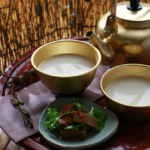
Makgeolli is Korea’s traditional cloudy rice wine.
It is milky, lightly sweet, slightly sour, and often gently fizzy. It is strongly associated with foods such as pajeon, kimchi jeon, nokdujeon, bindaetteok, tofu kimchi, acorn jelly salad, and rustic tavern food.
Makgeolli may be served in a bottle, kettle, bowl, or cup depending on the restaurant. Traditional taverns often serve it in a metal kettle with small bowls. Before pouring, makgeolli should often be gently shaken or mixed because the rice sediment settles at the bottom. But be careful if the bottle is carbonated, because shaking too hard can make it overflow.
As with soju, it is polite to pour for others. If drinking with elders, use both hands when pouring or receiving. The atmosphere around makgeolli is often more relaxed and rustic than formal soju drinking, but respect still matters.
Makgeolli is especially connected to rainy days. Many Koreans think of pajeon and makgeolli when it rains. Drinking makgeolli with jeon in a traditional tavern can be one of the most Korean drinking experiences.
Makgeolli etiquette is warmer and slower. It is not usually about quick shots. It is about sharing food, talking, and drinking from small bowls or cups over time.
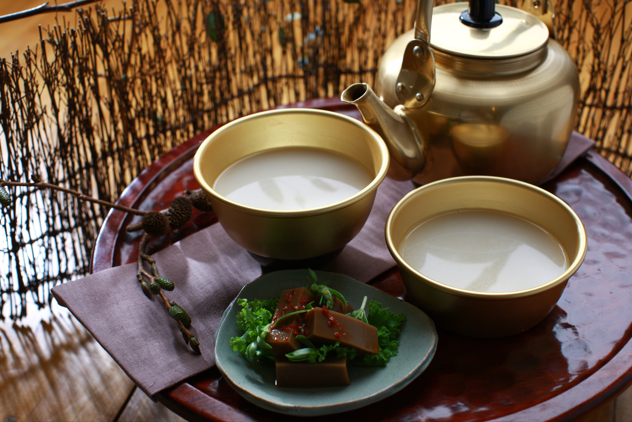
Photo: Korea Tourism Organization
Traditional Liquor and Respect
Korea has many traditional alcoholic drinks beyond soju and makgeolli, including cheongju (청주), yakju (약주), fruit wines, regional rice wines, and distilled spirits.
When drinking traditional liquor, the mood may be more formal or refined. The alcohol may be served in small cups. The host may explain the region, ingredients, or flavor. In such settings, it is polite to drink slowly and appreciate the taste.
Do not treat every Korean alcohol as something to drink quickly. Some traditional liquors are meant to be tasted carefully, more like wine or whiskey. They may pair with Korean dishes, desserts, or seasonal foods.
If someone offers a traditional drink they value, receive it respectfully. Ask about it. Taste it. Even if you are not an expert, showing curiosity is polite.
Korean alcohol culture includes casual soju nights, but it also includes craftsmanship and regional tradition.
Anju (안주): Food with Alcohol
No discussion of Korean drinking etiquette is complete without anju.
Anju means food eaten with alcohol. It is essential to Korean drinking culture. Drinking without food can feel incomplete or careless, especially in social settings.
Anju can be simple or elaborate. Common anju include samgyeopsal, fried chicken, pajeon, kimchi jeon, bindaetteok, jokbal, bossam, dried squid, fruit, spicy stews, fish cake soup, seafood, tofu kimchi, tteokbokki, grilled fish, gamjatang, budae jjigae, and many more.
Anju has several roles. It gives flavor, slows drinking, supports conversation, protects the stomach somewhat, and turns drinking into a shared meal. People do not only drink together. They eat together.
Good drinking manners include eating enough. If you drink too much without eating, you may become drunk too quickly and make others uncomfortable. Eating anju is part of pacing yourself.
Also, share anju politely. Do not take all the best pieces. Use serving utensils when available. If the anju is a shared stew or platter, be aware of others.
In Korea, alcohol and food are partners.
A good drink table needs good anju.
Hoesik (회식): Company Drinking Culture
Hoesik means company dinner or work gathering.
Alcohol has historically been a major part of hoesik culture. Coworkers may gather after work, eat, drink, talk, and sometimes move to second or third rounds. These gatherings can build relationships, but they can also create pressure, especially for people who do not drink or who feel uncomfortable with hierarchy.
Traditional hoesik culture often involved seniors pouring drinks for juniors, juniors pouring for seniors, toasts, soju, beer, somaek, and a lot of social expectation. In some workplaces, refusing alcohol could be difficult in the past.
However, modern workplace culture is changing. Many companies are reducing forced drinking, ending dinners earlier, offering non-alcoholic options, or respecting personal boundaries more than before. Younger workers often prefer more flexible social culture.
If you attend a Korean company dinner, observe carefully. Use both hands with seniors, receive politely, pour for others, and participate in toasts if comfortable. But you also have the right to drink slowly or decline alcohol.