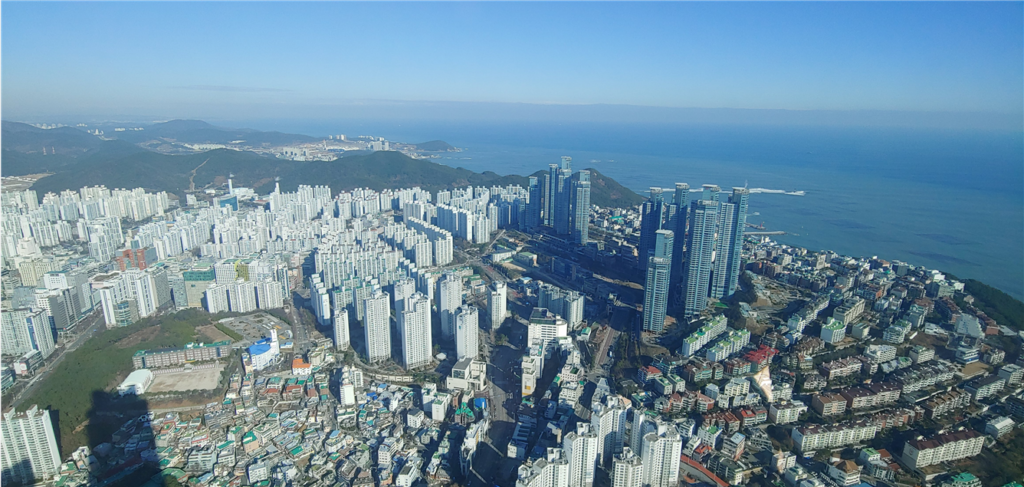

When people hear the name Busan, they often think first of the sea.
They imagine Haeundae Beach, the lights of Gwangandaegyo Bridge, seafood at Jagalchi Market, ships entering the port, and crowds gathering for the Busan International Film Festival.
These images are all part of modern Busan. Yet the city’s history reaches far beyond beaches and skyscrapers.
People were living along this coast thousands of years ago. The area later became connected to Gaya and Silla, developed around the old administrative center of Dongnae, served as Joseon’s principal gateway to Japan, and became one of the first places attacked during the Japanese invasions of Korea in 1592.
In 1876, Busan became Korea’s first modern international port. During Japanese colonial rule, that port was expanded for imperial purposes. During the Korean War, Busan became the provisional capital of South Korea and received refugees from across the peninsula. After the war, it grew into a major industrial and export city.
Today, Busan is Korea’s second-largest city, with a population of approximately 3.3 million as of 2025. It remains one of the country’s most important centers of trade, transportation, tourism, film, and maritime industry.
Busan’s history is therefore not only the history of a port.
It is the history of a city repeatedly transformed by people arriving, departing, trading, fighting, escaping, rebuilding, and beginning again.
To understand Busan, it helps to begin where so much of its history began: at the meeting point of land and sea.
1. A City Shaped by the Sea and the Mountains
Busan is located in the southeastern corner of the Korean Peninsula.
The sea surrounds much of the city, while mountains rise close behind the coastline. To the west lies the Nakdong River, which enters the sea through a broad estuary. Offshore islands, natural harbors, rocky coastlines, beaches, and steep hills have all influenced where people lived and how the city developed.
This geography gave Busan several advantages.
The coast provided fish and shellfish. The harbor allowed ships to anchor. The city’s position offered relatively direct sea routes toward Tsushima and the Japanese islands. The Nakdong River connected the coast with inland regions.
But geography also created dangers.
The same sea routes that brought merchants and diplomats could bring pirates and invading armies. The same mountains that protected settlements also limited flat land. In later centuries, workers and refugees built homes on steep slopes because the level areas around the port were already crowded.
The contrast between sea and mountain remains visible throughout Busan today.
A visitor can stand near a container terminal, look toward an old hillside neighborhood, and see several different chapters of the city’s history in one landscape. Busan’s official historical account likewise presents its development as closely connected to its coast, port, river routes, industry, and international exchange.
2. Prehistoric Busan: Life Along the Coast
Busan’s history began long before the city had its present name.
Archaeological remains show that people lived in the region during the Paleolithic, Neolithic, and Bronze ages. Some of the most important evidence comes from shell middens along the coast.
A shell midden is a place where shells, animal bones, broken tools, pottery, and other remains accumulated over a long period of human settlement.
The best-known example is the Dongsam-dong Shell Midden on Yeongdo Island.
The site was formed over thousands of years, approximately between 8,000 and 4,000 years ago. Archaeologists have found pottery, stone tools, bone tools, fishing equipment, ornaments, animal remains, dwellings, hearths, and evidence of early grain cultivation there.
Objects made from obsidian originating in Kyushu and examples of Japanese Jomon pottery also indicate that people on Korea’s southeastern coast were participating in maritime exchange from a very early period.
This is an important point.
Busan did not suddenly become outward-looking when its modern port opened in the nineteenth century. Its relationship with the sea is much older.
Thousands of years before container ships entered Busan Port, coastal communities were already fishing, traveling, exchanging objects, and building lives around the water.
3. Geochilsan-guk, Gaya, and Silla
During the early historical period, the area around present-day Busan was associated with a small polity known as Geochilsan-guk (거칠산국).
It is generally believed to have been located around present-day Dongnae. Historical interpretations connect it to the wider Gaya cultural and political world of southeastern Korea.
Nearby Geumgwan Gaya, centered around present-day Gimhae, became powerful through iron production and trade. Communities in and around Busan were therefore connected to a region known for metalworking, river transport, agriculture, and maritime exchange.
Geochilsan-guk was eventually incorporated into Silla. During Silla’s administrative reorganization, the region became known as Geochilsan-gun and was later renamed Dongnae-gun in 757.
The name Dongnae would remain deeply important for more than a thousand years.
Ancient tombs in Bokcheon-dong and other parts of Busan preserve evidence of the region’s early political and cultural development. Weapons, armor, pottery, ornaments, and burial objects reveal a society connected to both inland power and maritime routes.
Long before Busan became a modern city, the Dongnae area was already an important center in southeastern Korea.
4. Dongnae Before Busan
Today, Dongnae is one district within the much larger Busan Metropolitan City.
Historically, however, the relationship was almost the reverse.
For centuries, Dongnae was the established administrative center, while Busan-po was a coastal settlement and harbor under Dongnae’s authority.
Dongnae contained government offices, a fortress, markets, schools, temples, hot springs, and residential communities. It governed a territory that included much of what later became modern Busan.
Busan-po developed closer to the sea.
The origin of the name “Busan” is not completely certain. According to the Busan Metropolitan Government, the modern name developed from Busan-po, a settlement located near the lower slopes of a mountain once called Busan and now generally known as Jeungsan.
Busan-po did not initially exist as an independent city. It remained part of Dongnae-hyeon and later Dongnae-bu.
This helps explain why Busan has more than one historical center.
Dongnae represents the older inland administrative city.
The areas around present-day Jungang-dong, Nampo-dong, and Busan Port represent the modern port city that expanded rapidly after the nineteenth century.
Modern Busan eventually absorbed both.
5. Busan-po: Joseon’s Southeastern Gateway
After the Joseon Dynasty was founded in 1392, Busan’s strategic importance increased.
A naval base was established at Busanjin in 1397. In 1407, the Joseon government formally opened Busan-po as a port for controlled trade with Japan.
The government needed to manage several matters at once.
It wanted peaceful trade and diplomatic communication, but it also had to defend the coast against piracy and possible invasion. Busan therefore became both a gateway and a military frontier.
Busanjin served as an important naval headquarters for the defense of the southeastern coast. A fortress was constructed in 1490 to protect troops, vessels, and supplies.
This dual role would define Busan for centuries.
The port was a place where goods, information, and foreign visitors entered Korea.
At the same time, soldiers, officials, and coastal defenses reminded everyone that relations across the sea could quickly become dangerous.
Few Korean cities experienced international exchange and military threat as closely as Busan did.
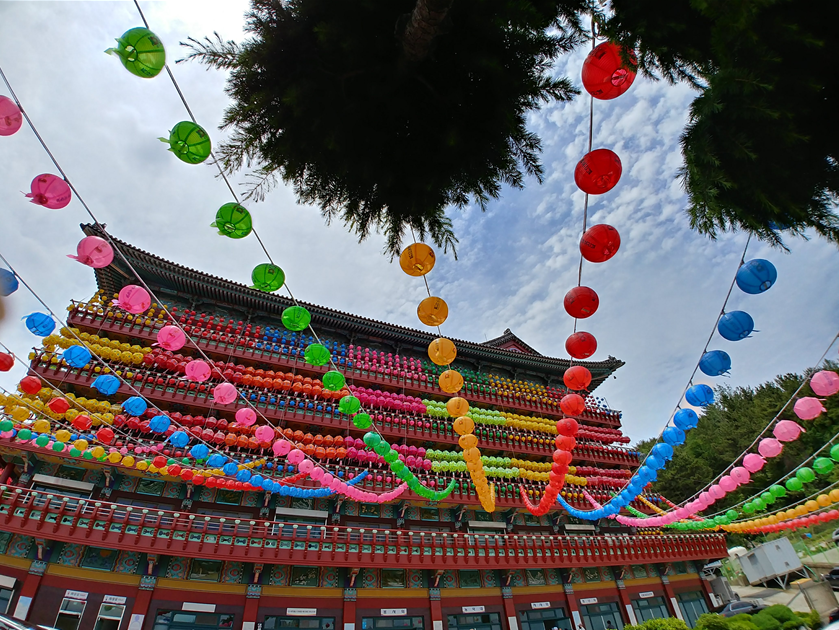
6. 1592: The First Battles of a National War
That danger became reality in 1592.
Japanese forces under Toyotomi Hideyoshi began a massive invasion of Korea. Because of its location, Busan was among the first places attacked.
The defenders of Busanjin Fortress, led by Commander Jeong Bal, resisted the invading army but were overwhelmed. Japanese forces then advanced toward Dongnaeeupseong Fortress.
At Dongnae, Magistrate Song Sang-hyeon and the soldiers and civilians defending the fortress also fought until the city fell.
A famous later painting known as the Dongnaebu Sunjeoldo depicts the battle and the death of Song Sang-hyeon. The painting presents the defense of Dongnae as an act of loyalty and resistance in the face of overwhelming force.
Busan’s position made it the opening battlefield of the Imjin War.
After capturing the port and surrounding fortresses, Japanese armies used the southeastern region as a base for advancing northward.
The invasions lasted until 1598 and devastated large parts of Korea.
For Busan, the war left a particularly deep memory. Busanjin and Dongnae became symbols not only of military defeat but also of local resistance and sacrifice.
7. From War to Diplomacy: Waegwan and the Joseon Tongsinsa
After the invasions ended, Korea and Japan gradually restored formal relations.
Busan again became the most important place for managing that relationship.
The Joseon government operated a waegwan in Busan. A waegwan was a controlled residential and commercial compound where Japanese merchants and officials could stay, trade, and conduct approved business.
In 1678, the waegwan was moved to Choryang.
The Choryang Waegwan became a large and carefully regulated space. Japanese residents could conduct trade there, but their activities and movements were supervised by the Joseon authorities.
Busan was therefore not an unrestricted international city in the modern sense. It was a controlled diplomatic border zone.
Busan was also closely connected to the Joseon Tongsinsa, the large diplomatic missions sent from Korea to Japan after the war. Twelve missions were dispatched between 1607 and 1811. They helped restore relations, communicate between governments, and exchange scholarship, art, literature, and ceremony.
For these delegations, Busan was the final Korean city before crossing the sea.
This period reveals another side of Busan’s history.
The same route that had carried invading armies could also carry diplomats working to preserve peace.
8. 1876: Busan Opens as a Modern International Port
The next great turning point came in 1876.
Under the Treaty of Ganghwa, Korea was forced to open Busan to modern international trade. Busan became the first Korean port opened under the new treaty system, followed later by Wonsan and Incheon.
The opening brought rapid change.
A Japanese settlement was established near the port. Customs facilities, warehouses, roads, banks, commercial offices, and new forms of transportation appeared. Imported products and unfamiliar technologies entered the city.
The modern port district developed around areas that are now part of Jungang-dong and Nampo-dong.
Busan was becoming a modern commercial city.
However, the opening cannot be understood simply as a positive story of international exchange.
The treaty was unequal, and Japan was increasing its political and economic influence over Korea. Modernization arrived together with pressure on Korean sovereignty. Busan’s official history describes the port as both a route through which modern culture entered and a bridgehead for Japanese imperial expansion.
This contradiction would become one of the central themes of modern Busan.
The port connected Korea to the world, but it also exposed the country to foreign control.
9. The Railway and the Birth of a New City
The port alone did not create modern Busan.
It was the combination of the port and the railway that transformed the city into a national gateway.
The Gyeongbu Line, connecting Seoul and Busan, opened in 1905. For the first time, people and goods could move by rail between the capital and the southeastern port along a continuous modern route.
Busan became the point where land transportation and sea transportation met.
A person or shipment could travel across the Korean Peninsula by rail, arrive at the port, and continue by ship toward Japan or other destinations.
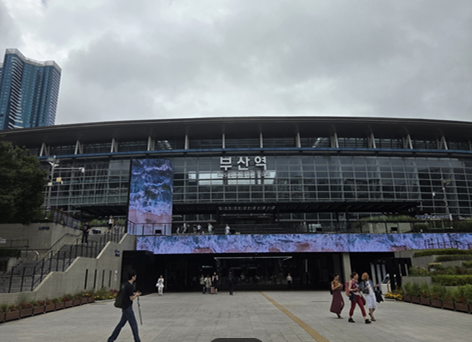
Land reclamation changed the coastline. Customs buildings, railway facilities, warehouses, and piers expanded. The areas near Busan Station and the harbor developed rapidly.
At the same time, the older center of Dongnae continued to exist farther inland.
This produced a city with two different historical identities:
- traditional Dongnae, centered on administration, local society, and older institutions;
- modern Busan, centered on the port, railway, international trade, and colonial expansion.
Over time, the port city grew so quickly that “Busan” became the name for the entire urban region.
10. Busan Under Japanese Colonial Rule
Japan formally annexed Korea in 1910.
In that same year, Busan was separated administratively from Dongnae and organized as Busan-bu.
During colonial rule, the port expanded considerably. Piers, warehouses, rail connections, and reclaimed land made Busan increasingly important to the Japanese Empire.
But this development served colonial purposes.
Busan became a transportation base linking the Korean Peninsula with Japan. People, military personnel, industrial goods, food, and extracted resources passed through the city.
The port helped Japan control Korea and supported its wider expansion toward the Asian continent.
Some colonial-era buildings and streets still survive in the old downtown area. They are reminders that modern architecture and infrastructure can carry painful historical meanings.
One prominent example is the building later used as the Busan Modern History Museum. Constructed for the Oriental Development Company, it was connected to an institution deeply involved in colonial land control and economic exploitation.
Busan was also a place of resistance.
A local branch of the National Debt Redemption Movement was organized in Dongnae in 1907. Independence demonstrations took place in Dongnae during the March 1st Movement of 1919. In 1920, independence activist Park Jae-hyeok attacked the Busan Police Station.
The colonial history of Busan therefore contains both expansion and exploitation, control and resistance.
11. Liberation and a New Republic
Korea was liberated from Japanese colonial rule in August 1945.
Busan entered a period of enormous political and social change.
Colonial institutions were dismantled, reorganized, or taken over by new authorities. Korean residents attempted to rebuild local government and economic life while the peninsula was divided between Soviet and American occupation zones.
Busan’s port remained essential.
It connected southern Korea to international trade and transportation at a time when the new country faced shortages, political uncertainty, and social conflict.
In 1949, the colonial administrative system of Busan-bu was replaced by the City of Busan.
The city had little time to adjust to peace.
Less than five years after liberation, another war began—one that would transform Busan more deeply than any event since the opening of the port.
12. Busan Becomes the Provisional Capital
The Korean War began on June 25, 1950.
North Korean forces advanced rapidly southward. The South Korean government moved first to Daejeon, then to Daegu, and finally to Busan.
Busan served as South Korea’s provisional capital for a combined total of 1,023 days: first from August 18 to October 26, 1950, and again from January 4, 1951, until August 14, 1953.
The government used existing buildings for presidential, legislative, administrative, diplomatic, and military functions.
Busan was able to perform this role because of its location and infrastructure. It was protected behind the Nakdong River defensive line, possessed a deep-water port, had railway connections, and could receive military equipment, humanitarian supplies, personnel, and international assistance.
During these years, Busan was not merely another large city.
It was the political center of the Republic of Korea.
Decisions affecting the survival of the country were made there. Government officials, soldiers, diplomats, journalists, foreign aid workers, and displaced civilians filled the city.
Busan had become a capital under emergency conditions.
13. A City of Refugees
The wartime government was only one part of Busan’s Korean War experience.
The city also became home to a vast refugee population.
People arrived from Seoul, North Korea, and other regions affected by fighting. Many had lost their homes, possessions, relatives, and sources of income.
Busan did not have enough housing for them.
Families built temporary shelters along hillsides, beside roads, near the port, and in any available space. Neighborhoods became crowded with small houses, narrow alleys, steep stairs, shared water supplies, and improvised construction materials.
At Ami-dong, refugees settled on the site of a former Japanese cemetery. With building materials in short supply, gravestones and stone ornaments were reused in foundations, stairs, and walls. Traces of them remain visible in the neighborhood today.
The Uam-dong Cattle Shed Village was another refugee settlement, created in structures previously used for the quarantine and export of cattle.
These places are not simply unusual tourist attractions.
They preserve the physical evidence of people creating homes under desperate conditions.
Busan became a city shaped not only by those born there, but also by people from across Korea who arrived with nowhere else to go.
14. Markets, Schools, Books, and Wartime Culture
Refugee life was difficult, but Busan did not stop functioning as a society.
Markets expanded as people bought, sold, exchanged, and sometimes smuggled scarce goods.
Gukje Market, or International Market, became a major center of commerce. Bupyeong Kkangtong Market also developed through the circulation of imported products, military supplies, food, clothing, and household necessities.
At Bosu-dong Book Street, secondhand books became valuable to students, teachers, and readers who had been separated from schools and libraries.
Education continued in improvised conditions. Dozens of elementary, middle, and high schools reopened in temporary classrooms, sometimes under simple canopies. A wartime association of universities was organized so that displaced university students could continue studying.
Writers, musicians, dancers, artists, and intellectuals who had fled to Busan also continued their work. The provisional capital became a temporary center of Korean cultural life.
This period left a lasting mark on Busan’s identity.
The city remembers the war not only through government buildings and military sites, but also through markets, books, food, hillside villages, schools, and family stories.
The history of the wartime capital is ultimately a history of survival in everyday life.
15. Postwar Reconstruction and Industrial Growth
After the armistice in 1953, the national government returned to Seoul.
Busan was no longer the capital, but the city did not return to its prewar condition.
Many refugees remained permanently. The population had expanded, new neighborhoods had formed, and the port had become even more important.
As South Korea industrialized, Busan became a major manufacturing and export center.
Textiles, footwear, machinery, processed seafood, chemicals, and other industries grew. Factories attracted workers from surrounding provinces and rural communities.
Busan’s footwear industry became particularly well known, while the port handled the raw materials and finished products connected to Korea’s export economy.
The city’s official history describes Busan Port as an important base for postwar economic growth and notes that light industries such as textiles and shoes contributed to rapid population expansion.
Port construction accelerated.
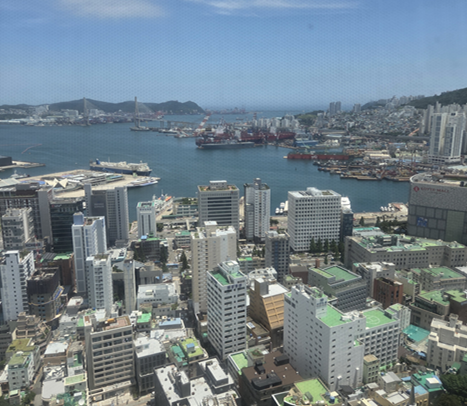
New piers, container terminals, passenger facilities, and industrial zones were developed. From the 1970s onward, Busan became increasingly integrated into global container shipping networks. Later expansion included terminals at Jaseongdae, Sinseondae, Gamman, and the large Busan New Port complex.
The city that had sheltered refugees became one of the engines of Korea’s economic transformation.
16. A Growing Metropolitan City
Industrialization changed the physical shape of Busan.
The city expanded beyond the old downtown area around Nampo-dong and Jungang-dong. Residential and commercial districts spread through Seomyeon, Dongnae, Suyeong, Haeundae, Sasang, Saha, and other areas.
Roads, tunnels, bridges, apartment complexes, industrial districts, universities, and subway lines connected places that had once felt separate.
Administrative changes reflected that growth.
In 1963, Busan became a city directly governed by the central government, independent of South Gyeongsang Province. In 1995, it was reorganized as Busan Metropolitan City, with an expanded system of districts and one county.
The city’s center of gravity also began to shift.
The old downtown near the port remained historically important, but Seomyeon became a major transportation and commercial center. Haeundae developed into a district of beaches, apartments, hotels, convention facilities, shopping, and high-rise construction.
Modern Busan was no longer a single port district.
It had become a broad metropolitan region containing historic fortresses, industrial neighborhoods, fishing ports, beaches, mountain communities, business centers, and new residential cities.
17. Busan and Korea’s Democratic Movement
Busan’s modern history is also a history of political protest.
Students and citizens in Busan participated in the April Revolution of 1960, which helped bring down the authoritarian government of President Syngman Rhee.
An even more important local movement took place in October 1979.
On October 16, students at Pusan National University began demonstrations against President Park Chung Hee’s authoritarian Yushin system. Students from other universities joined, and the protests spread into central Busan.
Workers, merchants, office employees, and other citizens participated. The movement then spread to Masan.
These events became known as the Busan–Masan Democratic Uprising, or Bu-Ma Democratic Uprising.
The authorities responded with martial law, arrests, and military force. Although the protests were suppressed, they created a serious crisis for the authoritarian government and became an important turning point in Korea’s democratization history. The uprising was designated a national commemorative event in 2019.
This history complicates the image of Busan as only a commercial and industrial city.
The city’s workers, students, and ordinary citizens also helped shape modern Korean democracy.
18. From Port and Factory City to Cultural City
During the late twentieth century, Busan began developing a new international identity.
The port and manufacturing remained essential, but tourism, conventions, film, culture, and urban festivals became increasingly important.
A major turning point came in 1996, when the first Busan International Film Festival was held.
The inaugural festival screened 169 films from 31 countries. It was Korea’s first international film festival and attracted filmmakers, critics, industry professionals, and large public audiences.
The festival helped change the image of Busan.
The city was no longer known internationally only for shipping, heavy industry, and the Korean War. It became associated with cinema and cultural exchange.
The festival first grew around the theaters of Nampo-dong and later became closely identified with Haeundae and the Busan Cinema Center.
This movement from old downtown cinemas to a modern cultural complex mirrors Busan’s wider transformation.
The city continues to carry the identity of a working port, but it has also become a place of beaches, art, film, architecture, tourism, and international events.
19. Busan Port in the Twenty-First Century
The port remains at the center of Busan’s economy and identity.
Busan Port now connects with hundreds of ports around the world and functions as a major Northeast Asian logistics and transshipment hub.
Much of the port’s container activity has expanded westward toward Busan New Port, where large terminals and logistics districts have been developed.
At the same time, older sections of North Port are being transformed.
The North Port redevelopment project seeks to convert former industrial waterfront areas into spaces for business, tourism, culture, parks, passenger facilities, and public access. The larger second phase is planned to continue through 2030 and includes areas around Busan Station, Jaseongdae Wharf, and older downtown neighborhoods.
This creates another important contrast.
For more than a century, much of the waterfront was separated from daily urban life by railway lines, warehouses, fences, piers, and industrial facilities.
Redevelopment is attempting to reconnect the city with the sea.
Busan is therefore not abandoning its port history.
It is trying to decide how an old industrial port can become part of a new urban future.
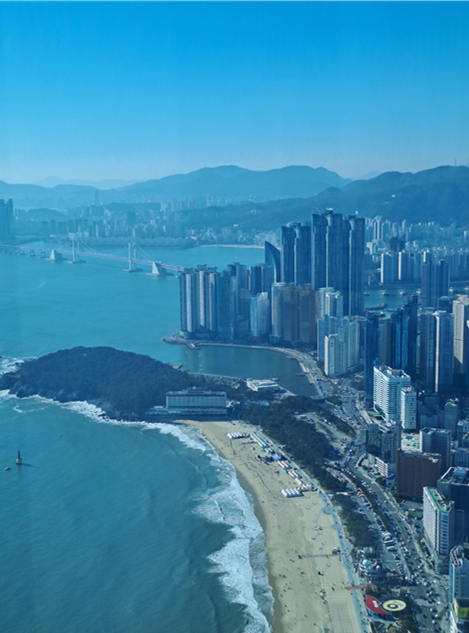
20. Busan Today: A City Built in Layers
Busan today is a city of many different landscapes.
In Dongnae, visitors can find traces of the old administrative city, fortress history, Confucian institutions, and hot-spring culture.
Near Busanjin and Choryang, they can explore the history of naval defense, diplomacy with Japan, the railway, migration, and colonial-era urban development.
Around Nampo-dong, Gwangbok-dong, Jagalchi, and Yeongdo Bridge, they can encounter the old port city, markets, refugee memories, seafood culture, and commercial life.
In Ami-dong, Gamcheon, Choryang, and other hillside neighborhoods, narrow streets and steep stairs reflect the city’s shortage of flat land and the arrival of migrants and refugees.
Farther east, Haeundae, Centum City, Marine City, and Gwangalli represent a more recent Busan of high-rise buildings, tourism, conventions, entertainment, and waterfront development.
To the west, the Nakdong River estuary, industrial districts, and Busan New Port reveal another side of the city’s future.
These places may seem unrelated, but they all belong to the same historical story.
Busan has repeatedly expanded by absorbing new people, new districts, new industries, and new functions.
A City That Has Always Faced Outward
Seoul’s history is closely connected to political power.
Incheon’s history is closely connected to access to the capital and the outside world.
Busan’s history is defined by the sea.
The sea brought prehistoric exchange.
It brought merchants and diplomats during the Joseon period.
It brought invading soldiers in 1592 and imperial expansion in the modern era.
It carried ships, trains, products, workers, migrants, refugees, military supplies, and international aid.
It later connected Korea’s factories to overseas markets and introduced Busan’s film festival, beaches, and urban culture to visitors from around the world.
But Busan should not be understood only as a gateway through which things passed.
People stayed.
Refugees built homes. Workers raised families. Merchants created markets. Students organized protests. Filmmakers created a festival. Citizens transformed military, colonial, industrial, and wartime spaces into museums, parks, cultural areas, and places of memory.
Busan’s history is therefore both outward-looking and deeply local.
It is a city connected to distant places, but its identity was built by people who adapted to the difficult geography and repeated crises of the southeastern coast.
From the Dongsam-dong shell midden to Dongnae Fortress, from the Choryang Waegwan to the modern port, from the provisional capital to the container terminals and cinema center, Busan has always been changing.
Yet one element remains constant.
Busan continues to face the sea—not only as a boundary, but as a route toward somewhere new.