One of the first Korean expressions many foreign visitors learn is “ppalli-ppalli” (빨리빨리), which means “quickly, quickly” or “hurry up.”
In Korea, saying a word twice often adds emphasis, so ppalli-ppalli expresses more urgency than simply saying ppalli, meaning “quickly.” The phrase can be heard at home, in restaurants, at workplaces, on construction sites, and even among friends preparing to leave the house.
However, ppalli-ppalli culture is not merely about speaking quickly or rushing from one place to another. It describes a broader social preference for speed, efficiency, convenience, and immediate results. In many situations, waiting is seen not as a normal part of life but as a problem that should be solved.
This attitude has helped Korea develop highly efficient services and infrastructure. At the same time, it can create stress, impatience, and pressure. To understand modern Korean society, it is useful to look at both sides of ppalli-ppalli culture.
What Does “Ppalli-Ppalli Culture” Mean?
The expression refers to the tendency to complete tasks, deliver services, and respond to requests as quickly as possible.
A person influenced by ppalli-ppalli culture may walk quickly, eat quickly, make decisions quickly, and become frustrated when a process seems unnecessarily slow. In the workplace, an employee may be expected to answer a message immediately. In a restaurant, customers may expect food to arrive soon after ordering. When using a website or mobile application, even a short delay may feel inconvenient.
The culture is especially noticeable in large cities such as Seoul, where people often move through crowded subway stations at a fast pace. Commuters may stand near the train doors before arriving at their station, prepare their transportation cards in advance, and walk rapidly through transfer passages.
This speed is not always caused by anger or impatience. Often, it is simply considered practical. People become accustomed to organizing their movements so that no time is wasted.
For visitors from cultures where daily life moves more slowly, the Korean pace can initially feel intense. A cashier may complete a transaction before the customer has finished organizing a wallet. A restaurant employee may clear dishes quickly. An office colleague may send another message only a few minutes after the first one.
These actions are not necessarily intended to be rude. In many cases, they reflect an assumption that fast service is good service.
How Did the Culture Develop?
Korea’s emphasis on speed is often connected to the country’s rapid economic and social transformation.
During the twentieth century, Korea experienced war, poverty, political change, industrialization, urbanization, and technological development within a relatively short period. Many people believed that the country had to work harder and move faster in order to rebuild and compete internationally.
Speed became associated with progress.
Factories needed to produce more goods. Cities needed to build roads, apartments, schools, hospitals, and public transportation. Companies needed to expand. Students were encouraged to study intensively, while workers were often expected to complete demanding tasks within limited time.
Under these conditions, moving slowly could be interpreted as falling behind.
This historical background helps explain why ppalli-ppalli became more than a useful phrase. It developed into a shared social attitude. Quick action was seen as necessary for survival, improvement, and success.
The culture was also strengthened by Korea’s high population density and urban lifestyle. When many people share public transportation, restaurants, offices, and residential areas, efficiency becomes important. A slow process can affect not just one person but everyone waiting behind that person.
Over time, speed became part of the public’s expectations. Services that were once considered remarkably fast gradually became normal.
Ppalli-Ppalli Culture in Everyday Life
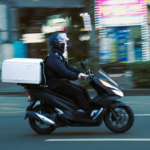
One of the clearest examples can be found in food delivery.
In Korean cities, customers often expect meals to arrive quickly and still be hot. Restaurants, delivery workers, digital platforms, and apartment buildings are organized to make the process efficient. People can order food through an application, follow the delivery status, and receive the meal without a long conversation.
The same expectation applies to online shopping. Fast shipping has become an important part of customer satisfaction. Many consumers want to know not only whether a product will arrive, but exactly when it will arrive.
Public transportation also reflects this preference for efficiency. Subway trains run frequently, transfer systems are carefully organized, and passengers usually prepare to board and exit quickly. When the doors open, people are expected to move without blocking the entrance.
Restaurants provide another example. In many Korean restaurants, especially those serving office workers during lunch, food is prepared and served rapidly. Customers eat, pay, and leave so that the table can be used by the next group.
Even communication can be influenced by ppalli-ppalli culture. A message that remains unanswered for too long may cause concern. In some workplaces, quick replies are seen as evidence of responsibility and attention.
Of course, not every Korean behaves in the same way. Age, occupation, personality, location, and personal values all influence a person’s attitude toward time. Nevertheless, the general expectation of quick service is strong enough that visitors often notice it immediately.
How Visitors Can Respond
Visitors do not need to imitate every aspect of ppalli-ppalli culture. However, understanding local expectations can make daily life easier.
In busy public spaces, it is helpful to prepare in advance. Have your transportation card ready before reaching the subway gate. Decide what you want to order before arriving at the counter. Avoid suddenly stopping in the middle of a crowded walkway.
On escalators, station platforms, and subway stairs, pay attention to the movement of people around you. When you need to check a map or phone, move to the side instead of blocking the flow.
In restaurants, staff members may serve food or remove dishes quickly. This does not always mean they are trying to make you leave. Rapid service is often considered attentive and professional.
At the same time, visitors should not feel guilty about requesting more time when they genuinely need it. It is acceptable to ask a person to speak more slowly or to explain something again.
A useful Korean expression is:
천천히 말씀해 주세요.
Cheoncheonhi malsseumhae juseyo.
“Please speak slowly.”
Another helpful phrase is:
잠시만요.
Jamsimanyo.
“Just a moment, please.”
These phrases allow you to slow down an interaction politely without creating unnecessary conflict.
More Than a National Stereotype
It is easy to turn ppalli-ppalli culture into a simple stereotype: Koreans are always in a hurry.
Reality is more complicated.
Korean society contains busy office districts and quiet mountain temples, rapid delivery systems and long family meals, crowded subway stations and peaceful country villages. The pace of life changes according to place, time, and situation.
Furthermore, speed can communicate care. A restaurant owner who serves food quickly may want customers to enjoy it while it is hot. A colleague who responds immediately may be showing respect. A delivery worker may understand that the customer is waiting for something important.
At other times, speed can become a source of stress and thoughtlessness.
Understanding ppalli-ppalli culture therefore requires balance. It should neither be praised as the secret of Korea’s success nor criticized as a purely negative habit. It is a cultural response to Korea’s history, urban environment, economic development, and social expectations.