
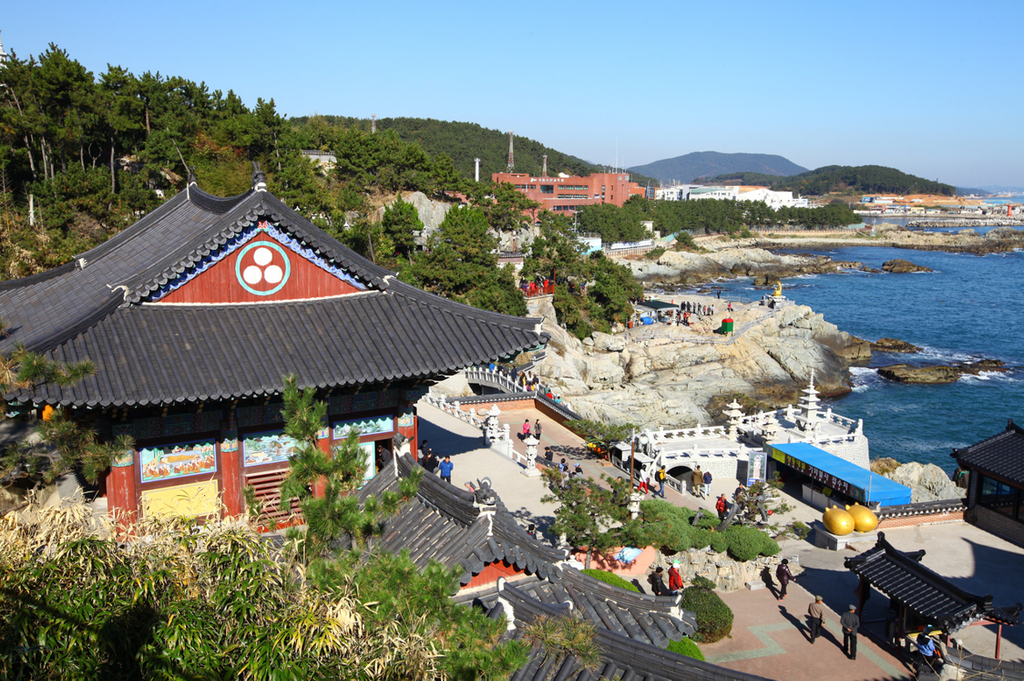
Temple roofs above a rocky shoreline, stone stairways leading toward the water, and waves breaking below the grounds—Haedong Yonggungsa has one of Busan’s most distinctive settings. Located in Gijang, on the city’s northeastern coast, this Buddhist temple attracts many international visitors as well as Korean travelers. Its combination of religious buildings and open sea views makes it a memorable stop on a Busan trip.
Visitors can explore the temple halls, find their birth-year animal among the zodiac statues, or pause at a viewpoint overlooking the water. People also come to pray and make wishes, so sightseeing and religious activities take place alongside each other.

Quick Facts About Haedong Yonggungsa
- Korean name: 해동용궁사 (Haedong Yonggungsa)
- Location: Gijang-gun, northeastern Busan
- What it is: A Buddhist temple on the rocky coast
- Traditional founding date: 1376, during the Goryeo period
- Known for: Ocean views, zodiac statues, 108 steps, and the seaside Gwaneum statue
- Admission: Free
- Address: 86 Yonggung-gil, Gijang-gun, Busan
- Visiting hours listed by VISITKOREA: 4:30 a.m.–7:20 p.m.; last admission at 6:50 p.m.
What Makes the Temple Special?
The sea is part of almost every stage of the visit. As the path descends, views open between the trees, revealing temple buildings arranged along the rocky shore. From the grounds, you can look across the water or back toward the roofs and statues. The surrounding coast is also a designated geosite within Busan’s geopark. Its exposed rocks and coastal formations help give the temple its dramatic appearance. Together, the architecture and shoreline offer plenty to notice even for visitors who are unfamiliar with Korean Buddhism. busan.go.kr

A Popular Stop for International Visitors
Haedong Yonggungsa frequently appears on international travelers’ Busan itineraries. Busan’s official city information specifically notes that its coastal location attracts many overseas visitors. Local tour operators also describe strong interest in photographing the temple against the sea. The appeal is easy to understand from the layout: visitors can see Korean temple architecture, walk among sculptures, and enjoy coastal scenery within the same visit. Its popularity also means that the paths and viewpoints can be busy, so leave time to look around without rushing.
The Story Behind the Name
Temple accounts trace Haedong Yonggungsa’s origins to 1376 and the monk Naong. After destruction during the Japanese invasions of the late sixteenth century, rebuilding began in the early 1930s. The present complex reflects later reconstruction and expansion. The name is connected to another monk, Jeongam, who became abbot in 1974. According to the temple’s story, he dreamed of Gwaneum—the Buddhist figure associated with compassion—ascending to heaven on a dragon. This dream inspired the name Haedong Yonggungsa. Yonggung (용궁) means “Dragon Palace,” a fitting image for a temple beside the sea.

What to See at Haedong Yonggungsa
The Twelve Zodiac Guardians
Along the approach, visitors encounter statues representing the twelve zodiac animals. They have human bodies and animal heads, giving each figure a distinctive appearance. Many visitors look for the animal associated with their birth year and take a photograph beside it. The statues provide a playful introduction to the Korean zodiac before entering the main temple grounds.
The 108 Steps
The route toward the temple includes a stairway of 108 steps through a pine grove. As you descend, the sea gradually becomes more visible. The approach is part of the experience, so take your time rather than treating it simply as the way to the main buildings. Remember that the return journey includes climbing back up.
Haesu Gwaneum: The Seaside Statue
One of the temple’s most recognizable figures is Haesu Gwaneum Daebul (해수관음대불), the large stone statue of Gwaneum overlooking the sea. Steps beside the main hall lead toward the statue and an elevated viewpoint. From here, visitors can take in the coastline and see how the temple buildings fit into the surrounding landscape.
The Main Hall and Dragon Sculptures
The main worship hall brings painted decoration and Buddhist imagery into the seaside setting. Dragon sculptures around the grounds connect visually with the temple’s name and its founding stories. Look at the smaller details as well as the wide view: carved figures, painted beams, and sculptures can reveal parts of the temple’s story that a panoramic photograph misses.
A Place to Make a Wish
Haedong Yonggungsa is associated with the belief that a sincere prayer may bring the fulfillment of one wish. At Yongmungyo Bridge, visitors sometimes toss coins toward offering bowls while making a wish. For some visitors, this is a lighthearted part of sightseeing. For others, prayers for health, family, or personal hopes give the visit a more private meaning. Give people space when they are praying, even in areas popular for photographs.
Sunrise Over the Sea
The open coastal setting makes Haedong Yonggungsa a popular sunrise destination. January 1 draws people hoping to see the first sunrise of the year and offer prayers for the months ahead. A sunrise visit takes some planning. Check the sunrise time and transport options for your date, and confirm early access before setting out.
How to Get There
One public transport route starts at Osiria Station on the Donghae Line. From Exit 1, transfer to Bus 139 or express Bus 1001, get off at Yonggungsa–National Institute of Fisheries Science, and walk approximately 15 minutes toward the temple. The temple is beyond central Haeundae, so include the transfer and walking time when planning your day. Search 해동용궁사 in a Korean map app to find the route from your accommodation.
Visiting Respectfully
Speak quietly near worship halls, follow shoe-removal instructions, and check photography signs before entering buildings. Keep the narrow paths clear when stopping for pictures. For an early-morning or evening visit, confirm the current opening hours with the temple. Published closing times differ between visitor listings and temple information.
Read Next
Temple Stay in Korea (템플스테이): How to Book & What to Expect

