
Persimmons, called gam (감) in Korean, are one of Korea’s best-loved autumn fruits. They come in several forms: crisp dan-gam (단감), soft and sweet hongsi (홍시), chewy dried gotgam (곶감), and tangy gam-sikcho (감식초), or persimmon vinegar.
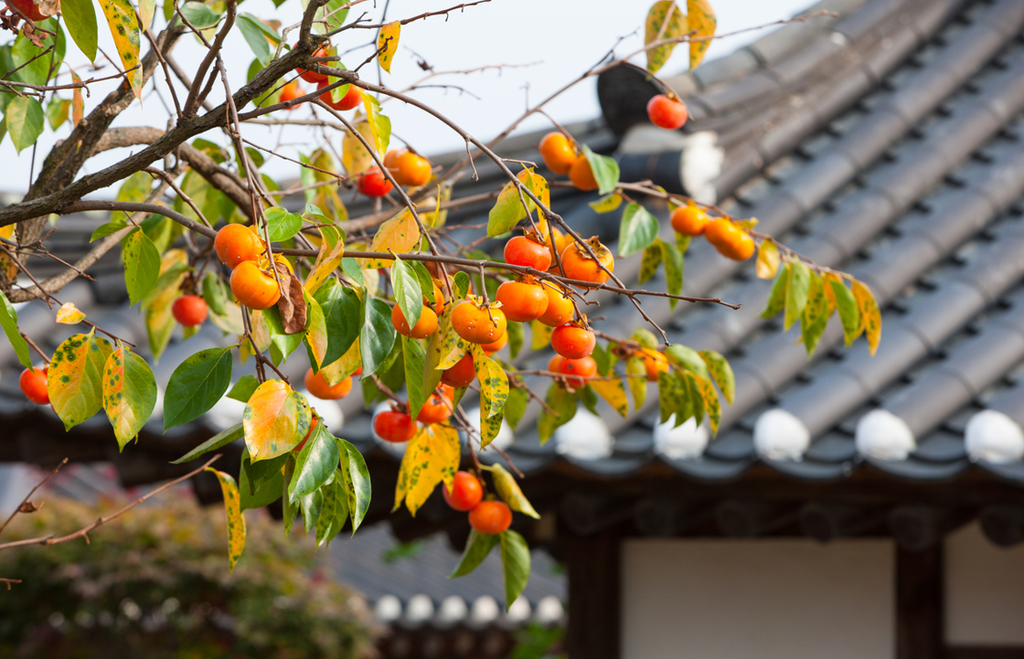
For many Koreans, an image of the autumn countryside includes persimmon trees with bright orange fruit hanging from their branches. After the leaves fall, some persimmons remain on the trees, adding a splash of color to the rural landscape. In late autumn, families traditionally harvested persimmons and dried some to enjoy through the winter.
Quick Facts About Korean Persimmons
- Korean name: 감 (gam)
- Main season: Autumn, generally from September through November
- Common forms: Dan-gam (단감), hongsi (홍시), and gotgam (곶감)
- Famous growing areas: Sangju (상주) and Cheongdo (청도)
- Common uses: Fresh fruit, dried snacks, desserts, vinegar, and ancestral rites
Dan-gam (단감): Crisp, Sweet Persimmon
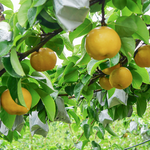
Dan-gam means “sweet persimmon.” It can be eaten while firm and has a crisp texture similar to an apple. Wash it, cut it into wedges, and enjoy it as a snack or dessert.
Fuyu (부유) and Jiro (차랑) are familiar sweet-persimmon varieties in Korea. Their harvest times vary by variety and region, but many appear in markets during autumn.
Hongsi (홍시): Soft, Ripe Persimmon
Hongsi (홍시) is a very ripe persimmon with soft, sweet flesh. The inside can become almost pudding-like, so it is often eaten with a spoon.
Many hongsi are made from astringent persimmons. These taste puckery when firm but become sweet as they ripen. Yeonsi (연시) is ripened after harvest, while hongsi traditionally refers to a persimmon that ripens naturally on the tree.
Daebong (대봉감), a large persimmon variety, is often enjoyed fully ripe as hongsi.
Gotgam (곶감): A Traditional Winter Snack
Gotgam (곶감) is made by peeling astringent persimmons and drying them. As they dry, they become chewy and sweet, with a soft interior. The traditional drying process takes time and care.
Before refrigeration and today’s wide choice of snacks, dried persimmons were a way to preserve the autumn harvest and enjoy fruit during winter. They were also served to guests and saved for special occasions. Sangju (상주) in Gyeongsangbuk-do is especially famous for gotgam.
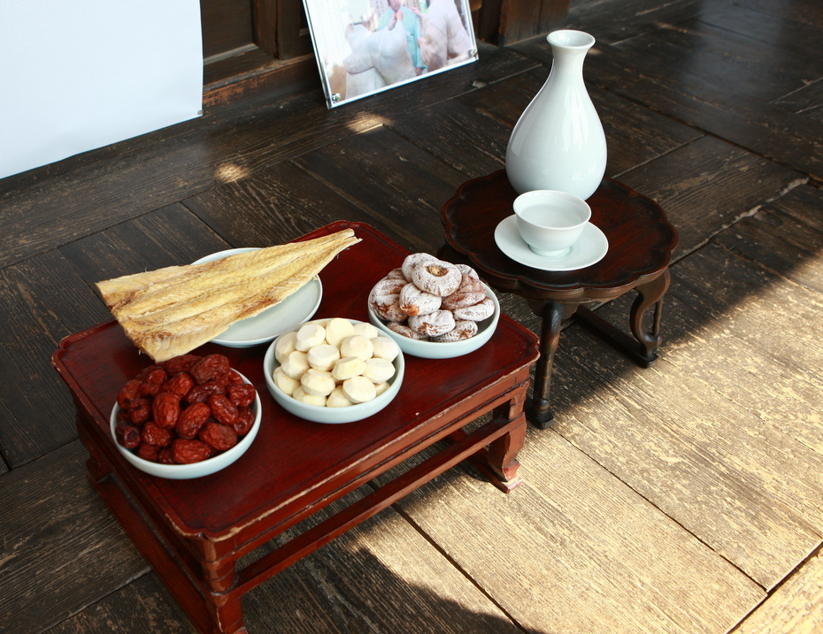
Gotgam is often placed on jesa (제사) and charye (차례) tables as an offering to ancestors. It is also enjoyed during holidays such as Seollal and Chuseok. Customs vary among families and regions, but dried persimmon is a familiar part of traditional Korean food culture.
The Korean Folktale “The Tiger and the Dried Persimmon”
In a traditional Korean folktale, a tiger hears a baby crying inside a house. The mother tries to comfort the baby, but it keeps crying. She says, “Stop crying, or a tiger will come,” but the baby still does not stop. Then she offers the baby a gotgam (곶감), a dried persimmon, and the baby suddenly becomes quiet. The tiger, listening outside, thinks the gotgam must be even scarier than a tiger.
Gam-sikcho (감식초): Persimmon Vinegar
Gam-sikcho (감식초) is vinegar made by fermenting persimmons. It has a tangy flavor with a mild fruitiness. In Korean cooking, it can be used in dressings, sauces, and seasoned dishes in place of other vinegars. Persimmon vinegar is also sold as a regional specialty. Its flavor and acidity can vary by product, so start with a small amount when using it in a recipe.
When Are Persimmons in Season?
Persimmons are closely associated with autumn in Korea. Fresh dan-gam and astringent persimmons are harvested at different times, generally from early fall through late autumn. Gotgam is made after harvest and is especially popular later in the year and during winter.
As persimmons ripen, markets and supermarkets fill with different textures and colors: firm fruit for slicing, soft hongsi for eating with a spoon, and dried gotgam to enjoy as a snack.
Where Are Korean Persimmons Grown?
Sangju is well known for its dried persimmons. Cheongdo (청도) is associated with bansi (반시), a flat-shaped persimmon. Different regions grow different types, so the shape, texture, and best way to enjoy the fruit can vary.
In late autumn, persimmon trees and rows of fruit being prepared for drying are part of the seasonal scenery in some rural areas. Local markets and specialty shops sell fresh persimmons as well as products such as gotgam and persimmon vinegar.
How Koreans Enjoy Persimmons
- Eat dan-gam fresh: Slice the firm fruit and enjoy its crisp, sweet flesh.
- Spoon out hongsi: Eat the soft fruit with a spoon. It can also be chilled before serving.
- Snack on gotgam: Enjoy the chewy dried fruit on its own or with tea.
- Try persimmon desserts: Persimmons are used in rice cakes, sweets, and café desserts.
- Use gam-sikcho in cooking: Add a little persimmon vinegar to dressings or sauces for a tart, fruity note.
When buying persimmons, check which type you are choosing. A firm dan-gam is ready to eat, while a firm astringent persimmon may need to ripen before it tastes sweet.
Persimmon Nutrition
Persimmons contain dietary fiber, vitamin A, vitamin C, and potassium. Fiber contributes to normal digestion, while vitamins and minerals support everyday body functions. Persimmons also contain antioxidant compounds, including carotenoids. Fresh and dried persimmons have different textures and nutritional profiles. Gotgam is sweeter and more concentrated than fresh fruit, so people often enjoy it in smaller portions.
A Taste of Korean Autumn and Winter
Korean persimmons offer several different experiences: crisp dan-gam, soft hongsi, chewy gotgam, and tangy gam-sikcho. They also connect the seasons: fruit ripens on the trees in autumn, some is dried for winter, and gotgam appears on holiday tables and in a familiar folktale. If you visit Korea in fall, look for persimmon trees in the countryside and try the fruit in more than one form.