Korean pears are large, round, crisp, and full of juice. They are often called Korean pears or Asian pears in English. Unlike many Western pears, which soften as they ripen, Korean pears are usually eaten while crisp. They have a clean sweetness and refreshing juice. In Korea, pears are eaten fresh, added to cooking, and made into drinks. They are also traditionally placed on ancestral memorial tables, especially for holidays such as Chuseok and Seollal.
Quick Facts About Korean Pears
- Korean name: 배 (bae)
- Common English names: Korean pear, Asian pear
- Texture: Crisp, firm, and juicy
- Main harvest season: Late summer through autumn, depending on the variety
- Common uses: Fresh fruit, cooking, pear juice, blended pear drinks, holiday gifts, and ancestral memorial offerings
Korean Pears and Western Pears
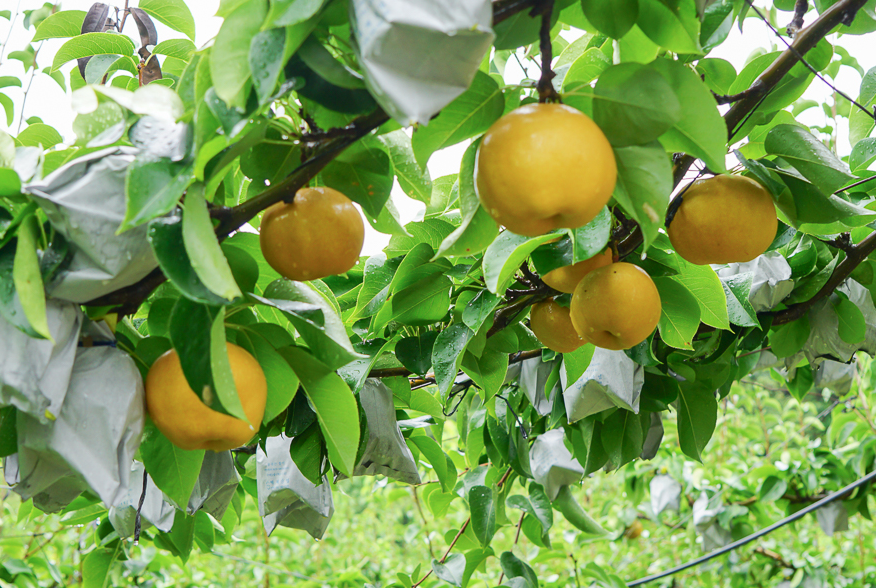
The pears commonly grown in Korea are round, often with brown or golden-brown skin. Their flesh is pale, firm, and crisp. They are generally ready to eat when ripe and are not usually left out to soften.Many familiar Western pears are picked while firm and become softer and more fragrant as they ripen at room temperature. Korean pears stay crisp when ripe, so their texture is closer to a crunchy, juicy fruit than a soft, buttery one.Korean pears are also often quite large. They may be shared after a meal, and carefully selected pears are commonly packed in gift boxes.
Popular Korean Pear Varieties
Shingo (신고)
Shingo is one of Korea’s best-known pear varieties. It is a late-season pear, usually harvested from late September into autumn. The fruit is typically large, crisp, and juicy. Shingo pears are widely sold in supermarkets and fruit shops and are often chosen for holiday gifts.
Wonhwang (원황)
Wonhwang is an early-season variety, typically harvested in August. It is juicy and sweet, and reaches stores before the main Shingo season.
Sinhwa (신화)
Sinhwa was developed as a variety that can be harvested earlier than Shingo. It is known for its sweetness and is grown for the holiday fruit market. Its harvest timing can be useful when Chuseok falls before the main Shingo harvest.
Hwanggeumbae (황금배)
Hwanggeumbae means “Golden Pear.” Unlike the familiar brown-skinned pears, it has yellow-green skin. Pears can vary in color by variety, so the variety name can be more helpful than peel color alone when choosing one.
When Are Korean Pears in Season?
The Korean pear harvest begins in late summer with early varieties such as Wonhwang. Other varieties follow through September and October. Shingo, the best-known variety, is harvested later than early-season pears. The exact timing changes with the variety, growing region, and weather each year. Korean pears are especially associated with autumn, though they may be available outside the main harvest season too.
Pears on Charye Tables
A pear is traditionally one of the fruits placed on a charye (차례) table for ancestral memorial rites. Families prepare these tables on holidays such as Chuseok and Seollal, offering food and fruit in remembrance of their ancestors. Freshly harvested pears are especially fitting for Chuseok, an autumn harvest holiday. The exact arrangement and selection of foods can vary by family and region, but pears are a familiar part of the fruit offering. They are also popular gifts during the holiday season.
How Koreans Eat Pears
Koreans usually peel a pear before eating it. After removing the skin, cut the fruit into wedges and enjoy it fresh. Its crisp texture and refreshing juice make it a popular snack or dessert.
Pears are also used in Korean marinades. Cooks often grate or blend pear and mix it into marinades for bulgogi (불고기), galbi (갈비), and other meat dishes. The pear adds natural sweetness and moisture and helps make the meat tender. Thin slices of pear may also be served with yukhoe (육회), Korean-style seasoned raw beef. The cool, crisp fruit makes a refreshing contrast to the savory beef.
Baejeup (배즙): Korean Pear Juice
Some people in Korea drink baejeup (배즙), or Korean pear juice, when they have a cold. It is not usually an everyday drink. Instead, people may keep a few pouches at home and drink them when they want a mild, sweet pear drink. Baejeup is commonly sold in boxes of small, single-serving pouches. You can find it in some supermarkets and order it online from Korean grocery stores or fruit farms. Some farms also sell juice made from pears they grow themselves. The ingredients vary by product. Some pouches contain pear juice, while others combine pear with doraji (도라지), or balloon flower root. Check the ingredient label to see what is included. Korean pears also contain dietary fiber and vitamin C.
Gala Mandeun Bae (갈아 만든 배)
Gala mandeun bae is a popular Korean pear drink. The name means “crushed pear.” It has a sweet, refreshing pear flavor, and some versions include pear purée or small pieces for texture. It is sold in cans at Korean supermarkets and convenience stores.
Buying and Storing Korean Pears
When shopping, check the variety label if one is available. Korean pears can differ in skin color, size, sweetness, and harvest timing, so a greenish peel does not necessarily mean that the fruit is unripe.
At home, keep pears cool and handle them gently to avoid bruising. Once peeled and cut, serve the slices soon, as the flesh can discolor after exposure to air.
A Crisp Taste of Korean Autumn
Korean pears are more than a sweet, juicy fruit. Their different varieties mark the changing seasons, and the fruit is part of holiday gifting and ancestral memorial traditions. Peel and enjoy one fresh, taste grated pear in a Korean meat marinade, or try a can of Gala mandeun bae to discover another way Koreans enjoy pear.