Korean ginseng, called insam (인삼), is a traditional food ingredient, a regional specialty, and the base for many processed products. It is used in dishes such as samgyetang (삼계탕) and made into red ginseng, tea, liquor, traditional sweets, and health functional foods.
Geumsan (금산), Ganghwa (강화), and Punggi (풍기) are among Korea’s best-known ginseng regions. Each has markets and festivals where visitors can explore local ginseng, foods, and related products. JungKwanJang (정관장), one of Korea’s best-known red ginseng brands, is another familiar part of the country’s ginseng culture.
Quick Facts About Korean Ginseng
- Korean name: 인삼 (insam)
- Scientific name: Panax ginseng
- Famous growing regions: Geumsan, Ganghwa, and Punggi
- Common forms: Fresh ginseng, white ginseng, red ginseng, tea, extracts, and liquor
- Popular dish: Samgyetang, chicken soup with ginseng
- Well-known red ginseng brand: JungKwanJang
What Is Korean Ginseng?
Korean ginseng is the root of Panax ginseng, a perennial plant native to Korea and neighboring parts of northeast Asia. It grows slowly and requires careful cultivation, so farmers leave the roots in the ground for several years before harvesting.
The Korean word insam combines in (人), meaning “person,” and sam (蔘), or ginseng. The name is often associated with the root’s branching shape, which can resemble a human figure.
The word ginseng is used internationally for products made from different ginseng species. When shopping, check the plant name and country or region of origin. Korean ginseng is generally identified as Panax ginseng. www.nccih.nih.gov
A Long History in Korea
Ginseng has been an important Korean specialty for centuries. It was valued as a trade product and used in traditional food and medicine. As wild ginseng became harder to obtain, cultivation developed into a more established agricultural practice. encykorea.aks.ac.kr
People also developed ways to preserve and use the roots. Fresh ginseng, dried white ginseng, and steamed red ginseng have different textures, flavors, and uses.
Korea’s Ginseng Regions and Festivals
Geumsan, Ganghwa, and Punggi are well-known areas for ginseng cultivation and trade. Their regional names refer to where ginseng is grown or sold, rather than to different species.
Geumsan Ginseng (금산인삼)
Geumsan, in Chungcheongnam-do, is one of Korea’s best-known ginseng centers. The Geumsan Ginseng Centre and nearby markets sell fresh ginseng, red ginseng, and herbal products. At the Geumsan Ginseng Museum, visitors can see cultivation tools and displays about ginseng foods and products. www.geumsan.go.kr
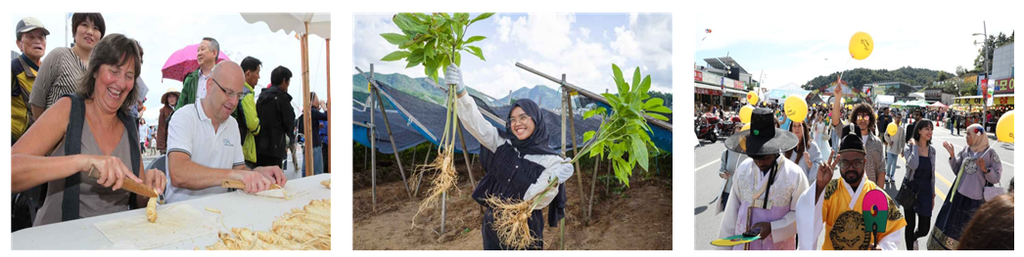
Photo: visitkorea.or.kr
The Geumsan World K-Insam Festival features ginseng foods, products, and activities. Depending on the program, visitors may be able to try experiences such as ginseng harvesting or a red ginseng foot bath. Activities vary from year to year.
Geumsan is also associated with insamju (인삼주), or ginseng liquor. Some versions are brewed with rice, yeast, and ginseng; others are made by steeping ginseng in alcohol. Ingredients and flavor vary by maker. www.korea.net
Ganghwa Ginseng (강화인삼)
Ganghwa Island, in Incheon, is especially associated with six-year-old ginseng. Ginseng cultivation expanded there after people from Gaeseong came to Ganghwa during the Korean War. The island’s soil and coastal climate are also considered suitable for growing ginseng. english.visitkorea.or.kr
The Ganghwa Ginseng Center (강화인삼센터) sells ginseng grown in the region, including fresh and processed products. Visitors can compare products and ask about their origin, growing period, and processing. english.visitkorea.or.kr
Ganghwa has also held the Ganghwa Goryeo Ginseng Festival, featuring local ginseng products and related activities. Whether it is held and what it offers can vary, so check local event information before planning a visit.
Punggi Ginseng (풍기인삼)
Punggi is part of Yeongju, in Gyeongsangbuk-do. Local histories link the start of field cultivation there to 1541, when Ju Se-bung served as magistrate of Punggi. Visitors can browse the Punggi Ginseng Market for ginseng and other regional products. english.visitkorea.or.kr
Yeongju hosts the Yeongju Punggi Insam Festival, which introduces local ginseng through events and visitor programs. Activities vary from year to year.
Fresh, White, and Red Ginseng
Ginseng product names often describe how the root has been processed.
- Fresh ginseng (susam, 수삼): Newly harvested ginseng. It is used in cooking and should be stored according to the seller’s instructions.
- White ginseng (baeksam, 백삼): Ginseng that has been cleaned and dried.
- Red ginseng (hongsam, 홍삼): Ginseng that has been steamed and then dried.
Steaming and drying change the root’s color, texture, and flavor. Red ginseng is sold as whole roots, slices, tea, extract, jelly, candy, and drinks. Products differ in the amount and form of ginseng they contain, so check the ingredient list.
How Red Ginseng Is Made
Red ginseng production uses several pieces of equipment rather than one single “red ginseng machine.” Fresh roots are washed and sorted, then steamed in a large unit called a jeungsamgi (증삼기). They are dried in drying rooms or with drying equipment. Factories that make red ginseng extract also use extraction and concentration equipment.
A production line may include washers, steamers, natural or mechanical drying rooms, extractors, concentrators, and packaging machines. At some factories, fresh roots are washed, steamed, and dried in dedicated rooms before further processing. kgc.co.kr
Visitors interested in the process can look for a ginseng museum or factory tour. Some facilities offer tours by reservation, and online factory tours may show areas such as the cleaning, steaming, and drying rooms. Availability varies by facility.
JungKwanJang: A Well-Known Korean Red Ginseng Brand
JungKwanJang (정관장) is the representative ginseng and red ginseng brand of Korea Ginseng Corporation, or KGC. KGC traces its history to 1899, when the Samjeonggwa department was established within the Korean Empire’s royal palace to oversee ginseng. JungKwanJang products include red ginseng concentrates, drinks, stick packs, and snacks. kgc.co.kr
People new to red ginseng may find ready-to-drink pouches or stick packs convenient, while others choose concentrated extract or whole-root products. JungKwanJang products are not all the same type of food: ingredients, ginseng content, directions for use, and health functional food labeling vary by product. Check the package before buying.
JungKwanJang products are sold at its stores and through retailers such as department stores and duty-free shops. They are also available through Jeongmall, the brand’s official online mall. Product selection may vary by store and online channel.
How Do People Usually Consume Ginseng?
A common everyday option is red ginseng extract or a red ginseng drink sold in small stick packs or pouches. These are convenient to take and widely available as health functional food products. Red ginseng pouches are a common type of ginseng product in Korea. doi.org
People also eat ginseng in samgyetang, brew it as tea, or sometimes slice it and serve it with honey. Ginseng liquor, insam jeonggwa, candy, and jelly are other ways to enjoy its flavor, often as treats or gifts.
Ginseng Foods, Drinks, and Health Products
Ginseng is used in soups, tea, liquor, traditional sweets, and packaged products.
- Samgyetang (삼계탕): A young whole chicken soup commonly prepared with ginseng, garlic, jujubes, and glutinous rice.
- Ginseng tea (insam-cha, 인삼차): Made by simmering ginseng or mixing ginseng powder or extract with hot water. It has an earthy, slightly bitter flavor. It is sold as root slices, tea bags, powder, or ready-to-drink pouches. Ginseng tea is not automatically a health functional food; check the label.
- Insamju (인삼주): Ginseng liquor, either brewed with ginseng or made by steeping ginseng in alcohol. It is an alcoholic drink, not a health supplement.
- Insam jeonggwa (인삼정과): Ginseng slowly simmered in sugar or rice syrup until glossy and chewy. It is a traditional Korean confection often served on special occasions.
- Ginseng candy (insam-satang, 인삼사탕): Hard candy flavored with ginseng or red ginseng. The amount of ginseng varies by product.
- Ginseng jelly (인삼젤리): A chewy snack that may contain ginseng or red ginseng extract. Its sweetness can balance ginseng’s earthy, slightly bitter flavor.
- Red ginseng health products: Concentrates, drinks, powders, tablets, capsules, and stick packs. Some are classified as health functional foods, while others are regular foods.
Products that contain ginseng are not all health functional foods. In Korea, check the package for the health functional food label and its functional information. Regular tea, candy, and jelly do not automatically carry the same functional claims.
Where to Buy Korean Ginseng
Ginseng is sold at regional markets and specialty centers, as well as supermarkets, health-food shops, and online stores.
- Geumsan: The Geumsan Ginseng Centre and nearby markets sell fresh ginseng, red ginseng, herbal products, and ginseng foods. Online services also provide product and market information.
- Ganghwa: The Ganghwa Ginseng Center sells Ganghwa-grown ginseng and processed products.
- Punggi: The Punggi Ginseng Market offers locally associated ginseng and regional products.
- JungKwanJang stores and online mall: These sell red ginseng concentrates, pouches, stick packs, drinks, and gift sets.
- Supermarkets and specialty shops: These commonly carry red ginseng drinks, extracts, ginseng tea, candy, jelly, and gift sets. Fresh ginseng may be available seasonally.
- Online stores: Regional cooperatives, ginseng specialty shops, and general online marketplaces sell fresh ginseng, red ginseng products, ginseng liquor, tea, jeonggwa, candy, and jelly. Before ordering, check the seller, origin, ingredients, processing method, and shipping and storage instructions.
Fresh roots are often sold by weight or in prepared packages. Processed products such as extracts, stick packs, tea, and sweets are easier to store and carry, making them popular gift choices.
What Research Says About Ginseng’s Effects
Some human studies suggest that Asian ginseng may help reduce general fatigue. Research has also suggested possible benefits for certain cognitive functions in middle-aged adults. Studies are often small or short, however, and results are not consistent for every proposed use.
In Korea, qualifying red ginseng health functional foods may carry approved claims that they can help support immune function, reduce fatigue, improve blood flow through inhibition of platelet aggregation, support memory, and provide antioxidant effects. These claims apply to products that meet the relevant standards and labeled serving amounts. They do not mean that ginseng prevents or treats disease.
Red ginseng may affect blood sugar and blood clotting, and it can interact with some medicines. People taking diabetes medication or anticoagulants, or those who are pregnant or breastfeeding, should consult a healthcare professional before using concentrated ginseng products.