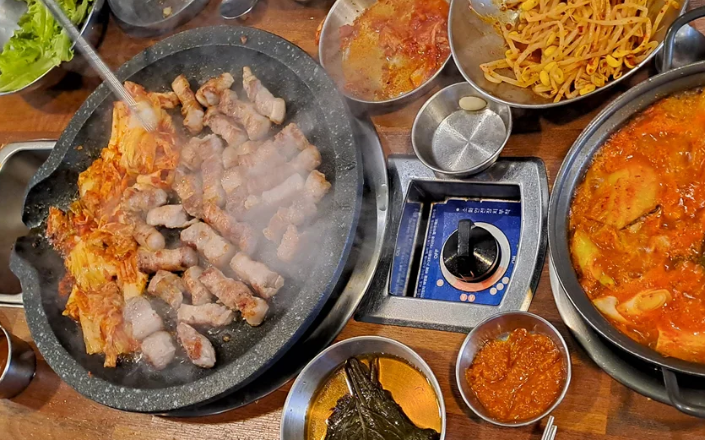

Samgyeopsal (삼겹살) is one of the most popular dishes in Korean BBQ. It consists of thick slices of pork belly grilled directly at the table.
The name comes from how the meat looks. In Korean, sam means “three” and gyeop means “layer.” The name refers to the visible layers of meat and fat in pork belly.
Unlike bacon, samgyeopsal is usually fresh pork. It is not cured or smoked. The meat is generally grilled with little or no seasoning, then eaten with sauces, vegetables, kimchi, and other Korean BBQ side dishes.
For first-time visitors to Korea, samgyeopsal is one of the easiest Korean BBQ dishes to try. Once you understand how a Korean barbecue restaurant, or gogitjip (고깃집), works, ordering and eating are straightforward.
Samgyeopsal is also a social food. It is one of the most common choices when people want to get together casually. Friends eat it after work, families eat it on weekends, and coworkers eat it at company dinners. Students eat it after exams, and couples choose it for relaxed dates. People also grill it at pensions, campsites, and outdoor gatherings.
It is not formal food and does not require special table manners, which makes it easy for people to relax.
The meal itself involves everyone at the table. Someone watches the meat, someone flips it, and someone cuts it. Others move cooked pieces to the edge of the grill, pass lettuce, pour drinks, or point out which pieces are ready. People talk while the meat cooks.
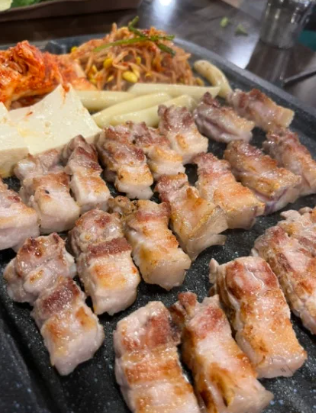
Pork Cuts Commonly Eaten in Korean BBQ
Samgyeopsal is the most familiar pork cut, but Korean BBQ restaurants often offer several different cuts.
Samgyeopsal (삼겹살) — Pork Belly
Samgyeopsal is pork belly with alternating layers of meat and fat. It is rich, juicy, and one of the most popular choices at Korean BBQ restaurants.
Moksal (목살) — Pork Neck
Moksal comes from the neck and shoulder area. It generally contains less visible fat than samgyeopsal and has a firm, meaty texture.
Hangjeongsal (항정살) — Marbled Pork Cut
Hangjeongsal is a highly marbled cut from around the pig’s neck. It is tender, rich, and slightly chewy.
Galmaegisal (갈매기살) — Pork Diaphragm
Galmaegisal comes from the area around the diaphragm. It is relatively lean and has a strong, meaty flavor.
Ogyeopsal (오겹살) — Pork Belly with Skin
Ogyeopsal is similar to samgyeopsal but includes the skin, creating an additional layer. It is particularly associated with Jeju-style pork dishes.
If this is your first Korean BBQ experience, samgyeopsal is a simple place to start. You can try other cuts on a later visit and compare their textures and flavors.
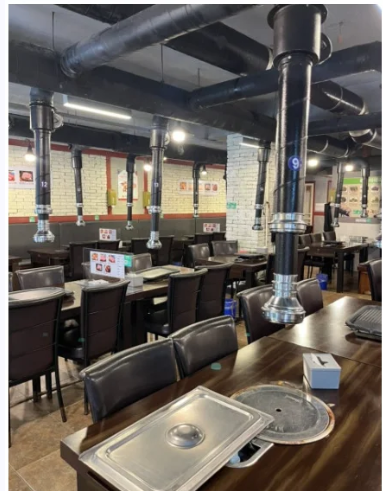
Your First Korean BBQ Restaurant Experience
A typical Korean BBQ restaurant has a grill built into the table or placed on top of it. A ventilation hood is often positioned above the grill to remove smoke.
1. Take a Seat
After you sit down, you will usually see a grill in the middle of the table. Some restaurants have a ventilation hood directly above it. If possible, choose a table with good ventilation, especially if you are not used to the smoke and smell from grilling meat.
2. Order the Meat
Samgyeopsal is usually ordered by the serving rather than by individual slices. Minimum orders vary by restaurant. Some restaurants may require two servings, even if there are only two people eating. Before ordering, check the price and the weight of one serving. Serving sizes can vary considerably between restaurants.
You can simply say:
“Samgyeopsal juseyo. (삼겹살 주세요.)”
“Samgyeopsal, please.”
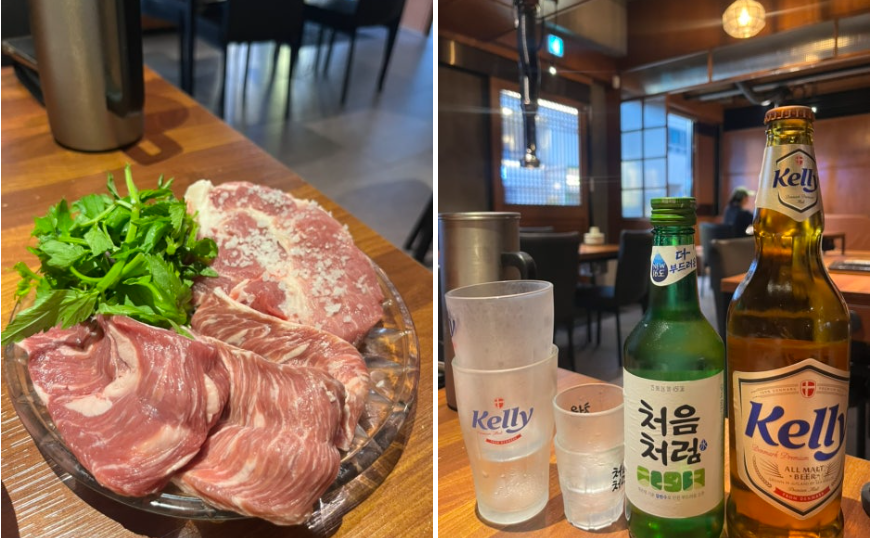
3. Side Dishes and Vegetables Arrive
Korean BBQ usually comes with several side dishes, or banchan (반찬).
Common items include:
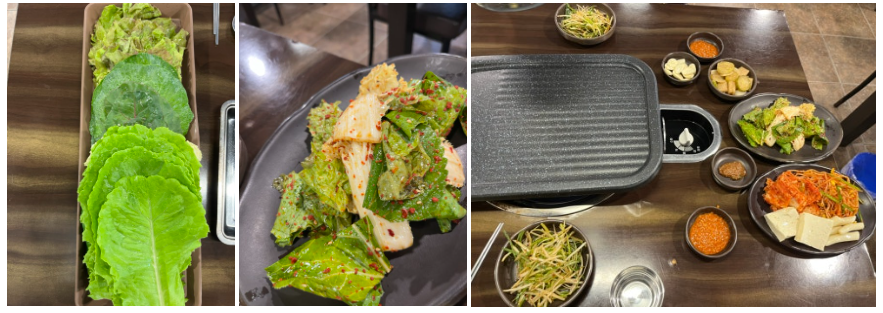
- Kimchi (김치)
- Kongnamul (콩나물) — seasoned bean sprouts
- Pajeori (파절이) — seasoned shredded green onion
- Ssamjang (쌈장) — dipping sauce
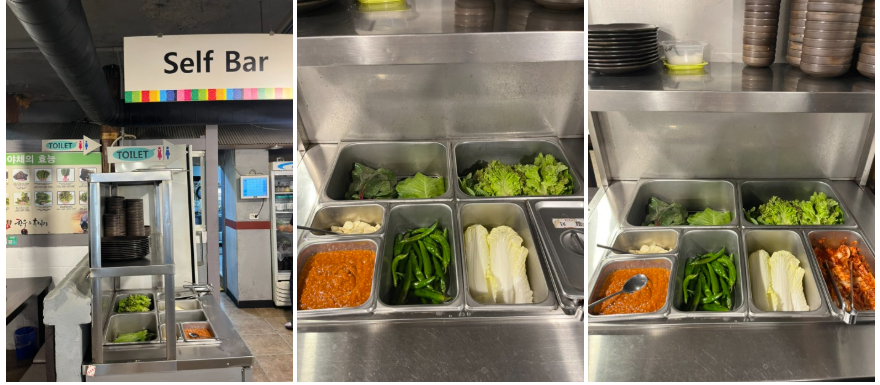
- Sangchu (상추) — lettuce
- Kkaennip (깻잎) — perilla leaves
- Garlic
- Green chili peppers
At many restaurants, you can ask for additional vegetables or side dishes.
4. Heat the Grill and Add the Meat
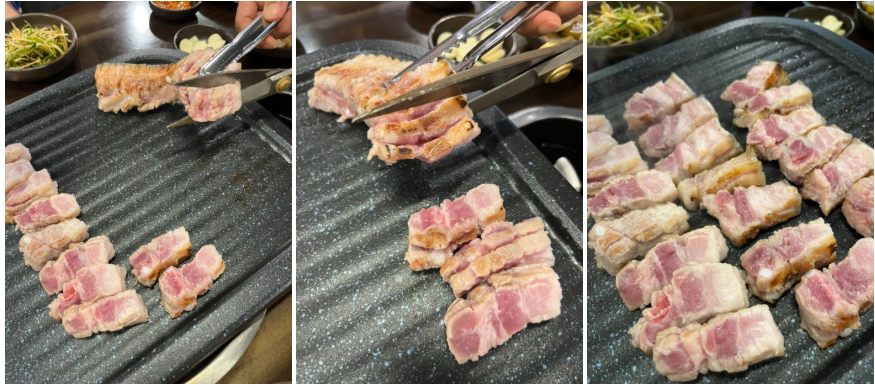
Depending on the restaurant, staff may heat the grill, place the meat on it, and sometimes cut or turn the meat for you. At other restaurants, you grill everything yourself.
If you are unsure, ask:
“Guwo juseyo? (구워 주세요?)”
“Could you grill it for us?”
You can also ask:
“Jikjeop guwoya haeyo? (직접 구워야 해요?)”
“Do we grill it ourselves?”
5. Grill and Eat the Meat
Samgyeopsal is normally grilled until fully cooked and then cut into bite-sized pieces. You can eat the grilled pork simply with salt or a dipping sauce. You can also make ssam by wrapping the meat in lettuce or perilla leaves with vegetables and sauce.
5. Add Rice, Stew, or Noodles
You do not have to order everything at the beginning.
Many people order additional dishes while eating, such as:
- Bap (밥) — rice
- Doenjang-jjigae (된장찌개) — fermented soybean paste stew
- Naengmyeon (냉면) — Korean cold noodles
- Makguksu (막국수) — cold buckwheat noodles
If you plan to finish with fried rice, you may not need to order much rice at the beginning.
6. Finish with Fried Rice
Some Korean BBQ restaurants offer bokkeumbap (볶음밥), or Korean fried rice, as a final course. After most of the meat has been eaten, the staff may use the remaining meat, kimchi, and rendered pork fat to make fried rice directly on the grill. A typical version may include rice, kimchi, small pieces of meat, gim-garu (김가루, dried seaweed flakes), and sesame oil. Some restaurants prepare it for you, while others expect you to mix and cook it yourself.
7. Pay the Bill
Meat, rice, stews, noodles, and drinks are usually charged separately. Some restaurants may also have additional charges, such as a table-setting fee, so check the menu if you are unsure.
How to Grill Samgyeopsal
Grilling the meat properly makes a noticeable difference.
Heat the Grill Well
The grill should be hot before you start cooking. If the surface is not hot enough, the meat may release too much moisture instead of browning properly.
Do Not Flip the Meat Constantly
Let one side cook until it is well browned before turning it. There is no need to keep flipping the meat every few seconds. The exact cooking method can vary depending on the grill, the thickness of the pork, and the restaurant.
Cut the Meat After It Has Cooked
Thick pieces of samgyeopsal are often grilled first and then cut into smaller pieces. Kitchen scissors are commonly used in Korean BBQ restaurants. Using scissors to cut grilled meat at the table is completely normal.
Grill Vegetables in the Pork Fat
The rendered fat from samgyeopsal can be used to grill other ingredients.
Common choices include:
- Kimchi
- Garlic
- Onion
- Green onion
- Mushrooms
- Bean sprouts
Grilled kimchi is especially popular because the heat and pork fat change its texture and flavor.
Do Not Let Too Much Fat Build Up
Samgyeopsal can release a considerable amount of fat. Some Korean BBQ grills have a sloped surface or a drain that allows excess fat to run away from the cooking area. If the grill becomes too greasy or smoky, staff may replace the grill or adjust it.
Sauces and Side Dishes for Samgyeopsal
Ssamjang (쌈장)
Ssamjang is one of the most important sauces for samgyeopsal. It is a thick Korean dipping paste usually made from doenjang (fermented soybean paste), gochujang, garlic, sesame oil, and other seasonings. The flavor is salty, savory, slightly spicy, slightly sweet, and deeply fermented.
Salt and Sesame Oil
Another classic dip for samgyeopsal is salt mixed with sesame oil. It is simpler than ssamjang and does not cover the taste of the meat as much. Instead, it brings out the meat’s own flavor. The salt makes the pork taste more like pork, and the sesame oil adds a nutty aroma. Some people like to use this dip for the first bite because it lets them taste the meat more clearly. It works especially well with high-quality pork.
Chogochujang (초고추장)
Chogochujang (초고추장) is a sauce made by mixing gochujang with vinegar and sugar. Some versions also add garlic or sesame seeds. The taste is sweet, sour, and spicy, and the sauce is thinner and brighter than ssamjang. Some samgyeopsal restaurants serve chogochujang as a dipping sauce. Its sour, spicy flavor cuts through the fat of the pork and makes the meat taste lighter. A light dip is enough, because the sauce can cover the taste of the meat.
Meljeot (멜젓)
Meljeot is a fermented anchovy-based dipping sauce often served with pork, particularly in Jeju-style restaurants. It may be served with garlic or green chili peppers to add more flavor.
Pajeori (파절이)
Pajeori (파절이) is another common side dish for samgyeopsal. It is made with thinly sliced green onions seasoned with ingredients such as chili flakes, vinegar, soy sauce, sugar, and sesame oil. The taste is sharp, fresh, slightly spicy, and a little sweet and sour.
Pajeori goes well with pork belly because it cuts through the fat. The fresh, slightly acidic flavor balances the richness of the meat and makes it feel less heavy. Some people put pajeori in their ssam, while others eat it on its own between bites of meat.
Garlic
Garlic is almost always on the table when people eat samgyeopsal. Some people eat it raw, but many grill it. Garlic can go directly on the grill or cook in a small metal cup with sesame oil. As it cooks, it becomes softer, sweeter, and less sharp. Grilled garlic with samgyeopsal is a classic combination.
Garlic cuts through the fat of the pork and adds aroma. It is also commonly added to ssam, or lettuce wraps. Raw garlic gives the wrap a sharp bite, while grilled garlic adds a mild sweetness.
Onion
Thinly sliced raw onion adds crunch and freshness.
Myeongi-namul (명이나물) and Other Greens
Some restaurants serve seasoned wild greens or pickled vegetables as another way to eat the meat. Myeongi-namul is especially popular with grilled meat and has a savory, slightly sweet and sour flavor.
How to Eat Samgyeopsal: Ssam
One of the most common ways to eat Korean BBQ is ssam (쌈), which means wrapping meat and other ingredients in a leafy vegetable. A basic ssam has a leaf, a piece of meat, a little sauce such as ssamjang, and extras such as grilled garlic or pajeori.
Lettuce, or sangchu (상추), and perilla leaves, or kkaennip (깻잎), are the most common leaves for ssam. Lettuce is crisp and fresh, with a mild, watery taste. It goes well with rich pork and almost any combination of ingredients.
Perilla leaves have a stronger flavor. It is herbal, a little minty, and a little grassy, and it goes especially well with fatty meat. Some visitors like it right away, while others need time to get used to it. Most people use just one kind of leaf for each wrap, choosing lettuce or perilla depending on their taste. Some people put both leaves together.
A simple way to make a ssam is:
- Place a lettuce or perilla leaf in your hand.
- Put a small amount of ssamjang in the center.
- Add pajeori or grilled garlic.
- Add a piece of grilled samgyeopsal.
- Fold the leaf around the ingredients.
- Eat it in one bite.
Try not to make the wrap too large. A smaller ssam is easier to eat and lets you taste all the ingredients together.
Try Samgyeopsal in Different Ways
You do not have to eat every piece of pork the same way. Start with a piece of grilled samgyeopsal dipped in salt and sesame oil so you can taste the meat itself. Then try it with:
- Lettuce or perilla leaves with ssamjang
- Pajeori
- Kimchi, either fresh or grilled on the side of the pan in the pork fat
- Grilled garlic
- Myeongi-namul
- Chogochujang or meljeot, if the restaurant serves them
The same pork can taste quite different depending on what you eat it with.
The Final Course: Korean BBQ Fried Rice
Bokkeumbap (볶음밥) is a common way to finish a Korean BBQ meal. After most of the meat has been eaten, the remaining pork fat and ingredients can be used to make fried rice on the grill.
A typical Korean BBQ fried rice may contain
- Rice
- Kimchi
- Leftover meat
- Gim-garu (김가루) — dried seaweed flakes
- Sesame oil
The rice is spread across the grill and cooked until the bottom becomes slightly crisp. Some restaurants have staff prepare the fried rice at the table. At others, you may need to do it yourself. If you want fried rice, order it after you have finished most of the grilled meat.
Other Ways to Finish a Korean BBQ Meal
Fried rice is not the only option.
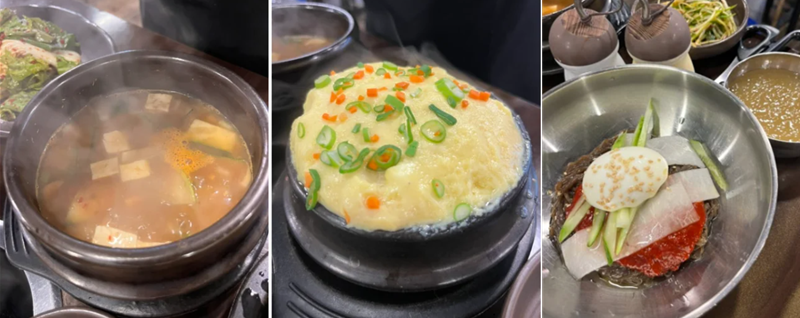
Doenjang-jjigae (된장찌개)
Doenjang-jjigae is a Korean stew made with fermented soybean paste. It is commonly eaten with rice during or after a Korean BBQ meal.
Gyeranjjim (계란찜)
Gyeranjjim is a Korean steamed egg dish made by cooking beaten eggs with water or broth until soft and fluffy. It has a mild, savory flavor and a soft texture. It is often served in a hot stone bowl or earthenware pot and may arrive bubbling at the table. The mild flavor makes it a good side dish with salty and fatty grilled pork.
Naengmyeon (냉면)
Naengmyeon is a cold noodle dish with a refreshing, often tangy flavor. The cold noodles provide a contrast to the hot and fatty grilled pork.
What to Know Before You Order
A few things can make your first Korean BBQ experience easier.
Check the Minimum Order
Some restaurants require a minimum order, such as two servings of meat. This varies by restaurant.
Check the Weight of One Serving
Do not assume that one serving always means the same amount.
Check both the price and the weight listed on the menu before ordering.
Ask for More Vegetables
Many restaurants allow customers to request additional vegetables or side dishes.
You can say:
“Sangchu jom deo juseyo. (상추 좀 더 주세요.)”
“A little more lettuce, please.”
“Kkaennip jom deo juseyo. (깻잎 좀 더 주세요.)”
“A little more perilla leaves, please.”
Check Whether Staff Grill the Meat
Some Korean BBQ restaurants have staff who grill, cut, and turn the meat for customers. Others are completely self-service. If this is your first Korean BBQ experience, a restaurant where staff handle the grilling can make the process easier.
Useful Korean Words at a Korean BBQ Restaurant
Samgyeopsal (삼겹살) — Pork belly
Moksal (목살) — Pork neck
Hangjeongsal (항정살) — Marbled pork cut
Galmaegisal (갈매기살) — Pork diaphragm
Ogyeopsal (오겹살) — Pork belly with skin
Ssam (쌈) — Wrapping meat and other ingredients in a leaf
Ssamjang (쌈장) — Dipping sauce for ssam
Pajeori (파절이) — Seasoned shredded green onion
Guwo juseyo (구워 주세요) — Please grill it for us
Deo juseyo (더 주세요) — More, please
Bokkeumbap (볶음밥) — Korean fried rice
All-You-Can-Eat Korean BBQ
Another option for trying Korean BBQ is an all-you-can-eat (무한리필) Korean BBQ restaurant. At these restaurants, you pay a set price and can usually order additional meat during your meal instead of paying for each serving separately. Many offer several types of pork, so you can try samgyeopsal along with other cuts such as moksal, hangjeongsal, or daepae-samgyeopsal (대패삼겹살), which is thinly sliced pork belly.
The exact rules vary by restaurant. Some restaurants have a time limit, while others may have different rules for meat, side dishes, drinks, or additional items. Check the restaurant’s menu and rules before ordering.
Some Korean all-you-can-eat BBQ chains and restaurants include:
Gogi Ssalong (고기싸롱)
Gogi Ssalong is an all-you-can-eat Korean BBQ restaurant offering several types of grilled meat, including samgyeopsal, moksal, pork ribs, chicken, and pork skin. The exact selection can vary by location. It is a useful option if you want to try different types of Korean grilled meat rather than ordering only one cut.
Myeongnyun Jinsa Galbi (명륜진사갈비)
Despite the word galbi (갈비), which means ribs, in its name, Myeongnyun Jinsa Galbi offers more than pork ribs. The brand’s current menu includes tong-samgyeopsal (통삼겹살), pork neck, pork ribs, and several other grilled meats as part of its all-you-can-eat concept. Menu selections can vary by location, so check the specific branch before visiting.
Myeongnyun Jinsa Galbi Official Website
Eongteori Saenggogi (엉터리생고기)
Eongteori Saenggogi is a Korean BBQ brand with multiple locations in Korea. The company operates Eongteori Saenggogi and other all-you-can-eat meat restaurant concepts. Some locations are in areas popular with visitors, including Myeongdong. If you are looking for a Korean BBQ restaurant where you can grill meat yourself, check the menu and all-you-can-eat options at the specific branch before visiting.
Eongteori Saenggogi Official Website
Gangnam Dwaeji Sanghoe (강남 돼지상회)
Gangnam Dwaeji Sanghoe is an all-you-can-eat pork BBQ restaurant in the Gangnam area, with additional locations including Myeongdong and Hongdae. Its current menu includes an unlimited pork assortment with samgyeopsal, moksal, hangjeongsal, galmaegisal, usamgyeop, and daepae-samgyeopsal. The menu also lists pork skin, pork bulgogi, vegetables, and other items.