
Daeboreum (정월대보름) is the first full moon day of the Korean lunar new year, and one of Korea’s most important traditional days. While Seollal opens the new year in winter and Chuseok closes the farming year in autumn, Daeboreum stands at the start of spring — the point where the farming year begins. At its heart are the ideas found in early-spring observances everywhere: health for the year ahead, a good harvest, and the well-being of the village as a whole.
Unlike Seollal and Chuseok, Daeboreum is not an official public holiday in Korea today. It is a traditional date that Koreans still observe at home and in smaller town events. Families cook the day’s special foods, crack nuts in the early morning, and in places where the tradition survives, neighbors gather in the evening to welcome the first full moon together.
What Does “Daeboreum” Mean?
The name breaks into two parts. “Jeongwol” (정월) means the first month, and “boreum” (보름) means the fifteenth day, when the moon is full. Together, Daeboreum (대보름) means “the big fifteenth” — the day of the new year’s first full moon. In Chinese characters the day is written 상원 (Sangwon), “the upper prime,” the first of the three prime days in an old three-way year cycle.
The full moon is the center of the day’s meaning. In farming society, a full moon was a symbol of abundance — round and completely filled out, like a grain head before harvest. Because this was the first full moon after Seollal, Koreans read it as a sign of the year to come: a full moon meant a full year. The day was also seen as the starting point of the farming year, so its customs are heavily aimed at a good harvest and at keeping the family healthy through the coming summer.
Because of this, Daeboreum customs are mostly wishes in action: eat certain foods to stay well, burn certain things to clear away harm, and welcome the full moon to draw its luck.
When Is Daeboreum?
Daeboreum follows the lunar calendar, so the date changes every year. It falls on the 15th day of the 1st lunar month — the first full moon after Seollal. On the solar calendar it usually lands in February, and in some years — including 2026 — in early March.
Because Daeboreum is not a public holiday, there is no long weekend and no great national migration. Families keep the day with food and small home rituals, and the evening observances are mostly carried on by festivals, temples, and village communities.
What Koreans Do During Daeboreum
Daeboreum customs are shaped around one day broken into two halves: the quiet, careful morning inside the home, and the lively, communal evening under the moon. The details vary by family and region, but the observances below are the most widely remembered.
The Morning Ritual: Bureom and Gwibalkisul
The day begins quietly, before the rest of the household stirs. A person who wakes first cracks a hard-shelled nut — chestnuts, walnuts, or pine nuts — in the teeth. This is bureom (부럼). The word puns on “buseureom” (부스럼), a boil or skin sore, so cracking nuts at dawn was a wish that no such sore would appear on the body for the year. The sound of biting through the shell was believed to drive off misfortune.
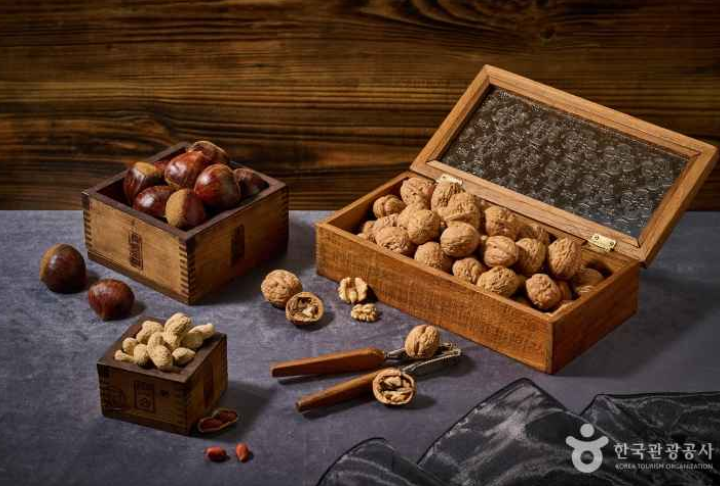
Photo: Korea Tourism Organization
Alongside the nuts comes gwibalkisul (귀밝이술), a cup of unheated cheongju, a clear rice wine, taken in the morning. Its name means “ear-brightening wine”: drinking it chilled was a wish that the ears stay sharp and that only good news reach the household through the year. In many homes the two are done together, as one quiet opening to the day.
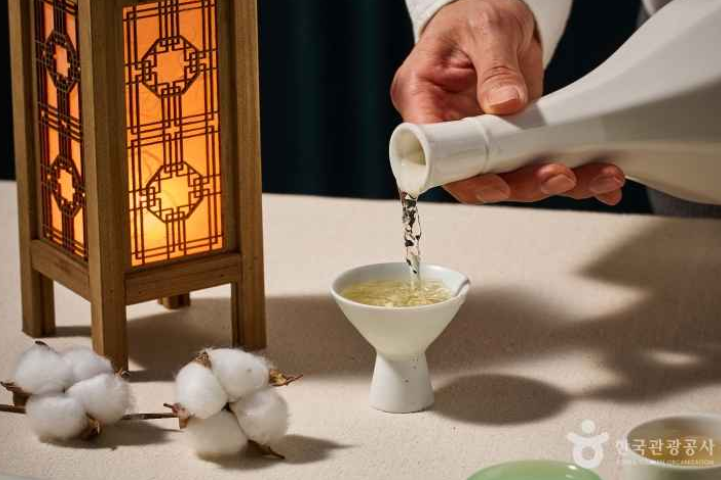
Photo: Korea Tourism Organization
Dalmaji and Daljip Taeugi: Welcoming and Burning the Moon
In the evening, families and villages turn toward the moon. Dalmaji (달맞이) is the custom of going to a high place — a hill or a rooftop — to meet the first full moon as it rises and make a wish for the year.
In village observances, this is joined by daljip taeugi (달집태우기). A structure called a daljip, “moon house,” is built of straw, pine branches, and firewood, often raised on a pole. When the full moon rises, the daljip is set alight. How cleanly and fully it burns was read as a sign of the year’s fortune: a bright, steady burn meant peace for the village and a good harvest ahead.
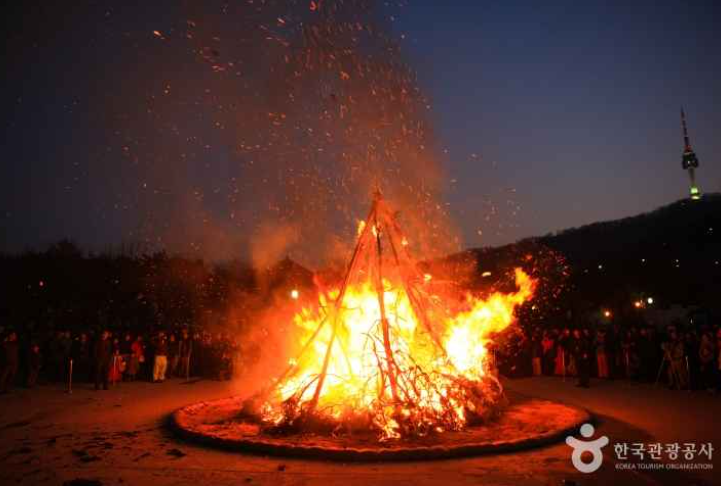
Photo: Korea Tourism Organization
Jwibulnori: Fire in the Fields
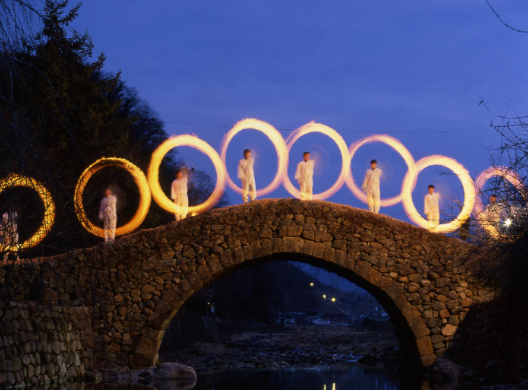
On the night before Daeboreum, some regions practice jwibulnori (쥐불놀이), literally “rat fire play.” Dry grass on the ridges between rice fields is set alight, and burning cans are swung through the air at the end of ropes. The fire burned off the old grass and the eggs of insects that would damage the new crops in spring, returning the ash to the soil. What looks like play was, in a farming calendar, practical field management dressed as a celebration.
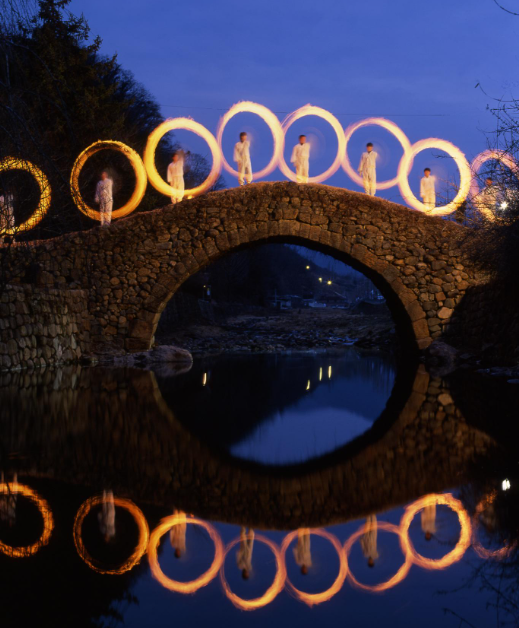
Photo: Korea Heritage Service
Daribapgi: Walking the Bridges
At night, families also practiced daribapgi (다리밟기), walking over bridges. The number of bridges crossed was the point: twelve bridges meant health for all twelve months, and the custom was a wish for strong legs and an untroubled path through the year.
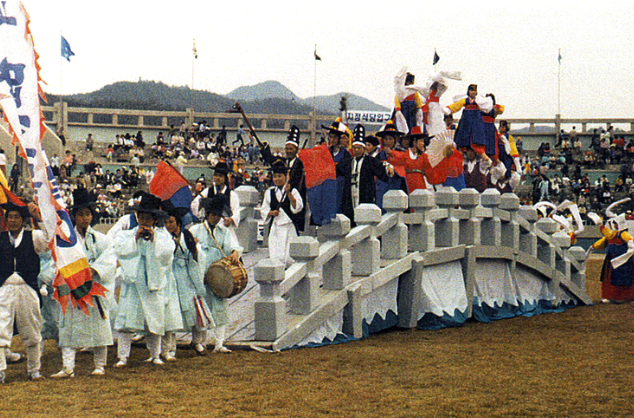
Photo: Korea Heritage Service
Deowipalki: Selling Away the Summer Heat
A lighter custom belongs to the morning. Anyone who met another person before the day’s heat built up would call out the person’s name and say, “Buy my heat” (내 더위 사가세요). By selling the heat away, the speaker hoped to avoid being worn down by the summer sun. In some regions the custom was tied to one’s age — you had to sell your heat that many times.
Daeboreum Food: What’s on the Day’s Table
Daeboreum food is built around the same wishes as its customs. The day’s table is meant to keep the household healthy through the year, and the foods are the ones that were stored or gathered to see the family through late winter and into spring.
Ogokbap (오곡밥): Five-Grain Rice
The centerpiece of the Daeboreum meal is ogokbap, rice cooked with five kinds of grain. The mix varies by region and family; a common version uses glutinous rice, glutinous foxtail millet, glutinous sorghum, red beans, and black beans. The “five” grains carried the wish that all the year’s crops — and especially the family’s own — be plentiful. An old rule held that you should eat ogokbap from at least three homes with different family names, so that the year’s luck would be gathered from several households.
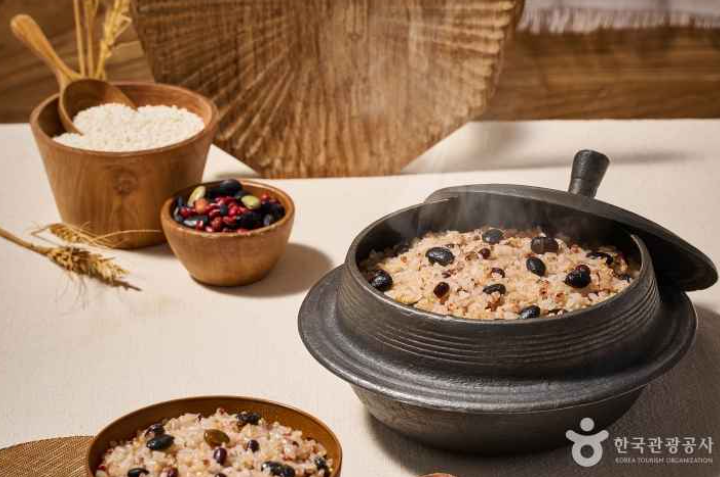
Photo: Korea Tourism Organization
Yukkeun Namul (묵은나물): The Dried Vegetables of the Year Before
With the rice come namul, seasoned vegetables — but on Daeboreum, specifically the dried greens stored the summer before: dried bracken, mushrooms, cucumber and pumpkin slices, eggplant skin, and dried radish leaves. Because these vegetables had been dried and kept through the winter, eating them was a practical wish to have food on hand all through the lean season. It was also believed that eating them would keep the body from suffering the summer heat ahead.
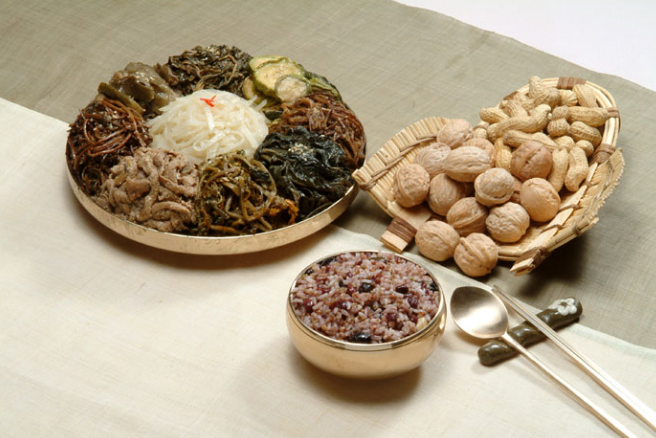
Photo: Korea Tourism Organization
Yakbap (약밥): Sweet Honey Rice
The day’s dessert is yakbap, also called yaksik — sticky rice steamed with honey, chestnuts, jujubes, and pine nuts. Its tradition is old enough to be recorded in the Samguk Yusa, the medieval collection of Korean history and legend, where the dish is tied to a story about a crow that saved a Silla king on the 15th day of the first month. Because of such stories, yakbap came to be remembered as food of good fortune.
A Full Moon, a Full Year
Daeboreum brings the Korean year its first full moon, and with it a set of wishes for the months ahead: no skin sores, sharp ears, strong legs, a cool summer, and fields that would burn bright at harvest. Unlike the great family migrations of Seollal and Chuseok, it is a quieter day — but the same belief holds. Eat the five grains, crack a nut at dawn, and greet the round moon, and the year begins in full. It is a custom Korean families have carried on for centuries, at the hinge between winter and the farming spring.