
Kimbap (김밥), also spelled gimbap, is one of Korea’s most popular everyday foods. It is a Korean rice roll made with seasoned rice and various fillings wrapped in gim, or dried seaweed. The roll is sliced into bite-sized pieces and is commonly eaten as a quick meal, packed lunch, picnic food, or casual snack.
Kimbap is easy to find throughout Korea. It is sold at bunsikjip (분식집), or casual Korean snack restaurants, dedicated kimbap restaurants, traditional markets, neighborhood eateries, and convenience stores. It is also relatively inexpensive, filling, easy to carry, and quick to eat, making it a practical meal for both locals and visitors.
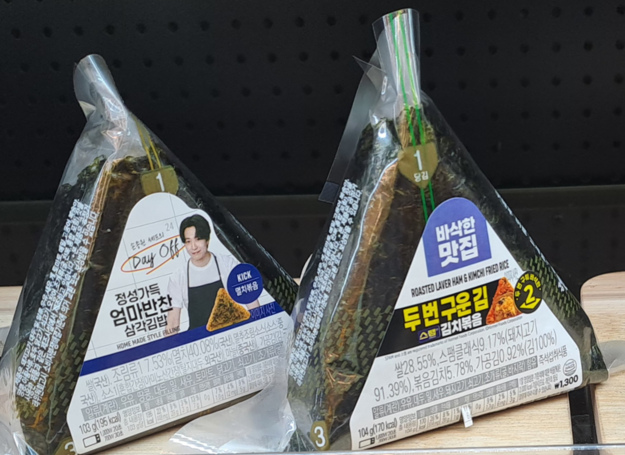
There are many types of kimbap, including vegetable kimbap, tuna kimbap, beef kimbap, bulgogi kimbap, pork cutlet kimbap, kimchi kimbap, cheese kimbap, and the regional specialty known as Chungmu Kimbap. Convenience stores also sell Samgak Kimbap, a triangular version with specially designed packaging.
In this guide, you will learn what kimbap is, what ingredients are commonly used, how the main types differ, how Koreans usually eat it, and where to find kimbap in Korea.
What Is Kimbap?
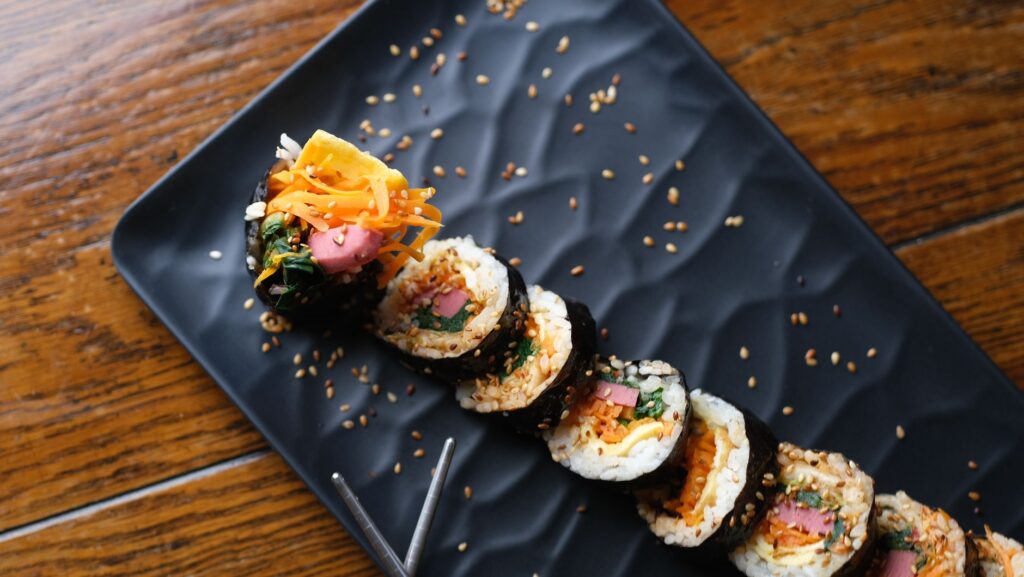
The word gim (김) means dried seaweed, while bap (밥) means rice. To make kimbap, rice is spread over a sheet of gim. Various fillings are placed on top, and the ingredients are rolled tightly before the roll is sliced.
A basic kimbap commonly contains egg, carrot, spinach, cucumber, burdock root, yellow pickled radish (단무지), and ham. The rice is usually seasoned with sesame oil and salt.
Other common fillings include tuna, beef, bulgogi, pork cutlet, kimchi, cheese, perilla leaves, and various vegetables. The exact ingredients depend on the restaurant and the type of kimbap.
There is no single standard recipe for kimbap. Many restaurants use similar basic ingredients but create different varieties by changing the main filling or adding special ingredients.
Freshly made kimbap is usually served immediately after it is sliced. For takeout, it may be wrapped in aluminum foil or placed in a takeaway container.
Kimbap in Korean Daily Life
Kimbap is commonly eaten for breakfast, lunch, or a light meal. It is easy and quick to eat, relatively inexpensive, and filling enough to serve as a complete meal. Because it usually contains rice, vegetables, egg, and other ingredients such as meat or fish, kimbap can also provide a variety of nutrients in one convenient meal.
For many Koreans, kimbap brings back memories of childhood school picnics. Before a school outing, parents would often prepare and pack freshly made kimbap for their children to take along. These homemade rolls were packed in a lunchbox and eaten with classmates during the picnic.
Kimbap is also associated with travel, family outings, and packed lunches. It can be prepared in advance, carried easily, and eaten without complicated preparation. These qualities have made it a familiar part of everyday Korean food culture.
Common Types of Kimbap
Most kimbap restaurants offer several varieties. The basic ingredients may remain similar, while the main filling changes.
The most common varieties are often named after their main filling. Yachae Kimbap contains vegetables, Chamchi Kimbap contains tuna, Sogogi Kimbap contains beef, Bulgogi Kimbap uses bulgogi, Donkatsu Kimbap contains pork cutlet, and Kimchi Kimbap uses kimchi. Chungmu Kimbap is different because it contains plain rice and is served with separate side dishes.
Yachae Kimbap (야채김밥)
Yachae Kimbap is vegetable kimbap and is one of the most basic varieties.
It commonly contains carrot, spinach, cucumber, burdock root, pickled radish, and egg. Some restaurants add ham or other ingredients.
Despite its name, yachae kimbap is not always vegetarian. Customers who avoid meat or animal products should ask about the ingredients before ordering.
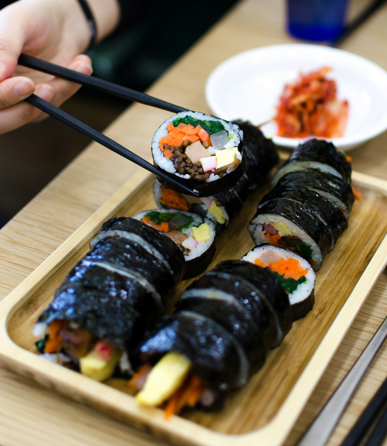
Chamchi Kimbap (참치김밥)
Chamchi Kimbap is tuna kimbap. The tuna is often mixed with mayonnaise, and perilla leaves (깻잎) are commonly added.
It is one of the most widely available varieties at Korean kimbap restaurants.
Sogogi Kimbap (소고기김밥)
Sogogi Kimbap contains seasoned beef together with the vegetables and egg commonly used in kimbap.
The beef may be prepared in different ways depending on the restaurant. In general, sogogi simply means beef.
Bulgogi Kimbap (불고기김밥)
Bulgogi Kimbap uses bulgogi as its main filling. Bulgogi is Korean-style beef marinated in a sweet and savory sauce.
Sogogi Kimbap and Bulgogi Kimbap may look similar, but Bulgogi Kimbap specifically uses beef prepared in the style of bulgogi.
Donkatsu Kimbap (돈가스김밥)
Donkatsu Kimbap contains Korean-style pork cutlet. The cutlet is sliced into strips and rolled together with vegetables and other kimbap ingredients.
Some restaurants also add sauce, cheese, or cabbage.
Kimchi Kimbap (김치김밥)
Kimchi Kimbap uses kimchi as one of its main fillings. Depending on the restaurant, the kimchi may be used directly or stir-fried before being added to the roll.
Stir-fried kimchi gives the kimbap a deeper flavor and reduces some of the moisture in the filling.
Cheese Kimbap (치즈김밥)
Cheese Kimbap includes cheese with the usual kimbap ingredients. Cheddar, mozzarella, or other types of cheese may be used depending on the restaurant.
Cheese is often paired with ham, tuna, or pork cutlet.
Chungmu Kimbap (충무김밥)
Chungmu Kimbap is a regional style of kimbap associated with Tongyeong, which was formerly known as Chungmu.
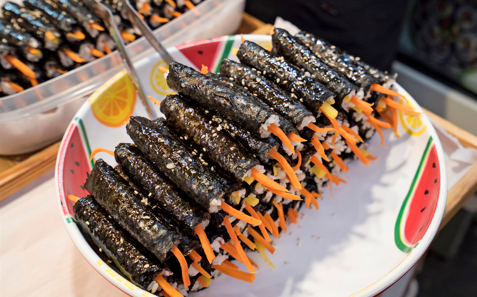
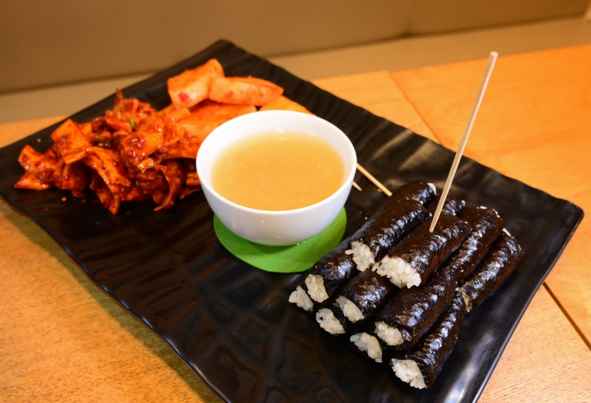
It is different from ordinary kimbap because the roll contains only plain rice wrapped in seaweed. It does not contain the assortment of fillings normally found inside regular kimbap, and the rice is not coated with sesame oil.
Instead, Chungmu Kimbap is served with separate side dishes, traditionally spicy diced radish kimchi and squid salad.
Chungmu Kimbap is traditionally associated with sailors and fishermen in the Tongyeong area. According to local accounts, rice and side dishes were packed separately to help preserve freshness during sea voyages. The dish is still served with rice rolls, squid salad, and radish kimchi today. Korea Tourism Organization
Because its ingredients and serving method are different from standard kimbap, Chungmu Kimbap is best understood as a separate regional style rather than simply another filling variation.
How Kimbap Is Usually Eaten
Regular kimbap is normally sliced into several small pieces before being served. A typical piece is small enough to eat in one bite.
Many people eat each piece whole because the rice and fillings can come apart when the piece is bitten in half. Kimbap is commonly eaten one piece at a time with chopsticks or a fork.
In casual situations, such as when eating takeout, kimbap can also be eaten by hand.
Where to Find Kimbap in Korea
Kimbap is available at many different types of food establishments, so visitors can easily find it throughout Korea.
Bunsikjip (분식집)
A bunsikjip (분식집) is a casual Korean restaurant serving simple meals and snack foods. Kimbap is one of its most common menu items.
Kimbap can be eaten by itself, but it is also frequently ordered with other Korean casual foods such as ramyeon (라면), tteokbokki (떡볶이), and udong (우동).
Tteokbokki is one of the most common foods eaten with kimbap. A popular way to enjoy the two together is to dip a piece of kimbap into the spicy tteokbokki sauce. The mild flavor of the rice and seaweed provides a contrast to the sweet and spicy sauce.
Ramyeon and udong are also frequently ordered with kimbap. Their hot broth makes them a familiar combination at bunsikjip restaurants and kimbap restaurants.
Eomuk (어묵), Korean fish cake often served in a hot broth, is commonly found alongside kimbap at snack restaurants, markets, and street-food stalls.
Mandu (만두), Korean dumplings, may also be ordered as an additional dish. Depending on the restaurant, they may be steamed, boiled, or fried.
Donkatsu, or Korean-style pork cutlet, is also served at some bunsikjip restaurants. It may be ordered as a separate meal or included in dishes such as donkatsu kimbap.
Kimbap Cheonguk (김밥천국) is one familiar example of this type of casual Korean restaurant. The name literally means “Kimbap Heaven” and became widely associated with inexpensive kimbap restaurants in Korea, especially during the 1990s and 2000s.
Restaurants using the Kimbap Cheonguk name are not necessarily part of one unified franchise. Ownership, menus, and prices can vary by location.
These restaurants typically offer several types of kimbap along with ramyeon, tteokbokki, mandu, donkatsu, stews, and other simple Korean dishes. For visitors, a Kimbap Cheonguk-style restaurant is a practical place to experience kimbap as an inexpensive everyday meal.
Kimbap Restaurants
Many restaurants specialize in kimbap and offer several varieties on the same menu. Vegetable, tuna, beef, bulgogi, pork cutlet, and kimchi kimbap are commonly available.
Some restaurants also offer premium versions using seafood, specialty vegetables, different types of meat, or larger portions.
Traditional Markets
Kimbap is also sold at traditional markets and food markets. Some markets are particularly known for specific types or regional styles.
For example, Tongyeong is closely associated with Chungmu Kimbap, a regional style served with separate side dishes such as squid salad and radish kimchi.
Kimbap at Korean Convenience Stores
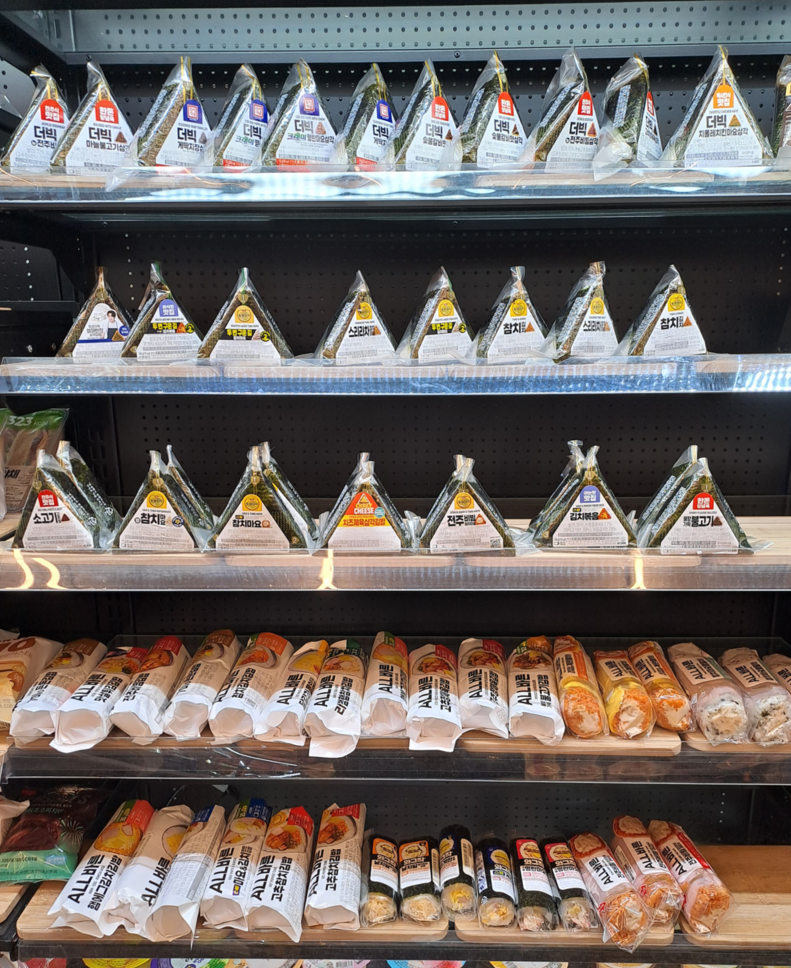
Convenience stores sell both regular packaged kimbap and Samgak Kimbap.
Regular Packaged Kimbap
Regular convenience-store kimbap generally keeps the familiar cylindrical shape and is sold as a ready-to-eat packaged meal.
Many products use a plastic sleeve that allows the kimbap to be eaten without chopsticks or a plate. After opening the package, the kimbap can be pushed up from the bottom of the sleeve as it is eaten.
This packaging keeps the kimbap together and makes it convenient to eat while standing, walking, traveling, or taking a short break. The exposed part of the kimbap can be held by hand while the rest remains inside the sleeve.
Samgak Kimbap (삼각김밥)
Samgak Kimbap is a triangular form of kimbap commonly sold at Korean convenience stores.
Unlike regular kimbap, which is rolled into a cylinder and sliced into several pieces, Samgak Kimbap is packaged as an individual serving.
Common fillings include tuna mayonnaise, tuna kimchi, bulgogi, spicy pork, kimchi, and seasoned meat.
Samgak Kimbap uses special packaging that keeps the gim separate from the rice until the package is opened. This helps prevent the seaweed from becoming soft during storage.
The package instructions are printed on the wrapper, so customers can follow the numbered steps even if they have never opened a Samgak Kimbap before.
After the package is opened, Samgak Kimbap can be eaten directly by hand without chopsticks, a plate, or other utensils.
Convenience-store kimbap products change regularly, and the selection can differ between convenience-store chains and individual locations. For visitors, convenience stores are a practical place to find an inexpensive breakfast, snack, or travel meal.