
One of the things foreign visitors notice quickly in Korea is that restaurants often serve banchan(side dish) automatically.
You sit down, order a main dish, and small side dishes appear. Sometimes they come before the main food. Sometimes they arrive with it. The number and type of banchan depend on the restaurant.
A barbecue restaurant may serve lettuce, garlic, ssamjang, kimchi, green onion salad, pickled radish, and other sides.
A soup restaurant may serve kkakdugi and kimchi.
A baekban restaurant may serve many vegetable and protein side dishes.
A noodle restaurant may serve kimchi or pickled radish.
A Korean-Chinese restaurant may serve danmuji and raw onion with chunjang.
Banchan are part of the restaurant experience. They make the meal feel abundant and balanced.
In many Korean restaurants, you are not paying separately for each basic banchan. They are included as part of the meal.
This can feel generous to visitors, but there are still manners and limits.
Banchan at Barbecue Restaurants
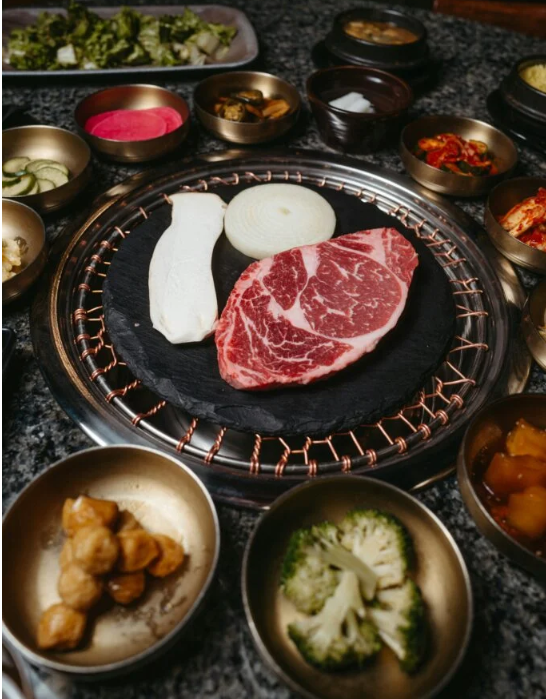
Korean barbecue restaurants have their own banchan culture.
When eating samgyeopsal, galbi, or other grilled meat, the banchan are not just side dishes. They are part of the barbecue system.
Common barbecue banchan and accompaniments include:
Kimchi, Lettuce, Perilla leaves, Garlic, Green chili peppers, Ssamjang, Salt with sesame oil, Green onion salad, Pickled radish, Onion pickles, Bean sprouts, Mushrooms, Cabbage salad.
These dishes balance grilled meat..
Fatty pork needs kimchi and pickles.
Smoky meat needs fresh lettuce.
Garlic and ssamjang add intensity.
Green onion salad gives sharpness.
Perilla leaves add herbal aroma.
Without these side dishes, Korean barbecue would feel incomplete.
The meat is important.
But the banchan make it Korean.
Banchan at Soup Restaurants
Soup restaurants often serve fewer banchan, but the banchan they serve are essential.
At seolleongtang, galbitang, gomtang, or haejangguk restaurants, the most important banchan are often kimchi and kkakdugi.
This makes sense.
The soups may be mild, rich, or broth-centered.
Kimchi and kkakdugi give sourness, spice, and crunch.
In many soup restaurants, the kimchi and kkakdugi are placed in large containers on the table. Diners cut them with scissors and serve themselves. This can surprise visitors, but it is common in some places.
The quality of the kimchi can define the restaurant.
A famous seolleongtang restaurant may be loved partly because its kkakdugi is excellent.
This shows again that banchan are not minor.
They can make or break the meal.
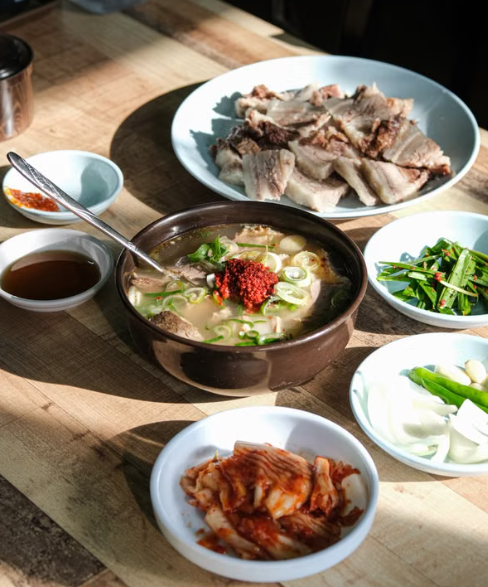
Banchan at Baekban Restaurants
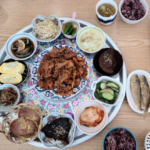
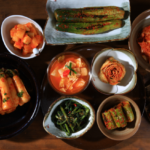
Baekban is one of the best ways to experience banchan.
Baekban means a Korean set meal built around rice, soup, a main dish, and several side dishes. It is one of the most important everyday meal styles in Korea.
A baekban restaurant may serve:
Rice, Soup, Kimchi, Namul, Fish, Tofu, Egg, Stir-fried fish cake, Anchovies, Pickles…
A main dish such as jeyuk bokkeum, grilled fish, bulgogi, or stew
The beauty of baekban is variety. You do not eat only one dish. You experience a whole table of small tastes.
For foreign visitors, baekban is one of the best ways to understand real Korean everyday food.
It is not tourist food.
It is the kind of food people eat for lunch, dinner, and home-style meals.
Banchan are the heart of baekban.
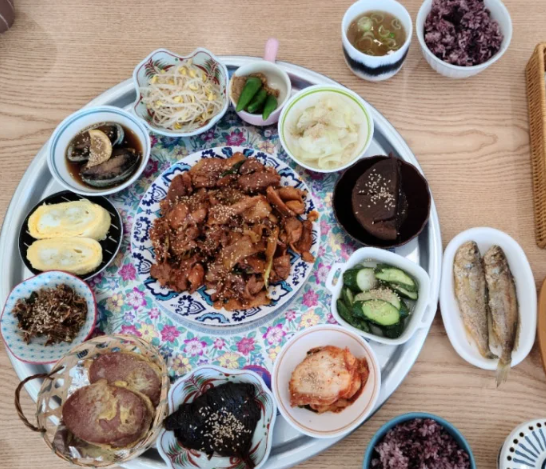
Photo: Korea Tourism Organization
Banchan at Hanjeongsik Restaurants
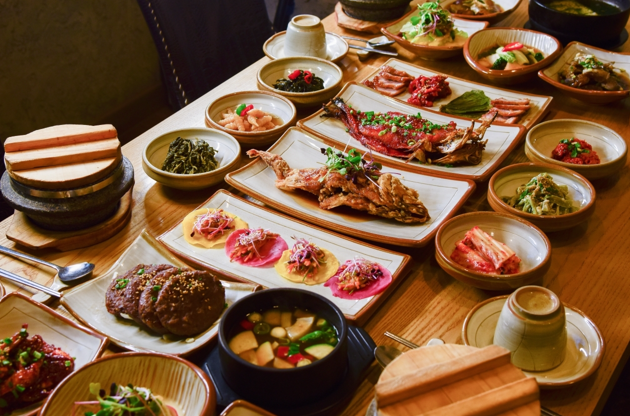
Hanjeongsik is a more formal or elaborate Korean set meal.
It often includes many dishes served in courses or arranged on a large table. Banchan in hanjeongsik can be more refined, seasonal, and carefully presented.
A hanjeongsik table may include:
Kimchi, Namul, Jeon, Fish, Meat, Vegetable dishes, Braised dishes, Pickles, Rice, Soup, Stew, Traditional desserts
Compared with ordinary baekban, hanjeongsik often feels more elegant and abundant. Banchan are not only practical here. They also show beauty, seasonality, regional ingredients, and hospitality.
This style of meal helps visitors understand that banchan can be simple home food or refined restaurant food.
The category is wide.
Banchan can be humble.
Banchan can be elegant.
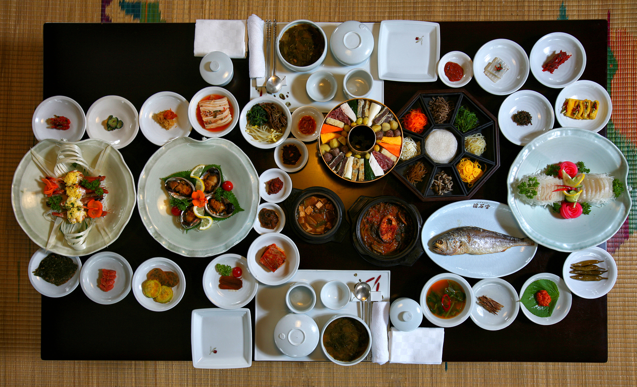
Photo: Korea Tourism Organization
Banchan at Korean-Chinese Restaurants
Korean-Chinese restaurants have a different side dish style.
Instead of many Korean banchan, they usually serve danmuji, yellow pickled radish, and raw onion with chunjang, black bean paste. Sometimes kimchi is also served.
These side dishes match Korean-Chinese foods such as jajangmyeon, jjamppong, and tangsuyuk.
Danmuji is crunchy, sweet, sour, and refreshing. It cuts through the rich black bean sauce of jajangmyeon. Raw onion dipped in chunjang gives sharpness and salty depth.
This shows that banchan culture changes by restaurant type.
A barbecue restaurant has ssam vegetables.
A soup restaurant has kkakdugi.
A Korean-Chinese restaurant has danmuji and onion.
Every table has its own logic.